Upper Tyrrhenian Cosentino · Riviera dei Cedri
Belvedere Marittimo
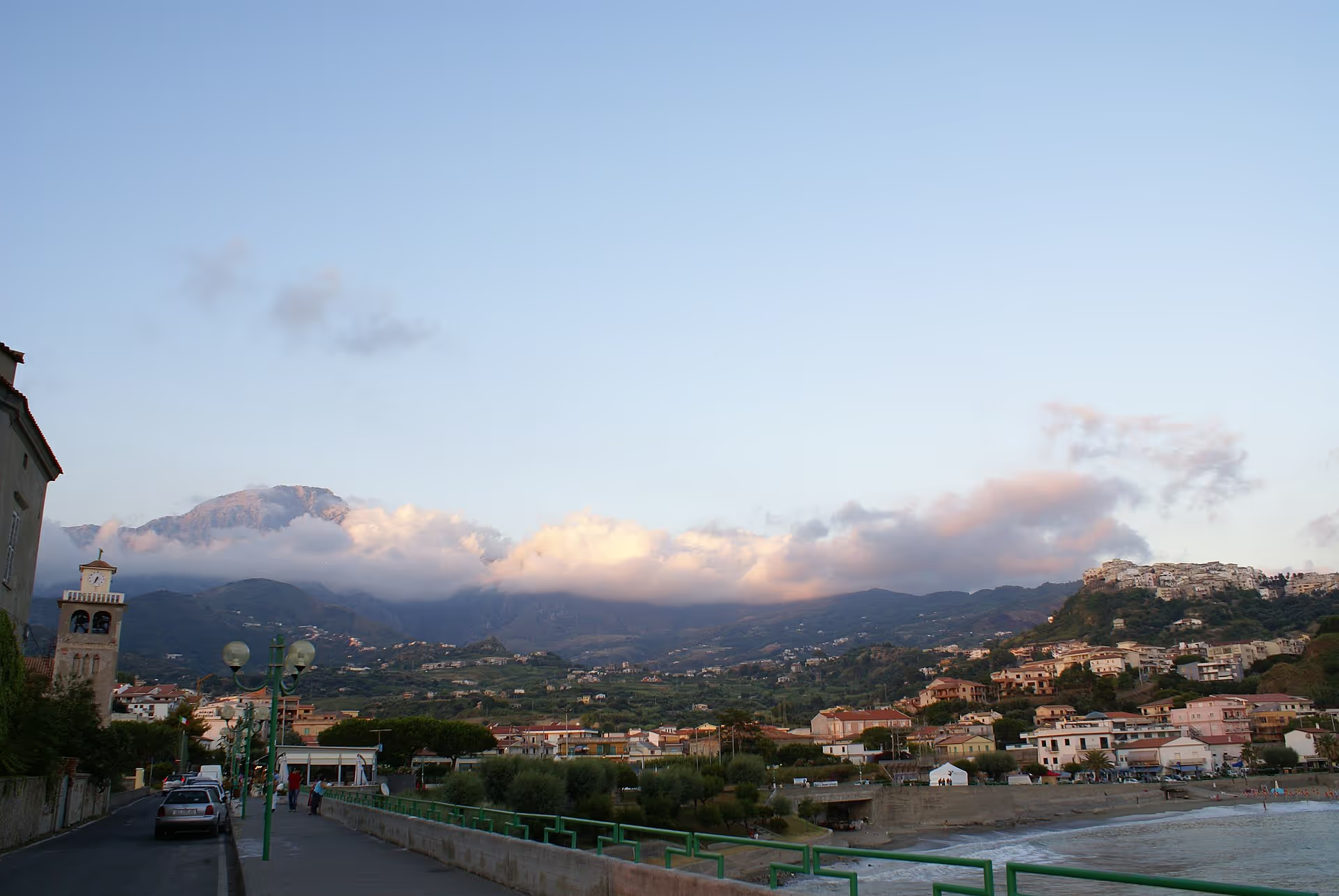
A medieval village 150 metres above the Tyrrhenian with the Sanseverino Renaissance castle, a wooden crucifix of 1711 and a chapel dated 1091; at its feet the Marina, the Bruttian tombs of Capo Tirone and the Note di Fuoco fireworks festival.
Belvedere Marittimo is a town of about 8,900 inhabitants in the province of Cosenza, between Diamante and Sangineto, on the Upper Tyrrhenian Cosentino coast. The name says it all: the old town sits on a rocky spur about 150 metres above the sea, and from up there the eye runs along the Riviera dei Cedri; at its feet, on the beach, the Marina has grown. A castle rebuilt in 1490 to Renaissance standards, a chapel with the date 1091 carved on its portal and a wooden crucifix of 1711 make the village a stop dense with history.
Geography
The territory splits into two distinct cores. The medieval village occupies a rocky outcrop about 150 metres up, its houses dropping steeply towards the narrow valley of the Soleo river. On the coast, some ten metres above sea level, stretches the Marina di Belvedere Marittimo, of more recent formation, where beaches, homes and tourist facilities are concentrated; the headland of Capo Tirone marks its shoreline. Behind, the countryside is dotted with dozens of hamlets and districts (Laise, Sant’Andrea, Petrosa, Calabro, San Nicola, Trifari, Quattromani, Oracchio, San Giorgio) and part of the municipality lies within the Pollino National Park. The climate is that of the Tyrrhenian coast: notably mild winters, hot but not scorching summers.
History
Belvedere’s history begins long before the village. Along the Soleo river, on the Galiso plateau at Oracchio, the historian Giovanni Amellino published between 1886 and 1890 the burials of a prehistoric community of the 10th–9th century BC. In the 7th century BC Bruttian groups settled on the hills around Monte La Caccia in small clusters of herders and farmers who grew vines and made terracotta, tiles, amphorae and jars; the Marina was their embarkation point. The tombs of Capo Tirone (4th–3rd century BC), with terracotta necklaces, bronze mirrors and Greek-style pottery, tell of the relations between those Bruttians and the colonies of Magna Graecia. In Roman times the territory held a villa d’otium on the Cotura plain, a Hellenistic-period farm at Sant’Ianni, a wine press for treading grapes at San Giorgio and another villa (1st–3rd century AD) on the northern boundary, towards Quattromani.
Today’s village was born with the Normans: tradition dates the first core of the castle to that period, enlarged by the Swabians and turned by the Angevins into a residence. In 1287 the feudal lord Ruggero Sangineto renewed fortress and town walls. By the late 1400s the fief belonged to the Sanseverino of Bisignano, who in 1490, under King Ferrante of Aragon, remade the castle to the military criteria of the Renaissance; the king’s coat of arms is still on the gate of the enclosure. In 1599 the brethren of Santa Maria del Pianto began the church that in the 18th century would take the name of the Santissimo Crocifisso, and in 1622 the lordship of Belvedere and Diamante passed to the prince of Bisignano Tiberio Carafa. The municipal coat of arms was recognised in 1931, the blue banner dates from 1930. Belvedere is twinned with Belvedere Langhe, Belvedere Ostrense, Belvedere di Spinello, Ceuta in Spain and Mitzpe Ramon in Israel.
What to see
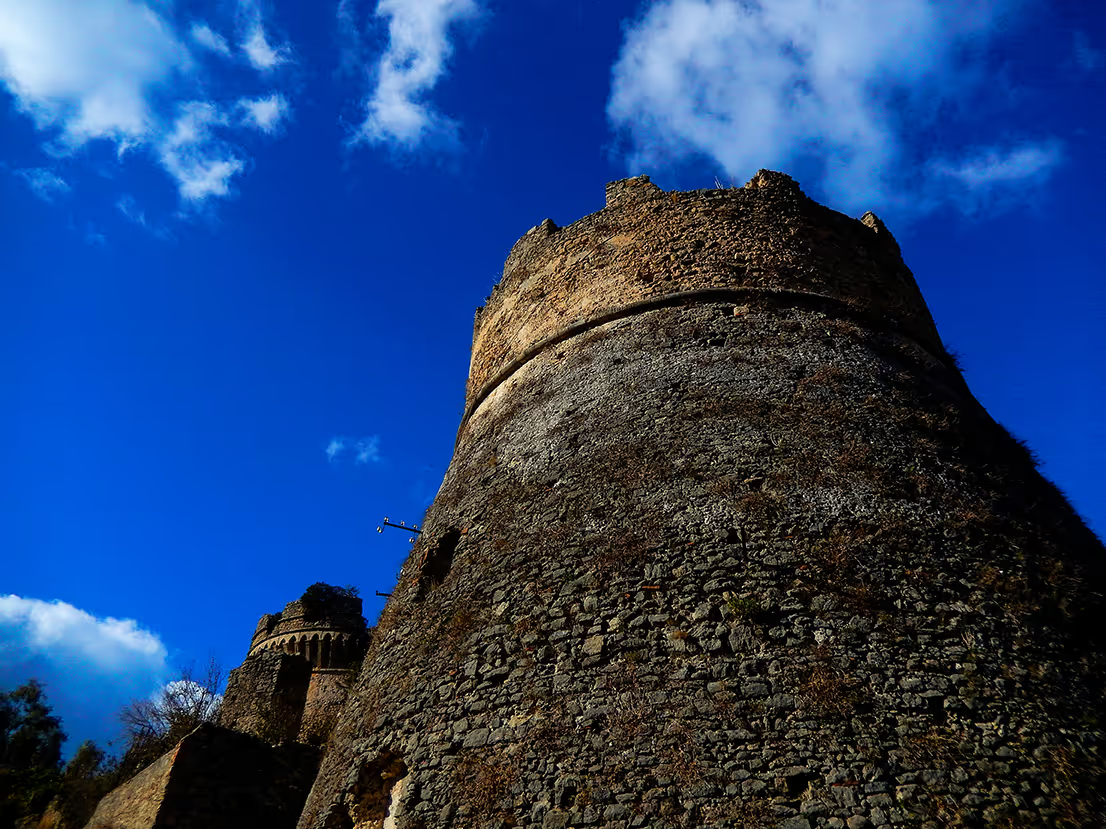
The Castle dominates the village. The Norman-Swabian core, the Angevin residence and the late-15th-century remodelling can still be read in its walls: the corbels of the crowning recall solutions of the castle of Imola, the towers those of Calabrian and Apulian castles of the same period (Corigliano, Taranto, Otranto), and recent studies have linked the design to masters such as Giuliano da Maiano, Francesco di Giorgio Martini and Antonio Marchesi da Settignano. Over the gate into the enclosure stands the coat of arms of Ferrante of Aragon.
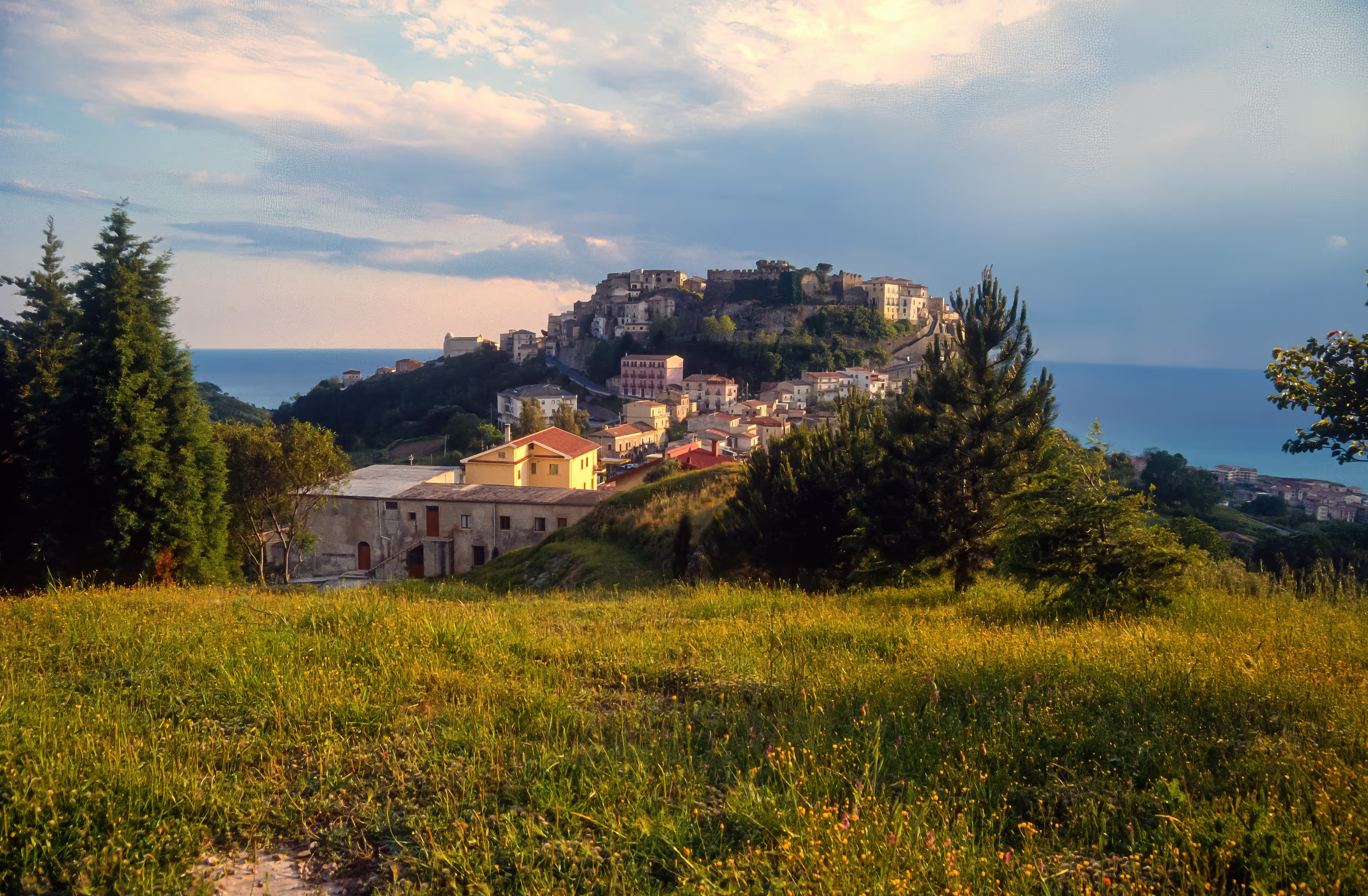
At the edge of the town, set against the old walls on the slope down to the Soleo, the Church of the Santissimo Crocifisso has a plain look that does not prepare you for what it holds: a monumental wooden crucifix of 1711, carved and painted, conceived by Pietro Frasa, a Milanese cleric and preacher who died in Foggia at 33 in that very year. The dead Christ, head fallen on the right shoulder and body twisted in a spiral, repeats the crucifix of Foggia cathedral and shows the influence of Caravaggio’s realism; the carving was done in Naples under Frasa’s direction, and a link to the workshop of Giacomo Colombo has been proposed. It was this sculpture that made the confraternity change its name, known until 1708 as Santa Maria del Pianto.
The village also holds the Chiesetta del Rosario, with the date 1091 carved on its sandstone portal, among the oldest monuments in town, and the birthplace of Saint Daniele Fasanella, the patron. In the Rocca district a quadrangular Roman watchtower survives. The Museo della Memoria Storica “Città di Belvedere Marittimo”, in via Castel Ruggiero, displays faithful reproductions of the archaeological finds from the area, whose originals are kept at the Civic Museum of Cosenza, in the stores of the Reggio Calabria museum and at Sibari.
Feasts, fireworks and crafts
Every year the town hosts Note di Fuoco, a fireworks festival born in 2007 that pits the three strongest nations in the field against each other over three to six days of shows; the first edition drew two hundred thousand spectators. The religious feasts follow the usual calendar: Saint Daniele Fasanella, the patron, with feast and market from 13 to 20 October; the Holy Cross on 22 June; on 13 December the feast in honour of Luigi Pollio and Riccardo Barbato. The economy joins the Marina’s beach tourism to citron processing, the fruit that gives the Riviera its name, and to a tradition of clay working that in the past counted several master craftsmen.
Belvedere on the Riviera dei Cedri
Belvedere Marittimo is the first town south of Diamante along the Upper Tyrrhenian Cosentino coast and opens the southern stretch of the Riviera dei Cedri, which continues with Sangineto, Bonifati and Cetraro. Its railway station is also the reference for Sangineto, whose stop has been closed since 2010. Inland, the inclusion of part of the territory in the Pollino National Park ties the village to the mountains, in the pattern that marks the whole coast: the sea in front, the Apennines behind.
Getting there
Belvedere Marittimo lies on the SS18 Tirrena Inferiore state road and is served by Belvedere Marittimo station on the Battipaglia–Reggio Calabria railway, which is also the reference station for Sangineto. By car from the A2 “del Mediterraneo” motorway: from the north, exit Lagonegro nord, then SS585 and SS18 southwards; from the south, exit Falerna and SS18 northwards. From the Marina a road climbs to the medieval village. The nearest airport is Lamezia Terme.
Places
What to see around here.
- Culture
Capo Tirone and the Bruttian tombs
The headland of Belvedere’s Marina where in 1956 Bruttian burials of the 4th–3rd century BC came to light and, on the Cotura plain, a Roman villa d’otium.
-
 Culture
 Castle of Belvedere Marittimo
The Sanseverino fortress dominating the medieval village: Norman core, Angevin residence and Renaissance forms of 1490, with the coat of arms of Ferrante of Aragon on the gate.
- Old town
Medieval village of Belvedere Marittimo
The upper town on its 150-metre spur: the Chiesetta del Rosario with its 1091 portal, the birthplace of Saint Daniele Fasanella, the walls and the view over the Riviera dei Cedri.
-
 Culture
 Church of the Santissimo Crocifisso
The small church of 1599 set against the village walls that houses the monumental wooden crucifix of 1711 conceived by Pietro Frasa.
Nearby towns
Keep exploring the Upper Tyrrhenian Cosentino coast from here.
-
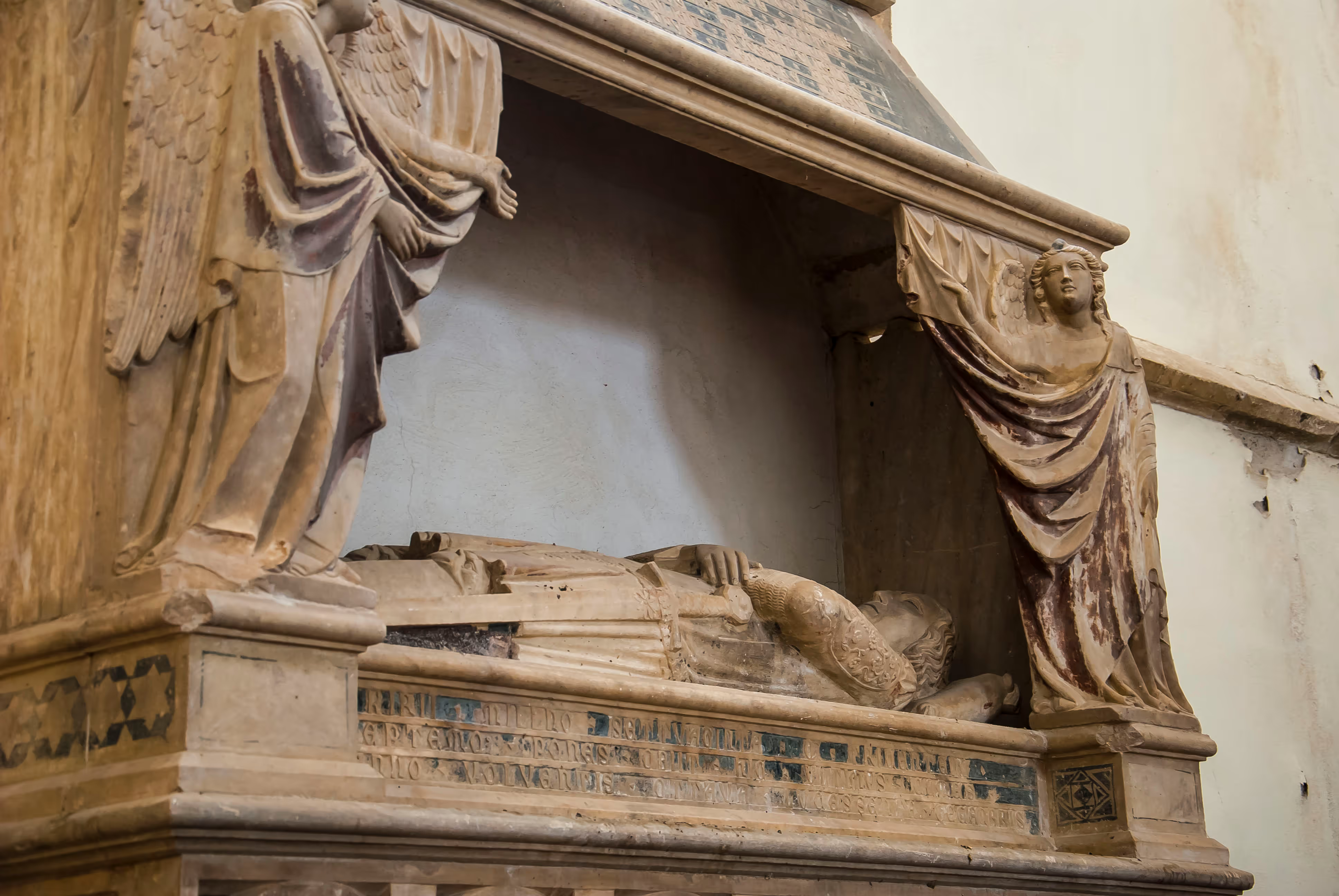
Sangineto
The village where the Riviera dei Cedri ends: a hilltop old centre with the castle of the Sanseverino of Bisignano and the peace olive tree of 1918, the 13th-century church of Santa Maria della Neve and, by the sea along the SS18, Sangineto Lido. One of the great feudal families of Angevin Calabria took its name from here.
-
Bonifati
Two souls on the same coast: the village 425 metres up on the Coastal Range, with the ruins of Castel Bonifati, five churches rich in art and its historic palazzi, and Cittadella del Capo by the sea, ancient Fella, with the Capo and Fella towers from the 12th to the 16th century.
-
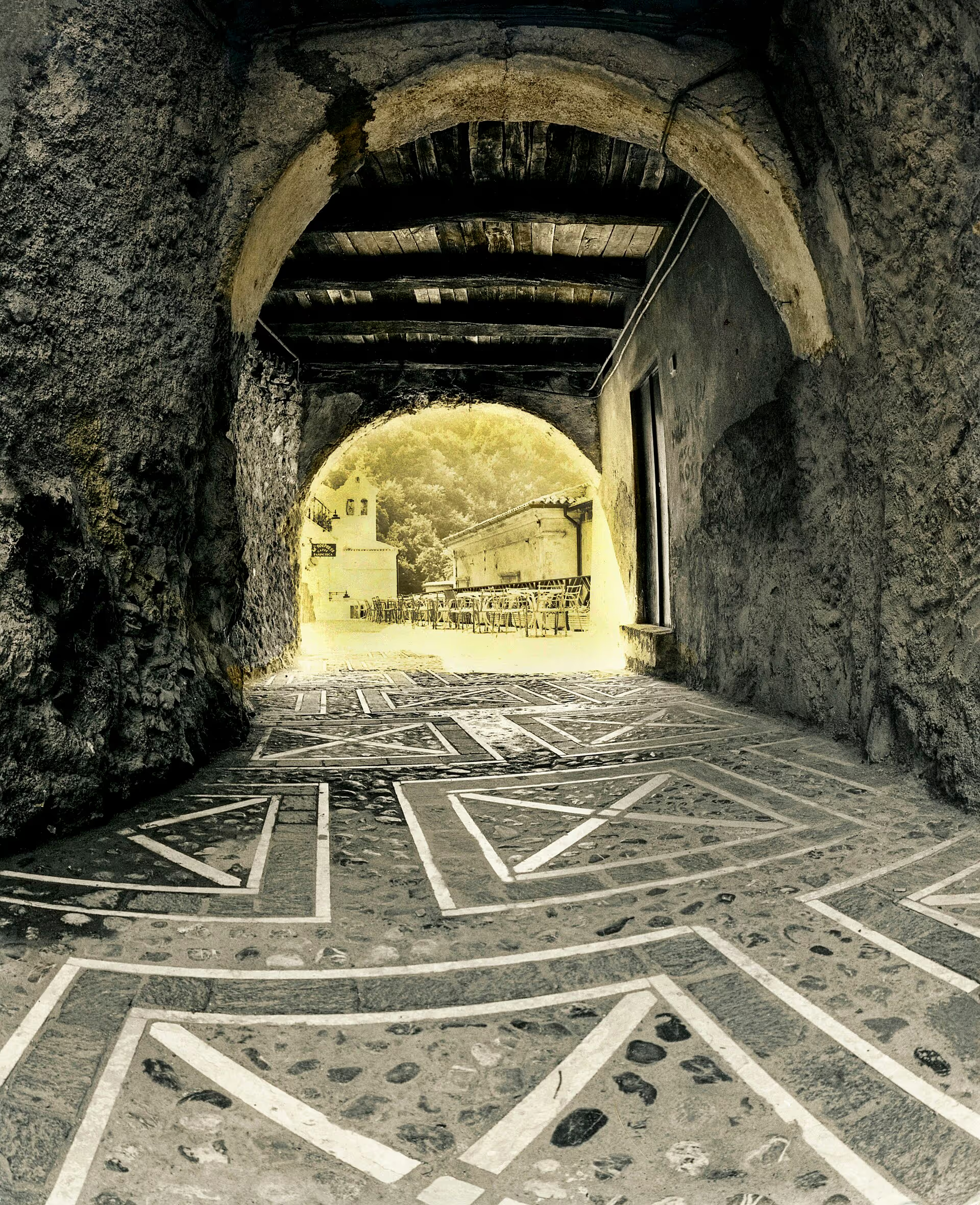
Buonvicino
The village born of three hamlets on the route between the Tyrrhenian and the interior: at 400 metres above the Corvino stream, in the Pollino park, Buonvicino keeps the Stretto gorge with the Sasso dei Greci, the cave of Abbot Ciriaco, a disciple of Saint Nilus, and his great bronze statue watching over the village.
-
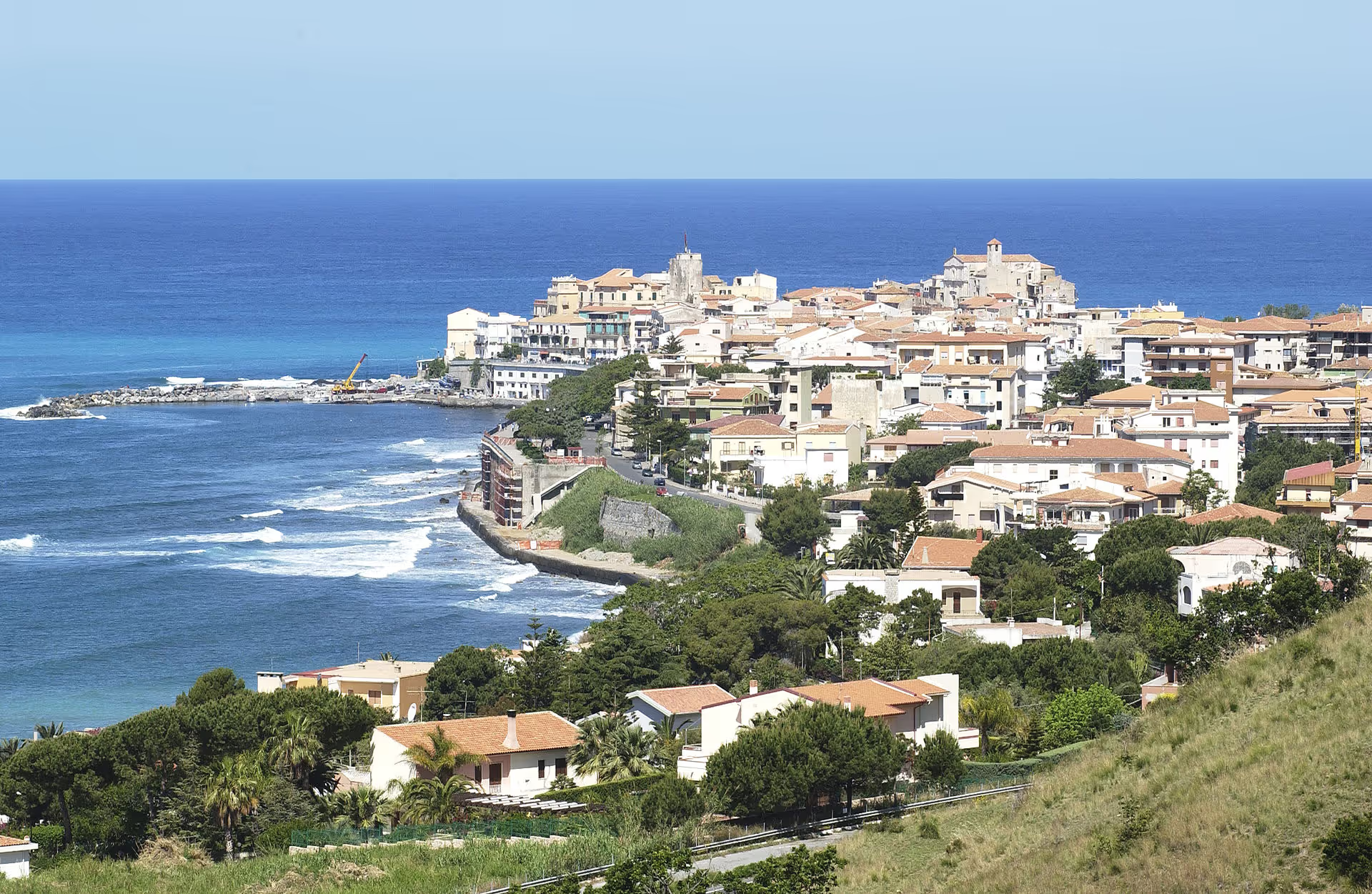
Diamante
The “town of murals” and chilli-pepper capital at the heart of the Riviera dei Cedri: eight kilometres of beaches, the island of Cirella and a fishing village turned open-air art gallery.
Itineraries through here
-
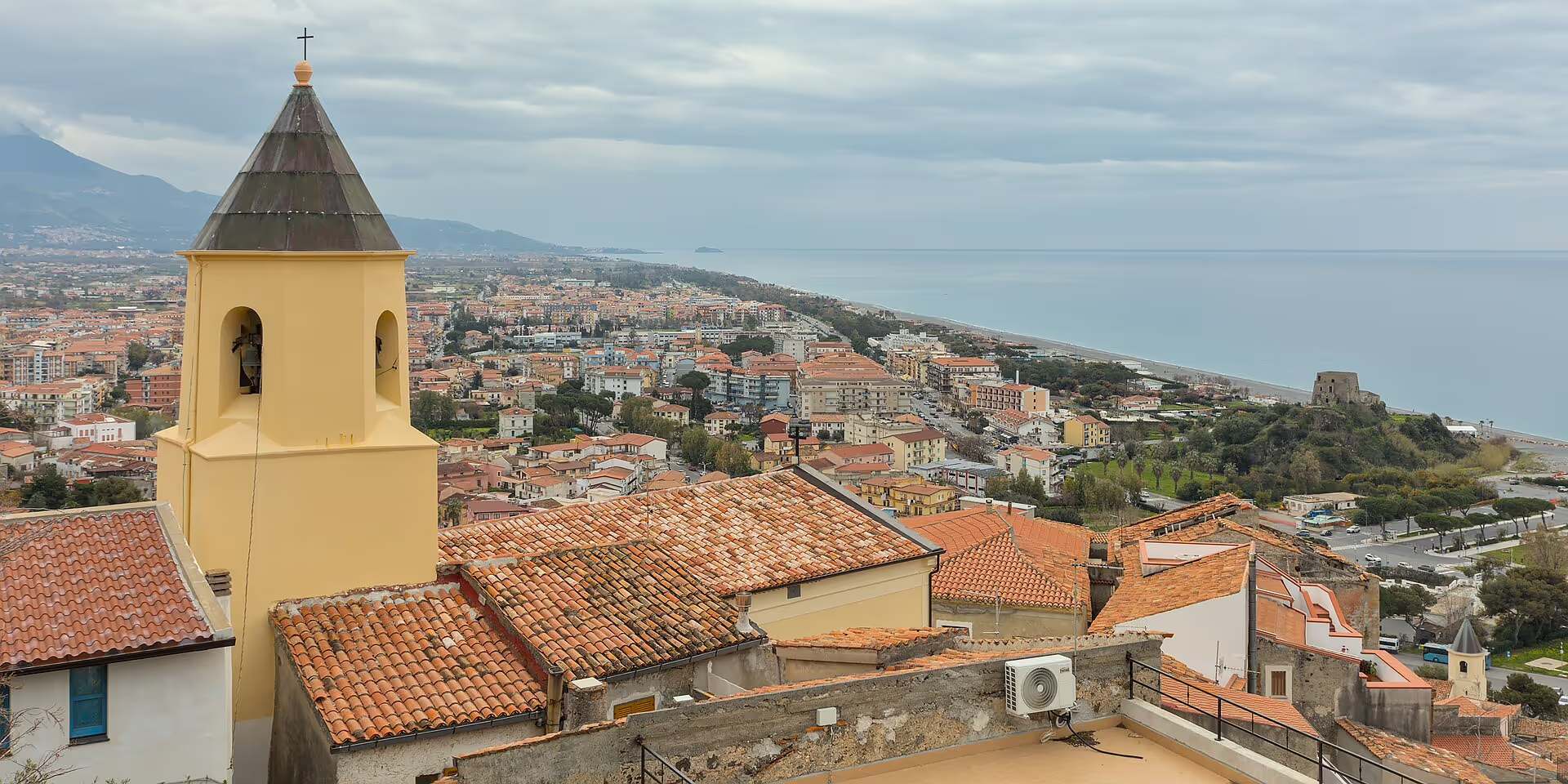 4 daysGrand tour
Grand Tour of the Riviera dei Cedri
Four days from north to south along the Upper Tyrrhenian Cosentino coast: islands, Norman towns, murals and sanctuaries.
11 stops8 townsMay–OctoberSee the stops -
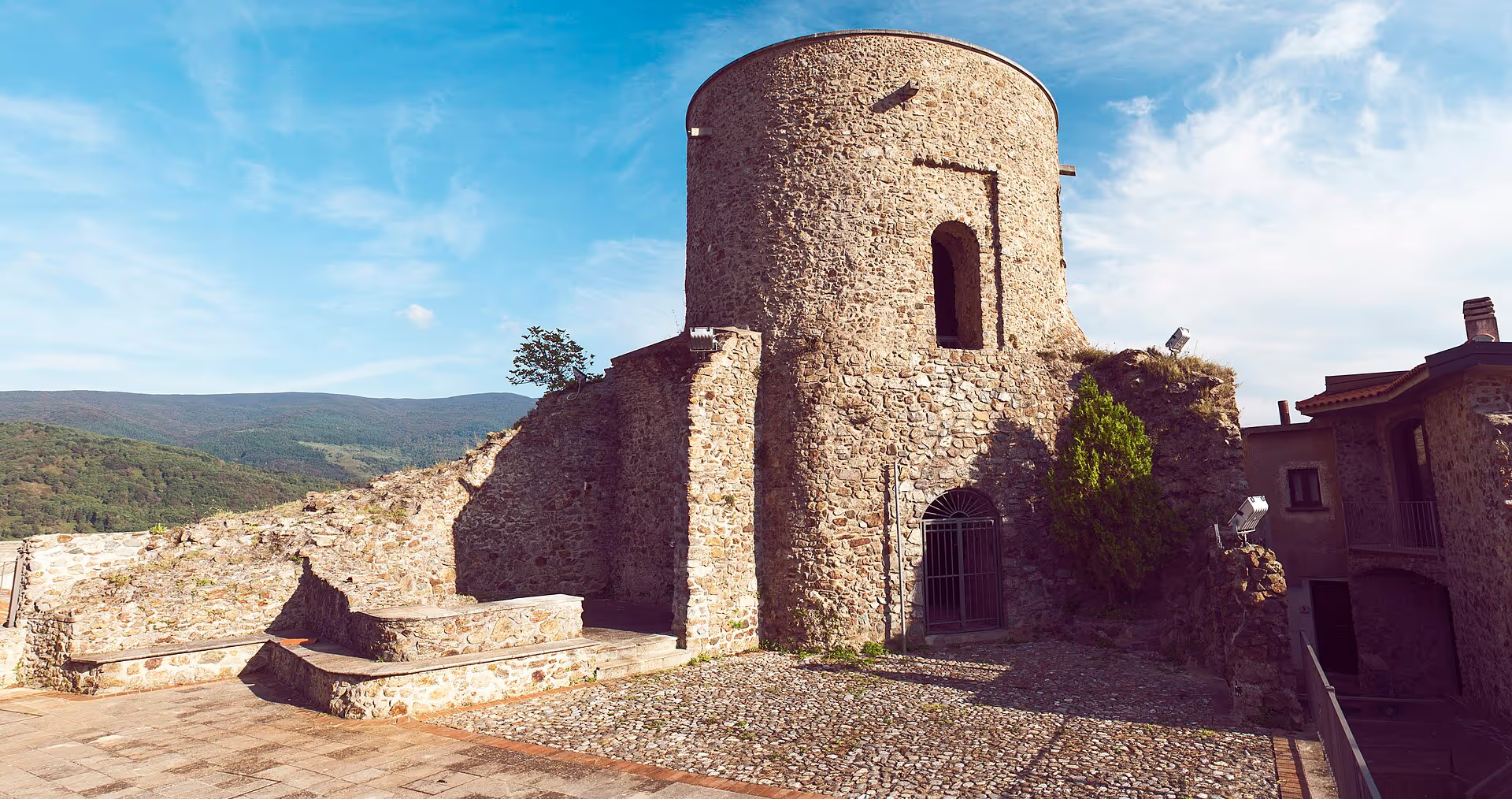 3 daysTowns & history
Towns & history
Three days among old towns, castles and the only Occitan language island in southern Italy.
6 stops5 townsAll year roundSee the stops -
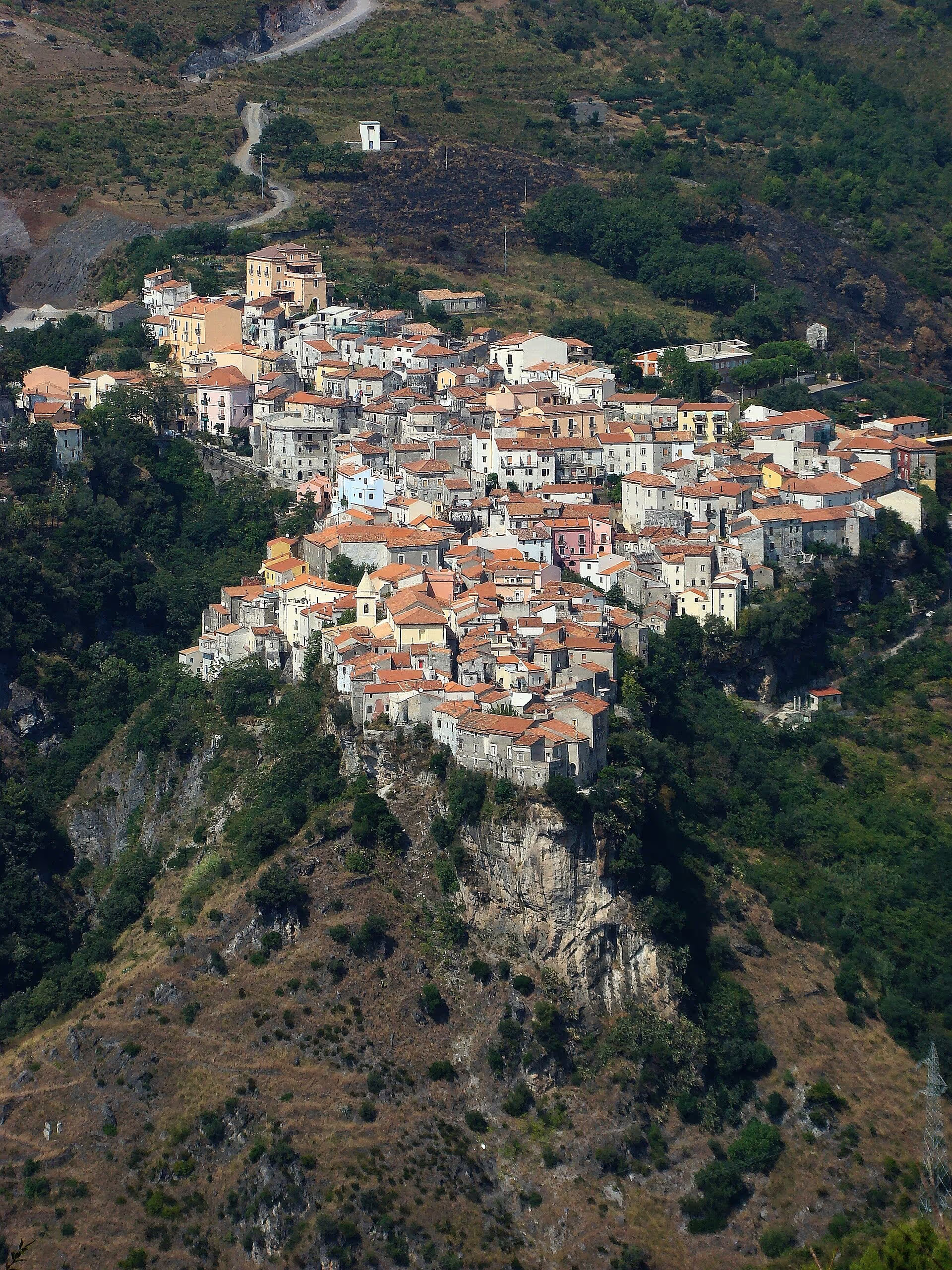 4 daysTowns & history
Four days among old towns
Four days among castles, Norman towns, sacred art and the Occitan language island.
8 stops5 townsAll year roundSee the stops -
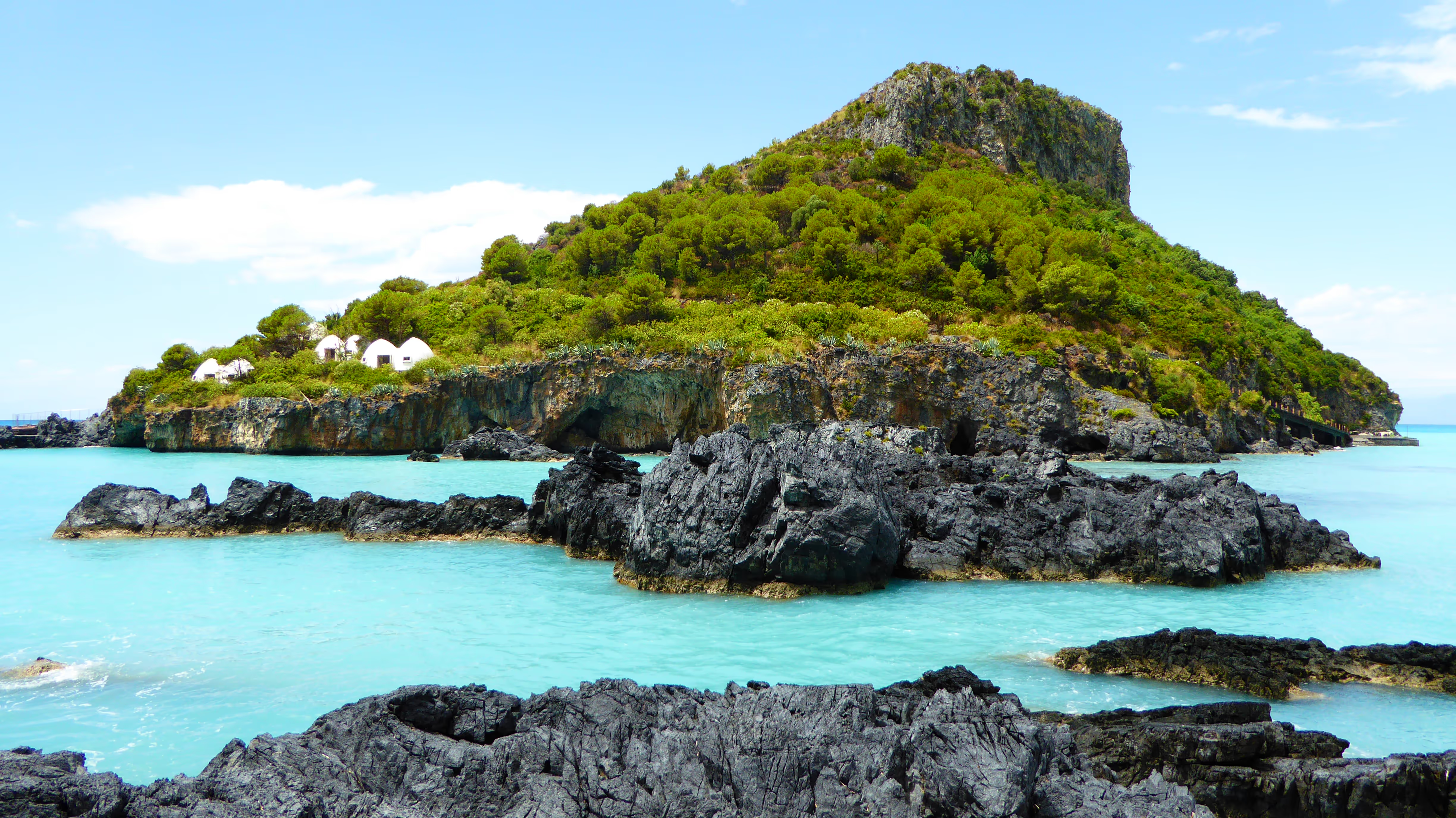 3 daysFamily
Family on the coast
Three easy days for families: beaches, murals and a boat trip to the island of Dino.
6 stops3 townsJune–SeptemberSee the stops
Where to stay
- Bouganville PalaceHotel · Belvedere Marittimo
- Hotel BelvedereHotel · Belvedere Marittimo
- OrtensiaApartment · Belvedere Marittimo
- PoseidonHotel · Belvedere Marittimo
Indicative information from OpenStreetMap. Check availability and reviews on the external platforms.
Where to eat
- AlexaRestaurant · Belvedere Marittimo
- Blue BarBar · Belvedere Marittimo
- Fata MorganaCafé · Belvedere Marittimo
- Gelateria Capo TironeBar · Belvedere Marittimo
- il Casale Vecchia FattoriaRestaurant · Belvedere Marittimo
- Il Cavallino RossoRestaurant · Belvedere Marittimo
- il RistoroRestaurant · Belvedere Marittimo
- Il Segreto di PulcinellaRestaurant · Belvedere Marittimo
- Lido AzzurroRestaurant · Belvedere Marittimo
- LIDO Stella Del MareCafé · Belvedere Marittimo
- Lo StuzzichinoRestaurant · Belvedere Marittimo
- Pizzeria da GrazianoRestaurant · Belvedere Marittimo
- Pizzeria NatalyRestaurant · Belvedere Marittimo
- Ristorante Pizzeria MilleluciRestaurant · Belvedere Marittimo
- Sabbia d'oroRestaurant · Belvedere Marittimo
Indicative information from OpenStreetMap. Check availability and reviews on the external platforms.
Do you run a local business?
Update the listing or discover how to give your business more visibility.
Join the guide for freeHow to get to Belvedere Marittimo
- Reference railway station
- Belvedere Marittimo
- about 1 km as the crow flies from the centre Also the reference station for Sangineto (stop closed since 2010).
- Train times (Trenitalia) ↗ Guide: by train
- Nearest airport
- Lamezia Terme International Airport (SUF)
- about 85 km as the crow flies from the centre
- Airport website ↗ Guide: by plane
- By car: A2 “del Mediterraneo” motorway
-
From the north · A2 Lagonegro north SS585 Fondo Valle del Noce → SS18 Tyrrhenian coastal road heading south
From the south · A2 Falerna SS18 Tyrrhenian coastal road heading north along the coast
- Driving directions (Google Maps) ↗ Guide: by car
Straight-line distances computed from verified coordinates: the road route is longer. Check times and connections on the operators’ websites.
Frequently asked questions
- On the Tyrrhenian coast of the province of Cosenza, in Calabria, between Diamante and Sangineto, on the Upper Tyrrhenian Cosentino coast; the medieval village sits about 150 m above the sea, the Marina on the shore.
- The Sanseverino Renaissance castle (1490), the Church of the Santissimo Crocifisso with the 1711 wooden crucifix, the Chiesetta del Rosario with its portal dated 1091, the birthplace of Saint Daniele Fasanella and the Museo della Memoria Storica.
- The core is Norman-Swabian, turned into a residence by the Angevins and renewed in 1287 by Ruggero Sangineto; its present look dates from 1490, the work of the Sanseverino of Bisignano under Ferrante of Aragon, whose coat of arms is on the gate.
- The 1711 wooden crucifix was conceived by the Milanese cleric and preacher Pietro Frasa (1678–1711), who directed its carving in Naples and did the painting and finishing; it replicates the one in Foggia cathedral.
- Bruttian burials of the 4th–3rd century BC at Capo Tirone, a Roman villa d’otium on the Cotura plain, a Roman wine press at San Giorgio and a villa of the 1st–3rd century AD; reproductions are at the Museo della Memoria Storica, the originals in Cosenza, Reggio Calabria and Sibari.
- A fireworks festival held in Belvedere Marittimo since 2007, with the three strongest nations in the field; it lasts three to six days and the first edition drew 200,000 spectators.
- Saint Daniele Fasanella, whose birthplace is preserved in the village; feast and market in his honour are held from 13 to 20 October.
- The reference station is Belvedere Marittimo, on the Tyrrhenian railway line, about 1 km as the crow flies from the centre of Belvedere Marittimo. Times and connections on the Trenitalia website.
- The nearest airport is Lamezia Terme International Airport (SUF), about 85 km as the crow flies; from there you continue by train from Lamezia Terme Centrale along the Tyrrhenian line, or by car on the A2 motorway.
Where is Belvedere Marittimo?
What to see in Belvedere Marittimo?
Who built the castle of Belvedere Marittimo?
Who made the crucifix of Belvedere Marittimo?
What archaeological remains are there in Belvedere Marittimo?
What is Note di Fuoco?
Who is the patron saint of Belvedere Marittimo?
Which is the nearest railway station to Belvedere Marittimo?
Which is the nearest airport to Belvedere Marittimo?
Discover locally
Live, up-to-date results with real reviews, on external platforms. We don’t hand-pick individual businesses we can’t verify.