Upper Tyrrhenian Cosentino · Riviera dei Cedri
Bonifati
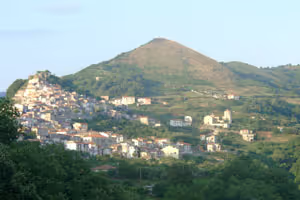
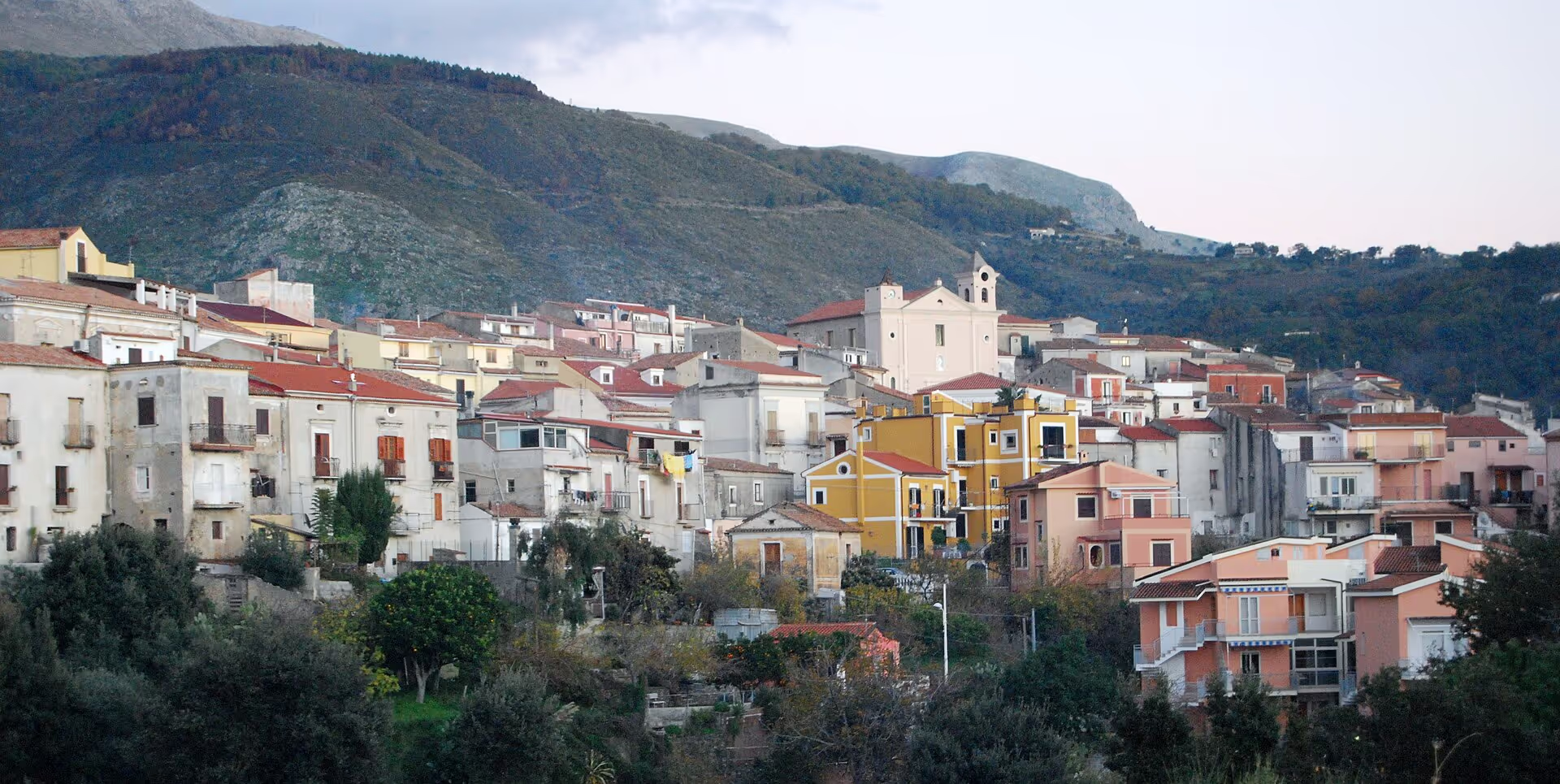
Two souls on the same coast: the village 425 metres up on the Coastal Range, with the ruins of Castel Bonifati, five churches rich in art and its historic palazzi, and Cittadella del Capo by the sea, ancient Fella, with the Capo and Fella towers from the 12th to the 16th century.
Bonifati (Bunìfati in Calabrian) is a town of about 2,500 inhabitants in the province of Cosenza, on the Upper Tyrrhenian Cosentino coast, between Sangineto and Cetraro. The old village sits 425 metres up on the north-western slopes of the Coastal Range, nestled between two hills; set apart from it, 23 metres above the sea, stretches Cittadella del Capo, the coastal hamlet that grew with seaside tourism. For centuries a farming centre, Bonifati keeps in its old town the ruins of its castle, churches with works from the 16th to the 18th century and a series of noble palazzi, while the municipal territory counts towers from different eras, from the 12th to the 16th century.
Geography
The municipal territory runs down from the Coastal Range to the sea and borders Cetraro, Sangineto and Sant’Agata di Esaro. Besides the main village it includes many hamlets: Cirimarco, Cittadella del Capo, Iardino, Paneduro, Pero, San Candido, San Lorenzo, Sparvasile, Telegrafo, Timpone and Torrevecchia. On the coastal strip, Cittadella del Capo also takes in the districts of Paneduro (known as Bonifati Lido), Santa Maria and Telegrafo. The historic village instead occupies the hill, between two heights each crowned by a large cross: legend has it that the king and queen of the castle are buried beneath the crosses.
History
Bonifati’s origins are entrusted to tradition. A tale handed down from father to son tells of a rich merchant who, stopping with servants and mounts by the shepherds’ huts at a place called Vaccaro, asked them what they were doing; when they replied that they were grazing their master’s animals, he is said to have exclaimed in Latin “Bene facite!” (“Well done!”), words so unusual for those shepherds that they gave the place its name, benefacite and then benefate. Another tradition has the town founded by refugees from the ancient city of Hiele, who came here after the troops of Robert Guiscard razed it to the ground in 1057. The first documented fact comes about two centuries later: in 1270 the name Castel Bonifati designates the fief that Charles I of Anjou gave to Gismondo Palmieri, in return for his help in the conquest of the Kingdom of Naples. The castle, attributed to the Normans and dated to the 13th century, was destroyed by the Angevins in the second half of the 15th century. On the coast, Cittadella del Capo (in Latin Civitatula Capitis) is identified with Fella (Φήλλα), a Greek colony that long lived from farming and fishing and in the 16th century was taken by the Turks of Barbarossa. For centuries a simple farming centre, the town has seen major growth in recent decades thanks to seaside tourism along the Tyrrhenian shore.
What to see
In the old town stand the ruins of Castel Bonifati, the fortress raised to defend the territory. The Sanctuary of the Blessed Virgin Mary of the Rosary, from the 16th century and once part of the Dominican convent, holds the 18th-century statue of the Madonna del Rosario, wooden statues of Saints Dominic and Vincent carved in 1734 by Francesco di Nardo, a 17th-century wooden crucifix attributed to Father Umile da Petralia, a fresco of the Madonna in Triumph and an inlaid wooden baptismal font. The Convent of San Francesco di Paola, dedicated to Santa Maria di Loreto, was built between 1518 and 1520 by a shepherd, Giovanni Mercorelli, with financial help from the magistrate Niccolò Colono, and keeps a wooden statue of the saint. The small 17th-century Church of the Calvario houses the painting Christ Carrying the Cross between Saints Peter and Paul by Dirk Hendricksz (1601) and a marble Madonna and Child by Giandomenico Mazzolo, donated on 15 August 1535 by Pietrantonio Sanseverino, prince of Bisignano. The Church of the Annunziata, Baroque and divided into three sections, has a 16th-century Annunciation group, an 18th-century wooden choir by Fra Gennaro da Bonifati and an 18th-century statue of the Addolorata.
Palazzi and towers
Besides the churches and the ruins of the fortress, the old town keeps a series of noble residences: Palazzo Favarulo, Palazzo Barbieri, Palazzo Scamardi-De Aloe, Palazzo del Principe and Palazzo Francesco De Aloe, together with the 16th-century Torre di Porta Malvitana. Elsewhere in the municipal territory stand other towers from different eras: the Torre del Capo, dated to the 12th century, the 15th-century Torre Parise and the 16th-century Torre di Fella, while the Torre del Telegrafo, also from the 16th century, has been destroyed and left its name to the district. The territory also includes the Palazzo del Capo.
Feasts and traditions
Bonifati’s patron saint is Santa Maria Maddalena, celebrated on 22 July. On the first Sunday of October the town celebrates the feast of the Madonna del Rosario, linked to the Dominican sanctuary. At Cittadella del Capo, on the third Sunday of August, the votive feast of San Francesco di Paola, patron of Calabria and of seafarers, is held. In the coastal hamlet the churches are recent: the parish church of San Francesco di Paola, consecrated on 25 March 1973 and restored in 2006, and that of San Michele Arcangelo, from 1924; elsewhere in the territory are the parish church of the Immacolata Concezione (1913), Santa Rosa da Lima (1991), Sant’Anna (1995) and the disused little church of San Lorenzo.
Getting there
Bonifati’s shore is served by Capo Bonifati station, on the Tyrrhenian railway, and crossed by the SS18 Tirrena Inferiore state road, along which Cittadella del Capo stretches; from the sea a road climbs to the village at 425 metres. By car from the A2 “del Mediterraneo” motorway: from the north, exit Lagonegro nord, then the SS585 Fondo Valle del Noce to the coast and the SS18 southwards; from the south, exit Falerna and the SS18 northwards. The nearest airport is Lamezia Terme.
Places
What to see around here.
- Old town
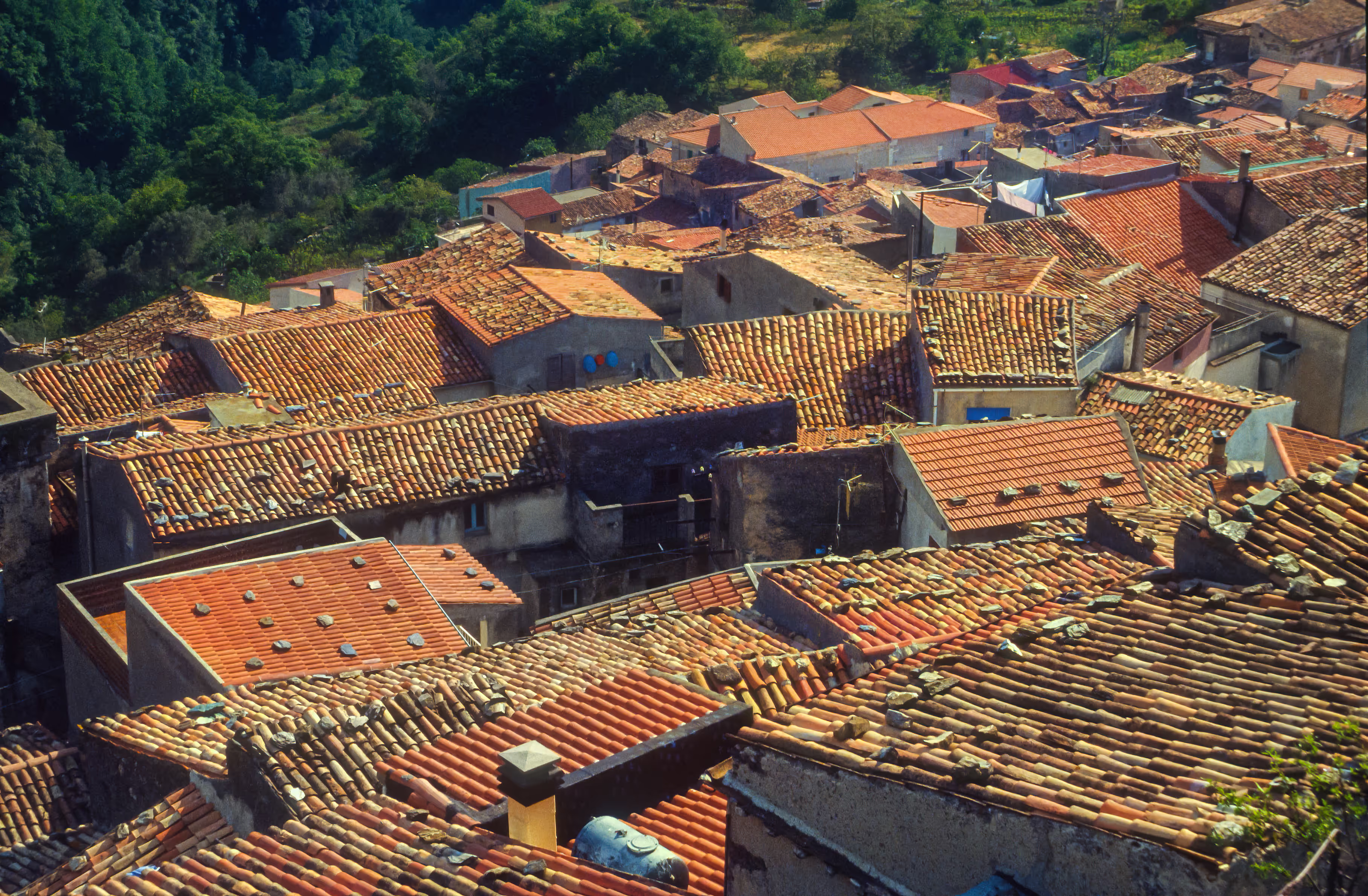
Old town of Bonifati
The village 425 metres up between two cross-topped hills: the ruins of Castel Bonifati, the Rosary sanctuary, the Convent of San Francesco di Paola, the Calvario, the Annunziata and the noble palazzi.
-
 Beach
Beach Cittadella del Capo
Bonifati’s coastal hamlet 23 metres above the sea, ancient Fella: Capo Bonifati station, the districts of Paneduro, Santa Maria and Telegrafo and the Capo and Fella towers.
- Culture
Towers of Bonifati
Five centuries of towers in Bonifati: the Torre del Capo (12th century), the Torre Parise (15th), the Torre di Fella and the Torre di Porta Malvitana (16th) and the vanished Torre del Telegrafo, which named a district of Cittadella del Capo.
Nearby towns
Keep exploring the Upper Tyrrhenian Cosentino coast from here.
-
Sangineto
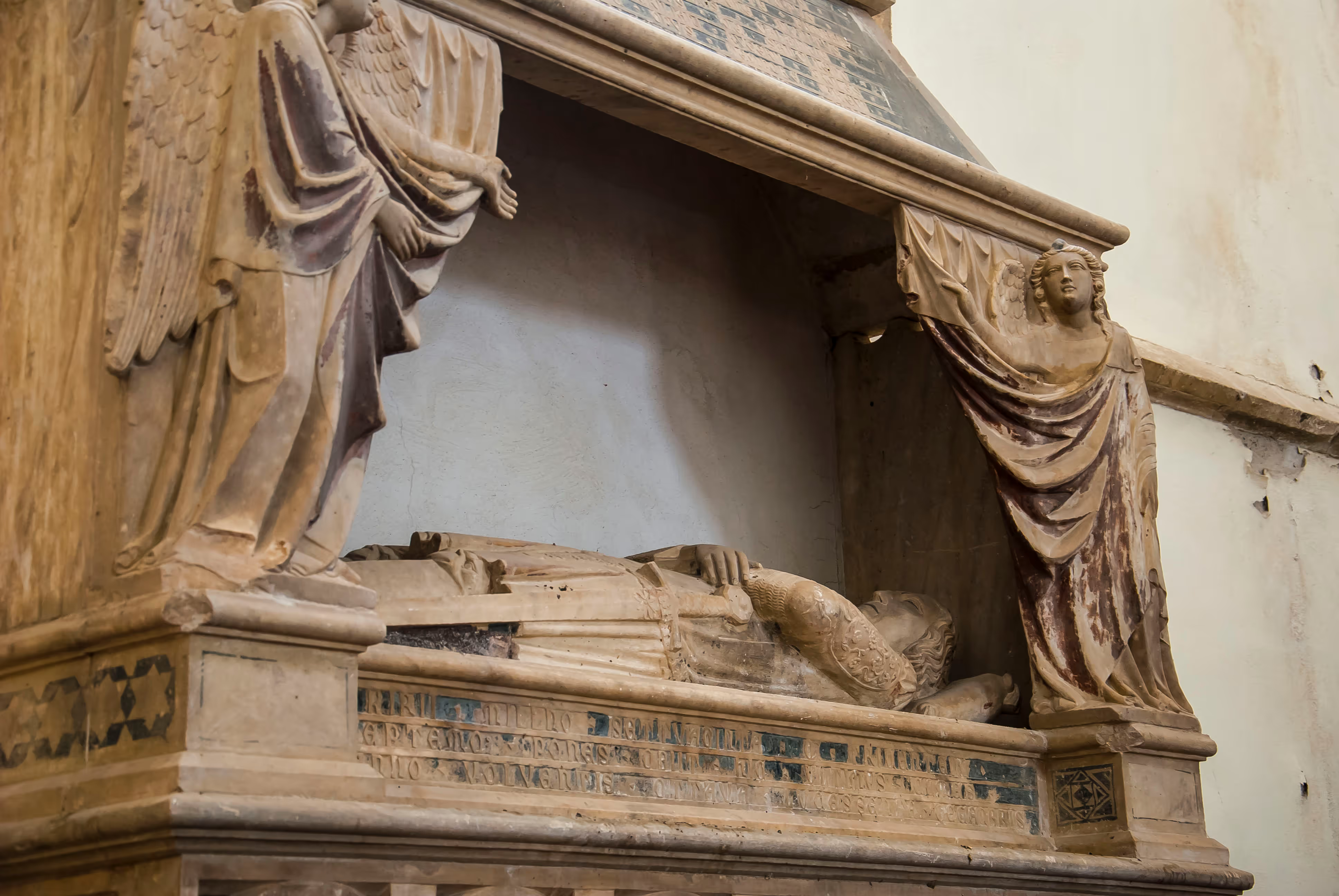
The village where the Riviera dei Cedri ends: a hilltop old centre with the castle of the Sanseverino of Bisignano and the peace olive tree of 1918, the 13th-century church of Santa Maria della Neve and, by the sea along the SS18, Sangineto Lido. One of the great feudal families of Angevin Calabria took its name from here.
-
Belvedere Marittimo
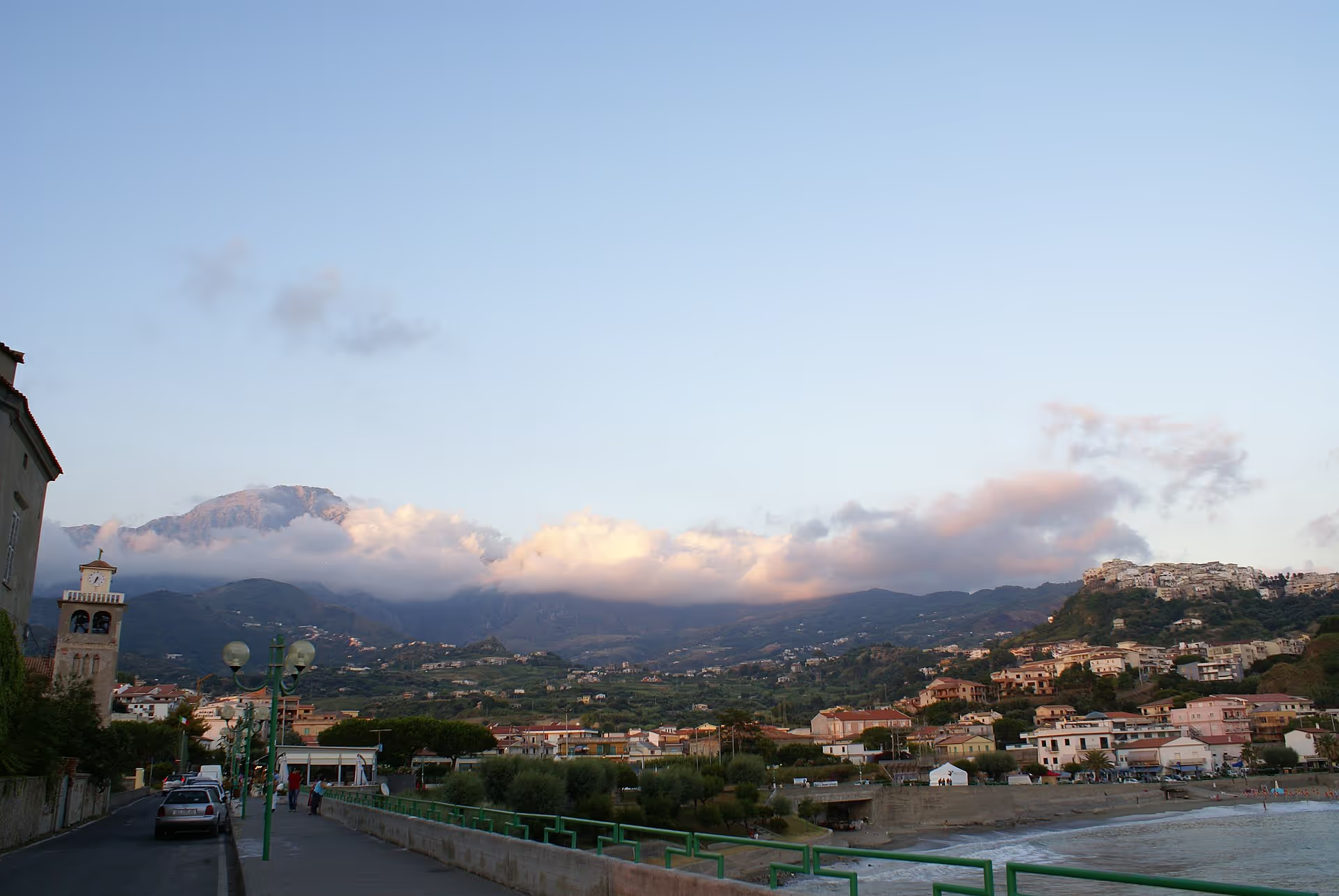
A medieval village 150 metres above the Tyrrhenian with the Sanseverino Renaissance castle, a wooden crucifix of 1711 and a chapel dated 1091; at its feet the Marina, the Bruttian tombs of Capo Tirone and the Note di Fuoco fireworks festival.
-
Cetraro
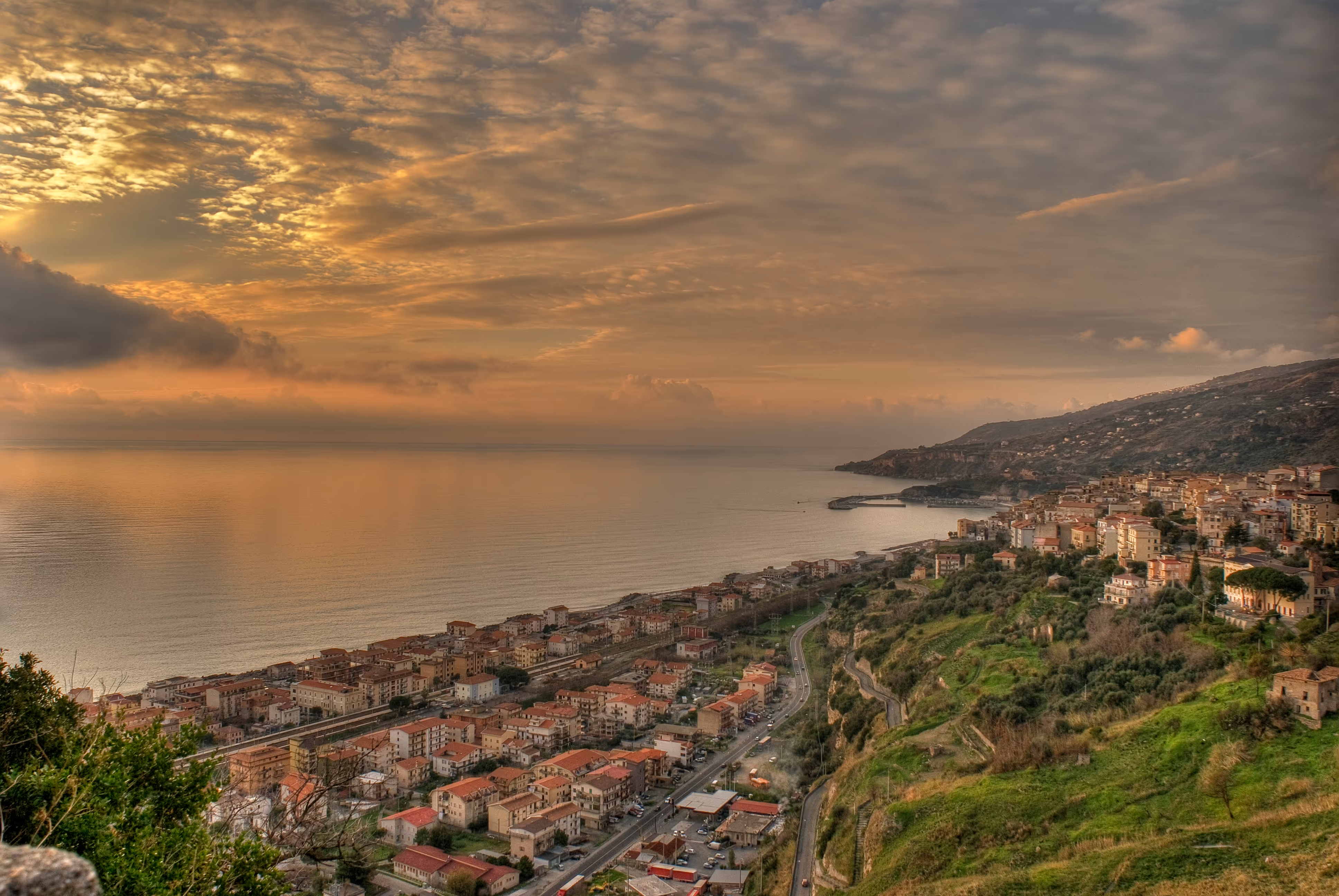
The abbot’s town: from 1086 to 1810 Cetraro was a fief of the Benedictines of Montecassino, remembered in the church of San Benedetto with its Baroque organ, the three gates of the old town and the sea procession of 11 July. Below, the Marina, Borgo San Marco and the marina.
-
Acquappesa
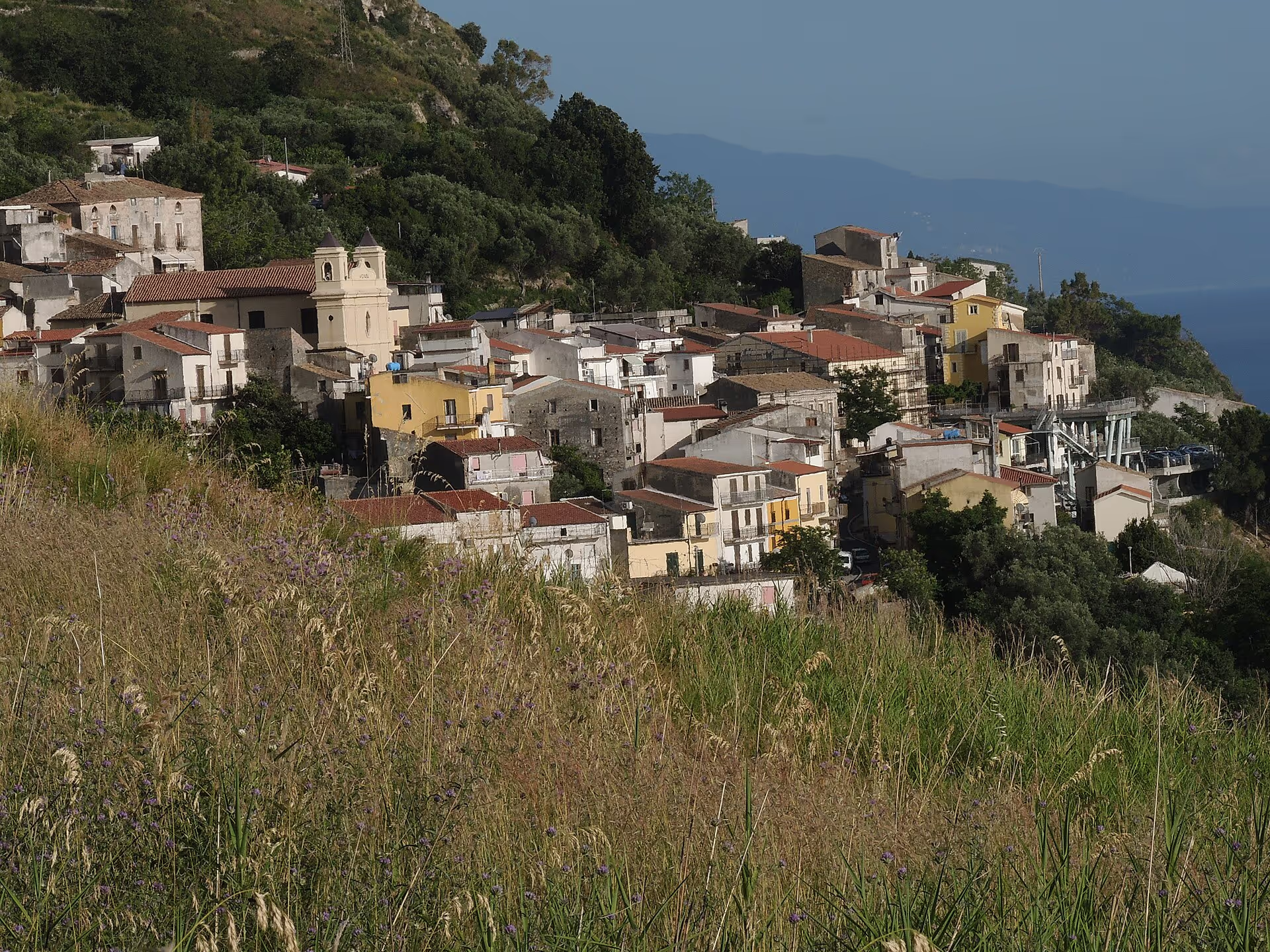
The town of the “hanging water”: six kilometres of coast between the Fiumicello and the Bagni river, a village its people call U Casàle, the woods of Monte Pistuolo and the Terme Luigiane, with sulphurous springs known since antiquity and five Giro d’Italia stage finishes.
Itineraries through here
-
 2 daysSea & beaches
Sea & beaches
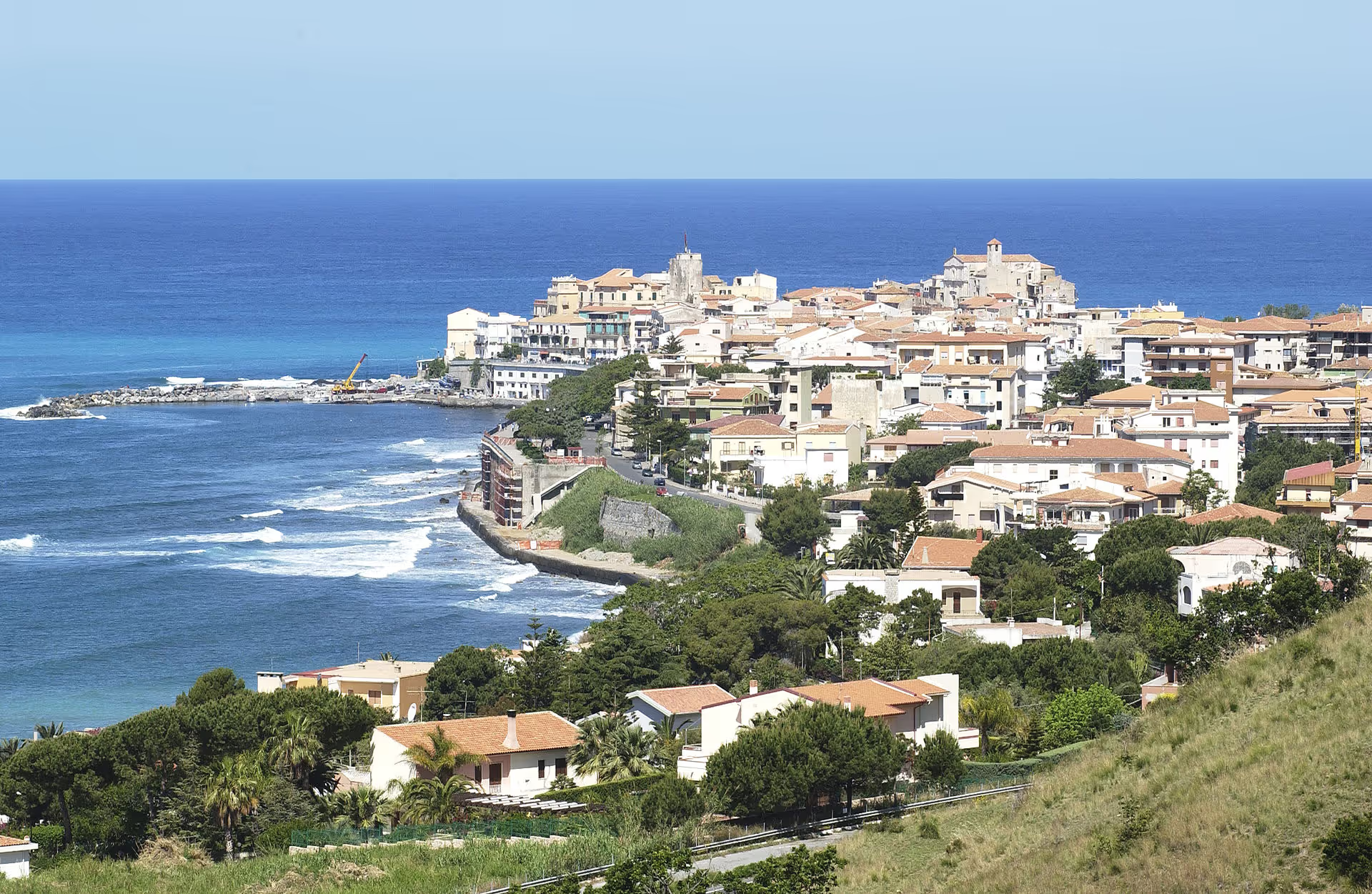
Two days among rock arches, islands and lidos of the Cosentino Tyrrhenian coast.
4 stops4 townsJune–SeptemberSee the stops -
 3 daysSea & beaches
Three days by the sea
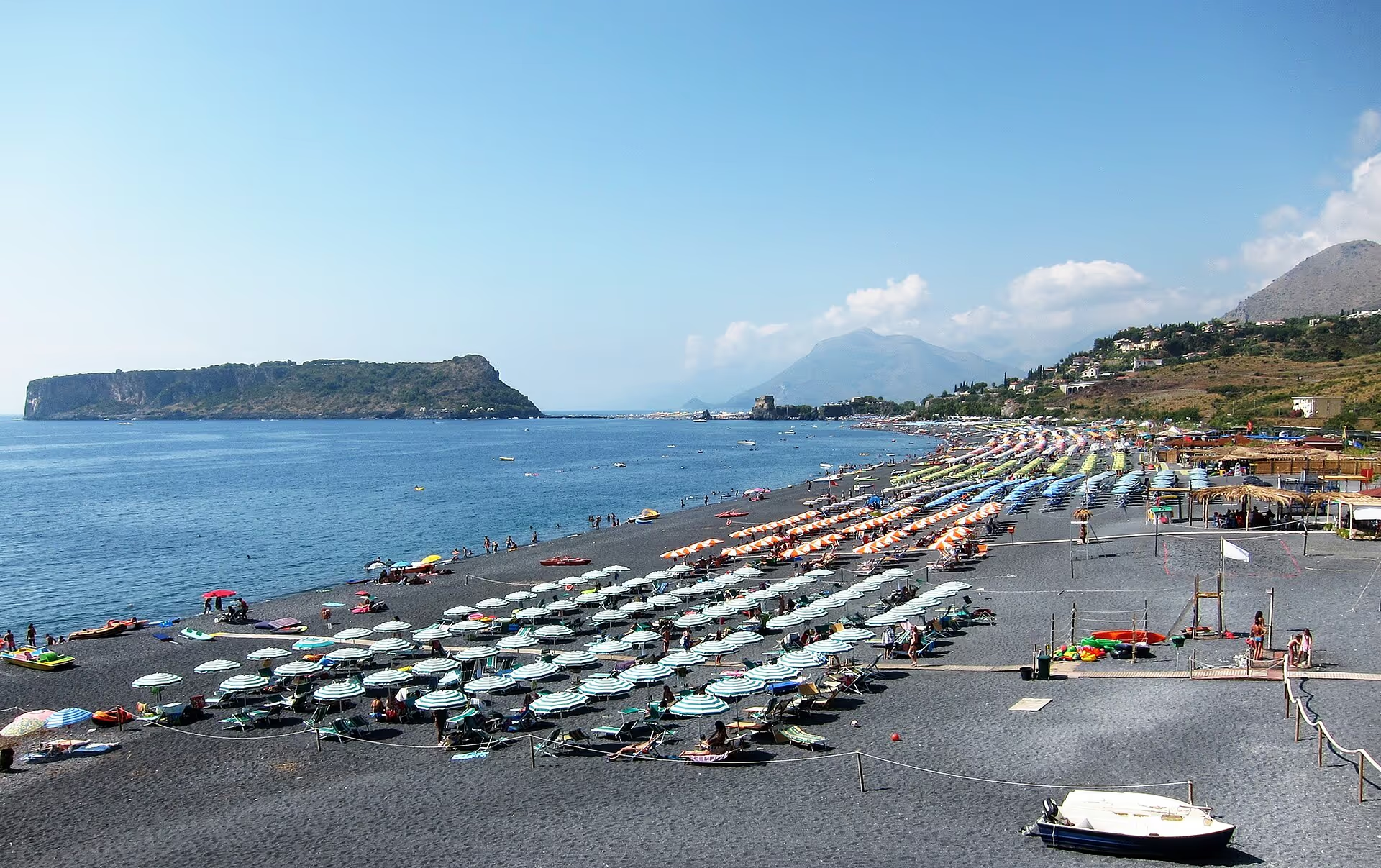
Three days along the Tyrrhenian coast: islands, rock arches and beaches from north to south.
6 stops5 townsJune–SeptemberSee the stops -
 4 daysSea & beaches
Four days on the Tyrrhenian coast
Four days devoted to the sea, from San Nicola Arcella to Cetraro: arches, islands, beaches and marina.
8 stops6 townsJune–SeptemberSee the stops
Where to stay
- B&B Santa MariaGuest house · Bonifati
- Palazzo Del CapoHotel · Bonifati
- Sol PalaceHotel · Bonifati
Indicative information from OpenStreetMap. Check availability and reviews on the external platforms.
Do you run a local business?
Update the listing or discover how to give your business more visibility.
Join the guide for freeHow to get to Bonifati
- Reference railway station
- Capo Bonifati
- about 4 km as the crow flies from the centre
- Train times (Trenitalia) ↗ Guide: by train
- Nearest airport
- Lamezia Terme International Airport (SUF)
- about 81 km as the crow flies from the centre
- Airport website ↗ Guide: by plane
- By car: A2 “del Mediterraneo” motorway
-
From the north · A2 Lagonegro north SS585 Fondo Valle del Noce → SS18 Tyrrhenian coastal road heading south
From the south · A2 Falerna SS18 Tyrrhenian coastal road heading north along the coast
- Driving directions (Google Maps) ↗ Guide: by car
Straight-line distances computed from verified coordinates: the road route is longer. Check times and connections on the operators’ websites.
Frequently asked questions
- Bonifati’s coastal hamlet, 23 metres above the sea along the SS18, which grew with seaside tourism; it includes the districts of Paneduro (Bonifati Lido), Santa Maria and Telegrafo and is identified with the ancient Greek colony of Fella.
- According to a folk tale, from “Bene facite!”, the Latin exclamation of a merchant to some shepherds; in Calabrian the town is called Bunìfati.
- The ruins of the fortress attributed to the Normans and dated to the 13th century, destroyed by the Angevins in the second half of the 15th century; in 1270 Charles I of Anjou had given the fief to Gismondo Palmieri.
- The Rosary sanctuary with the crucifix attributed to Umile da Petralia, the Convent of San Francesco di Paola (1518–1520), the Church of the Calvario with Dirk Hendricksz’s painting and Giandomenico Mazzolo’s Madonna, and the Baroque Annunziata.
- The Torre del Capo (12th century), the Torre Parise (15th century) and the Torre di Fella (16th century); the Torre del Telegrafo has been destroyed. In the village stands the Torre di Porta Malvitana.
- Santa Maria Maddalena, the patron saint, on 22 July; the Madonna del Rosario on the first Sunday of October; San Francesco di Paola at Cittadella del Capo on the third Sunday of August.
- The reference station is Capo Bonifati, on the Tyrrhenian railway line, about 4 km as the crow flies from the centre of Bonifati. Times and connections on the Trenitalia website.
- The nearest airport is Lamezia Terme International Airport (SUF), about 81 km as the crow flies; from there you continue by train from Lamezia Terme Centrale along the Tyrrhenian line, or by car on the A2 motorway.
What is Cittadella del Capo?
Where does the name Bonifati come from?
What remains of Castel Bonifati?
Which churches are worth seeing in Bonifati?
Which towers are there in Bonifati?
When are Bonifati’s feasts?
Which is the nearest railway station to Bonifati?
Which is the nearest airport to Bonifati?
Discover locally
Live, up-to-date results with real reviews, on external platforms. We don’t hand-pick individual businesses we can’t verify.