Upper Tyrrhenian Cosentino · Riviera dei Cedri
Cetraro
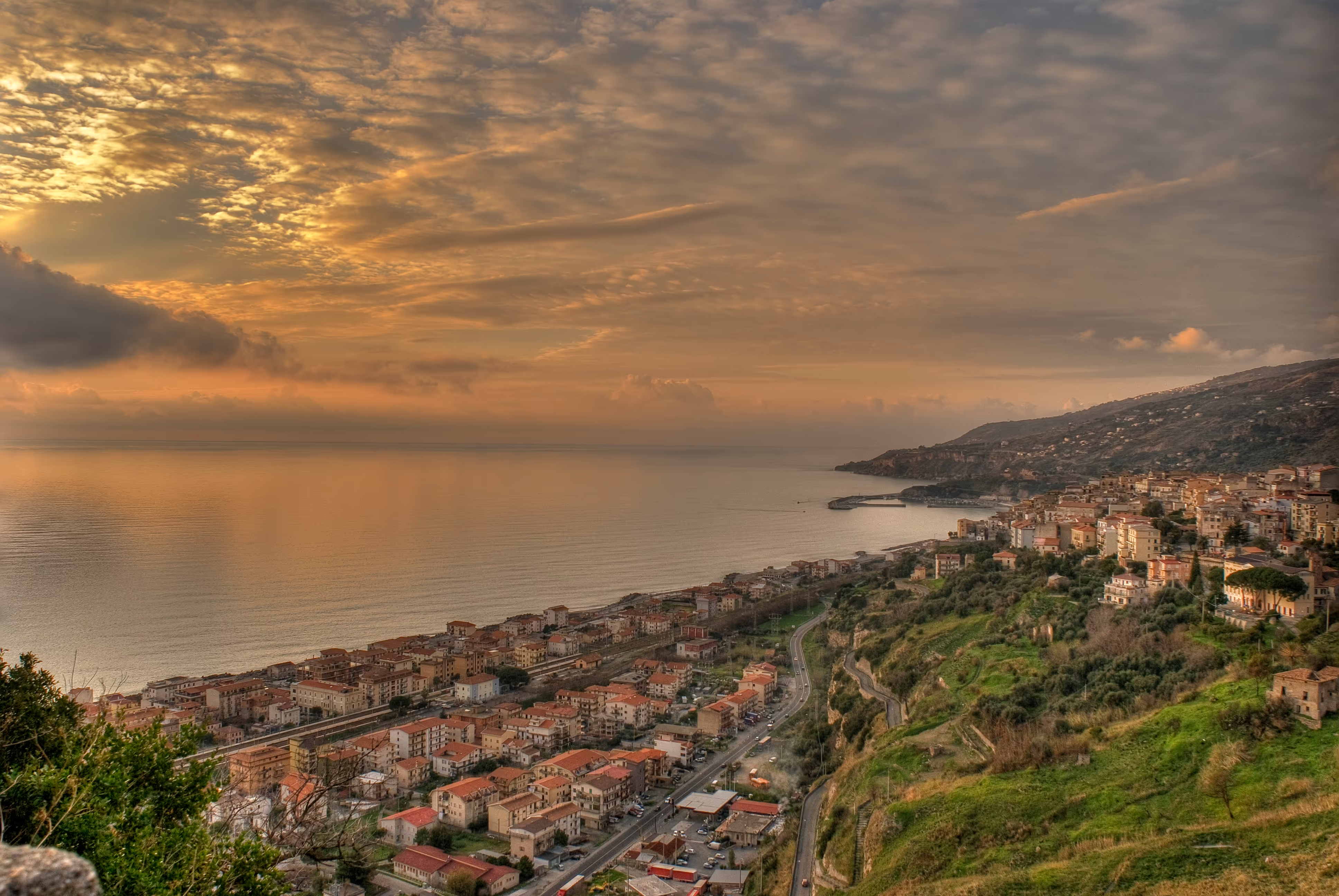
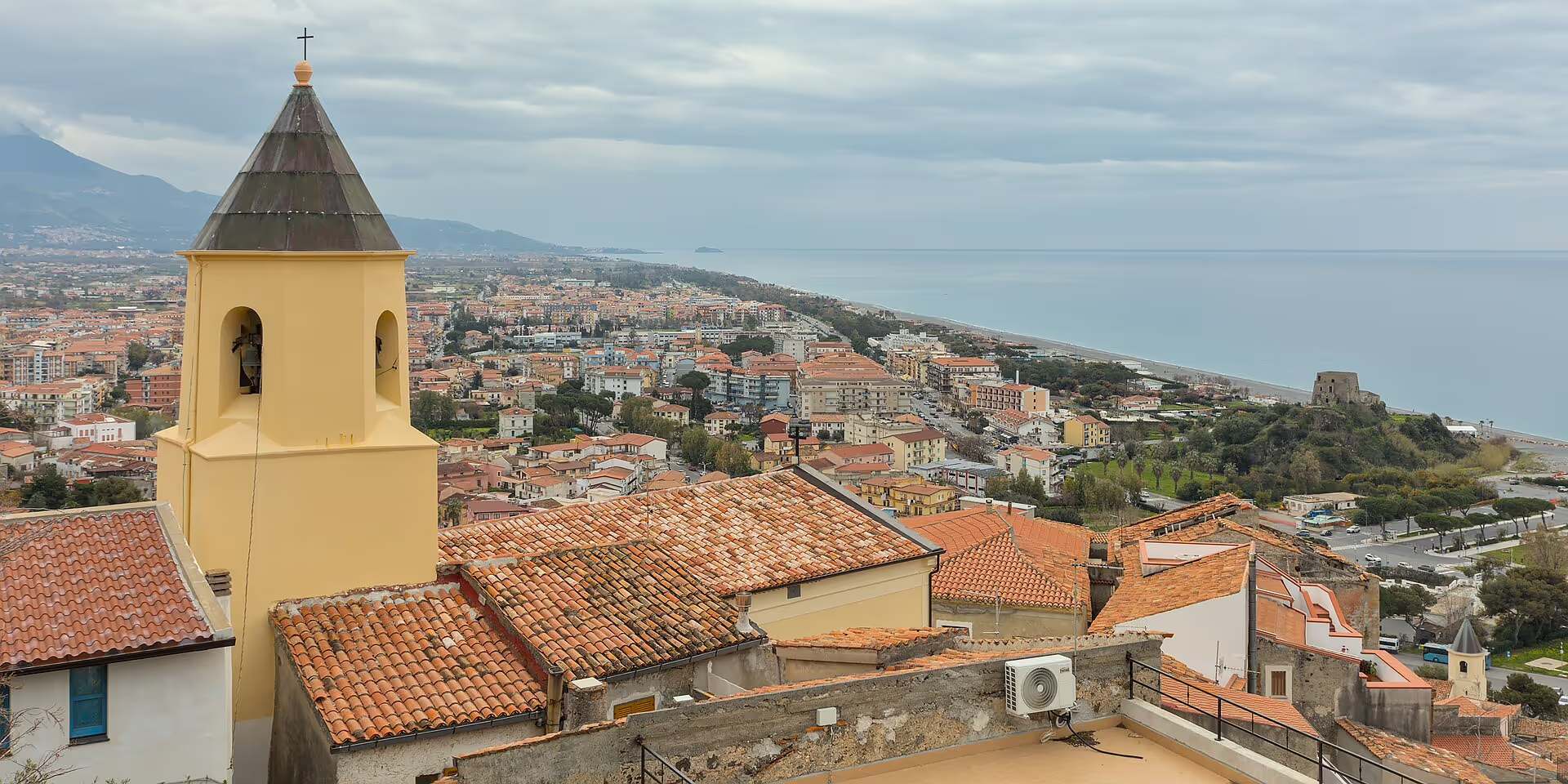
The abbot’s town: from 1086 to 1810 Cetraro was a fief of the Benedictines of Montecassino, remembered in the church of San Benedetto with its Baroque organ, the three gates of the old town and the sea procession of 11 July. Below, the Marina, Borgo San Marco and the marina.
Cetraro is a town of about 9,100 inhabitants in the province of Cosenza, on the southern stretch of the Upper Tyrrhenian Cosentino coast, between Bonifati and Acquappesa. The name most likely comes from the citron, the fruit that christened the whole Riviera dei Cedri and is still grown here. For more than seven centuries the town had no baron but an abbot: the abbot of Montecassino, who ruled it from 1086 to 1810 and left a crozier beside the citron tree in the municipal coat of arms. Today Cetraro lives on two levels, the Paese on the hill and the Marina with its yacht harbour, joined every summer by the sea procession of Saint Benedict.
Geography
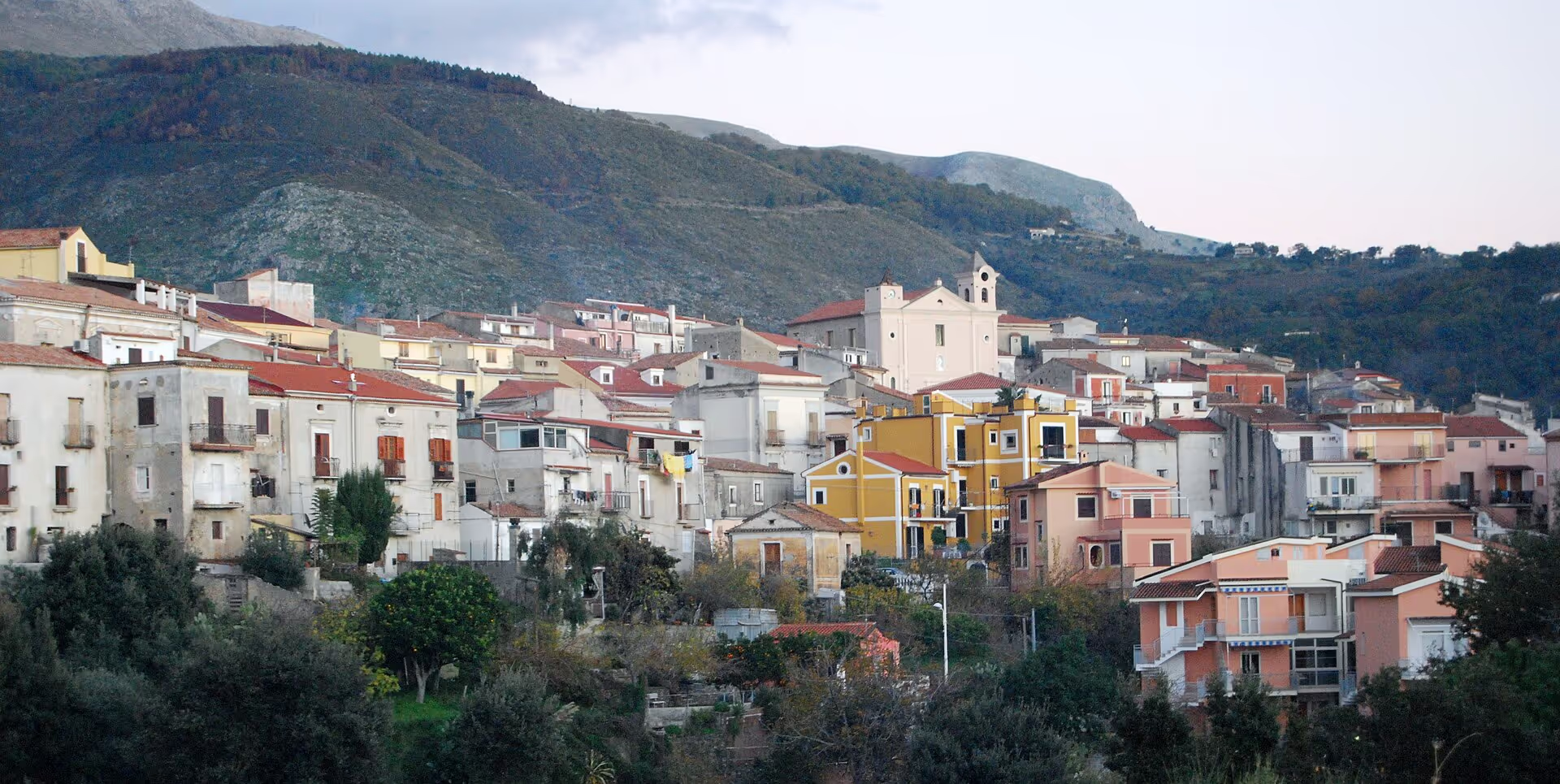
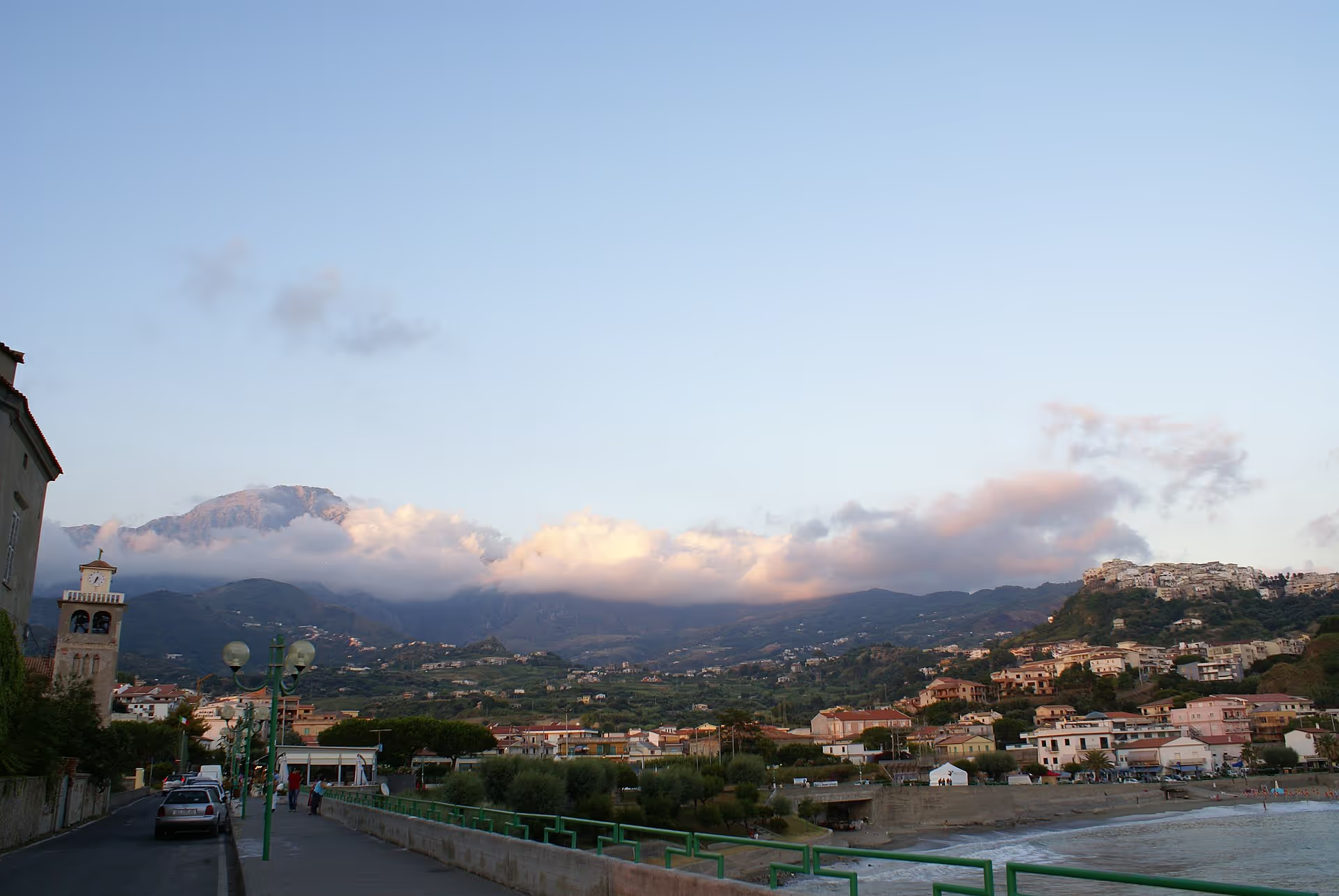
The town is made of two main cores. Cetraro Paese perches 120 metres above the sea on the southern side of the valley of the Aron stream, the watercourse that makes the town a little windier than the other centres on the coast. Two kilometres below, at 10 metres, stretches Cetraro Marina, which grew after the war around the port. Among the many districts scattered over the territory stand out Borgo San Marco, the beach hamlet founded in 1910, Santa Maria di Mare and Lampetia, towards the headland of Capofella; above the coast rises Monte Serra, a place of pilgrimage to the sanctuary of the Madonna. The climate is that of the Mediterranean coast: very mild winters and hot summers.
History
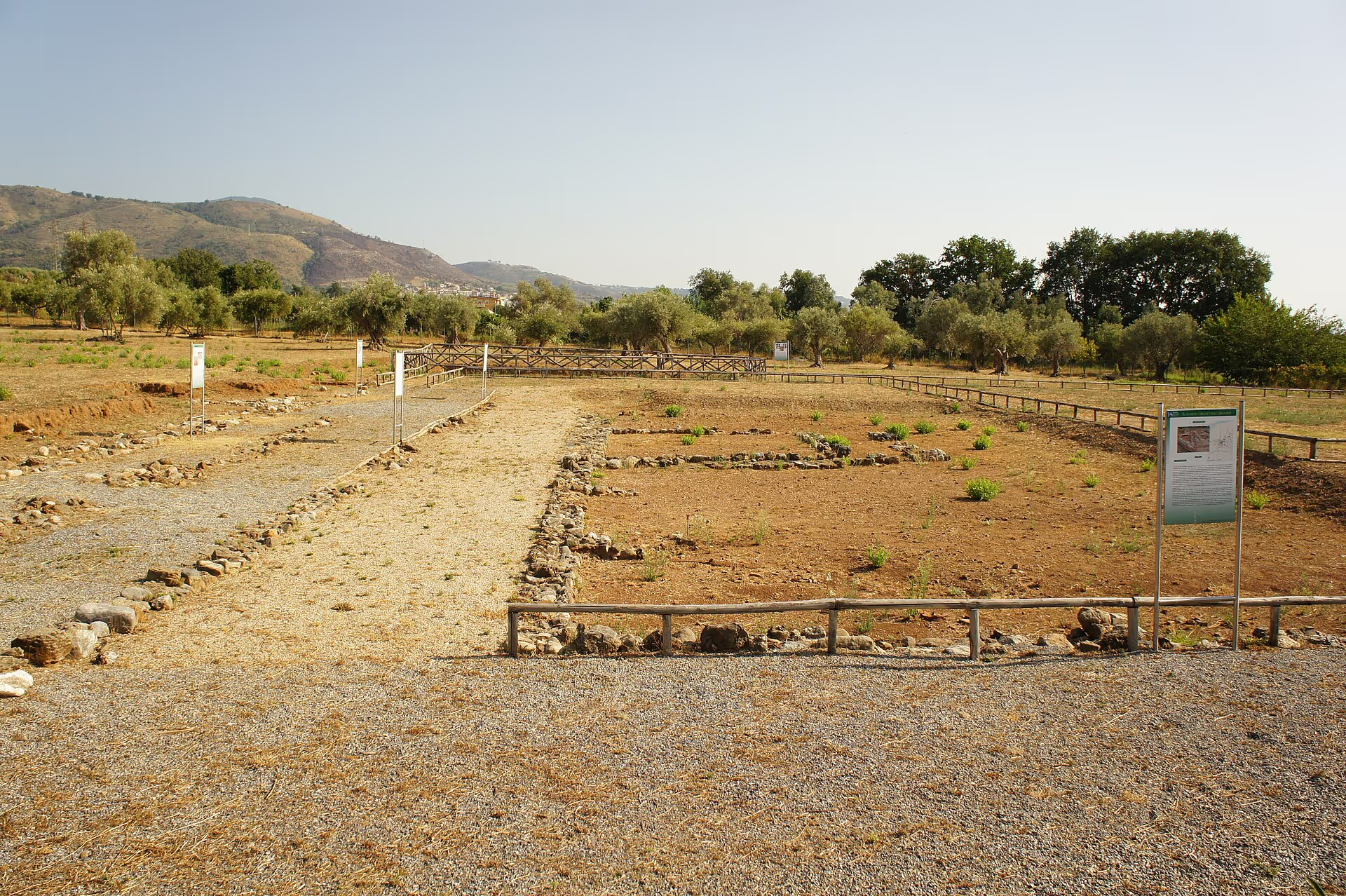
The origin of the name has been debated for centuries. The soundest explanation points to the Latin citrus and the Greek kitron, the citrons and lemons of the countryside; other readings tie it to the Aron stream (“Citra Aron”, this side of the Aron) or to the Jewish merchants who, sailing to Santa Maria del Cedro to buy citrons for their feast, would have called the headland Kata-rion, the destination beyond the cape. In the 17th century the historian Giovanni Fiore da Cropani identified Cetraro with the Bruttian city of Clampetia, but the Tabula Peutingeriana places that city further south, between Fiumefreddo Bruzio and San Lucido.
Documented history begins with the Normans. Duchess Sichelgaita, second wife of Robert Guiscard, gave Cetraro to Abbot Desiderius of Montecassino in return for his good offices at Melfi, when the Normans made peace with Pope Leo IX. From 1086 to 1810 the town was ruled by the Benedictines of Montecassino, who set their temporal seat in the Palazzo Badiale, “a curti”, and their spiritual seat in the church of San Benedetto. In 1288 Cetraro surrendered, together with Paola, Bovalino and Fiumefreddo, to James II of Aragon, travelling from Sicily with Roger of Lauria; in 1534 the corsair Barbarossa burned seven Spanish galleons under construction in the port. The three gates of the old town, di Mare, di Basso and di Sopra, recall the fortified town of those centuries.
In 1943 Cetraro suffered two Allied bombings, on 27 August and 25 October, aimed at the railway and with limited damage; on 11 September it was liberated by the Anglo-American troops of Operation Baytown. After the war the Faini textile factory, which made silk swimsuits, drew workers from neighbouring towns and made the Marina grow, before closing with the arrival of synthetic fabrics. On 21 June 1980 the ’Ndrangheta murdered Giovanni Losardo, town councillor and anti-mafia activist: a civic memory the town keeps. Cetraro has been twinned with Venosa and Acri since 2010 and with Vercelli since 2023.
What to see
The mother church of San Benedetto Abate, in via Roma a step from piazza del Popolo, is the church the Cassinese monks wanted “at the top of the slope” right after the donation: it is first mentioned in a document of 1104 and was long a priory with monks at prayer day and night. Its present look is 18th-century: enlarged between 1750 and 1779, when the marble statue of the saint was set over the portal, it has a Latin-cross plan with three naves. Beside it rises the tower already called “lo campanaro” in 1540, the only survivor of the town’s medieval towers. Inside are a wooden choir of 1822, Francesco Basile’s canvas of the Madonna with the souls in Purgatory (1793), the fresco of the Last Judgement on the vault and above all the 18th-century organ, restored in 1990 and counted among the finest examples of Neapolitan organ-building in Calabria.
In the old town you meet the Chiesa del Ritiro, that is Santa Maria delle Grazie, of 1454, Renaissance in style, with a marble altarpiece of the same period and a 16th-century tuff portal, sacked several times by corsairs and restored in the 19th century; the Church of San Nicola, perhaps of the mid-11th century; and the Church of San Pietro Apostolo, born as the Capuchin church: the friary was founded in 1618 and completed in 1634, had as its guardian in 1710 Friar Angelo d’Acri, later beatified, who in 1737 gave the group of the Madonna Addolorata, and keeps a 17th-century polyptych on the high altar. Among the little squares of the old town, “a giorgia”, the old market place, and “miezzu a curta”, in the heart of the old village, people still drink at the fountain of the Statua dei Sette Mari.
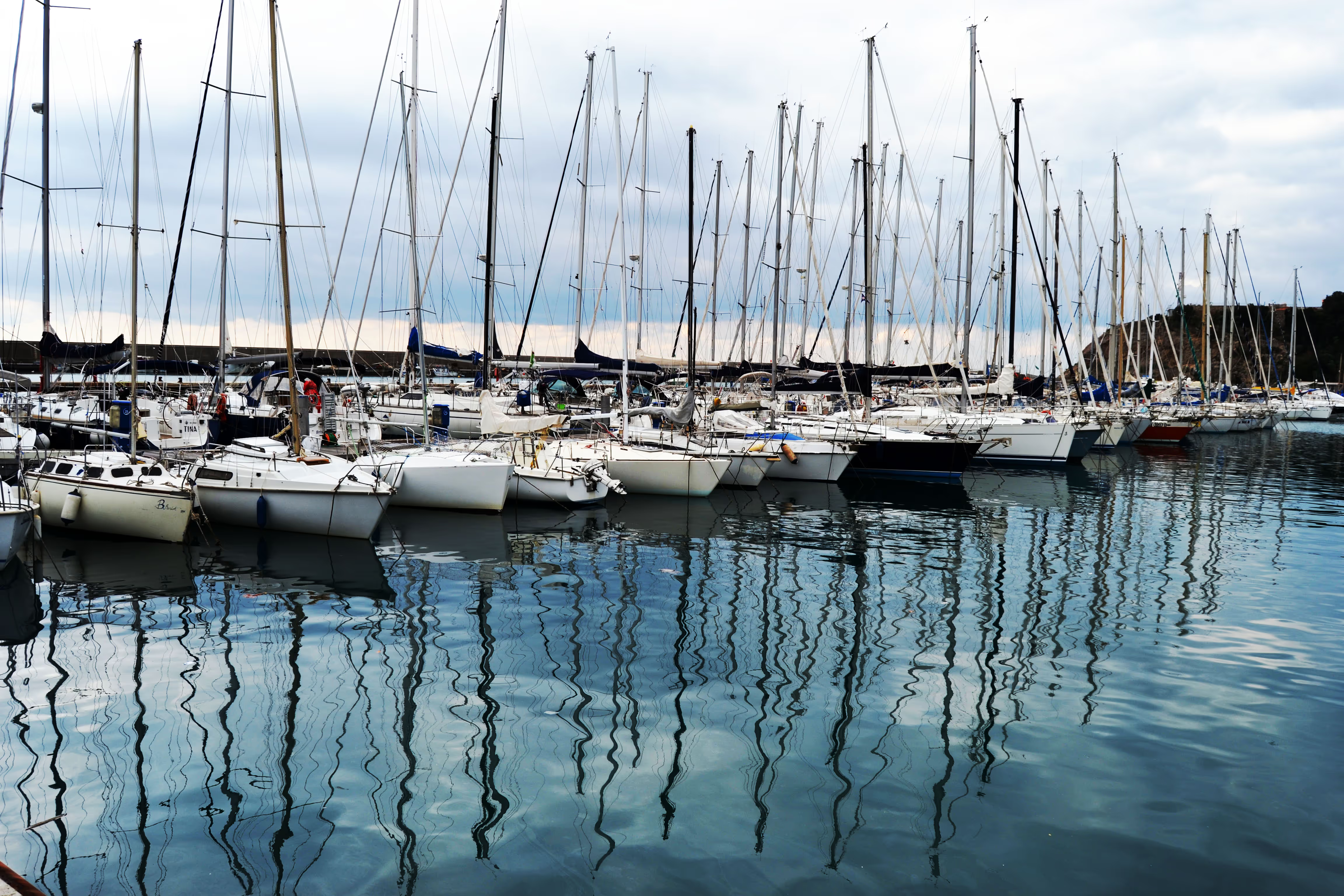
At the Marina the port, with its breakwater of about 450 metres, has hosted since 2009 the yacht harbour Marina di San Benedetto, 500 berths on floating pontoons. To the north, Borgo San Marco is the beach hamlet founded in 1910 by Venetian settlers after the earthquake of 1908, today lined with lidos between the Mulini and Santa Maria di Mare; behind it, Monte Serra with the sanctuary of the Madonna, the goal of a walk and of yearly pilgrimages.
Saint Benedict goes to sea
Every 11 July the statue of Saint Benedict leaves the mother church and comes down to the Marina: it is put aboard the largest fishing boat and carried in procession along the coast, followed by boats, trawlers and dinghies, from the port to Borgo San Marco and Lampetia, beyond the headland of Capofella, and back. Then the saint climbs back to the town, to his church, for Mass. It is the rite that holds the two Cetraros together, the hill one and the sea one, and tells better than any document of seven centuries of Benedictine abbots. Another tradition of the mother church is the nativity scene, which in the late 1800s, according to Giovanni De Giacomo, filled almost a quarter of the nave with herds, a river, a butcher’s and a cavalry of figurines.
Flavours of Cetraro
The land around Borgo San Marco grows the vegetables sold at the local market: tomatoes, pumpkins, the oblong hot peppers the people of Cetraro call vajanelle and the even hotter chillies known as piparielli. Above all remains the citron, the fruit from which the town probably takes its name and which ties it to the rest of the Riviera dei Cedri; today’s economy rests on summer tourism and farming.
Getting there
Cetraro lies on the SS18 Tirrena Inferiore state road and has its own station on the Battipaglia–Reggio Calabria Tyrrhenian railway, at the Marina. By car from the A2 “del Mediterraneo” motorway: from the north, exit Lagonegro nord, then SS585 and SS18 southwards; from the south, exit Falerna and SS18 northwards. Those arriving by boat find the Marina di San Benedetto yacht harbour in the port. The nearest airport is Lamezia Terme.
Places
What to see around here.
- Beach
Borgo San Marco and Monte Serra
The beach hamlet founded in 1910 by Venetian settlers after the earthquake of 1908: lidos between the Mulini and Santa Maria di Mare, the garden of the vajanelle peppers and, behind, Monte Serra with the sanctuary of the Madonna.
- Old town
Old town of Cetraro
The Paese 120 metres above the Aron valley: the three gates of the fortified town, the little squares “a giorgia” and “miezzu a curta”, the Chiesa del Ritiro of 1454, San Nicola, the Capuchins and the Sette Mari fountain.
- Culture
Church of San Benedetto Abate
The mother church founded by the monks of Montecassino, recorded from 1104 and remade in Baroque forms in the 18th century: medieval tower, wooden choir and one of the finest organs in Calabria.
-
 Viewpoint
 Port of Cetraro
The port of the Marina, with its 450-metre breakwater and the Marina di San Benedetto yacht harbour: from here, on 11 July, the patron saint’s sea procession sets out.
Nearby towns
Keep exploring the Upper Tyrrhenian Cosentino coast from here.
-
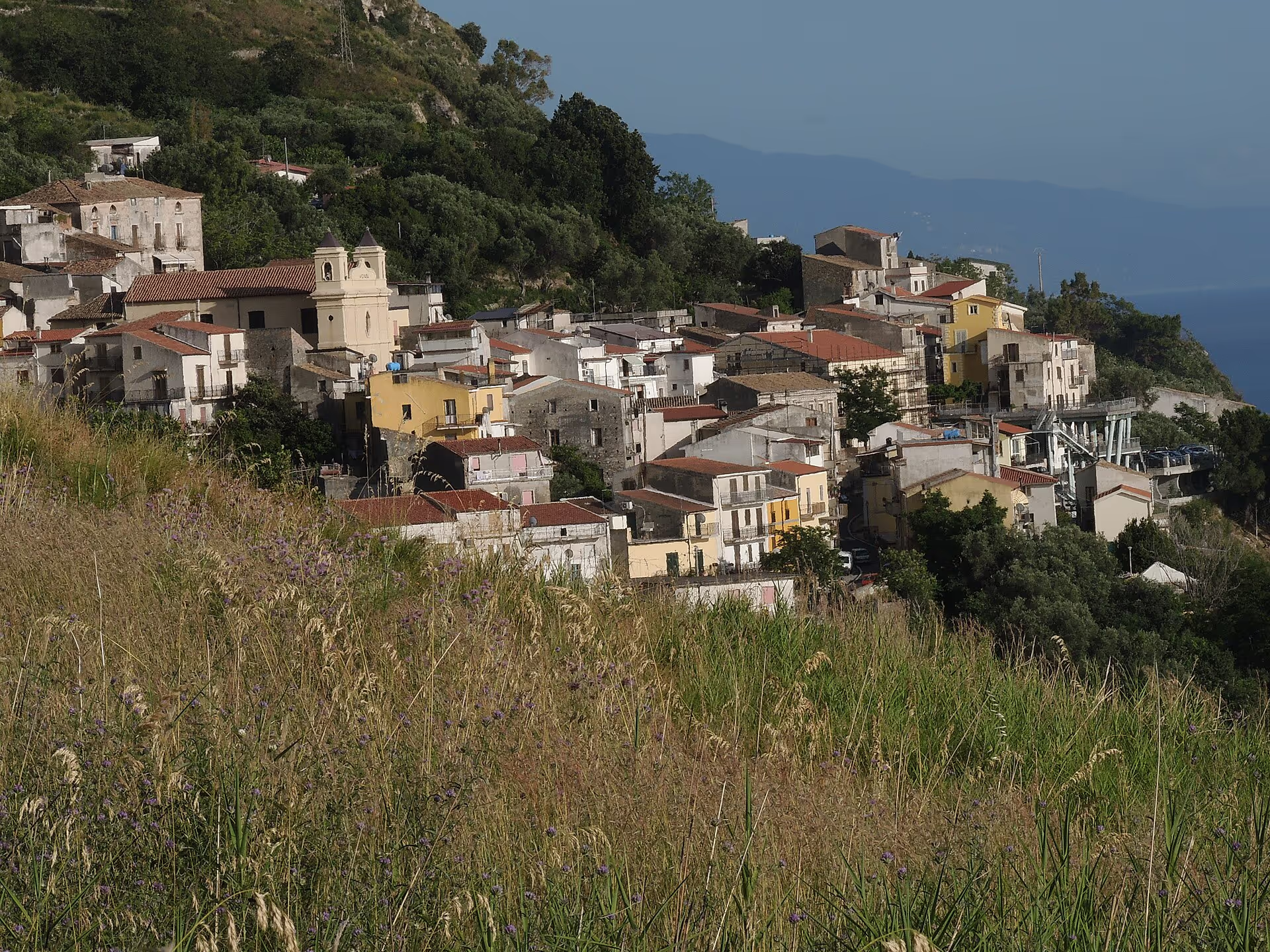
Acquappesa
The town of the “hanging water”: six kilometres of coast between the Fiumicello and the Bagni river, a village its people call U Casàle, the woods of Monte Pistuolo and the Terme Luigiane, with sulphurous springs known since antiquity and five Giro d’Italia stage finishes.
-
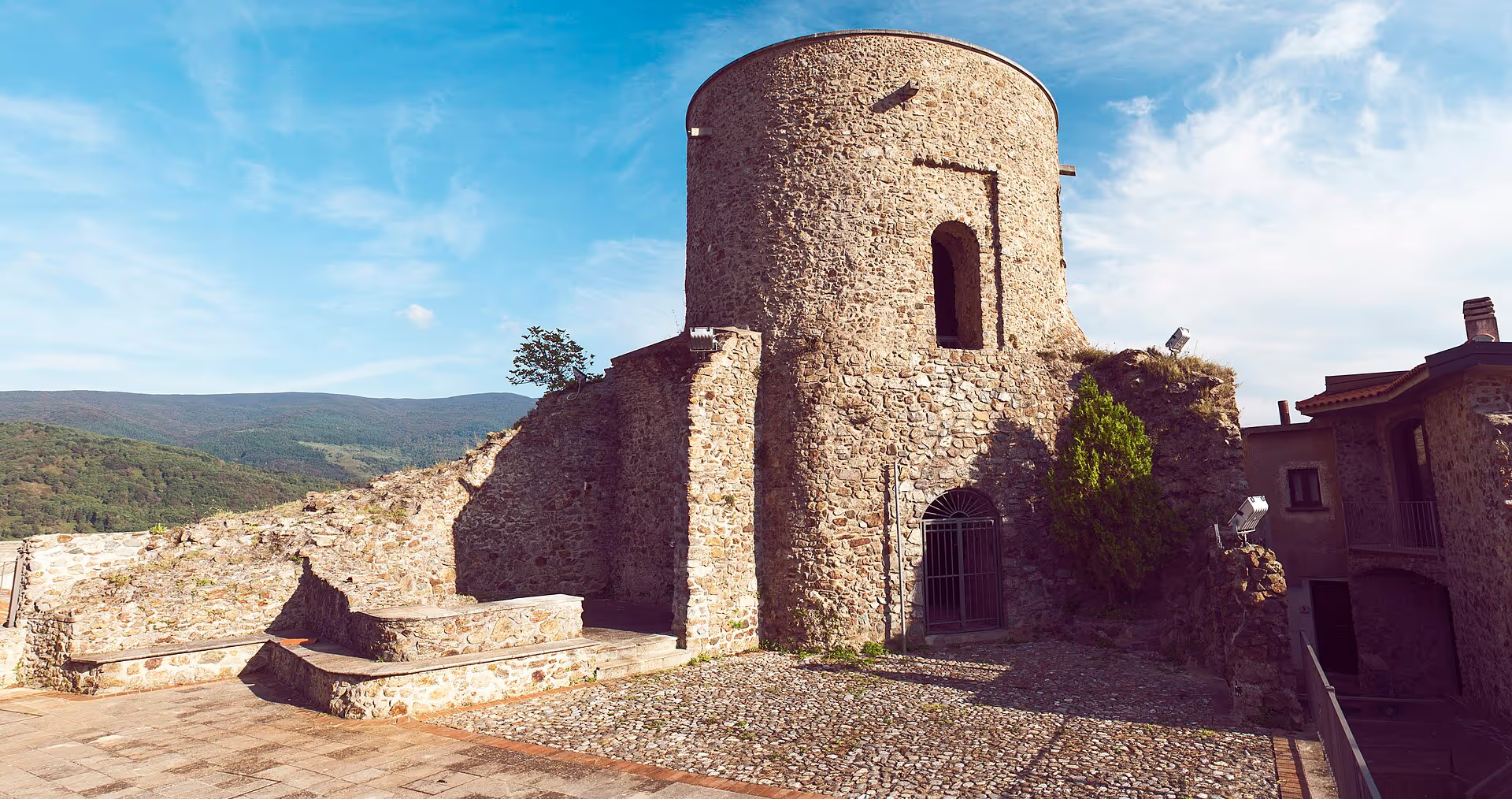
Guardia Piemontese
The Occitan island of the South: the village 515 metres above the Tyrrhenian founded by Waldensians from the Piedmont valleys, where Guardiolo is still spoken and where the Porta del Sangue, the peephole doors and the Val Pellice rock recall the night of 5 June 1561.
-
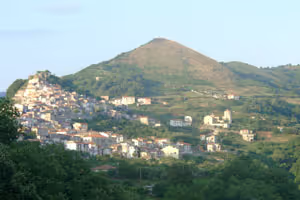
Bonifati
Two souls on the same coast: the village 425 metres up on the Coastal Range, with the ruins of Castel Bonifati, five churches rich in art and its historic palazzi, and Cittadella del Capo by the sea, ancient Fella, with the Capo and Fella towers from the 12th to the 16th century.
-
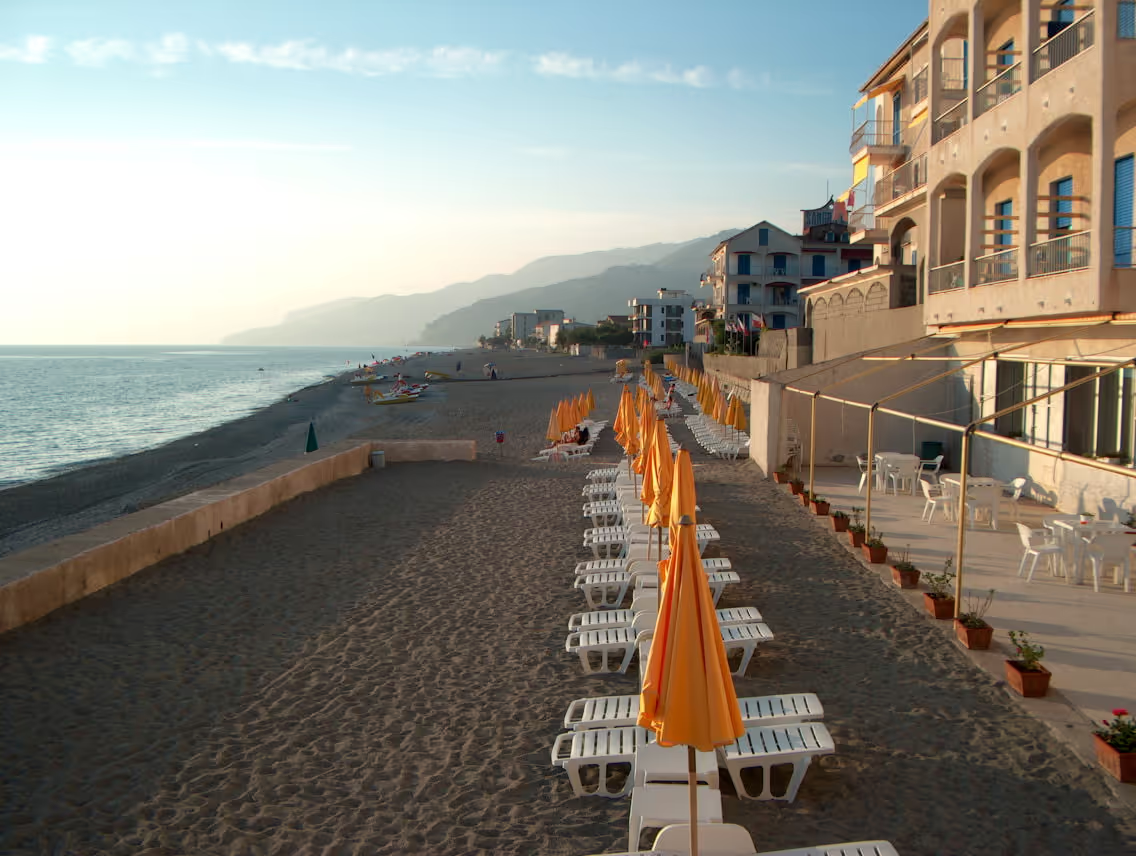
Fuscaldo
The town of stonemasons and Spinelli marquises: a village 350 metres up on the slopes of the Coastal Range, with the mother church consecrated in 1166, the twelve-column bell tower of the Immacolata and a fief that for three centuries also ruled Paola and Guardia. Below, the Marina on the Tyrrhenian.
-
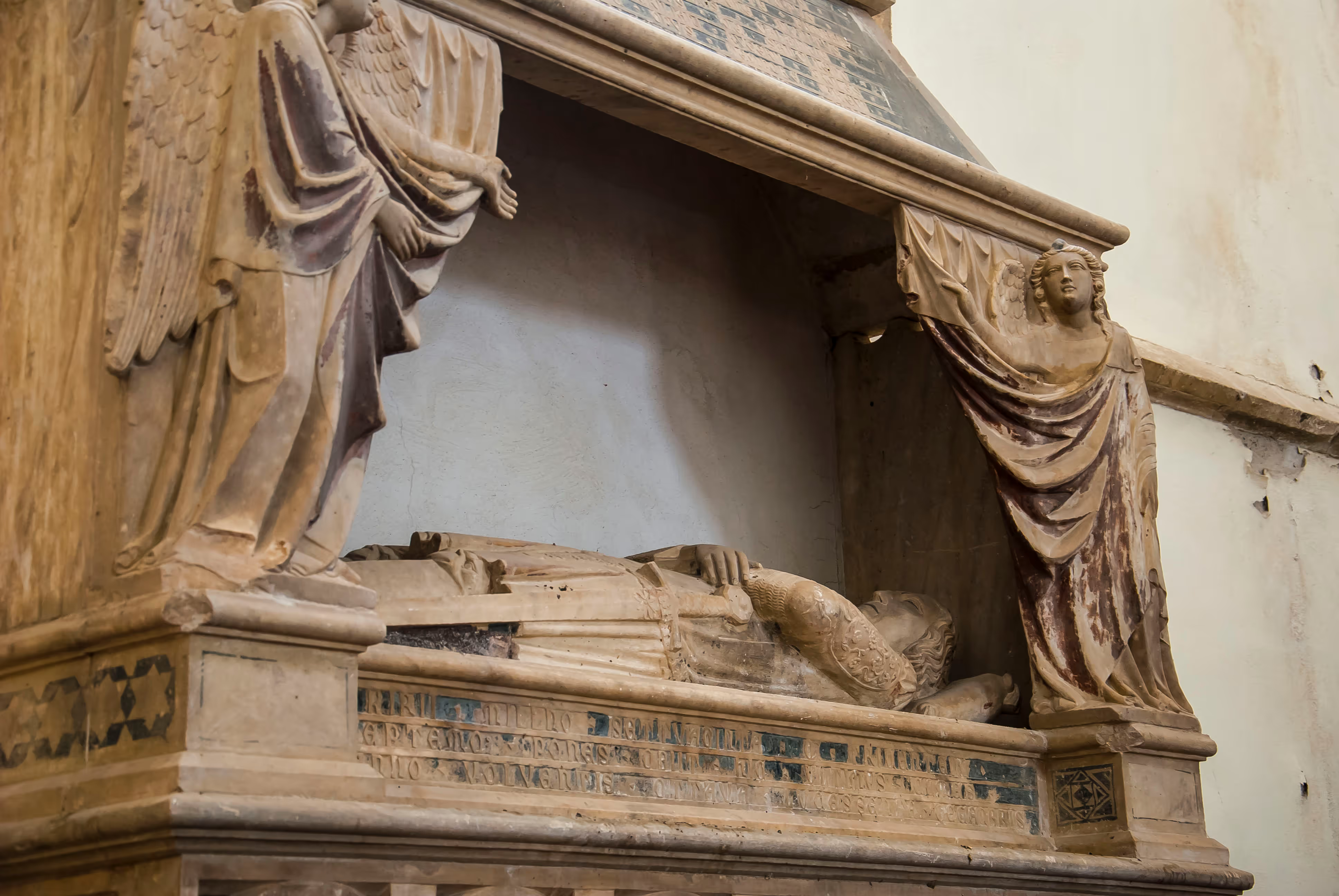
Sangineto
The village where the Riviera dei Cedri ends: a hilltop old centre with the castle of the Sanseverino of Bisignano and the peace olive tree of 1918, the 13th-century church of Santa Maria della Neve and, by the sea along the SS18, Sangineto Lido. One of the great feudal families of Angevin Calabria took its name from here.
-
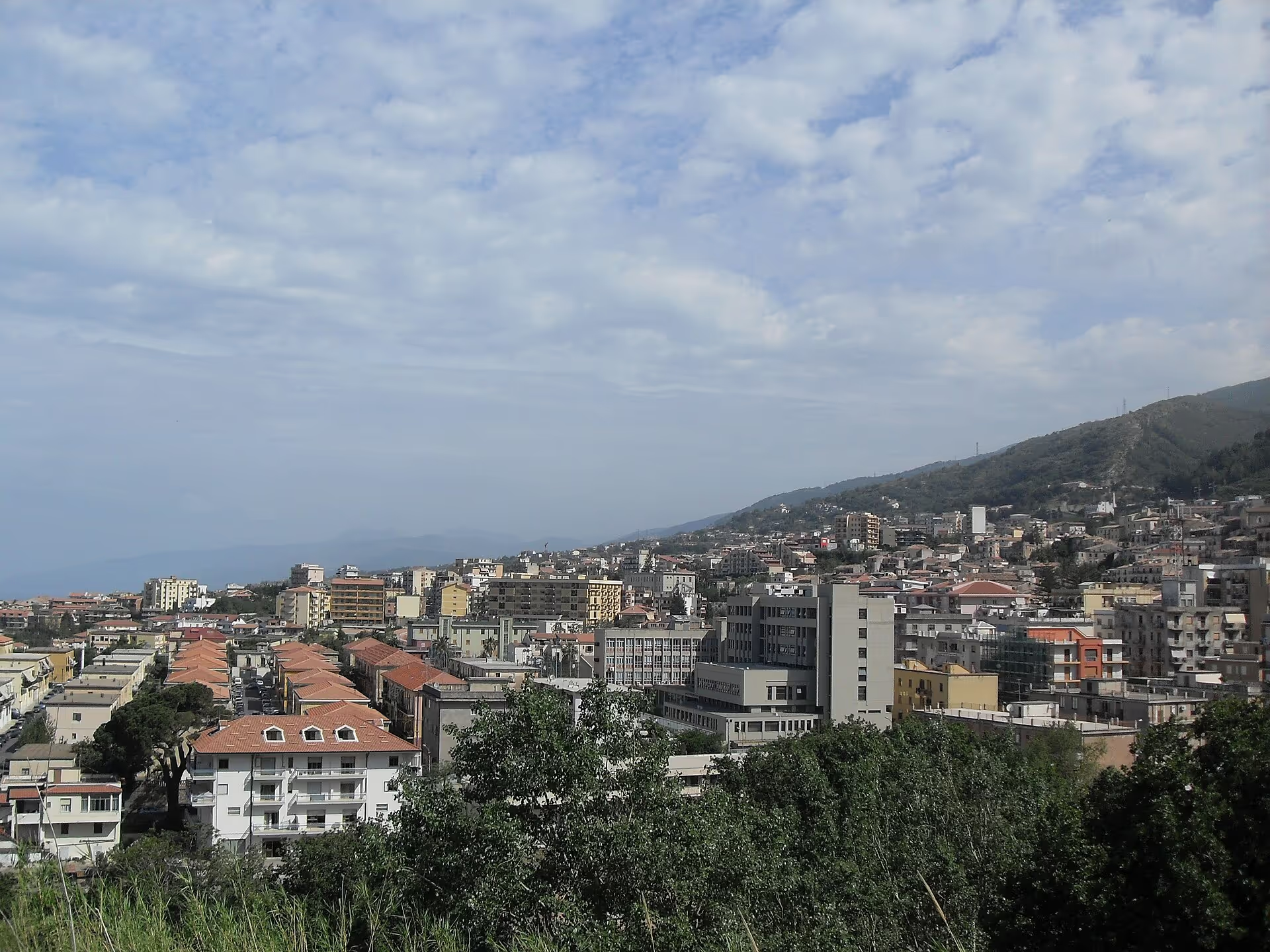
Paola
The town of Saint Francis, patron of Calabria: the sanctuary in the Isca valley, the underground church of Sotterra with its Byzantine frescoes, the Seven Channels fountain and the Rocchetta quarter, at the southern end of the Upper Tyrrhenian Cosentino coast.
Itineraries through here
-
 4 daysGrand tour
Grand Tour of the Riviera dei Cedri
Four days from north to south along the Upper Tyrrhenian Cosentino coast: islands, Norman towns, murals and sanctuaries.
11 stops8 townsMay–OctoberSee the stops - 2 daysWellness & spa
Wellness & spa
Two days among thermal waters, marina and towns of the Middle Tyrrhenian Cosentino area.
4 stops4 townsAll year roundSee the stops -
 4 daysSea & beaches
Four days on the Tyrrhenian coast
Four days devoted to the sea, from San Nicola Arcella to Cetraro: arches, islands, beaches and marina.
8 stops6 townsJune–SeptemberSee the stops -
 2 daysGrand tour
Flavours of the Riviera
Two days among citron, chilli pepper and harbour: the typical products of the Upper Tyrrhenian Cosentino coast.
4 stops3 townsAll year roundSee the stops -
 3 daysGrand tour
Flavours and traditions
Three days among citron, old towns and harbour: a journey through the flavours of the Upper Tyrrhenian Cosentino coast.
6 stops4 townsAll year roundSee the stops
Where to stay
- Borgo MarinaroGuest house · Cetraro
- Casa Vacanze Regina ElenaGuest house · Cetraro
- Centro Residenziale Colonia San BenedettoHotel · Cetraro
- Da AngeloHotel · Cetraro
- Dal tramonto all'albaApartment · Cetraro
- Grand Hotel San MicheleHotel · Cetraro
- La CarrubaHotel · Cetraro
- La CasettaGuest house · Cetraro
- La Fontana CentroGuest house · Cetraro
- La TerrazzaGuest house · Cetraro
- Lido dei PiniCampsite · Cetraro
- MarghaeritaGuest house · Cetraro
- MediterraneoGuest house · Cetraro
- Perla del TirrenoGuest house · Cetraro
- SagittariusGuest house · Cetraro
Indicative information from OpenStreetMap. Check availability and reviews on the external platforms.
Where to eat
- AgapeRestaurant · Cetraro
- Apnea ClubBar · Cetraro
- AzzurraCafé · Cetraro
- Bar CentraleBar · Cetraro
- BebiréBar · Cetraro
- Blu NotteBar · Cetraro
- Caffè San MarcoCafé · Cetraro
- CiaccoIce cream · Cetraro
- CornerCafé · Cetraro
- Crystal CafeCafé · Cetraro
- CumisàRestaurant · Cetraro
- Da MarcelloFast food · Cetraro
- EliteRestaurant · Cetraro
- EmilyCafé · Cetraro
- Fattoria BonellaIce cream · Cetraro
- I SaraceniRestaurant · Cetraro
- Il CaselloRestaurant · Cetraro
- Il CuboRestaurant · Cetraro
- Il FaroRestaurant · Cetraro
- Il Gusto giustoRestaurant · Cetraro
- Il LocaleRestaurant · Cetraro
- La Perla NeraCafé · Cetraro
- La SostaRestaurant · Cetraro
- La SpecialitàRestaurant · Cetraro
- LABBar · Cetraro
- Le Tre LuciRestaurant · Cetraro
- Linea 2Restaurant · Cetraro
- MonyCafé · Cetraro
- MuliniCafé · Cetraro
- MuliniRestaurant · Cetraro
- NettunoIce cream · Cetraro
- No Name YogurteriaIce cream · Cetraro
- Petit BarCafé · Cetraro
- Pizza&BeerFast food · Cetraro
- Portico 13Bar · Cetraro
- Q8 ShopCafé · Cetraro
- Sala MiramareRestaurant · Cetraro
- SestinCafé · Cetraro
- Spaghetteria Le LanterneRestaurant · Cetraro
- Voglia di PizzaRestaurant · Cetraro
Indicative information from OpenStreetMap. Check availability and reviews on the external platforms.
Beaches and beach clubs
- HemingwayBeach club · Cetraro
- La CapanninaBeach club · Cetraro
- Mari GiùBeach club · Cetraro
- Oasi delle SireneBeach club · Cetraro
- San MicheleBeach club · Cetraro
- SoqquadroBeach club · Cetraro
- SunsetBeach club · Cetraro
Indicative information from OpenStreetMap. Check availability and reviews on the external platforms.
Do you run a local business?
Update the listing or discover how to give your business more visibility.
Join the guide for freeHow to get to Cetraro
- Reference railway station
- Cetraro
- about 2 km as the crow flies from the centre
- Train times (Trenitalia) ↗ Guide: by train
- Nearest airport
- Lamezia Terme International Airport (SUF)
- about 71 km as the crow flies from the centre
- Airport website ↗ Guide: by plane
- By car: A2 “del Mediterraneo” motorway
-
From the north · A2 Lagonegro north SS585 Fondo Valle del Noce → SS18 Tyrrhenian coastal road heading south
From the south · A2 Falerna SS18 Tyrrhenian coastal road heading north along the coast
- Driving directions (Google Maps) ↗ Guide: by car
Straight-line distances computed from verified coordinates: the road route is longer. Check times and connections on the operators’ websites.
Frequently asked questions
- On the Tyrrhenian coast of the province of Cosenza, in Calabria, between Bonifati and Acquappesa, on the southern stretch of the Upper Tyrrhenian Cosentino coast; the Paese is 120 m above the sea, the Marina on the coast 2 km away.
- The mother church of San Benedetto Abate (1104) with its Baroque organ, the Chiesa del Ritiro of 1454, the Capuchin church of San Pietro Apostolo, the three gates of the old town, the Statua dei Sette Mari, the yacht harbour and Borgo San Marco with Monte Serra.
- Most likely from the Latin citrus and the Greek kitron, the citrons and lemons of the countryside; other theories link it to the Aron stream (“Citra Aron”) or to the Greek Kata-rion of Jewish merchants bound for Santa Maria del Cedro.
- The Benedictines of Montecassino, from 1086 to 1810: Duchess Sichelgaita, wife of Robert Guiscard, gave the town to Abbot Desiderius. The municipal coat of arms still shows an abbot’s crozier beside a citron tree.
- On 11 July: the statue of the patron is put aboard the largest fishing boat and carried in procession by sea from the port to Borgo San Marco and Lampetia, beyond Capofella, then brought back to the mother church.
- Cetraro’s beach hamlet, founded in 1910 by Venetian settlers after the earthquake of 1908; today it is the area of the lidos, between the Mulini, Santa Maria di Mare and Monte Serra.
- Yes: in the port, with a breakwater of about 450 metres, the Marina di San Benedetto has been open since 2009 with 500 berths on floating pontoons.
- The reference station is Cetraro, on the Tyrrhenian railway line, about 2 km as the crow flies from the centre of Cetraro. Times and connections on the Trenitalia website.
- The nearest airport is Lamezia Terme International Airport (SUF), about 71 km as the crow flies; from there you continue by train from Lamezia Terme Centrale along the Tyrrhenian line, or by car on the A2 motorway.
Where is Cetraro?
What to see in Cetraro?
Why is Cetraro called that?
Who ruled Cetraro in the Middle Ages?
When is Saint Benedict celebrated in Cetraro?
What is Borgo San Marco?
Does Cetraro have a yacht harbour?
Which is the nearest railway station to Cetraro?
Which is the nearest airport to Cetraro?
Discover locally
Live, up-to-date results with real reviews, on external platforms. We don’t hand-pick individual businesses we can’t verify.
Videos
Events
- Festa di San Benedetto 11 luglio
Processione a mare con la statua del santo.
Yearly