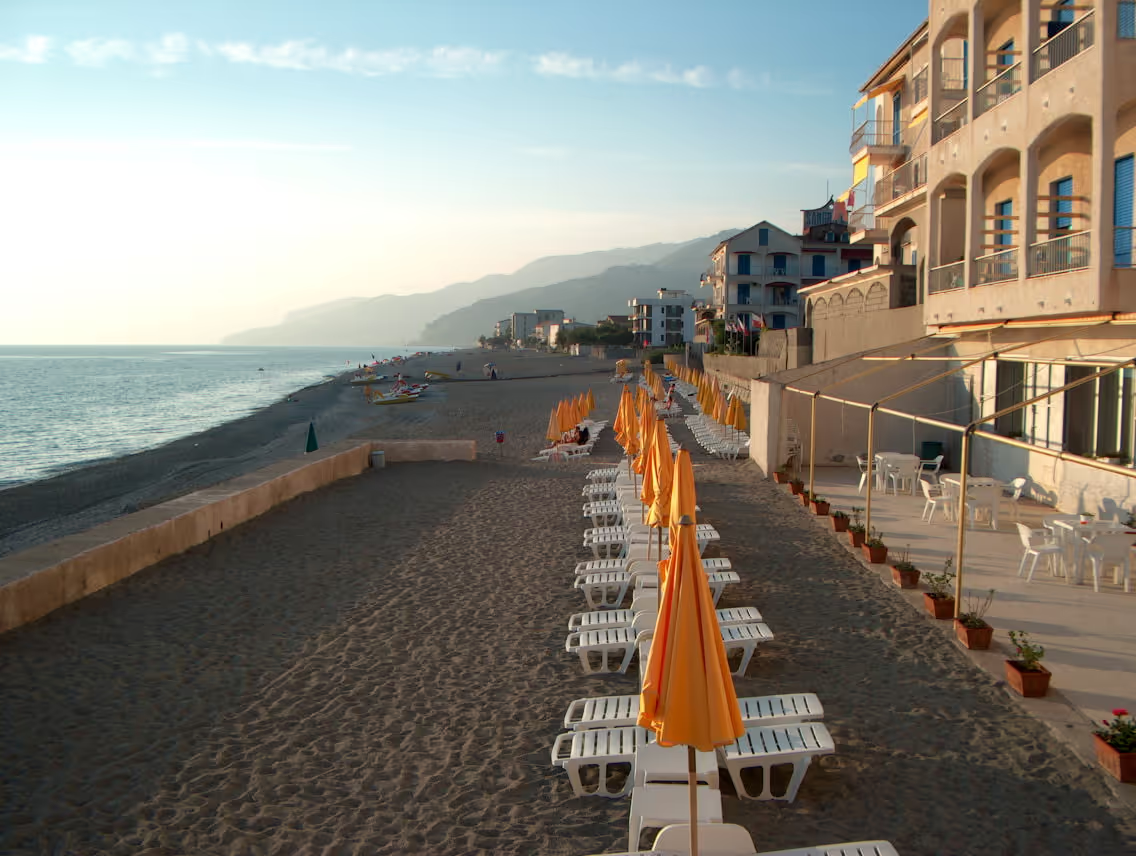
Upper Tyrrhenian Cosentino · Riviera dei Cedri
Fuscaldo
The town of stonemasons and Spinelli marquises: a village 350 metres up on the slopes of the Coastal Range, with the mother church consecrated in 1166, the twelve-column bell tower of the Immacolata and a fief that for three centuries also ruled Paola and Guardia. Below, the Marina on the Tyrrhenian.
Fuscaldo is a town of about 7,900 inhabitants in the province of Cosenza, between Guardia Piemontese and Paola, on the southern stretch of the Upper Tyrrhenian Cosentino coast. The old town sits 350 metres above the sea, on a hill squeezed between two streams, and for centuries was the seat of a fief that also included Paola and La Guardia: from 1496 to 1806 it was ruled by the Spinelli marquises. Its fame, though, is made of stone: the stonemasons of Fuscaldo carved the portals of the village, the twelve-column bell tower of the Immacolata and the statues of the churches, and their craft is still the town’s hallmark.
Geography
The original core occupies a hill 350 metres up between the valleys of the Maddalena and Mercaudo streams, on the western slopes of the Coastal Range, the ridge that separates the Tyrrhenian from the Crati valley; to the north runs the Vardaro stream, whose valley has always been a route between the coast and the hinterland. The territory drops to the sea at Marina di Fuscaldo, where the railway and the SS18 state road pass, and spreads into hill hamlets such as Scarcelli, on the road to Paola, Cariglio, Pesco and San Pietro, each with its own church. The name itself tells of the land: for some it comes from the Latin fons calidus, “hot spring”, after the thermal springs of the area; for others from the medieval personal name Foscoaldus.
History
The hill of Fuscaldo, defended by nature, served as a refuge from the time of the Gothic War (535–553) and, under the Lombards, as a lookout over the Vardaro valley, in use as a through route since at least Roman times. The territory was then Byzantine and exposed to Saracen raids. The first lord of whom memory remains is the Norman Robert of Bohon: in 1110 his widow Sica and son Umfredo appear in the documents, and already by the end of the 11th century Robert’s possessions included the tenimentum Paulae, the future Paola, which for centuries would remain a hamlet of Fuscaldo.
After a long line of feudal lords, in 1496 began the dynasty of the Spinelli, marquises of Fuscaldo, who held the fief almost without interruption until the abolition of feudalism in 1806. From their castle the Spinelli governed a wide territory: Paola was one of their hamlets, and La Guardia, today’s Guardia Piemontese, where marquis Salvatore had his summer residence, also fell under their jurisdiction. It was precisely in the castle of Fuscaldo that in May 1559 Salvatore Spinelli had the Waldensian pastor Gian Luigi Pascale locked up, at the start of the affair that two years later would lead to the massacre of the Waldensians of Calabria; and it was the same marquis who described to the king of Naples, in a letter of 1563, the “very good” waters of the fief of Paola. The Spinelli also left the town the building sites of its churches, such as the oratory of San Giovanni Nuovo, begun for a convent of nuns.
Of the Università of Fuscaldo, that is the medieval commune, remains the mother church it founded and maintained at its own expense until 1749: on 5 June 1166 the archbishop of Cosenza Riccardo consecrated its high altar to Saint James the Greater, depositing there the relics of the martyrs Pope Stephen, Viator, Senator and Cassiodorus, as recalled by a plaque set into the wall of the right nave. Fuscaldo is today twinned with Pero, in Lombardy.
What to see
The mother church of San Giacomo Maggiore is the oldest monument in town: documented from 1166, it originally had Gothic forms and housed many privately endowed chapels, some so narrow they had no altar, so that the families simply had their patron saints painted on the walls of the naves. The chapels are adorned with frescoes and paintings by Genesio Gualtieri of Mormanno and Giovan Battista Santoro; the wooden altar and lectern are the 1984 work of master carpenter Francesco Trifilio.
The Church of the Immacolata, on via Chiesa Matrice, is the masterpiece of Fuscaldo’s stonemasons: its bell tower about 35 metres high is marked by twelve fluted tuff columns with Corinthian capitals, three at each corner. The single-nave building was probably raised by the Archconfraternity of the Immacolata in 1633 and radically remade in the early 18th century by the architect Nicolò Ricciullo of Rogliano; the bell tower came later. Inside, Baroque stuccoes, a cycle of Marian canvases by Giacomo Cestaro and, on the high altar, the Immaculate painted in 1748 by Giuseppe Pascaletti of Fiumefreddo.
In the village you also meet the Church of San Giuseppe on via Garibaldi, of the 18th century, built where a cemetery once was and formerly called the Souls in Purgatory, with the canvas of Our Lady of Suffrage again by Pascaletti; and the oratory of San Giovanni Nuovo on via Roma, 18th-century, inhabited by the Augustinians and commissioned by the marquis Spinelli as a convent of nuns, which keeps beside its entrance a fragment of a medieval crusader column. In the hamlets, the Beata Vergine del Soccorso at Pesco, with its plaque of 1860 and the feast of 5 August; San Michele Arcangelo at Cariglio, founded in 1735; Santa Maria della Stella at Scarcelli, on the road to Paola, with three naves, a Madonna della Stella by Genesio Gualtieri and façade statues carved by the town’s stonemasons. At the Marina, the Church of Santa Maria del Rosario, opened in 1907, keeps two works by the painter Antonio Bertè, including a large Last Supper of 1981, and a bas-relief Via Crucis by the Roman sculptor Alberto Ricci (1980).
The stone of Fuscaldo
What sets Fuscaldo apart along the coast is the work of its stonemasons. The same hands that carved the stone portals of the village palaces raised the bell tower of the Immacolata with its twelve fluted tuff columns and Corinthian capitals, and shaped the statues on the façade of Santa Maria della Stella at Scarcelli. It is a family art that crosses the centuries: the Spinelli fief called on local craftsmen for the fountains and churches of Paola too, and even in the 20th century a master carpenter from the town designed the altar of the mother church. Walking through the old town, 350 metres above the sea, means reading this history on the jambs and lintels.
Getting there
Fuscaldo has its own station on the Tyrrhenian railway, at the Marina, where the SS18 Tirrena Inferiore state road also passes; from the sea a road climbs to the village at 350 metres. By car from the A2 “del Mediterraneo” motorway: from the north, exit Rende/Cosenza nord and SS107 to Paola, then SS18 northwards; from the south, exit Falerna and SS18 northwards. The nearest airport is Lamezia Terme.
Places
What to see around here.
-
 Old town
 Old town of Fuscaldo
The village 350 metres up between the Maddalena and the Mercaudo: the stonemasons’ stone portals, the mother church of 1166, San Giuseppe, San Giovanni Nuovo and the memory of the Spinelli marquises’ castle.
- Culture
Church of the Immacolata and its twelve-column bell tower
The Archconfraternity’s church (1633) remade by Nicolò Ricciullo, with its 35-metre bell tower of twelve tuff columns carved by Fuscaldo’s stonemasons and Pascaletti’s Immaculate of 1748.
- Viewpoint
Scarcelli, Cariglio, Pesco and Marina di Fuscaldo
Fuscaldo’s hamlets and their churches: Santa Maria della Stella at Scarcelli, San Michele at Cariglio, the Madonna del Soccorso at Pesco with the feast of 5 August and the Rosario at the Marina with Bertè’s Last Supper.
Nearby towns
Keep exploring the Upper Tyrrhenian Cosentino coast from here.
-
Paola
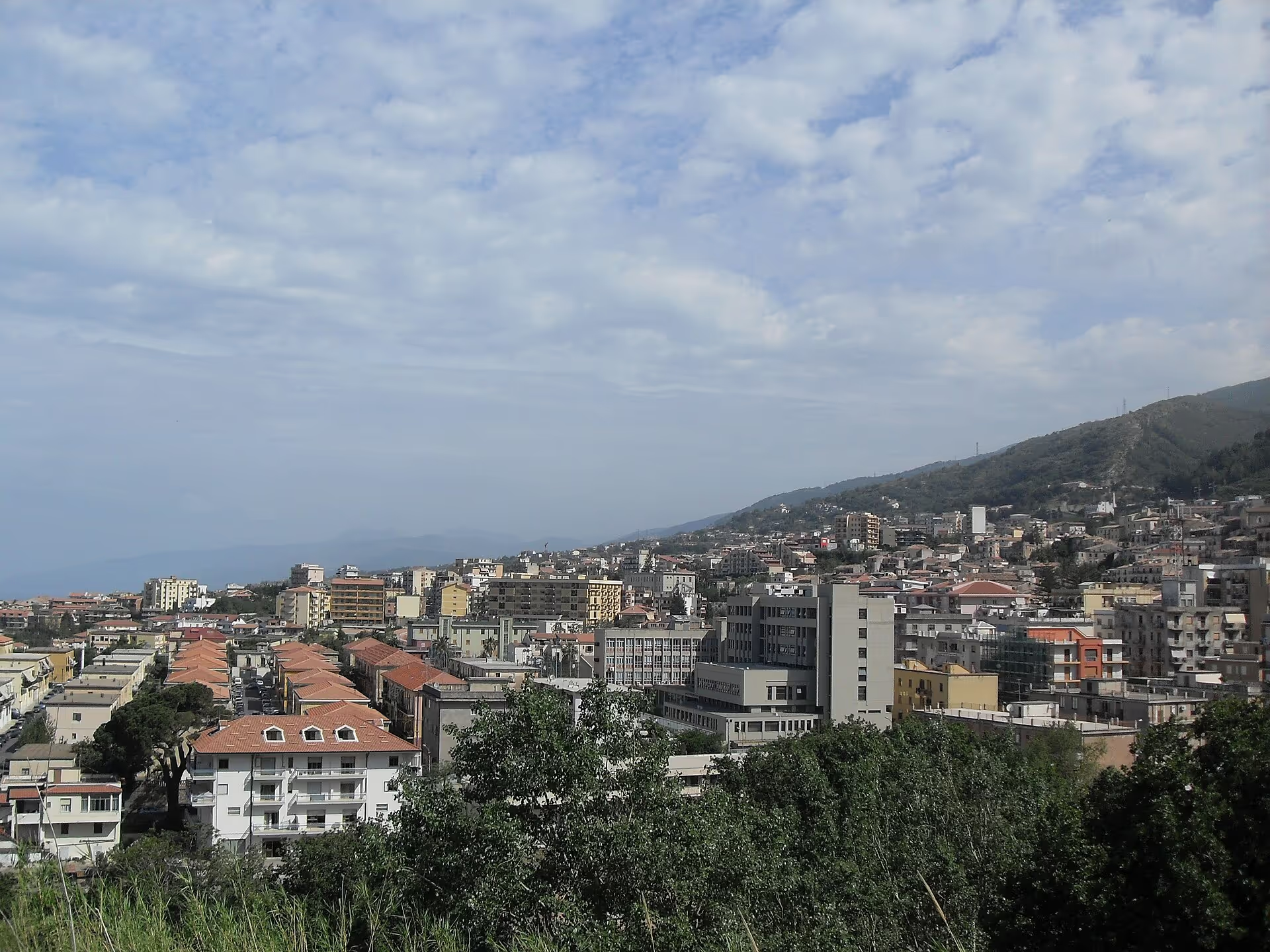
The town of Saint Francis, patron of Calabria: the sanctuary in the Isca valley, the underground church of Sotterra with its Byzantine frescoes, the Seven Channels fountain and the Rocchetta quarter, at the southern end of the Upper Tyrrhenian Cosentino coast.
-
Guardia Piemontese
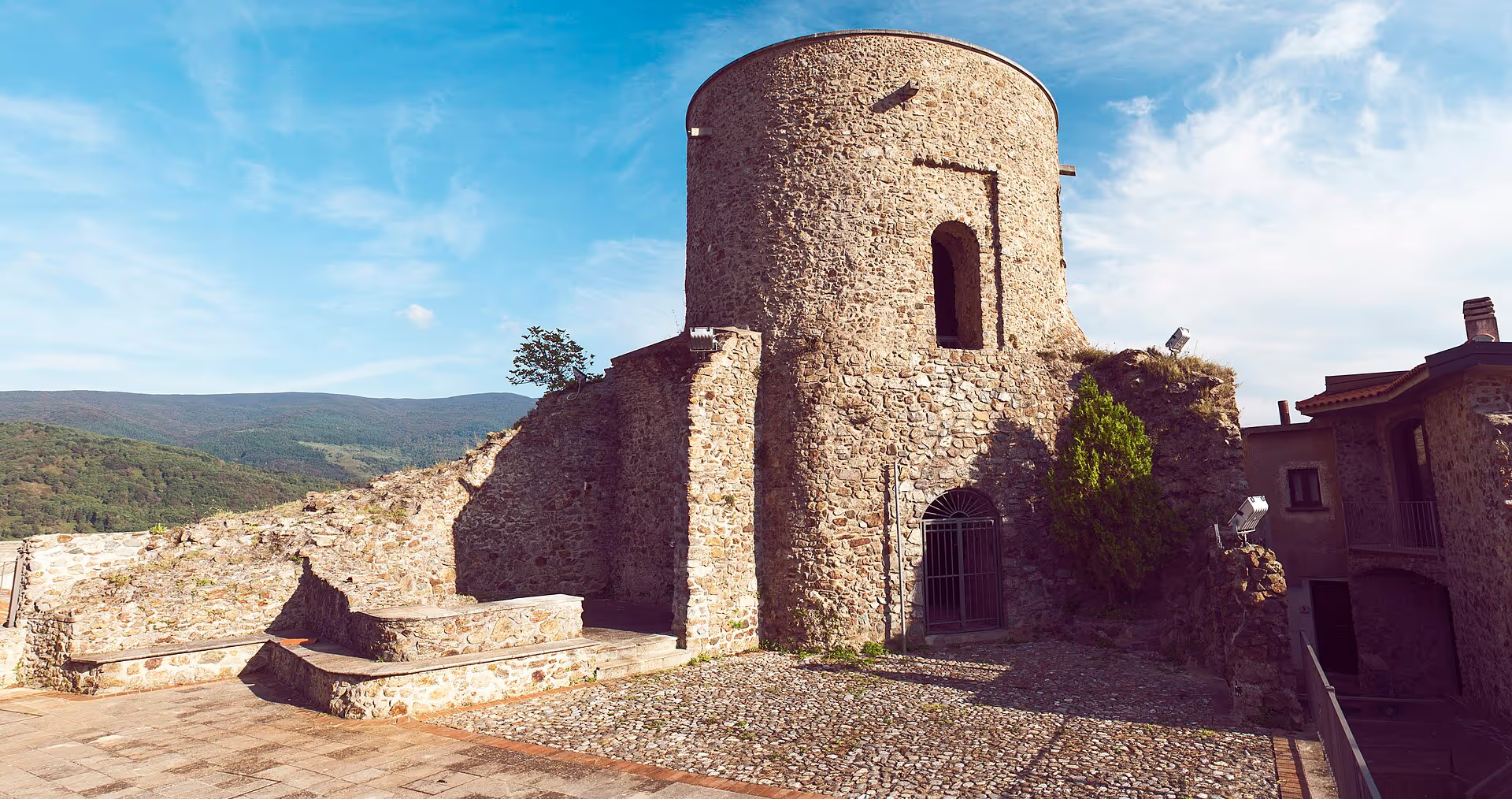
The Occitan island of the South: the village 515 metres above the Tyrrhenian founded by Waldensians from the Piedmont valleys, where Guardiolo is still spoken and where the Porta del Sangue, the peephole doors and the Val Pellice rock recall the night of 5 June 1561.
-
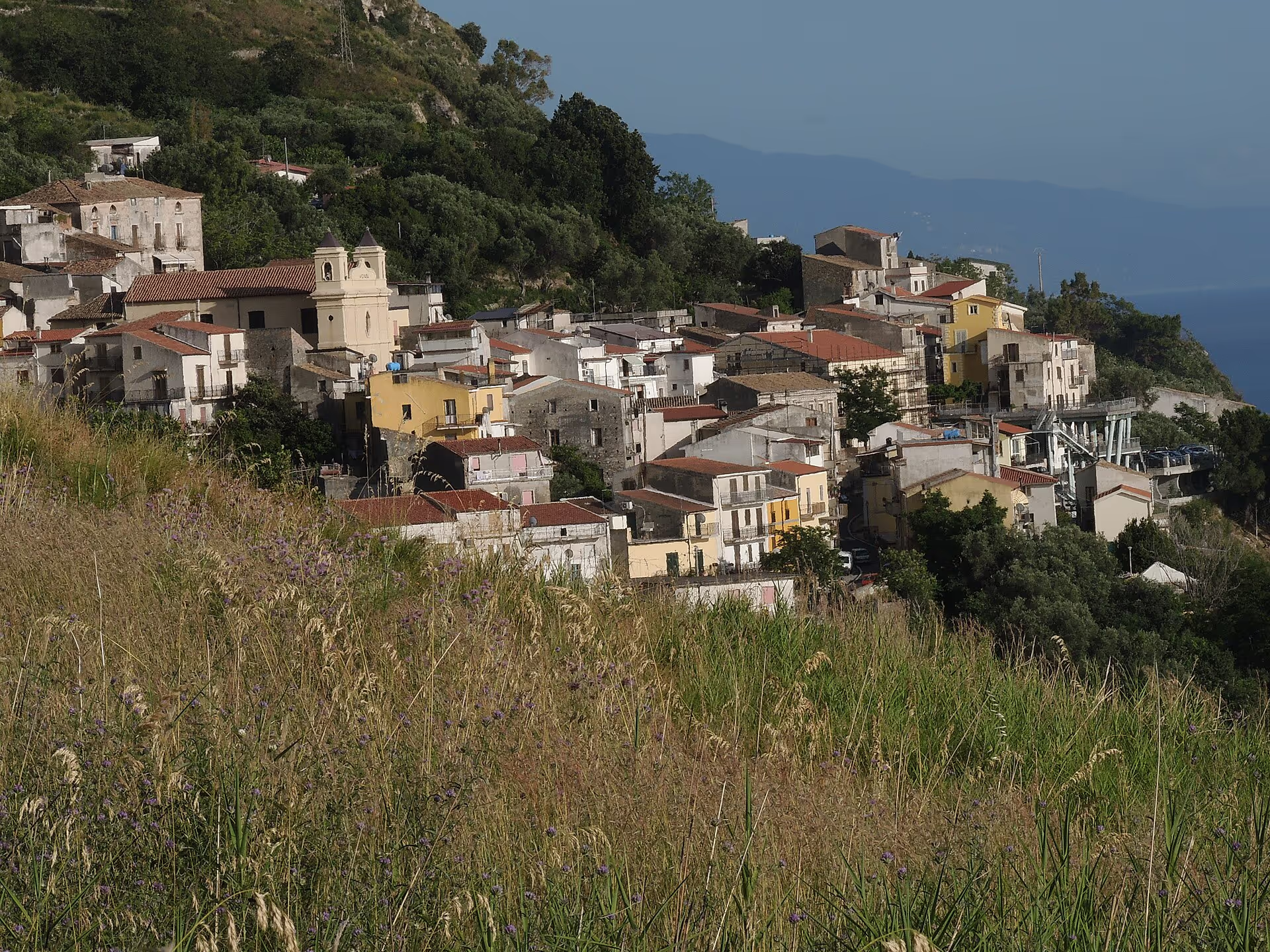
Acquappesa
The town of the “hanging water”: six kilometres of coast between the Fiumicello and the Bagni river, a village its people call U Casàle, the woods of Monte Pistuolo and the Terme Luigiane, with sulphurous springs known since antiquity and five Giro d’Italia stage finishes.
-
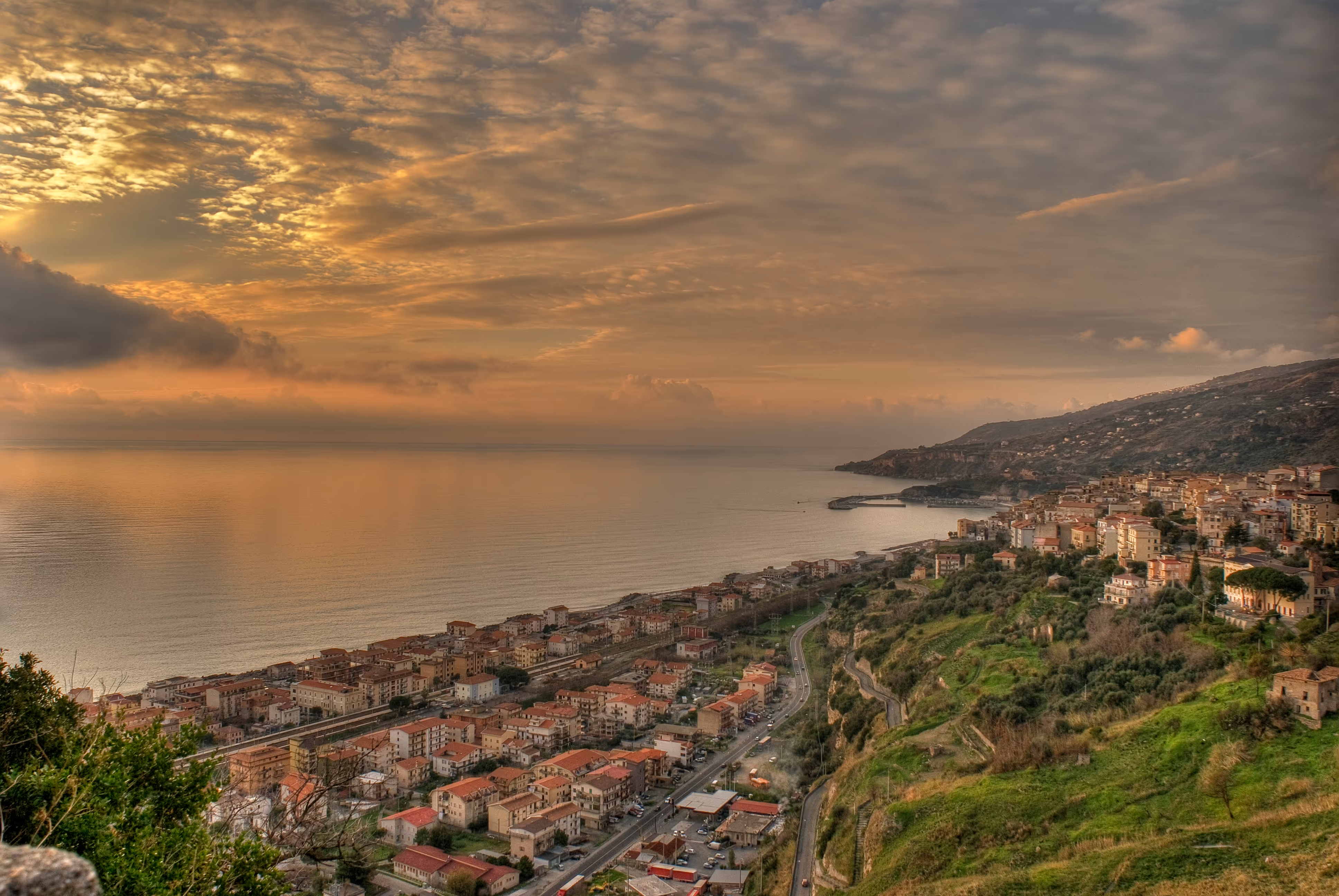
Cetraro
The abbot’s town: from 1086 to 1810 Cetraro was a fief of the Benedictines of Montecassino, remembered in the church of San Benedetto with its Baroque organ, the three gates of the old town and the sea procession of 11 July. Below, the Marina, Borgo San Marco and the marina.
Itineraries through here
- 3 daysTowns & history
Towns & history
Three days among old towns, castles and the only Occitan language island in southern Italy.
6 stops5 townsAll year roundSee the stops - 2 daysWellness & spa
Wellness & spa
Two days among thermal waters, marina and towns of the Middle Tyrrhenian Cosentino area.
4 stops4 townsAll year roundSee the stops -
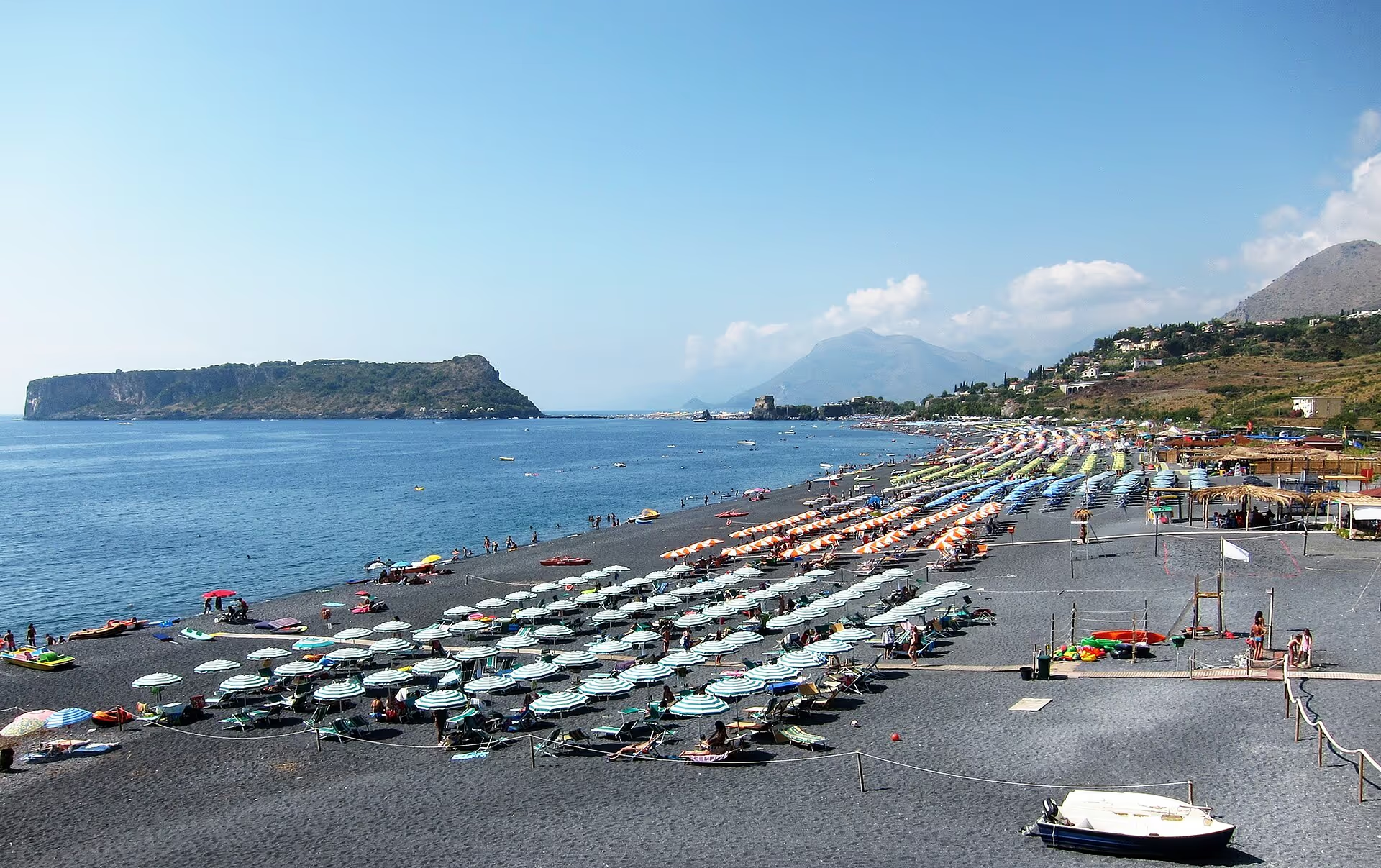 3 daysSea & beaches
Three days by the sea
Three days along the Tyrrhenian coast: islands, rock arches and beaches from north to south.
6 stops5 townsJune–SeptemberSee the stops -
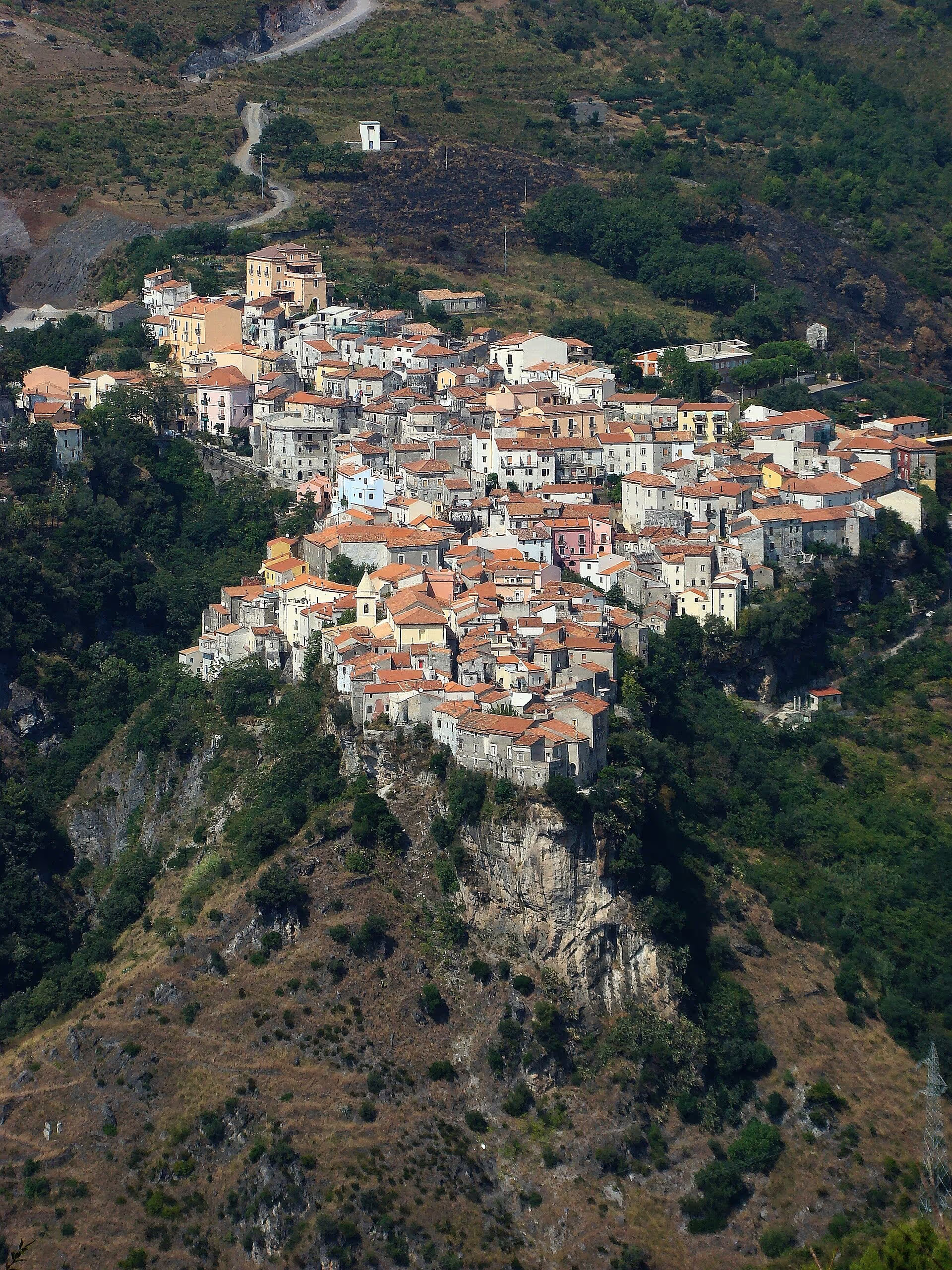 4 daysTowns & history
Four days among old towns
Four days among castles, Norman towns, sacred art and the Occitan language island.
8 stops5 townsAll year roundSee the stops -
 3 daysGrand tour
Flavours and traditions
Three days among citron, old towns and harbour: a journey through the flavours of the Upper Tyrrhenian Cosentino coast.
6 stops4 townsAll year roundSee the stops
Where to stay
- Campeggio InternazionaleCampsite · Fuscaldo
- Camping LagoCampsite · Fuscaldo
- SUDHotel · Fuscaldo
- TotalHotel · Fuscaldo
Indicative information from OpenStreetMap. Check availability and reviews on the external platforms.
Where to eat
- BanakerRestaurant · Fuscaldo
- Primo Re 2Restaurant · Fuscaldo
Indicative information from OpenStreetMap. Check availability and reviews on the external platforms.
Do you run a local business?
Update the listing or discover how to give your business more visibility.
Join the guide for freeHow to get to Fuscaldo
- Reference railway station
- Fuscaldo
- about 2 km as the crow flies from the centre
- Train times (Trenitalia) ↗ Guide: by train
- Nearest airport
- Lamezia Terme International Airport (SUF)
- about 60 km as the crow flies from the centre
- Airport website ↗ Guide: by plane
- By car: A2 “del Mediterraneo” motorway
-
From the north · A2 Rende / Cosenza north SS107 Silana-Crotonese → SS18 north along the coast
From the south · A2 Falerna SS18 Tyrrhenian coastal road heading north along the coast
- Driving directions (Google Maps) ↗ Guide: by car
Straight-line distances computed from verified coordinates: the road route is longer. Check times and connections on the operators’ websites.
Frequently asked questions
- On the Tyrrhenian coast of the province of Cosenza, in Calabria, between Guardia Piemontese and Paola, on the southern stretch of the Upper Tyrrhenian Cosentino coast; the village is 350 m up on the slopes of the Coastal Range, the Marina by the sea with the station.
- The old town with the stonemasons’ stone portals, the mother church of San Giacomo documented from 1166, the Church of the Immacolata with its twelve-column bell tower, San Giuseppe and San Giovanni Nuovo, the churches of the hamlets Scarcelli, Cariglio and Pesco and the Church of the Rosario at the Marina.
- For the stone portals of the village palaces, for the bell tower of the Immacolata about 35 metres high with twelve fluted tuff columns and Corinthian capitals, and for the statues on the façade of Santa Maria della Stella at Scarcelli.
- The feudal dynasty that ruled Fuscaldo from 1496 to 1806; their fief also included Paola, a hamlet of Fuscaldo, and La Guardia, today Guardia Piemontese. In 1559 marquis Salvatore had the Waldensian pastor Gian Luigi Pascale imprisoned in the castle of Fuscaldo.
- It is documented from 5 June 1166, when the archbishop of Cosenza Riccardo consecrated its high altar to Saint James the Greater, depositing the relics of four martyrs; it was founded by the Università of Fuscaldo and originally had Gothic forms.
- According to some from the Latin fons calidus, “hot spring”, after the thermal springs of the area; according to others from the medieval personal name Foscoaldus.
- Yes, Fuscaldo station on the Tyrrhenian line, at the Marina, where the SS18 also passes; from the Marina you climb to the village at 350 metres.
- The reference station is Fuscaldo, on the Tyrrhenian railway line, about 2 km as the crow flies from the centre of Fuscaldo. Times and connections on the Trenitalia website.
- The nearest airport is Lamezia Terme International Airport (SUF), about 60 km as the crow flies; from there you continue by train from Lamezia Terme Centrale along the Tyrrhenian line, or by car on the A2 motorway.
Where is Fuscaldo?
What to see in Fuscaldo?
What are the stonemasons of Fuscaldo famous for?
Who were the Spinelli marquises of Fuscaldo?
How old is the mother church of Fuscaldo?
Where does the name Fuscaldo come from?
Does Fuscaldo have a railway station?
Which is the nearest railway station to Fuscaldo?
Which is the nearest airport to Fuscaldo?
Discover locally
Live, up-to-date results with real reviews, on external platforms. We don’t hand-pick individual businesses we can’t verify.