Upper Tyrrhenian Cosentino · Riviera dei Cedri
Guardia Piemontese
The Occitan island of the South: the village 515 metres above the Tyrrhenian founded by Waldensians from the Piedmont valleys, where Guardiolo is still spoken and where the Porta del Sangue, the peephole doors and the Val Pellice rock recall the night of 5 June 1561.
Guardia Piemontese is a town of about 1,760 inhabitants in the province of Cosenza, on the southern stretch of the Upper Tyrrhenian Cosentino coast, and a place unique in the whole South of Italy: in the alleys of the village, 515 metres above the sea, people still speak Guardiolo, an Occitan language brought here between the 12th and 14th centuries by Waldensian settlers from the Piedmont valleys. It is the last Waldensian colony in Calabria, and its deepest memory is tied to one night, that of 5 June 1561, which gave its name to the village’s main gate. Below, on the coast, lie the Marina hamlet and Guardia Piemontese Terme station.
Geography
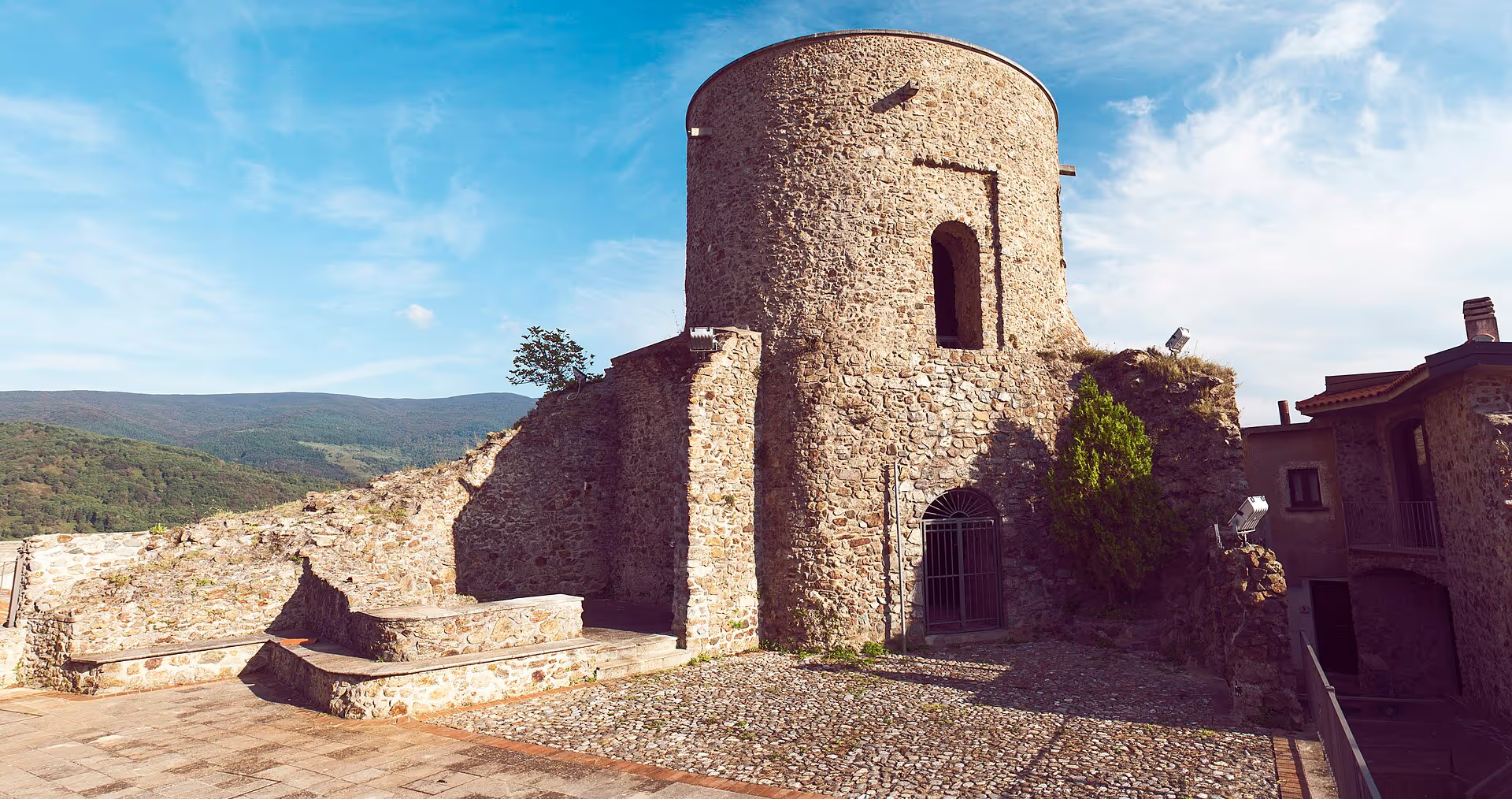
The village sits on a hill 515 metres above sea level, looking over the Tyrrhenian between Acquappesa and Fuscaldo: the watchtower that gives it its name, built around the year 1000 to spot Saracen ships, can be picked out even from the coast. The Marina, of recent development, stretches along the shore around the railway station, beside the Terme Luigiane spa which lies in the territory of Acquappesa. Between the two cores climbs the SS283 state road “delle Terme Luigiane”, and the village overlooks the whole gulf from Capo Bonifati towards Paola.
History
The village was born as La Guardia, from the name of its watchtower, and was long a hamlet of Fuscaldo: Guardia Fiscalda, Guardia dei Valdi, Guardia Lombarda. The adjective Piemontese came after Italian unification, to recall where its people came from. The Waldensians, followers of Peter Waldo, came down to Calabria between the 12th and 14th centuries from the Alpine valleys of Angrogna, Chisone, Pellice and Germanasca, from the Dauphiné and Provence, in search of land to farm and of peace: Calabrian landowners offered them plots in return for a rent, and at Montalto, San Sisto and La Guardia, which they built themselves, communities of “Ultramontani” arose who prayed in Occitan at home and lived without friction with their Catholic neighbours. Itinerant preachers, the “barba”, kept faith and ties with Piedmont alive.
Everything changed with the Reformation. In 1532 the Waldensians joined Protestantism and in 1559 the pastor Gian Luigi Pascale, from Cuneo, arrived from Geneva; at La Guardia, with the support of the poorer peasants and artisans, he had a place of worship built and preached openly. The feudal lord Salvatore Spinelli, marquis of Fuscaldo, had him arrested on 2 May 1559; Pascale was burned in Rome in September 1560. The Roman Inquisition, led by Cardinal Michele Ghislieri, the future Pius V, sent the Dominican Valerio Malvicino and on 9 February 1561 issued ordinances forbidding the Waldensians to gather in groups of more than six, to speak their language or to marry among themselves, imposing daily Mass and the yellow “abitello” of penitents. The community rebelled; the troops of the viceroy of Naples, led by Marino and Ascanio Caracciolo, sacked San Sisto on 29 May and marched on La Guardia. According to the most widespread account it was Spinelli himself who brought fifty soldiers disguised as prisoners into the village: on the night of 5 June 1561 they opened the main gate and the massacre swept away hundreds of people, thrown from the tower, put to the sword or burned, while seventy houses went up in flames. The survivors ended up in the prisons of Cosenza and Montalto, where on 11 June another 86 or 88 Waldensians were executed; historians estimate the total victims in Calabria at between 600 and 6,000. Those who escaped were forcibly converted and watched over by the Dominicans, who founded their friary in the village in 1600.
The language, however, endured. In 1927 the municipality was merged with Acquappesa as “Guardia Piemontese Terme”, becoming independent again in 1945; in 1983 it was twinned with Torre Pellice, one of the places its founders came from, and since 2008 the 5th of June has been the Day of Remembrance.
What to see
You enter the village through the Porta del Sangue, the main gate of the old walls: cobbles, brick fragments and roughly squared stones, and a name that since 1561 has told of the blood that ran down from the castle along the lanes until it passed beyond it. A few dozen metres away opens the small Porta Carruggio, the secondary entrance, while the base of the third gate is embedded in a palace on via Panoramica. In the stone-paved alleys you still meet the peephole doors, which can be opened only from outside: the Inquisition imposed them after the massacre, so that the Dominican friars could watch over the lives of the forcibly converted families. One, restored, is in the Waldensian Museum; at least three remain along the streets.
In piazza Chiesa Valdese, where the temple of the reformed once stood, is the Val Pellice Rock: a slab of Alpine rock brought in 1975 from the mountains of Torre Pellice, carved with the verse of Isaiah “Look to the rock from which you were hewn” and, below, the plaque with the 118 names of the people of Guardia killed on 5 June 1561. Not far away the bas-relief by sculptor Giuseppe Tarantino, donated by the Piedmont Region in 2000, tells of Piedmontese and Calabrian emigration.
The church of Sant’Andrea apostolo, the patron’s, has a tuff portal topped by the coat of arms with the tower. The church of the Santissimo Rosario, former friary of the Dominicans founded in 1600 and consecrated in 1616, keeps a hand-carved mid-17th-century wooden choir: 33 stalls in two tiers, armrests with female figures, panels divided by tall columns; behind the altar lies the tomb of Mario Spinelli, the marquis’s son, who died in 1636. Of the Spinelli palace, the feudal lord’s summer residence, the portal remains with the crowned swan of the family arms. At the top of the village the year-1000 watchtower overlooks the square used for performances and the sea.
Two museums explain all the rest. The Waldensian Museum, in the “Gian Luigi Pascale” cultural centre of the Tavola Valdese, opened in 1983 for the twinning with Torre Pellice and reopened in 2011 for the 450th anniversary of the massacre, tells with panels, documents and finds the history of the Waldensians in Calabria. The municipal Occitan Multimedia Museum, opened in January 2011, retraces Guardia’s culture through video and reportage and holds a library on Calabria’s three linguistic minorities: Occitan, Greek and Albanian.
Guardiolo, a langue d’oc on the Tyrrhenian
Guardiolo, gardiòl to those who speak it, is a variety of Occitan, the langue d’oc of southern France, the Piedmont valleys and the Val d’Aran: Guardia Piemontese is the only place in the South of Italy where it is spoken. Until the 1950s three variants could be told apart, one for each quarter of the small old town, a legacy of the different regions the settlers came from. Research carried out in 1999 found a language still alive: two thirds of the inhabitants said they always used it at home and with friends, while according to the linguist Fiorenzo Toso in 2007 the speakers numbered about 340 out of 1,860 residents. Keeping it alive are the Occitan association Gàrdia d’Òc, with its “Chambra dal Conselh” opened in 2010 and the folk group Vent de Nòtes, the Occitan Week in August and the feast of Saint Martin on 11 November, devoted to the French saint, with songs, dances and new wine.
The village calendar
On 6 January the “Bella Stella” escorts the Magi with a torchlight procession through the alleys to the church of Sant’Andrea, where the Holy Family is played by a young couple with the village’s latest newborn. 5 June is the Day of Remembrance established in 2008 for the massacre of 1561. On 6 July the Marina celebrates Saint Maria Goretti with white and red roses and a procession along the hamlet’s streets; the first Sunday of October belongs to Our Lady of the Rosary, 30 November to Saint Andrew the Apostle, patron of the village, with procession, band and fireworks.
Getting there
Guardia Piemontese is served by Guardia Piemontese Terme station, on the Tyrrhenian railway, at the Marina; from the coast the SS283 state road “delle Terme Luigiane” climbs to the village, while the SS18 runs along the shore. By car from the A2 “del Mediterraneo” motorway: from the north, exit Rende/Cosenza nord and SS107 to Paola, then SS18 northwards; from the south, exit Falerna and SS18 northwards. The nearest airport is Lamezia Terme.
Places
What to see around here.
-
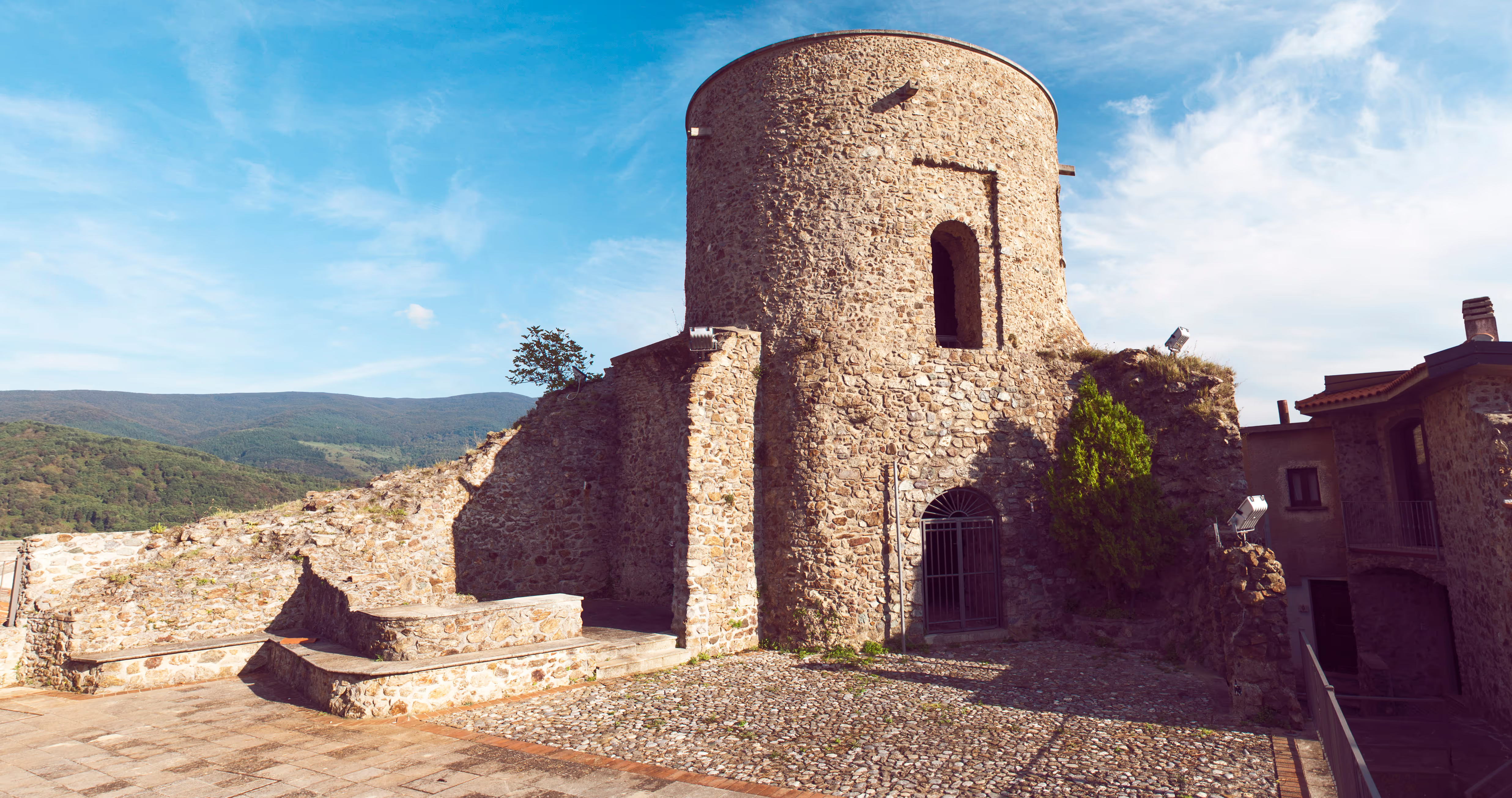 Old town
 Occitan old town of Guardia Piemontese
The village 515 metres up where Guardiolo is still spoken: stone alleys, the year-1000 tower, Sant’Andrea, the Dominicans’ wooden choir and the portal of the Spinelli marquises.
- Culture
Waldensian Museum and Occitan Multimedia Museum
The two museums that explain Guardia Piemontese: the history of Calabria’s Waldensians in the “Gian Luigi Pascale” cultural centre and Occitan culture in video and documents in the municipal museum.
- Culture
Porta del Sangue and the places of Waldensian memory
The village’s main gate, the peephole doors and the Val Pellice Rock with its 118 names: the marks of the night of 5 June 1561 and of the Day of Remembrance.
Nearby towns
Keep exploring the Upper Tyrrhenian Cosentino coast from here.
-
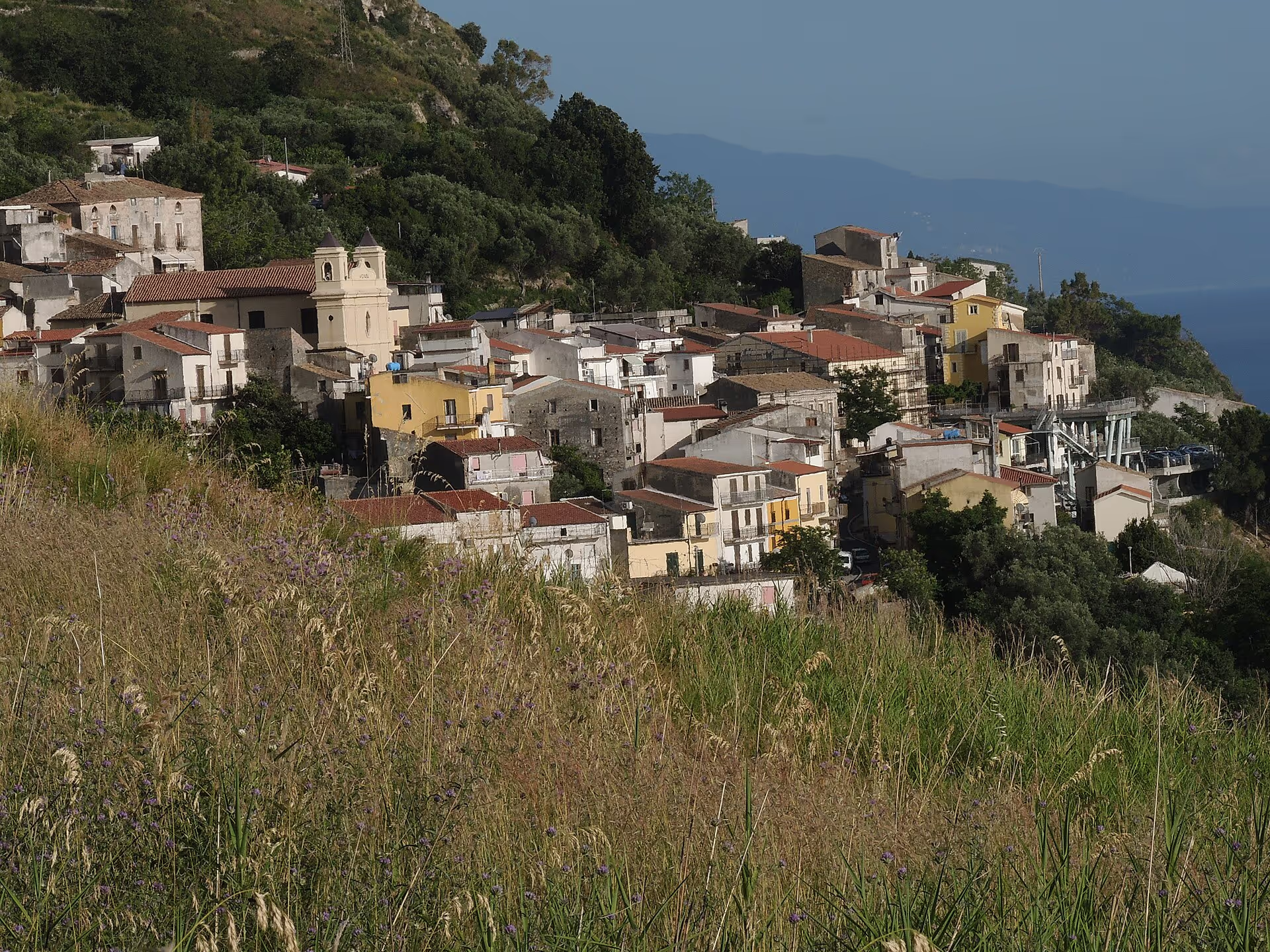
Acquappesa
The town of the “hanging water”: six kilometres of coast between the Fiumicello and the Bagni river, a village its people call U Casàle, the woods of Monte Pistuolo and the Terme Luigiane, with sulphurous springs known since antiquity and five Giro d’Italia stage finishes.
-
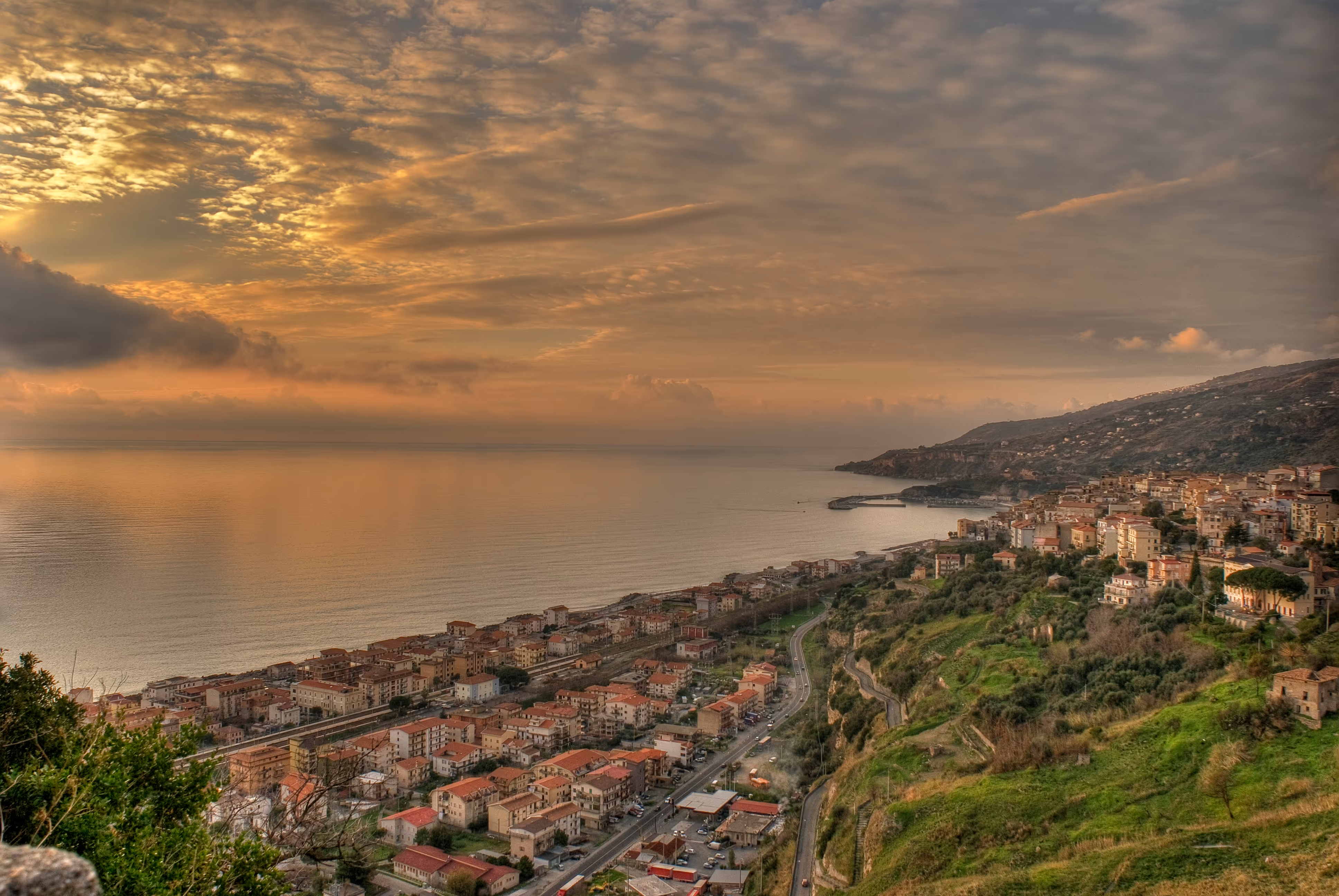
Cetraro
The abbot’s town: from 1086 to 1810 Cetraro was a fief of the Benedictines of Montecassino, remembered in the church of San Benedetto with its Baroque organ, the three gates of the old town and the sea procession of 11 July. Below, the Marina, Borgo San Marco and the marina.
-
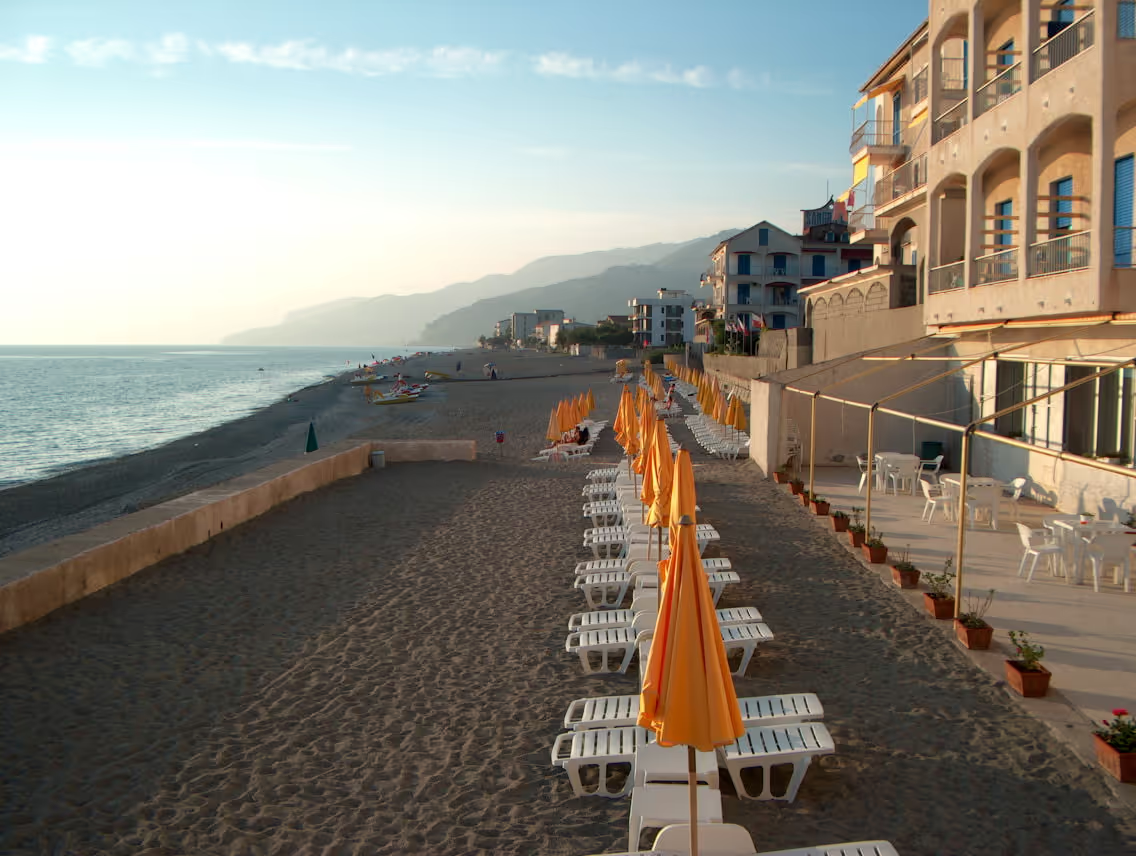
Fuscaldo
The town of stonemasons and Spinelli marquises: a village 350 metres up on the slopes of the Coastal Range, with the mother church consecrated in 1166, the twelve-column bell tower of the Immacolata and a fief that for three centuries also ruled Paola and Guardia. Below, the Marina on the Tyrrhenian.
-
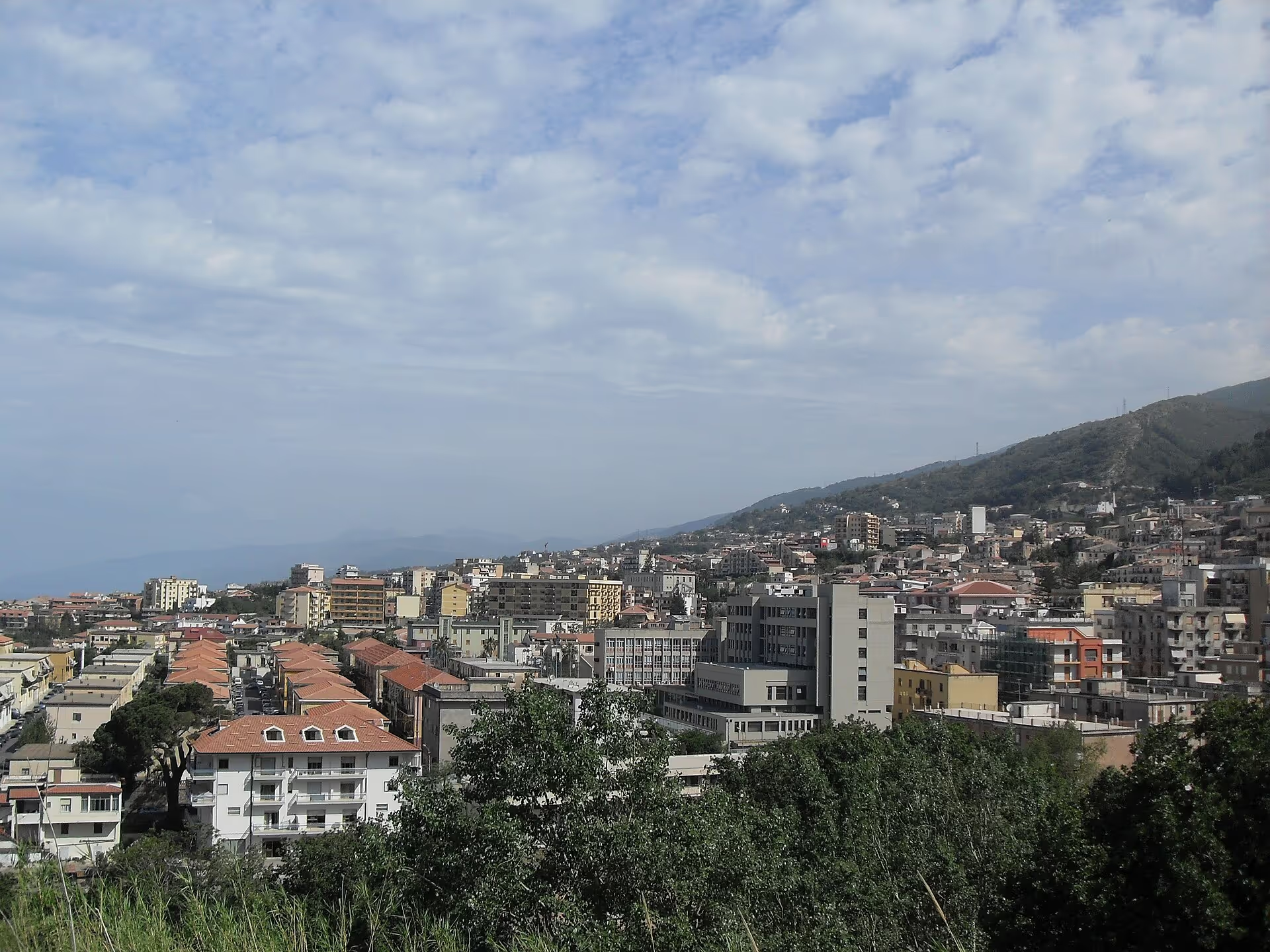
Paola
The town of Saint Francis, patron of Calabria: the sanctuary in the Isca valley, the underground church of Sotterra with its Byzantine frescoes, the Seven Channels fountain and the Rocchetta quarter, at the southern end of the Upper Tyrrhenian Cosentino coast.
Itineraries through here
- 3 daysTowns & history
Towns & history
Three days among old towns, castles and the only Occitan language island in southern Italy.
6 stops5 townsAll year roundSee the stops - 2 daysWellness & spa
Wellness & spa
Two days among thermal waters, marina and towns of the Middle Tyrrhenian Cosentino area.
4 stops4 townsAll year roundSee the stops -
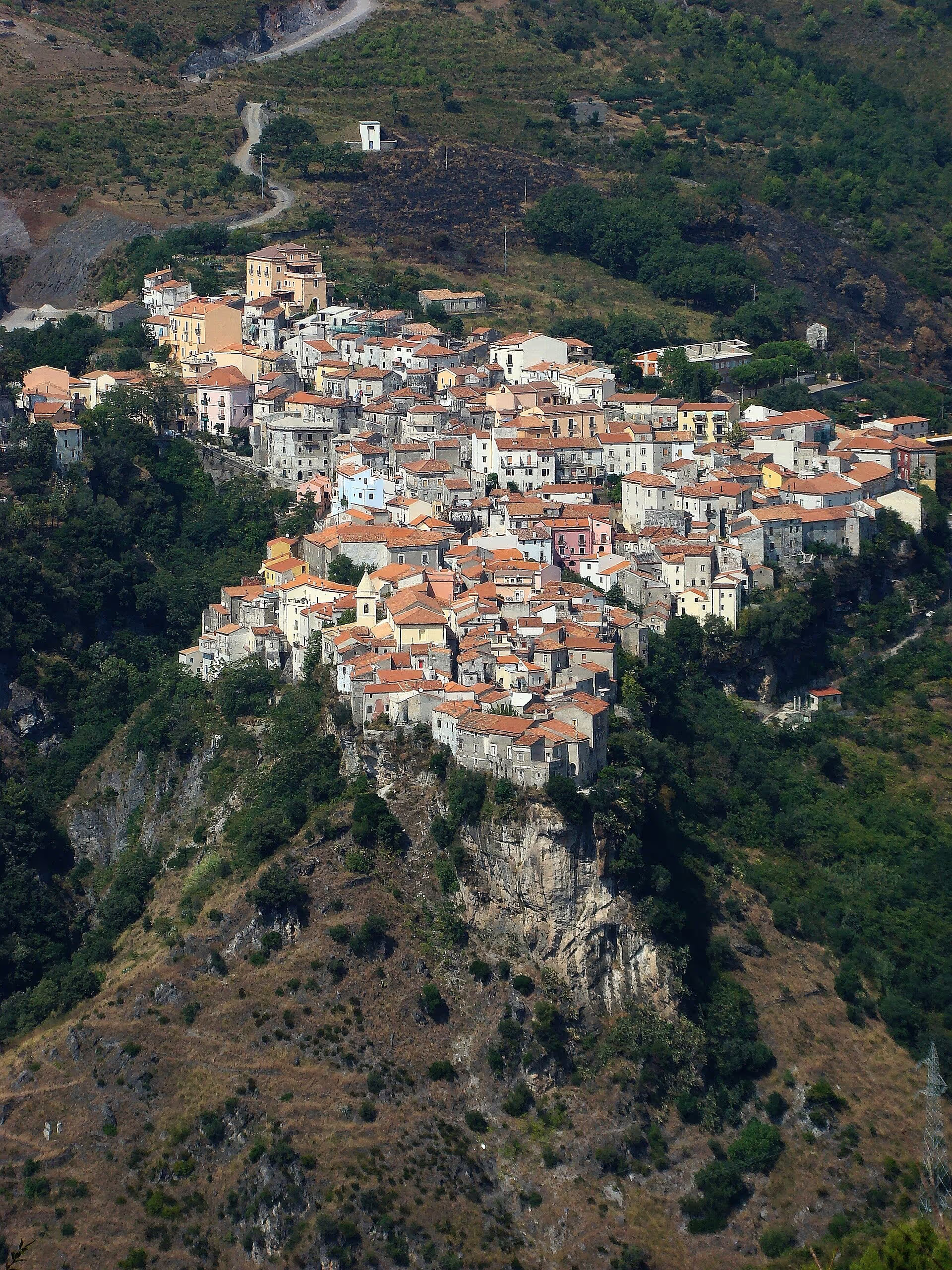 4 daysTowns & history
Four days among old towns
Four days among castles, Norman towns, sacred art and the Occitan language island.
8 stops5 townsAll year roundSee the stops -
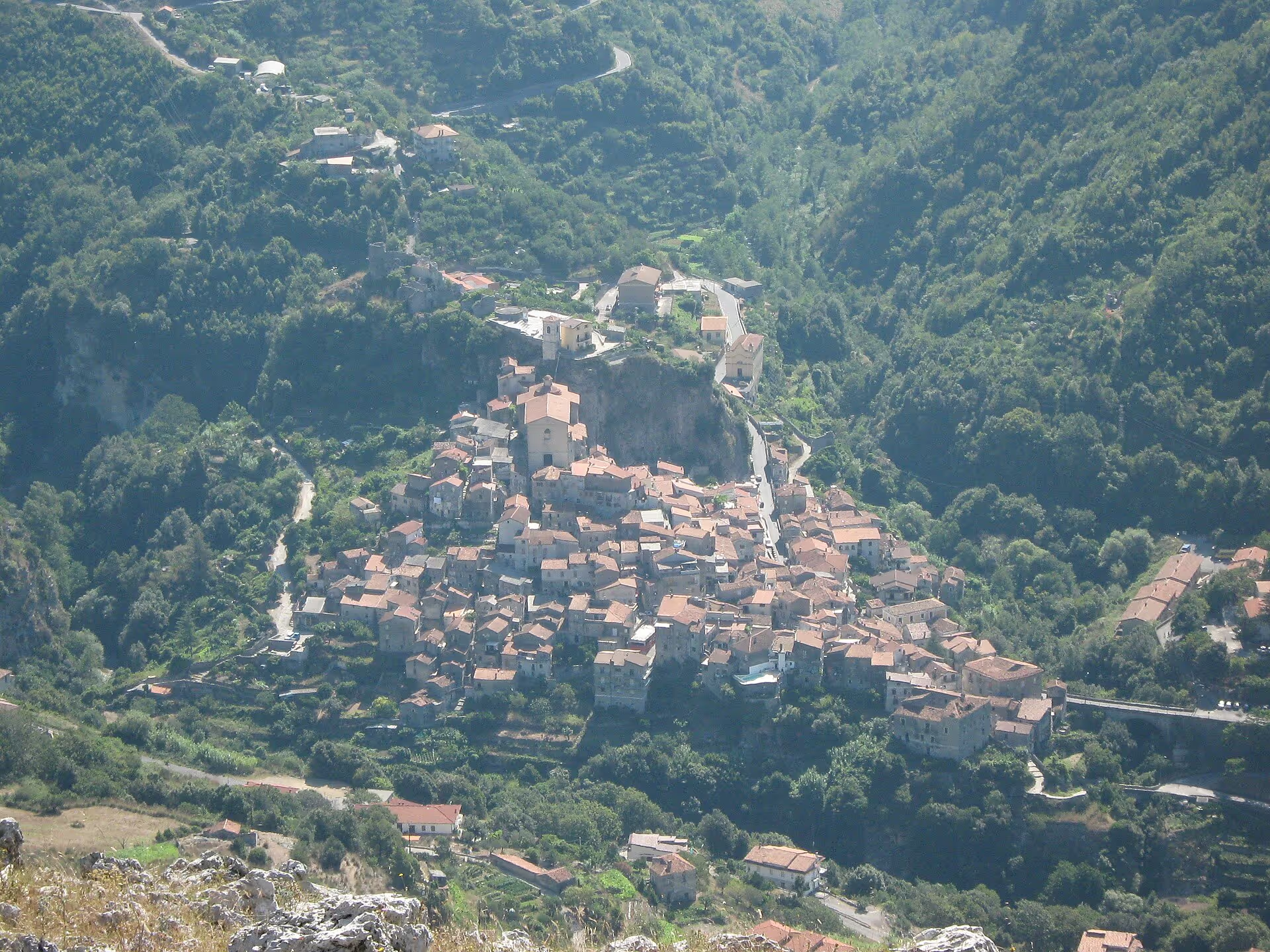 3 daysWellness & spa
Nature and Pollino in three days
Three days among spa, Palaeolithic cave and mountains of the Pollino National Park.
6 stops4 townsMarch–NovemberSee the stops
Where to stay
- Zi.Le.MaHotel · Guardia Piemontese
Indicative information from OpenStreetMap. Check availability and reviews on the external platforms.
Where to eat
- La CuccagnaBar · Guardia Piemontese
Indicative information from OpenStreetMap. Check availability and reviews on the external platforms.
Do you run a local business?
Update the listing or discover how to give your business more visibility.
Join the guide for freeHow to get to Guardia Piemontese
- Reference railway station
- Guardia Piemontese Terme
- about 2 km as the crow flies from the centre
- Train times (Trenitalia) ↗ Guide: by train
- Nearest airport
- Lamezia Terme International Airport (SUF)
- about 66 km as the crow flies from the centre
- Airport website ↗ Guide: by plane
- By car: A2 “del Mediterraneo” motorway
-
From the north · A2 Rende / Cosenza north SS107 Silana-Crotonese → SS18 north along the coast
From the south · A2 Falerna SS18 Tyrrhenian coastal road heading north along the coast
- Driving directions (Google Maps) ↗ Guide: by car
Straight-line distances computed from verified coordinates: the road route is longer. Check times and connections on the operators’ websites.
Frequently asked questions
- On the Tyrrhenian coast of the province of Cosenza, in Calabria, between Acquappesa and Fuscaldo, on the southern stretch of the Upper Tyrrhenian Cosentino coast; the village is on a hill 515 m above the sea, the Marina on the coast by Guardia Piemontese Terme station.
- Because it was settled between the 12th and 14th centuries by Waldensian colonists from the Occitan valleys of Piedmont, the Dauphiné and Provence: Guardiolo, their langue d’oc, survived the massacre of 1561 and is the only example of Occitan in the South of Italy.
- The troops of the viceroy of Naples, called in to crush the Waldensian revolt against the Inquisition’s ordinances, entered the village at night, by tradition thanks to a trick by the feudal lord Spinelli, and massacred hundreds of inhabitants; the main gate has been called the Porta del Sangue ever since.
- The Porta del Sangue and Porta Carruggio, the peephole doors, the Val Pellice Rock with the 118 names of the martyrs, the watchtower, the churches of Sant’Andrea and the Rosario with its 17th-century wooden choir, the Waldensian Museum and the Occitan Multimedia Museum.
- Old house doors with a peephole that opens only from outside, imposed by the Inquisition after 1561 so that the Dominican friars could watch over the lives of the forcibly converted Waldensians; one is in the Waldensian Museum, at least three remain in the old town.
- A Waldensian pastor from Cuneo sent from Geneva in 1559 to preach at San Sisto and La Guardia; arrested by the feudal lord Salvatore Spinelli and handed to the Inquisition, he was burned in Rome in September 1560. The cultural centre housing the Waldensian Museum is named after him.
- On 5 June, the anniversary of the 1561 massacre: the observance was established by the municipality in 2008, and the village has been twinned since 1983 with Torre Pellice, in the Waldensian valleys of Piedmont.
- The reference station is Guardia Piemontese Terme, on the Tyrrhenian railway line, about 2 km as the crow flies from the centre of Guardia Piemontese. Times and connections on the Trenitalia website.
- The nearest airport is Lamezia Terme International Airport (SUF), about 66 km as the crow flies; from there you continue by train from Lamezia Terme Centrale along the Tyrrhenian line, or by car on the A2 motorway.
Where is Guardia Piemontese?
Why is Occitan spoken in Guardia Piemontese?
What happened on 5 June 1561 in Guardia Piemontese?
What to see in Guardia Piemontese?
What are the peephole doors?
Who was Gian Luigi Pascale?
When is the Day of Remembrance held in Guardia Piemontese?
Which is the nearest railway station to Guardia Piemontese?
Which is the nearest airport to Guardia Piemontese?
Discover locally
Live, up-to-date results with real reviews, on external platforms. We don’t hand-pick individual businesses we can’t verify.