Upper Tyrrhenian Cosentino · Riviera dei Cedri
Paola
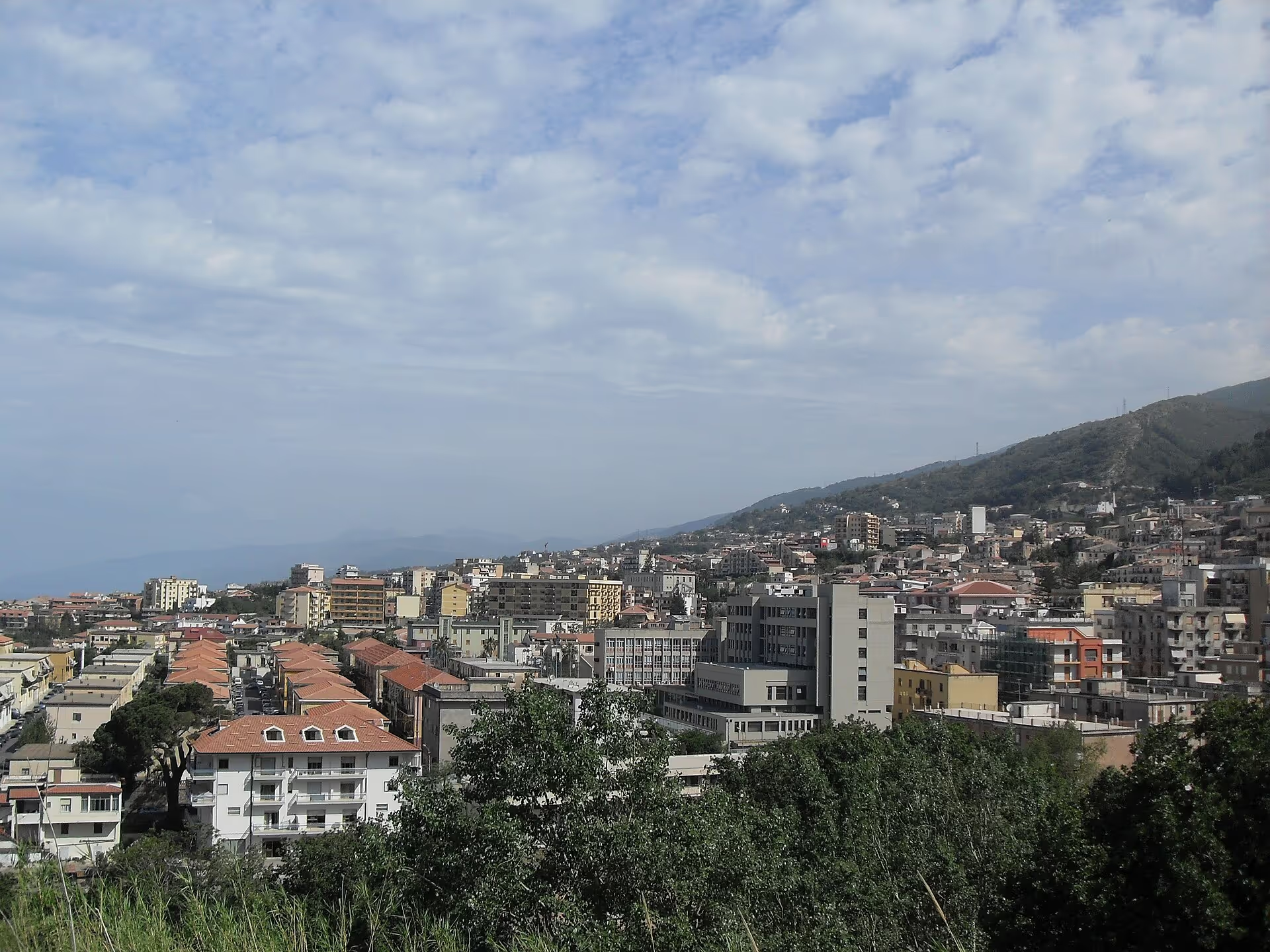
The town of Saint Francis, patron of Calabria: the sanctuary in the Isca valley, the underground church of Sotterra with its Byzantine frescoes, the Seven Channels fountain and the Rocchetta quarter, at the southern end of the Upper Tyrrhenian Cosentino coast.
With about 15,000 inhabitants, Paola is the most populous town of the Upper Tyrrhenian Cosentino coast and marks its southern boundary. Its name comes from the Latin pabula, “pastures”, but the world knows the town for one man: Saint Francis of Paola, born here in the 15th century, patron of Calabria and of seafarers. His sanctuary, in the valley behind the town, draws pilgrims from all over southern Italy and has made Paola one of Calabria’s religious-tourism destinations.
Geography
The territory, 42.88 km², rises from the sea to the 1,389 metres of Monte Cozzo Cervello, in the Catena Costiera that divides the coast from the Crati valley. The town has two souls: the marina, along the railway and the SS18, and the upper, hilly part, where the old town climbs towards the sanctuary in the green, narrow valley of the Isca stream. It borders Fuscaldo to the north, San Lucido to the south and, inland, Montalto Uffugo and San Fili.
History
The Roman ruins and the archaeological sites of contrada Cutura and Via Sant’Agata show the place was inhabited in antiquity, but the Paola you visit today is above all a child of the 16th century. It was the town’s golden age: the fame of Saint Francis, who died in 1507 and was canonised in 1519, brought the faithful from every part of Calabria, and Paola grew and adorned itself with palaces, streets and fountains in a season of intense building and artistic activity. From that period also dates the fief of the Spinelli marquises, whose documents already mention the great public fountain at the start of the century.
The saint has remained the thread of the town’s history. In 1921 his sanctuary was raised to a minor basilica; in 2000, for the Jubilee, the new liturgical hall opened; in 2008 the town closed the celebrations for the fifth centenary of his death, and in 2020, five hundred years after his canonisation, the Calabrian bishops’ conference proclaimed the basilica a regional sanctuary. The war left a visible mark: the British bombing of July 1943 flattened the long stairway and the houses around it, while the fountain at its foot stayed standing; a month later a bomb fell into the stream beside the sanctuary without exploding, and today it is displayed along the Via dei Miracoli.
What to see
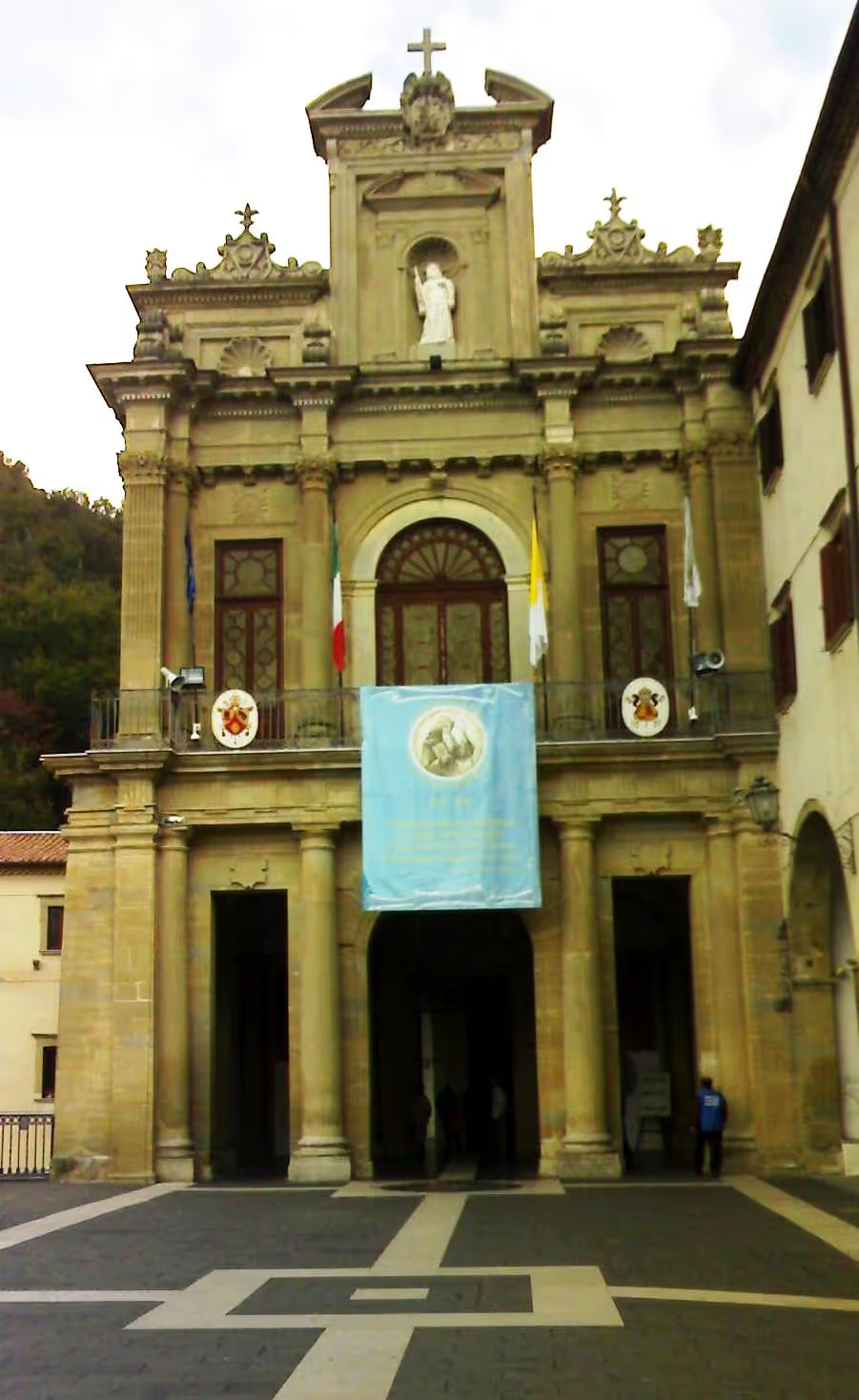
The Sanctuary of Saint Francis stands at 178 metres, at the head of the Isca valley. You reach it across a wide forecourt: the 16th-century old basilica keeps in its Baroque chapel the few relics of the saint left in Paola (the rest are in Tours, France), the cloister with the rose garden and the frescoes of his life, and the hermitage of 1436, the cramped underground rooms where Francis lived with his first brethren. From the arch on the right starts the Via dei Miracoli: the brick kiln, the unexploded bomb of 1943, the Cucchiarella spring where pilgrims drink, the Devil’s Bridge with the footprint of legend and the Cave of Penance. The new basilica, opened in 2000, houses works by Bruno d’Arcevia and a 44-stop Mascioni organ.
In contrada Gaudimare, beneath the church of the Carmine, a staircase leads down into the church of Sotterra: a sixteen-metre underground hall, probably of the 9th–10th century, buried by landslides and floods of the Palumbo stream and rediscovered in 1874, with Byzantine-style frescoes (the Ascension in the apse, the Annunciation, the nursing Madonna of the Pomegranate) and graffiti left by medieval pilgrims.
In town, the Seven Channels fountain at the foot of the stairway is a 15th-century trough turned monument: seven sandstone spouts, a basin of 1636 with the image of the saint and his miracles, and shields bearing the peacock, symbol of Paola and of the Minim order. Around it huddles the Rocchetta, the old quarter of alleys, arches, loggias and stone portals, with the Porta di San Francesco at the town entrance, the Clock Tower, the saint’s birthplace, the “Pisciariddi” fountain in Piazza del Popolo and the Norman-Aragonese castle. The Badia with its tower, the Torre del Soffio and Palazzo Scorza complete the picture; two museums, the Museum of Saint Francis and the Don Salvatore Stillo museum of sacred art, gather the town’s religious memory.
The feasts of Saint Francis
Paola’s calendar revolves around its saint. On 27 March his birth is remembered and on 2 April, the canonical feast, his death; the solemn celebrations take place from 1 to 4 May, with processions on land and at sea of the saint’s bust and of his cloak. The cloak is at the heart of the best-loved legend: a boatman refused to ferry Francis from the Calabrian coast to Messina, and the saint crossed the strait sailing on his own cloak. Hence his title of patron of seafarers, alongside that of patron of Calabria.
Getting there
Paola is the coast’s transport hub: its station on the Tyrrhenian railway is the interchange with the Paola–Cosenza line, the SS107 branches off from the town towards Cosenza and the Sila, and the SS18 crosses it from north to south. By car from the A2 “del Mediterraneo”: from the north, exit Rende/Cosenza nord and SS107 to the coast; from the south, exit Falerna and SS18 northbound. The nearest airport is Lamezia Terme.
Places
What to see around here.
- Old town
Rocchetta and old town of Paola
Paola’s old quarter between the Porta di San Francesco, the Clock Tower, the saint’s birthplace, the Norman-Aragonese castle and the Pisciariddi fountain.
- Culture
Church of Sotterra
Paola’s underground church, probably of the 9th–10th century, rediscovered in 1874 with its Byzantine frescoes and pilgrims’ graffiti.
- Culture
Seven Channels Fountain
The monumental sandstone fountain at the foot of Paola’s stairway: a 15th-century trough, a basin of 1636 and the peacock symbol of the town.
-
 Culture
 Sanctuary of Saint Francis of Paola
The regional sanctuary of Calabria’s patron saint, in the Isca valley: old basilica, 1436 hermitage, Via dei Miracoli and the new basilica of 2000.
Nearby towns
Keep exploring the Upper Tyrrhenian Cosentino coast from here.
-
Fuscaldo
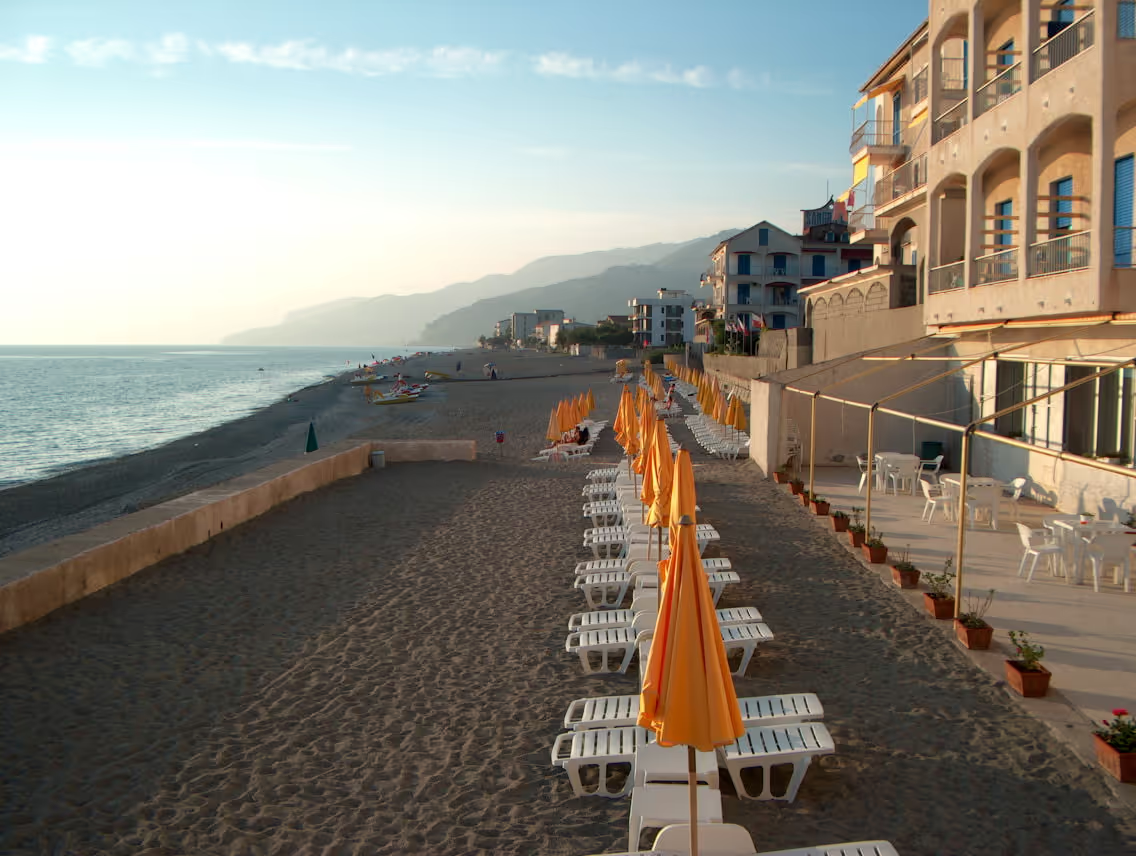
The town of stonemasons and Spinelli marquises: a village 350 metres up on the slopes of the Coastal Range, with the mother church consecrated in 1166, the twelve-column bell tower of the Immacolata and a fief that for three centuries also ruled Paola and Guardia. Below, the Marina on the Tyrrhenian.
-
Guardia Piemontese
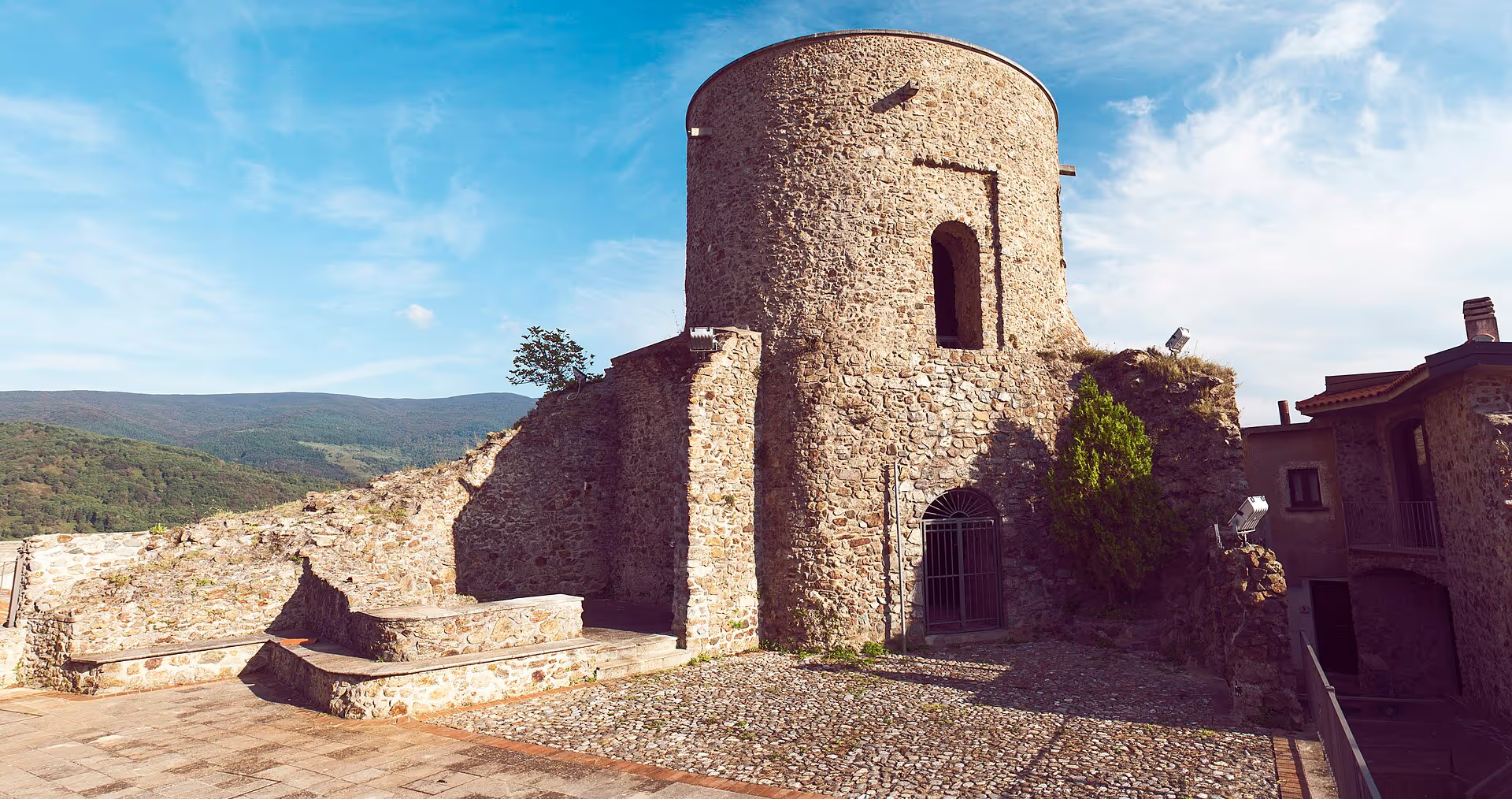
The Occitan island of the South: the village 515 metres above the Tyrrhenian founded by Waldensians from the Piedmont valleys, where Guardiolo is still spoken and where the Porta del Sangue, the peephole doors and the Val Pellice rock recall the night of 5 June 1561.
-
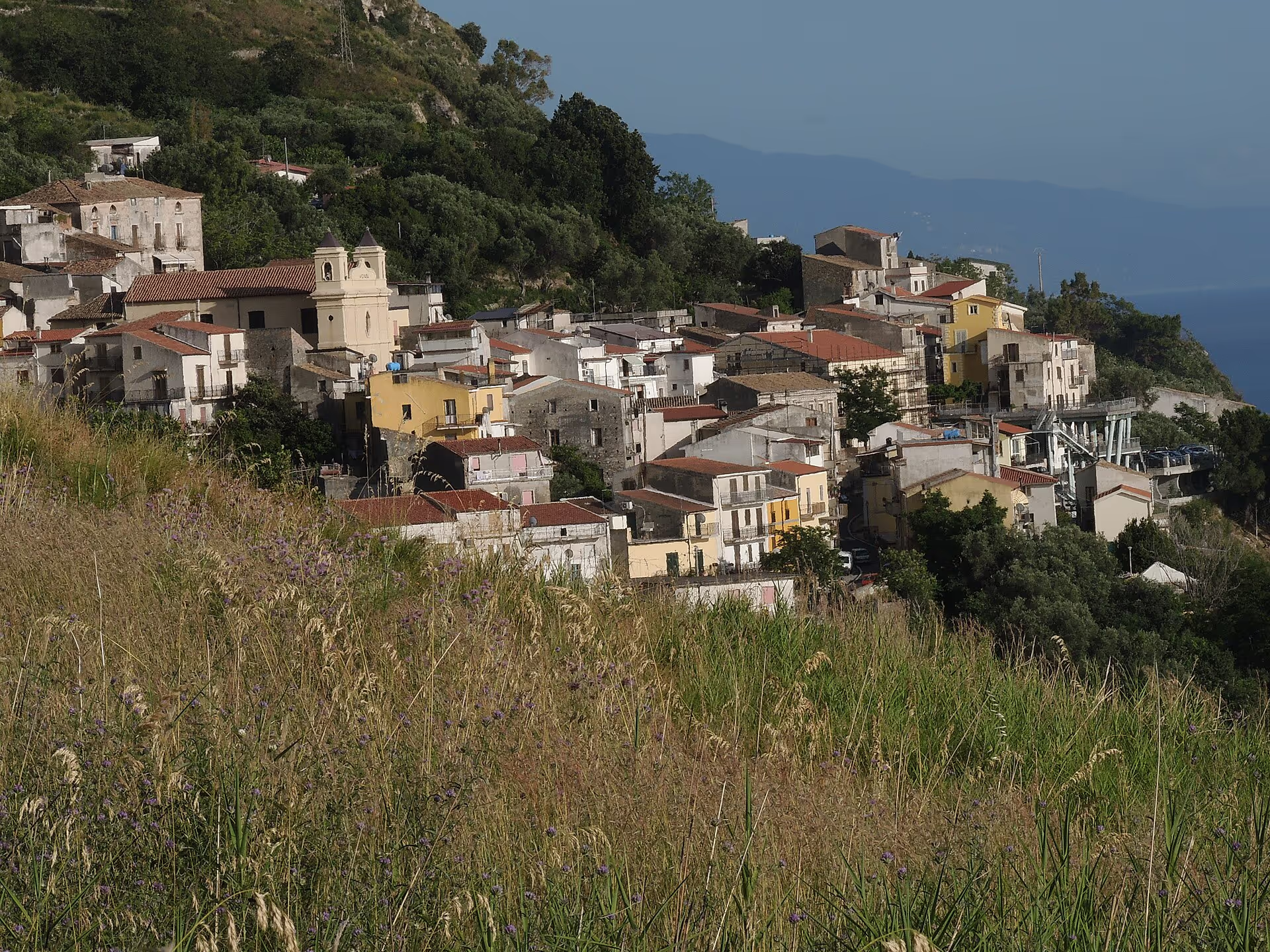
Acquappesa
The town of the “hanging water”: six kilometres of coast between the Fiumicello and the Bagni river, a village its people call U Casàle, the woods of Monte Pistuolo and the Terme Luigiane, with sulphurous springs known since antiquity and five Giro d’Italia stage finishes.
-
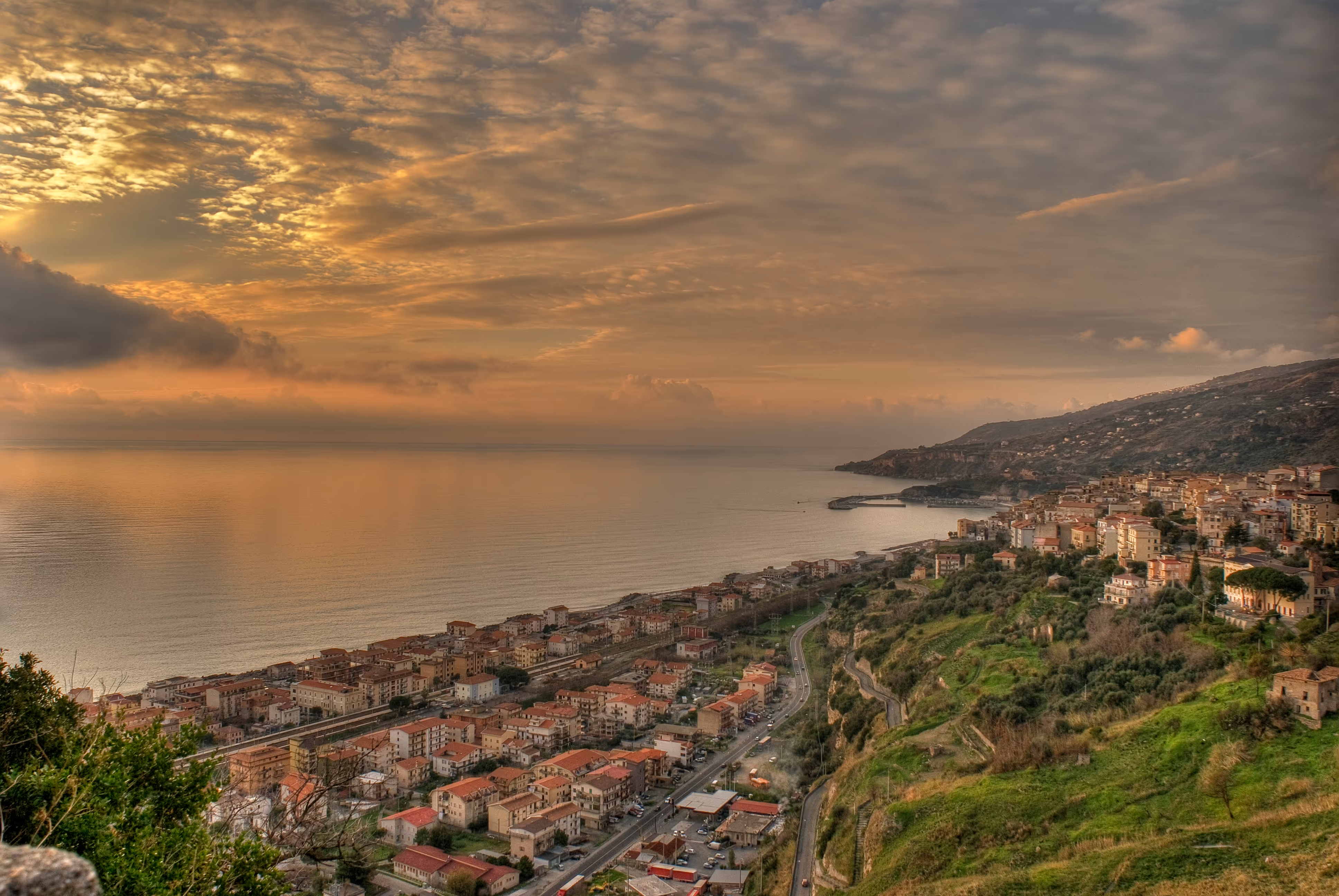
Cetraro
The abbot’s town: from 1086 to 1810 Cetraro was a fief of the Benedictines of Montecassino, remembered in the church of San Benedetto with its Baroque organ, the three gates of the old town and the sea procession of 11 July. Below, the Marina, Borgo San Marco and the marina.
Itineraries through here
-
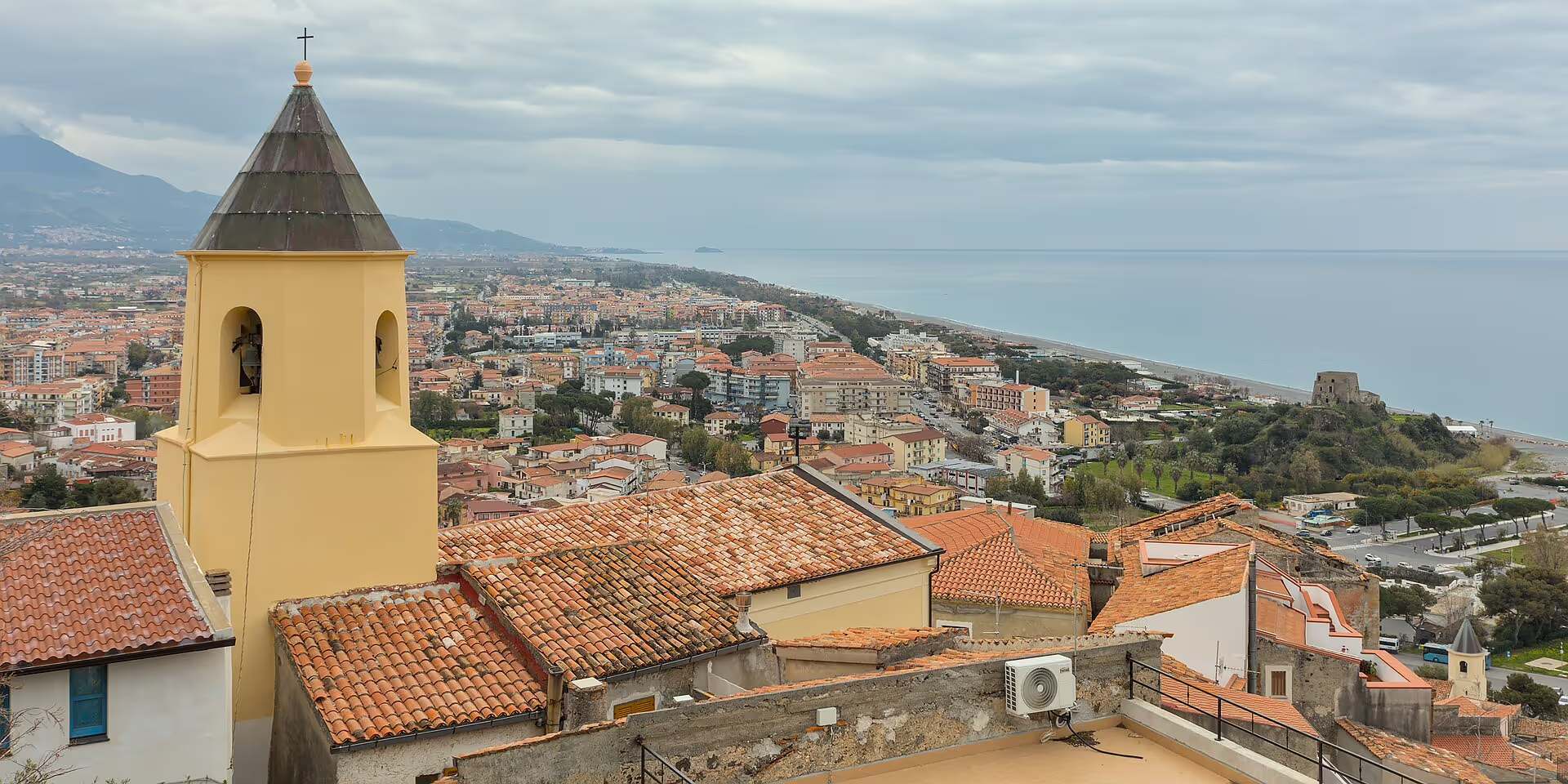 4 daysGrand tour
Grand Tour of the Riviera dei Cedri
Four days from north to south along the Upper Tyrrhenian Cosentino coast: islands, Norman towns, murals and sanctuaries.
11 stops8 townsMay–OctoberSee the stops - 2 daysSacred & culture
In the footsteps of the sacred
Two days among sanctuaries and devotion, from Saint Francis of Paola to the Madonna della Grotta.
3 stops3 townsAll year roundSee the stops
Where to stay
- Le ChambreGuest house · Paola
- Palazzo ScorzaHostel · Paola
- sant'agostinoHotel · Paola
Indicative information from OpenStreetMap. Check availability and reviews on the external platforms.
Where to eat
- Atmosfera VersatileRestaurant · Paola
- Bar ParadiseBar · Paola
- Brunnen CafeBar · Paola
- FloraRestaurant · Paola
- Il CantagalliIce cream · Paola
- Il CastelloIce cream · Paola
- krystalRestaurant · Paola
- La ConchigliaCafé · Paola
- Le MimoseRestaurant · Paola
- pizzeria pulcinellaRestaurant · Paola
- Ristorante Pizzeria Bar PetrullaRestaurant · Paola
- ScialabéRestaurant · Paola
Indicative information from OpenStreetMap. Check availability and reviews on the external platforms.
Do you run a local business?
Update the listing or discover how to give your business more visibility.
Join the guide for freeHow to get to Paola
- Reference railway station
- Paola
- about 1 km as the crow flies from the centre
- Train times (Trenitalia) ↗ Guide: by train
- Nearest airport
- Lamezia Terme International Airport (SUF)
- about 54 km as the crow flies from the centre
- Airport website ↗ Guide: by plane
- By car: A2 “del Mediterraneo” motorway
-
From the north · A2 Rende / Cosenza north SS107 Silana-Crotonese → SS18 north along the coast
From the south · A2 Falerna SS18 Tyrrhenian coastal road heading north along the coast
- Driving directions (Google Maps) ↗ Guide: by car
Straight-line distances computed from verified coordinates: the road route is longer. Check times and connections on the operators’ websites.
Frequently asked questions
- On the Tyrrhenian coast of the province of Cosenza, Calabria, at the southern end of the Upper Tyrrhenian Cosentino coast, between Fuscaldo and San Lucido; it is the most populous town of the Riviera dei Cedri and its main railway hub.
- A hermit born in Paola in the 15th century, founder of the Minim order, who died in 1507 and was canonised in 1519: he is patron of Calabria and of seafarers, and his sanctuary is in Paola.
- The Sanctuary of Saint Francis with the Via dei Miracoli and the hermitage, the underground church of Sotterra, the Seven Channels fountain with the stairway and the Rocchetta quarter with the Porta di San Francesco, the Clock Tower and the castle.
- An underground church in contrada Gaudimare, probably of the 9th–10th century, buried by landslides and rediscovered in 1874; it preserves Byzantine frescoes such as the Ascension and the Annunciation, and graffiti left by medieval pilgrims.
- The solemn celebrations take place from 1 to 4 May, with processions on land and at sea of the saint’s bust and cloak; his birth is remembered on 27 March and his death on 2 April.
- Because of the legend of the cloak: refused by a boatman, he is said to have crossed the Strait of Messina sailing on his own cloak.
- A monumental sandstone fountain at the foot of Paola’s stairway, born as a trough in the 15th century and enriched in 1636 with the basin bearing the saint’s image; it survived the bombing of 1943.
- The reference station is Paola, on the Tyrrhenian railway line, about 1 km as the crow flies from the centre of Paola. Times and connections on the Trenitalia website.
- The nearest airport is Lamezia Terme International Airport (SUF), about 54 km as the crow flies; from there you continue by train from Lamezia Terme Centrale along the Tyrrhenian line, or by car on the A2 motorway.
Where is Paola?
Who was Saint Francis of Paola?
What can you see in Paola in one day?
What is the church of Sotterra?
When is the feast of Saint Francis in Paola?
Why is Saint Francis the patron of seafarers?
What is the Seven Channels fountain?
Which is the nearest railway station to Paola?
Which is the nearest airport to Paola?
Discover locally
Live, up-to-date results with real reviews, on external platforms. We don’t hand-pick individual businesses we can’t verify.
Videos
Events
- Festa di San Francesco di Paola 1–4 maggio
Processioni a terra e a mare del busto e del mantello del santo.
Yearly