Upper Tyrrhenian Cosentino · Riviera dei Cedri
Papasidero
The Pollino village where the Upper Tyrrhenian Cosentino coast meets prehistory: the Grotta del Romito with the great aurochs engraved between 14,000 and 12,000 years ago, fifteen kilometres of the Lao river gorge inside a nature reserve and a medieval village with a Norman-Swabian castle and the gate of the changing of the Guard.
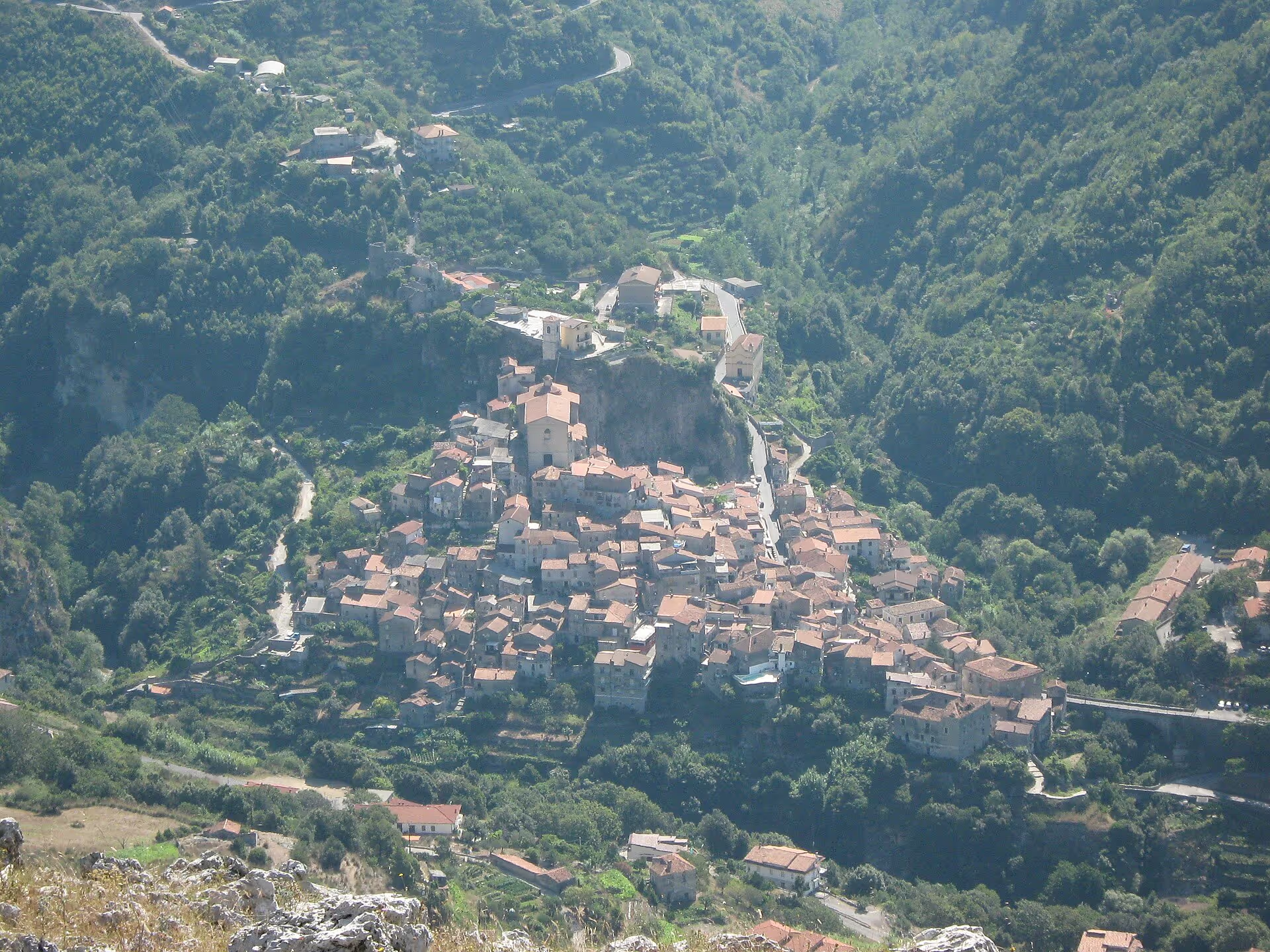
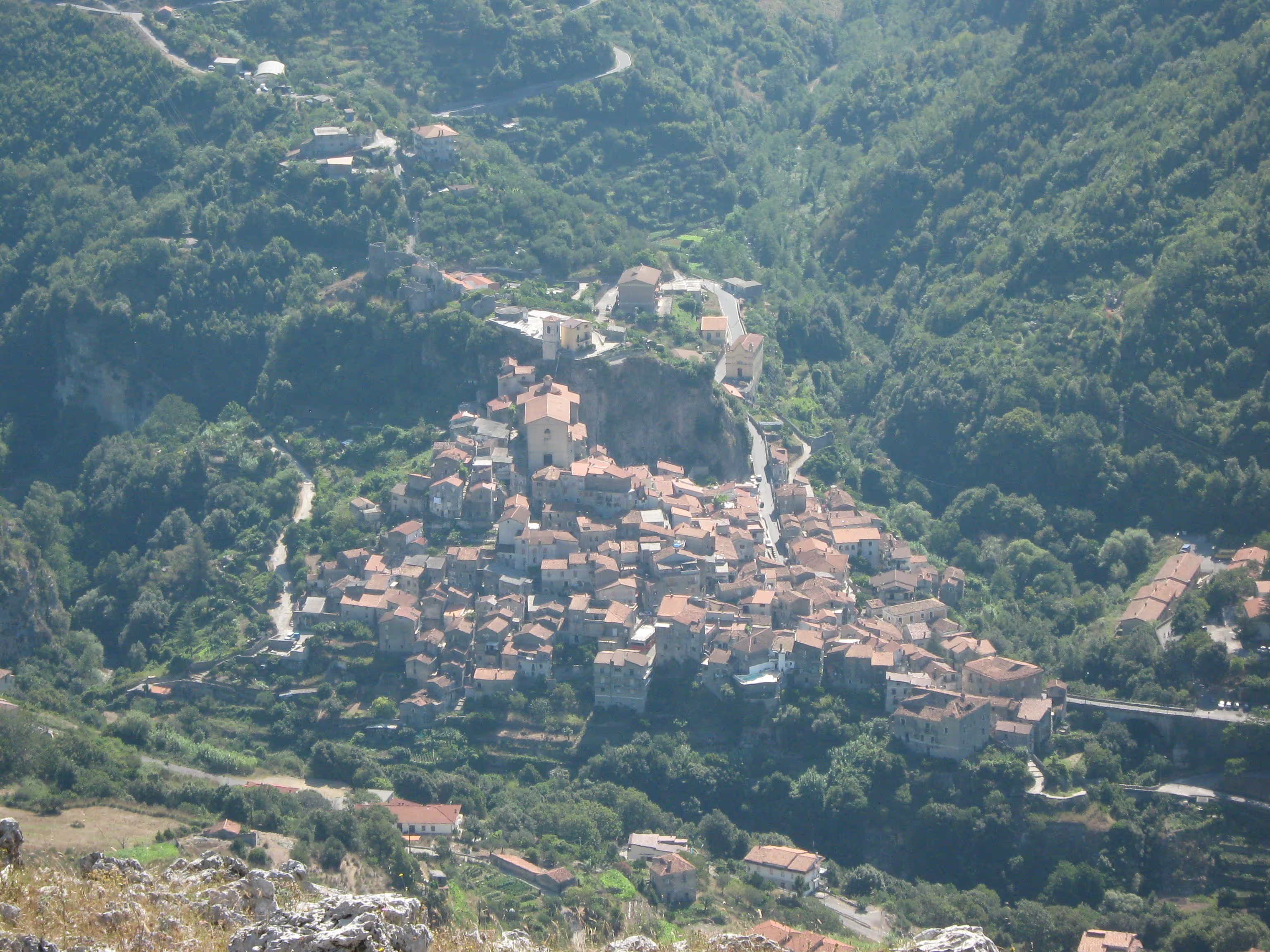
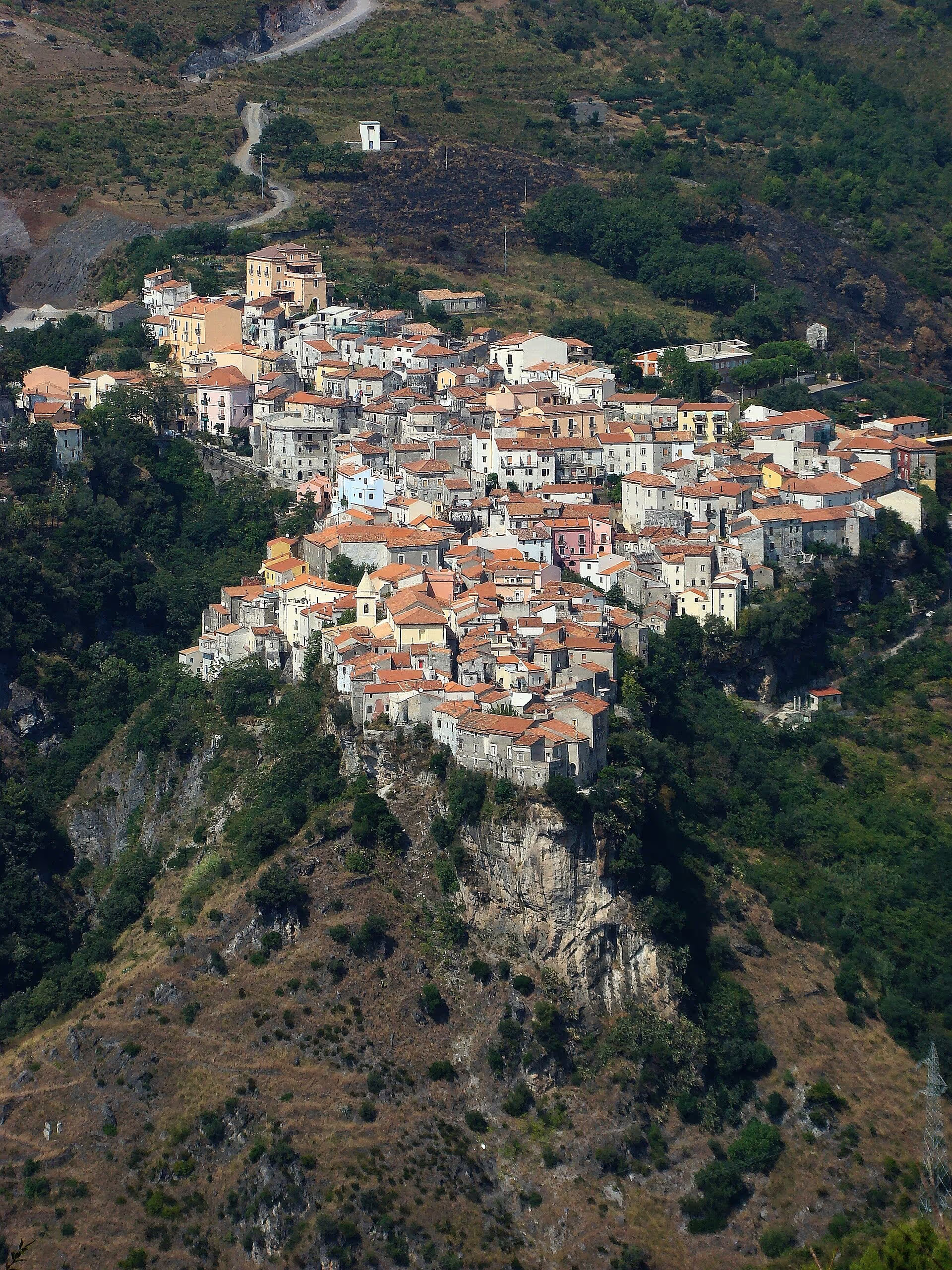
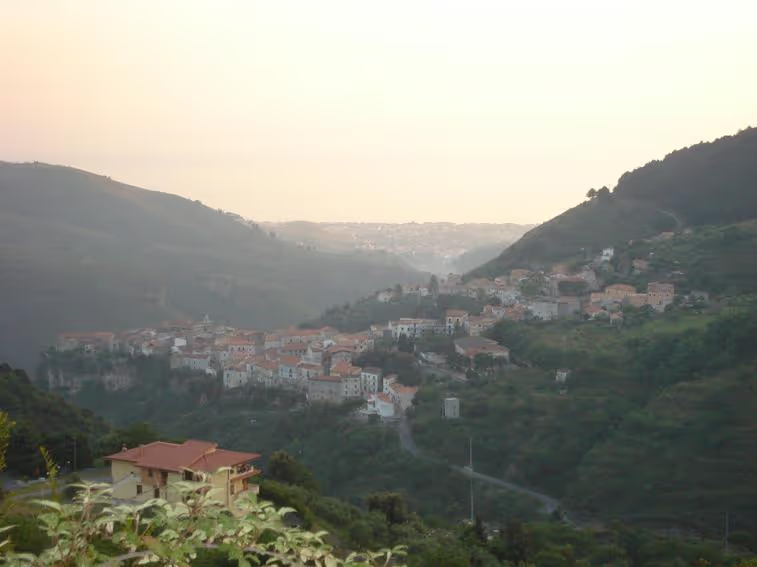
Papasidero is a town of about 570 inhabitants in the province of Cosenza, in the hinterland of the Upper Tyrrhenian Cosentino coast, inside the Pollino National Park. The village stands on a crag at whose foot runs the Lao river, which here flows deep in a gorge for some fifteen kilometres, and its whole territory, between 75 and 1,463 metres, is the Valle del fiume Lao nature reserve. At Nuppolara lies the Grotta del Romito, an Upper Palaeolithic site holding one of the oldest examples of prehistoric art in Italy: the engraving of a great aurochs, dated between 14,000 and 12,000 years ago.
Geography
The municipal territory ranges between 75 and 1,463 metres and coincides with the Valle del fiume Lao nature reserve, established in 1987 by decree of the Ministry of the Environment and covering 5,200 hectares, within the Pollino National Park. The Lao, which rises in Basilicata as the Mercure and takes its present name on entering Calabria near Laino Borgo and Laino Castello, crosses Papasidero for about 15 kilometres, flowing deep in a gorge; near Orsomarso it receives the Argentino, leaves the gorge and reaches the Tyrrhenian at Scalea. Papasidero borders Aieta, Laino Castello, Mormanno, Orsomarso, Praia a Mare and Santa Domenica Talao; its hamlets are Avena, Montagna, Nuppolara, Santo Nocaio, Tremoli and Vitimoso.
History
Papasidero’s history begins long before the village. In the Grotta del Romito human presence is documented from the Gravettian through the Epigravettian and Mesolithic to the Neolithic, with finds spanning 23,000 to 10,000 years ago. In antiquity the Lao was called Laus and marked the border between the Lucanians and the Bruttians. The name is traced to the Greek Papàs Isidoros (Παπάς Ισίδωρος), a Byzantine Basilian monk from a Greek Orthodox monastery in the area; some Calabrian historians instead believe Papasidero arose in the territory of ancient Skidros, a colony of Sybaris that linked Sybaris and Laos, and that the name derives from it. From the Middle Ages the village keeps its layout, with the mother church and the Norman-Swabian castle at the top and the town walls with their gates.
What to see
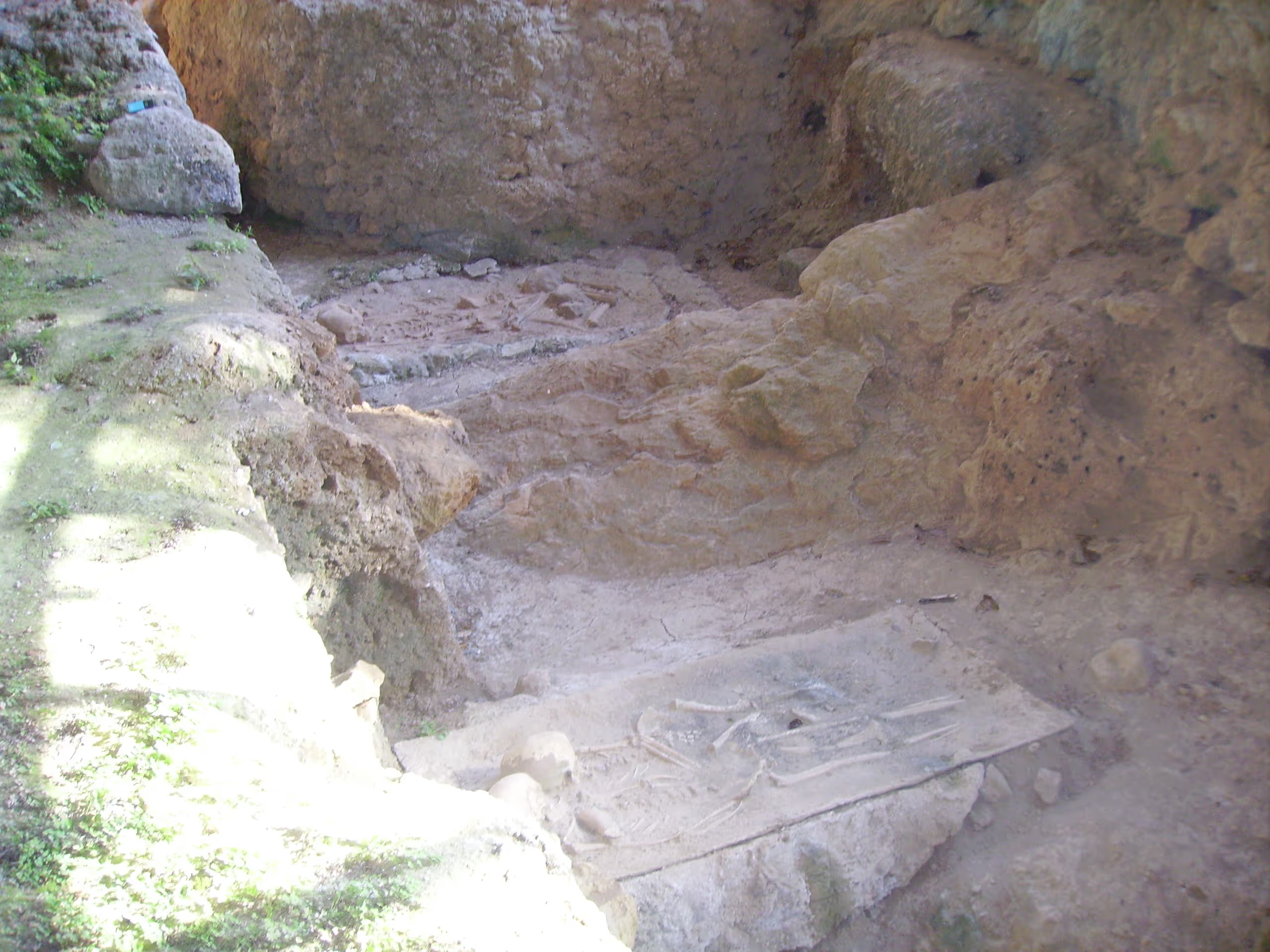
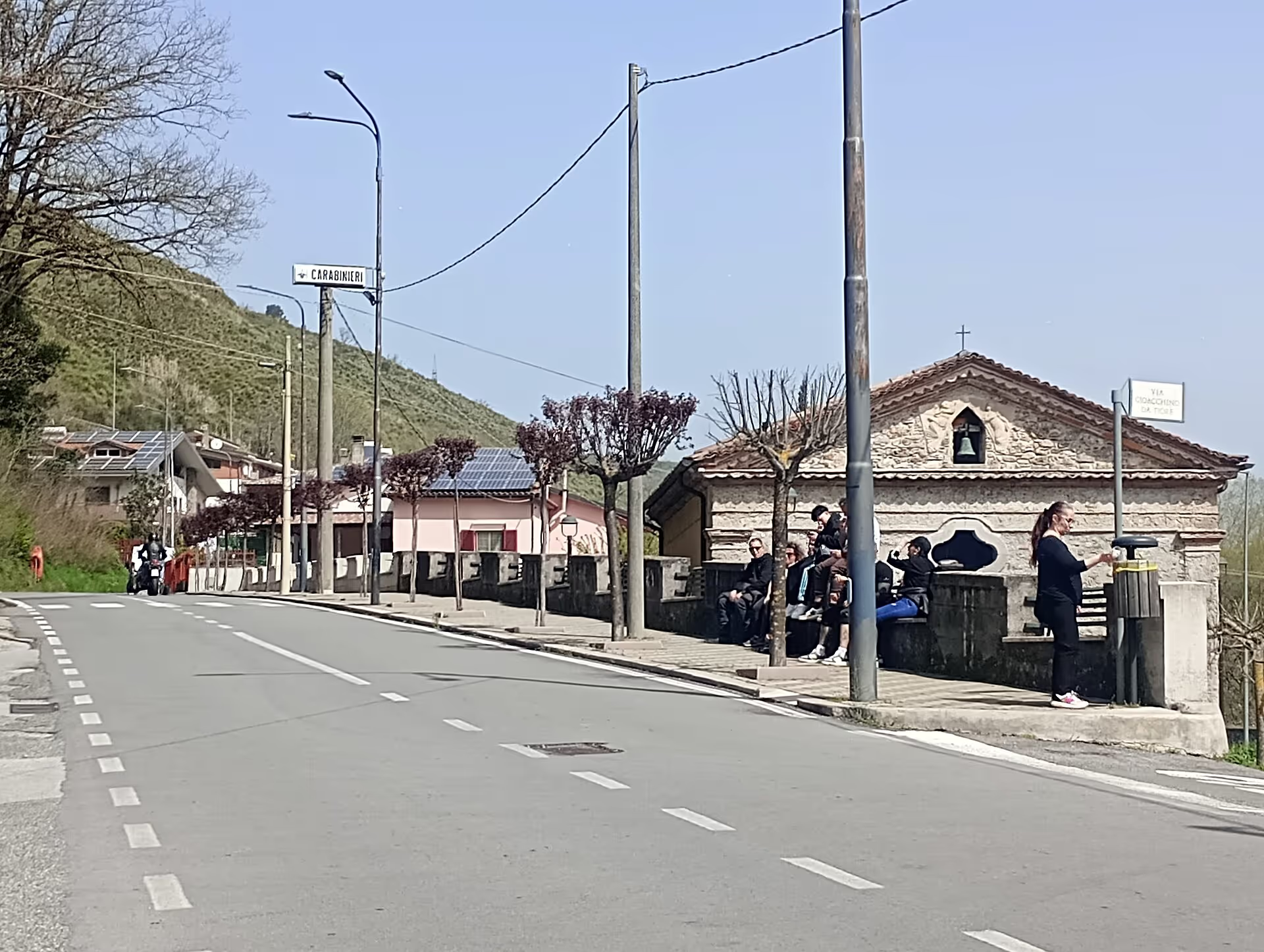
The Grotta del Romito is a rock shelter and a cave, originally a single space, artificially separated when the cave was used as a hermitage. On the boulder between the two is the engraving of the great aurochs (Bos primigenius), dated between 14,000 and 12,000 years before present and likened in style to Franco-Cantabrian art; the site has yielded the remains of nine individuals of Homo sapiens and can be visited today, with walkways, lighting and an antiquarium. In the village, the medieval old town culminates in the mother church of San Costantino and the Norman-Swabian castle; of the ancient gates in the walls, the one known as the gate of the changing of the Guard still survives. The territory is also home to the sanctuary of Our Lady of Constantinople, from the 17th–18th century, dedicated to the patron saint.
The Lao river
The Lao stands out among Calabrian rivers for the abundance of its waters: its average flow exceeds 12 m³/s, the fourth in the region after the Crati, Neto and Coscile, and even in summer it rarely falls below 5 m³/s, thanks to the permeability of its basin. About 55 km long, it crosses Papasidero along its most enclosed stretch, a deep gorge which, together with the purity of its waters, makes it a destination for rafting and canoeing enthusiasts. Brown trout, rovella, bleak and eels live in its waters. The name comes from the ancient Greek colony of Laos, a polis of Magna Graecia.
Coat of arms and patron saints
Papasidero’s coat of arms, granted by decree of the President of the Republic on 21 December 1978, is blue with a three-peaked mountain in natural colours, surmounted by three gold stars with eight rays. The stars allude to the Latin sidereus, “starry”, by assonance with the village’s name, and sit above the crag on which the village stands; the banner is a cloth divided into white and blue. The patron saint is Our Lady of Constantinople, celebrated on the Tuesday after Pentecost; the co-patron San Rocco is celebrated on the Sunday after the Ferragosto holiday. The inhabitants are called papasideresi or papasironi.
Getting there
Papasidero lies inland, in the valley of the Lao, the river which, after crossing the municipality, reaches the Tyrrhenian at Scalea. Among the neighbouring towns is Praia a Mare, on the coast, served by Praja-Ajeta-Tortora station on the Tyrrhenian line; from the coast you head back inland to the village. The region’s nearest airport is Lamezia Terme.
Places
What to see around here.
-
 Culture
 Grotta del Romito
Papasidero’s Palaeolithic site: the engraving of the great aurochs (14,000–12,000 years ago), nine Homo sapiens burials and 13,000 years of use from the Gravettian to the Neolithic.
-
 Culture
 Sanctuary of the Madonna di Costantinopoli
The 17th–18th-century sanctuary dedicated to Papasidero’s patron saint, Our Lady of Constantinople, celebrated on the Tuesday after Pentecost.
- Nature
Valle del fiume Lao nature reserve
The 5,200-hectare reserve established in 1987 in the Pollino park: fifteen kilometres of the Lao gorge at Papasidero, abundant flow all year round, rafting and canoeing.
Nearby towns
Keep exploring the Upper Tyrrhenian Cosentino coast from here.
-
Santa Domenica Talao
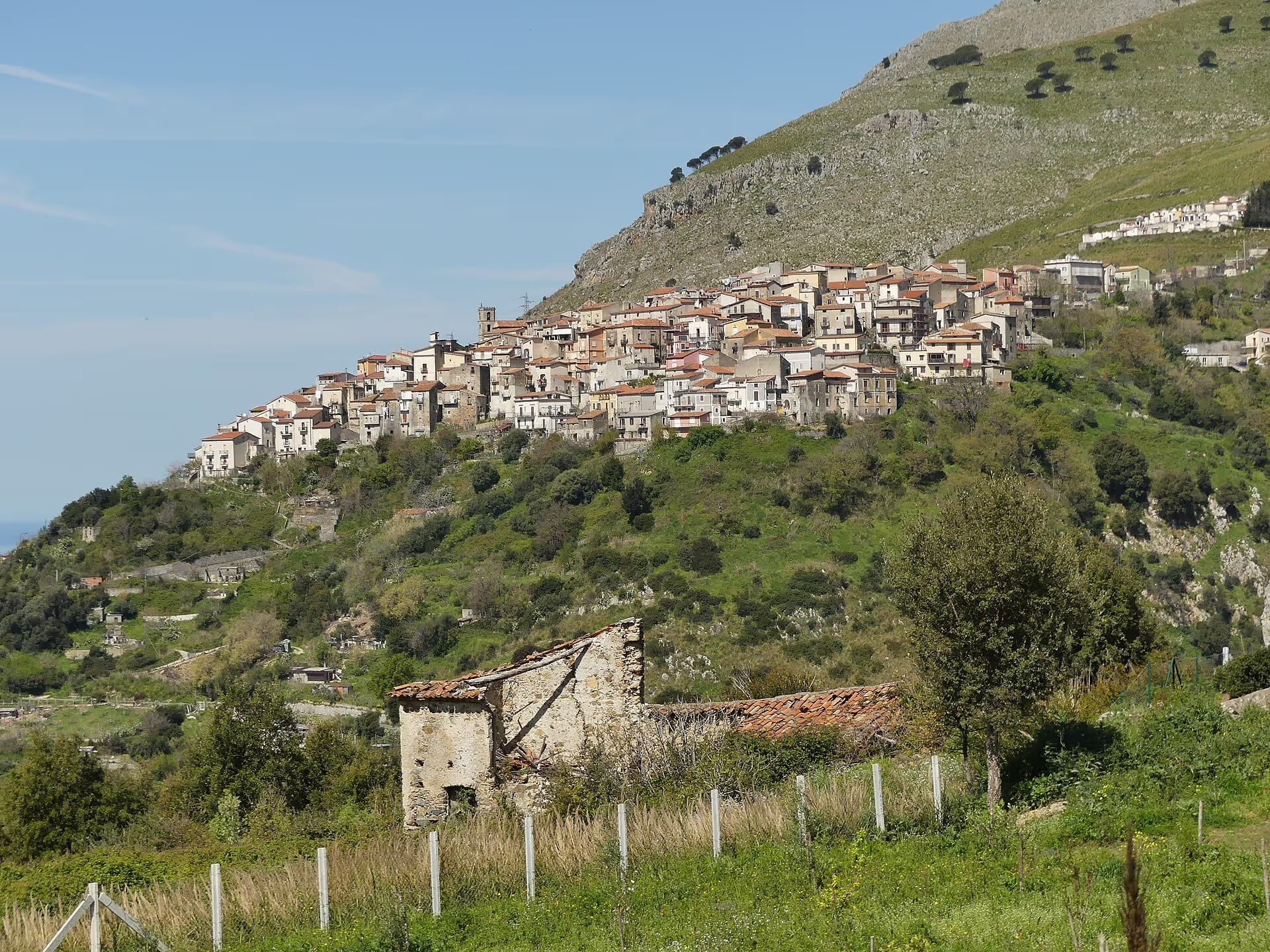
The village that looks over the Riviera dei Cedri from the Lao valley: founded in the 17th century by the Spinelli princes, grown with noble palazzi and chapels, tied by a century of emigration to the Dominican Republic and twinned with Santo Domingo.
-
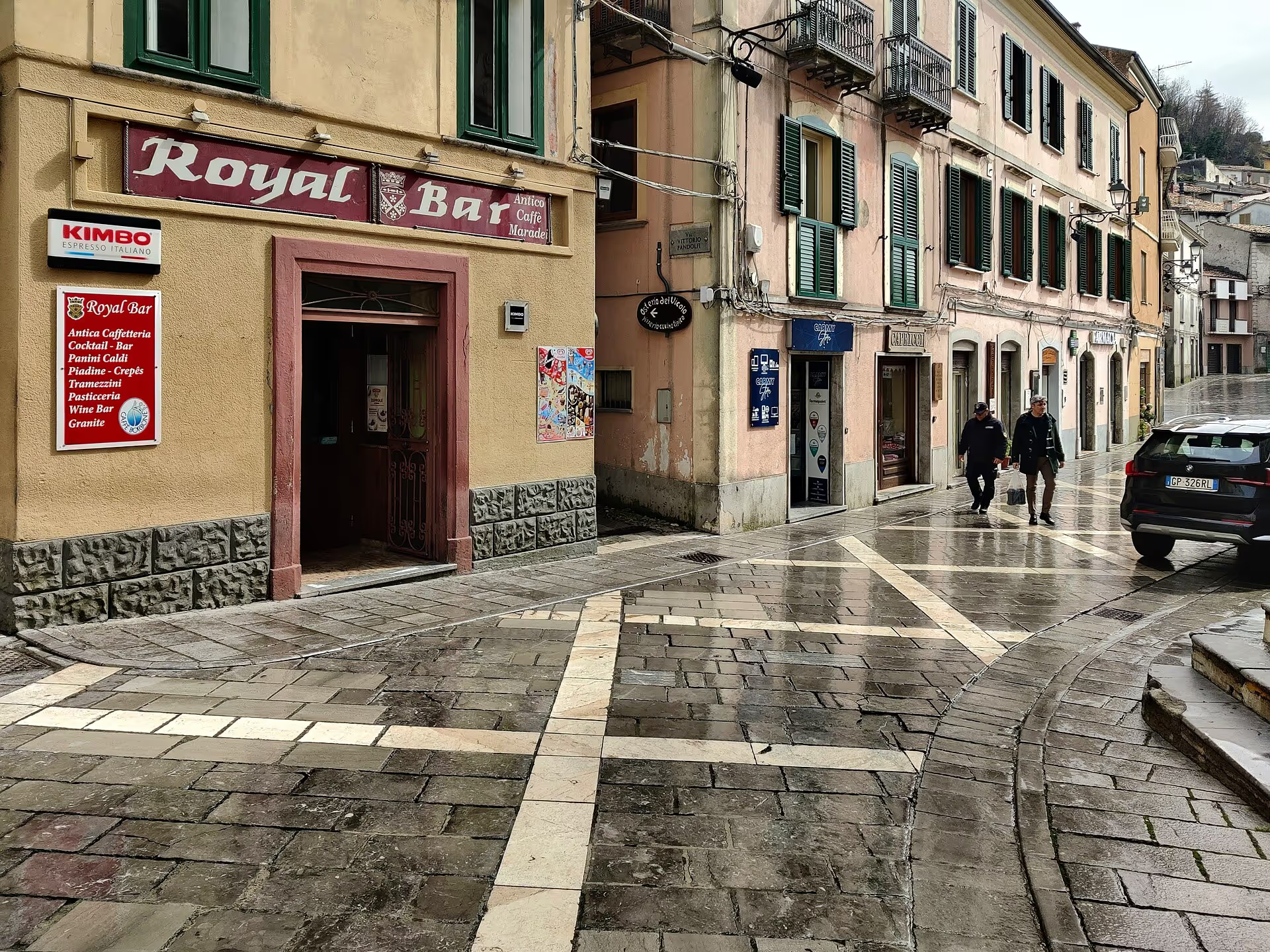
Mormanno
The mountain village at 820 metres between the Pollino and the Orsomarso Mountains: the 1928 votive lighthouse for the Calabrians who fell in the Great War, the Baroque mother church of Santa Maria del Colle, the 9th-century Annunziata and a town that looks from the Upper Tyrrhenian Cosentino hinterland over the Mercure valley.
-
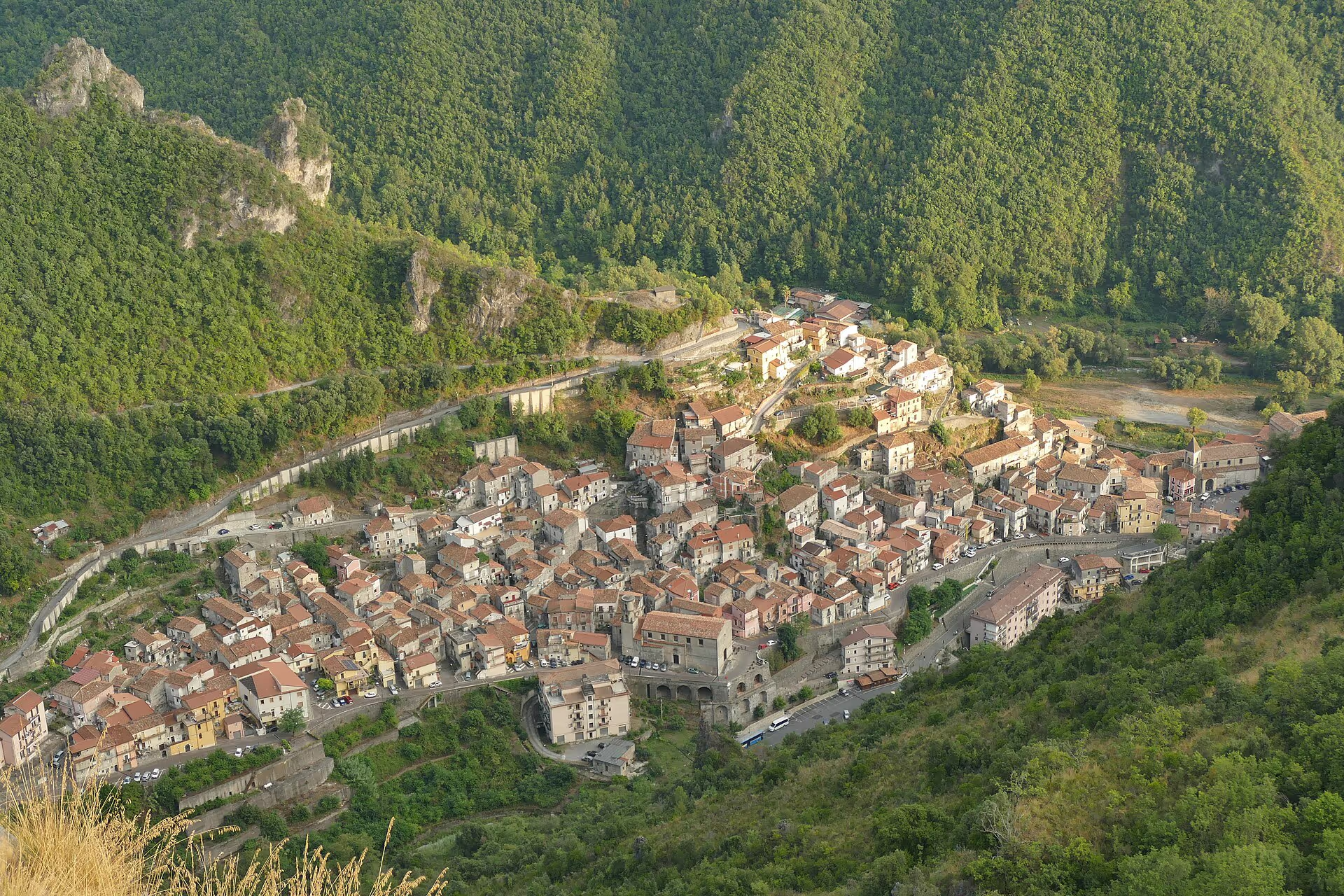
Orsomarso
The village that gives its name to a mountain range: Orsomarso, in the Pollino park, keeps the Argentino valley with the last native roe deer and the Bosnian pine, the 10th-century Basilian chapel of Santa Maria di Mércuri and a village that grew around the fortress of Ursus Martius.
-
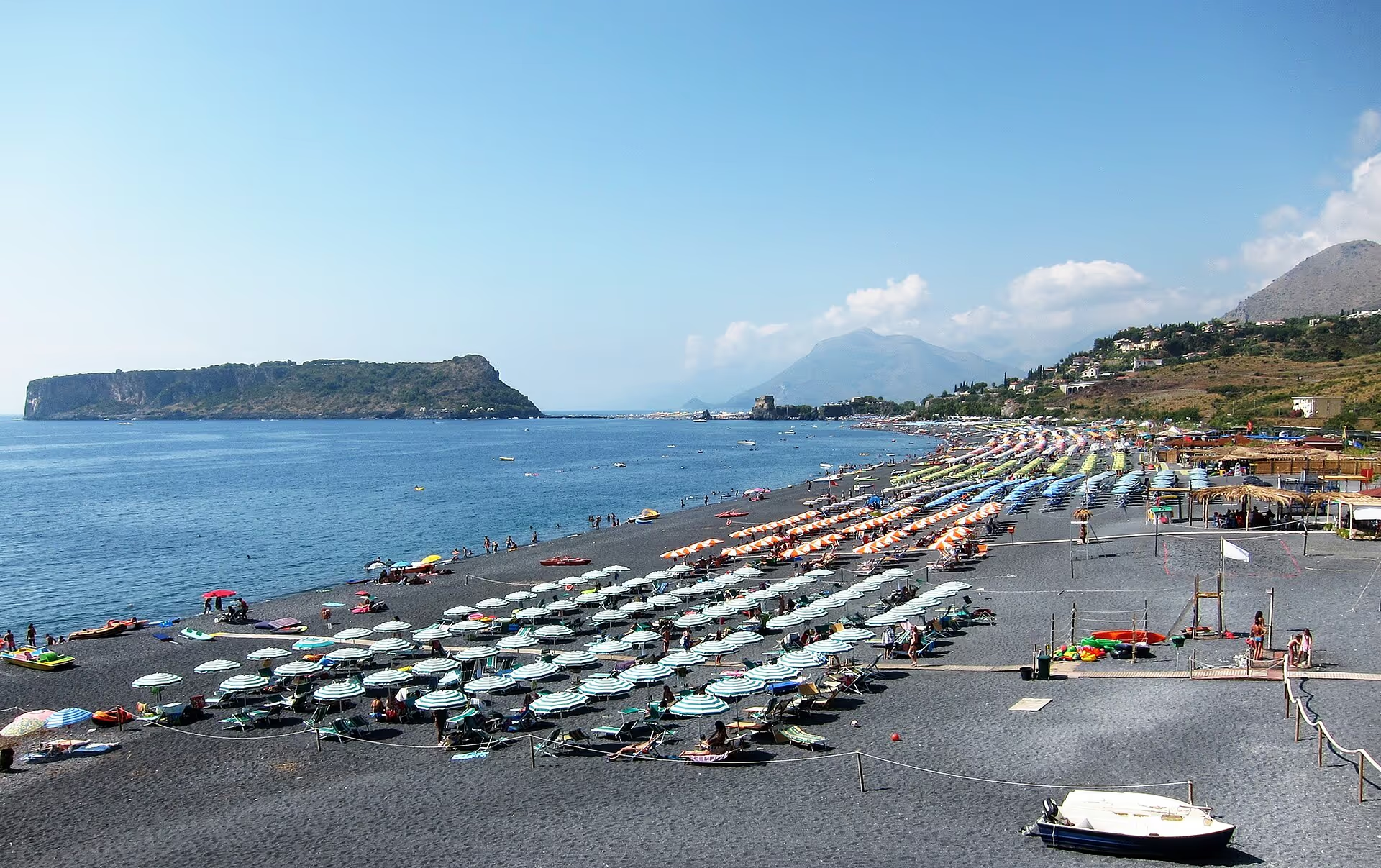
Praia a Mare
The beach town of the Upper Tyrrhenian Cosentino coast on the Basilicata border: the island of Dino with its sea caves, the rock sanctuary of the Madonna della Grotta and the towers that once watched over the shore.
-
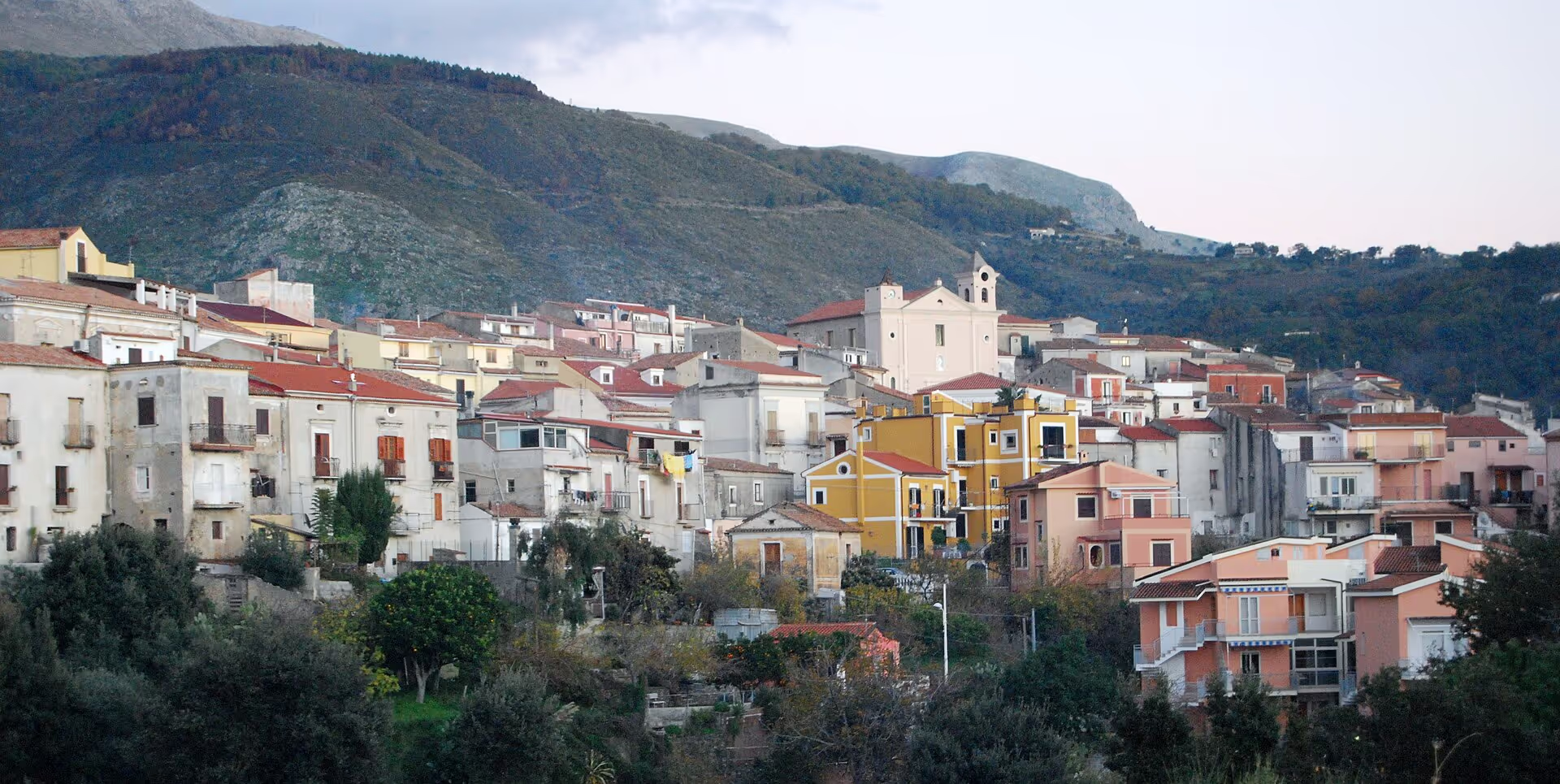
San Nicola Arcella
The cliff-top village of the Riviera dei Cedri: three bays in three kilometres, the rock arch of the Arcomagno, the Crawford Tower and a belvedere that takes in three regions.
-
Aieta
The Pollino’s “city of the eagle”: at 524 metres, one of the Borghi più belli d’Italia, Aieta keeps the Renaissance Palazzo Martirano-Spinelli, sixteenth-century churches, the Valle dei Mulini and, on Monte Calimaro, the remains of Aieta Vetere, a few kilometres from the sea at Praia.
-
Laino Borgo
Calabria’s gateway to the Pollino, where the Lucanian Mercure becomes the Lao: Laino Borgo brings together the sixteenth-century chapels of the Sanctuary of the Madonna dello Spasimo, the Good Friday Giudaica, the memory of Blessed Pietro Paolo Navarro and the river gorges, for rafting and canyoning.
-
Tortora
The northern gateway of Tyrrhenian Calabria: the village born of refugees from Blanda, the Oenotrian, Lucanian and Roman city on the Palècastro hill, the Palaeolithic site of Rosaneto, the Pollino mountains and the Marina on the Gulf of Policastro.
Itineraries through here
- 3 daysWellness & spa
Nature and Pollino in three days
Three days among spa, Palaeolithic cave and mountains of the Pollino National Park.
6 stops4 townsMarch–NovemberSee the stops - 4 daysWellness & spa
Nature and Pollino in four days
Four days among spa, cave, mountains and river in the Pollino National Park.
8 stops5 townsMarch–NovemberSee the stops
Where to stay
- B&B LaoGuest house · Papasidero
- La FontanellaGuest house · Papasidero
Indicative information from OpenStreetMap. Check availability and reviews on the external platforms.
Where to eat
- Bar Della PiazzaCafé · Papasidero
- Bar Ristorante Grotta del RomitoRestaurant · Papasidero
- Bar SpagnuoloCafé · Papasidero
Indicative information from OpenStreetMap. Check availability and reviews on the external platforms.
Do you run a local business?
Update the listing or discover how to give your business more visibility.
Join the guide for freeHow to get to Papasidero
- Nearest active station
- Praja-Ajeta-Tortora
- about 11 km as the crow flies from the centre
- Train times (Trenitalia) ↗ Guide: by train
- Nearest airport
- Lamezia Terme International Airport (SUF)
- about 111 km as the crow flies from the centre
- Airport website ↗ Guide: by plane
- By car: A2 “del Mediterraneo” motorway
- Inland town: the relevant A2 exits are described in the “By car” guide; use the directions link for the current route.
- Driving directions (Google Maps) ↗ Guide: by car
Straight-line distances computed from verified coordinates: the road route is longer. Check times and connections on the operators’ websites.
Frequently asked questions
- An Upper Palaeolithic site at Nuppolara, in Papasidero, made up of a rock shelter and a cave; it holds the engraving of a great aurochs dated between 14,000 and 12,000 years ago and has yielded the remains of nine Homo sapiens.
- Nine individuals, women and men, who lived between about 14,500 and 10,800 years ago; one had dwarfism, one survived for a long time half-paralysed thanks to the care of the community, and two buried together were related through the maternal line.
- Yes: the Lao river crosses the municipality for about 15 km in a deep gorge, with abundant flow all year round, and is a destination for rafting and canoeing.
- A 5,200-hectare protected area established in 1987 within the Pollino National Park, coinciding with Papasidero’s territory.
- From the Greek Papàs Isidoros, a Basilian monk of the area; some historians instead link it to the ancient Sybarite colony of Skidros.
- Our Lady of Constantinople on the Tuesday after Pentecost and San Rocco on the Sunday after Ferragosto.
- Papasidero has no station of its own: the nearest active station as the crow flies is Praja-Ajeta-Tortora, on the Tyrrhenian railway line, about 11 km from the centre. From there you continue by road; times and connections on the Trenitalia website.
- The nearest airport is Lamezia Terme International Airport (SUF), about 111 km as the crow flies; from there you continue by train from Lamezia Terme Centrale along the Tyrrhenian line, or by car on the A2 motorway.
What is the Grotta del Romito?
Who were the people of the Grotta del Romito?
Can you go rafting in Papasidero?
What is the Valle del fiume Lao nature reserve?
Where does the name Papasidero come from?
When are Papasidero’s patron saints’ feasts?
Which is the nearest railway station to Papasidero?
Which is the nearest airport to Papasidero?
Discover locally
Live, up-to-date results with real reviews, on external platforms. We don’t hand-pick individual businesses we can’t verify.