Upper Tyrrhenian Cosentino · Riviera dei Cedri
Sangineto
The village where the Riviera dei Cedri ends: a hilltop old centre with the castle of the Sanseverino of Bisignano and the peace olive tree of 1918, the 13th-century church of Santa Maria della Neve and, by the sea along the SS18, Sangineto Lido. One of the great feudal families of Angevin Calabria took its name from here.
Sangineto is a town of about 1,200 inhabitants in the province of Cosenza, on the Upper Tyrrhenian Cosentino coast, and marks the southern end of the Riviera dei Cedri, the coastal strip that runs from Tortora to here. It has two cores: the old centre on the hill, gathered around the castle, and Sangineto Lido, at Le Crete, near the sea along the SS18 state road. The town’s name is also that of the Sangineto family, of Norman origin, which in the 14th century ruled counties and towns of Angevin Calabria and took its surname from this very fief.
Geography
The territory climbs from the shore to the inland hills and borders Belvedere Marittimo, Bonifati and Sant’Agata di Esaro. Besides the main village and the Lido it includes the hamlets of Brombolo, Cacciola, Pantana, San Basile and Santo Ianni. By the sea, Sangineto Lido is the part that comes alive in summer, when its population grows markedly compared with winter; on the hill the old centre keeps the layout of the feudal village. Sangineto is also the point where the Riviera dei Cedri, the stretch of the Upper Tyrrhenian Cosentino coast where the citron is grown and processed, reaches its southern limit.
History
Sangineto’s historical weight is greater than the town itself. In the 13th century the fief gave its surname to a family of Norman blood which, under the Angevins, became one of the most influential in the region. The name Ruggero Sangineto recurs several times in the sources: in 1287 a feudal lord of that name modernised the castle and walls of Belvedere, in 1298 a Ruggero di Sangineto became lord of San Marco Argentano and in 1299 a Ruggero Sangineto was the first count of Corigliano; the leading members of the house (Ruggero, Francesco, Gerardo and Ruggero II) all held the offices of captain general and justiciar of Calabria and of Val di Crati and Terra Giordana. Filippo Sangineto, a man of arms and later an official of King Robert of Anjou, is recorded from 1319 as lord of Brahalla, today’s Altomonte, which he turned into one of the leading artistic centres of Angevin Calabria, building the church of Santa Maria della Consolazione with works by Simone Martini and Bernardo Daddi. The house died out through the female line: in 1342 Bionda Sangineto married Roberto Sanseverino, count of Terlizzi, and through that marriage San Marco, Corigliano, Sangineto and Belvedere passed to the Sanseverino of Terlizzi; in 1380 Giovannello, last of the male line of Altomonte, died, and his sister Margherita married Venceslao Sanseverino. That is how the town passed to the Sanseverino, who in the 15th century split into the Salerno and Bisignano branches: it was the princes of Bisignano who built, in the second half of the 15th century, the castle that still dominates the village. A far more recent episode has entered the town’s memory: on 4 November 1918, the day of the armistice, Austrian prisoners planted an olive tree in the castle courtyard as a sign of peace, and it still grows today.
What to see
The Angevin castle, built by the Sanseverino princes of Bisignano in the second half of the 15th century, has a rectangular plan and keeps a wide arcade; in the middle of the courtyard rises the old olive tree of 1918. The parish church of Santa Maria della Neve, dating to 1200, holds a baptistery and a 17th-century portal. The route is completed by the Convent of San Francesco di Paola and three chapels, dedicated to San Giuseppe, the Madonna del Carmine and San Michele Arcangelo, the town’s second patron. The castle is so much part of its identity that it appears on the municipal coat of arms, drawn in gold with its four-arched loggia.
Coat of arms and patron saints
Sangineto’s coat of arms and banner were granted by decree of the President of the Republic on 29 February 1996. The shield is divided horizontally: in the upper, golden part, a green uprooted palm tree with four bunches of golden dates; in the lower, blue part, the castle of Sangineto without battlements, in gold with black masonry, with windowed side towers, a central body with two doors and a central loggia of four arches, set on a green ground. The banner is a cloth divided into blue and green. The patron saints are Santa Maria della Neve, celebrated on 5 August, and San Michele Arcangelo, on 28 and 29 September.
Food and crafts
Sangineto’s cooking is that of the rural hinterland: potato gnocchi with a sauce of sausage and braciole, aubergine fritters, the frissurata of dried courgettes, beans, potatoes and maize bread. From the countryside come sausages and capocollo, served as starters; among the first courses, hand-made fusilli with pork ragù, tagliatelle with beans and chickpeas, pasta and beans with ground red pepper, polenta with cabbage and broad beans or with potatoes, beans and roasted peppers. Aubergines return in many recipes and kid goat is the star of the main courses. A domestic craft of objects in willow, cane and rush, of lace and embroidery, survives, along with a private production of cheeses, honey, dried fruit, oil and wine.
Getting there
Sangineto is reached along the SS18 Tirrena Inferiore state road, which crosses the Lido; from there a road climbs to the old centre on the hill. The reference railway station is Belvedere Marittimo, on the Tyrrhenian line. By car from the A2 “del Mediterraneo” motorway: from the north, exit Lagonegro nord, then the SS585 Fondo Valle del Noce to the coast and the SS18 southwards; from the south, exit Falerna and the SS18 northwards. The nearest airport is Lamezia Terme.
Places
What to see around here.
-
 Culture
 Castle of Sangineto
The castle of the Sanseverino princes of Bisignano (second half of the 15th century), rectangular with a wide arcade: in the courtyard, the olive tree planted by Austrian prisoners on 4 November 1918.
- Old town
Old town of Sangineto
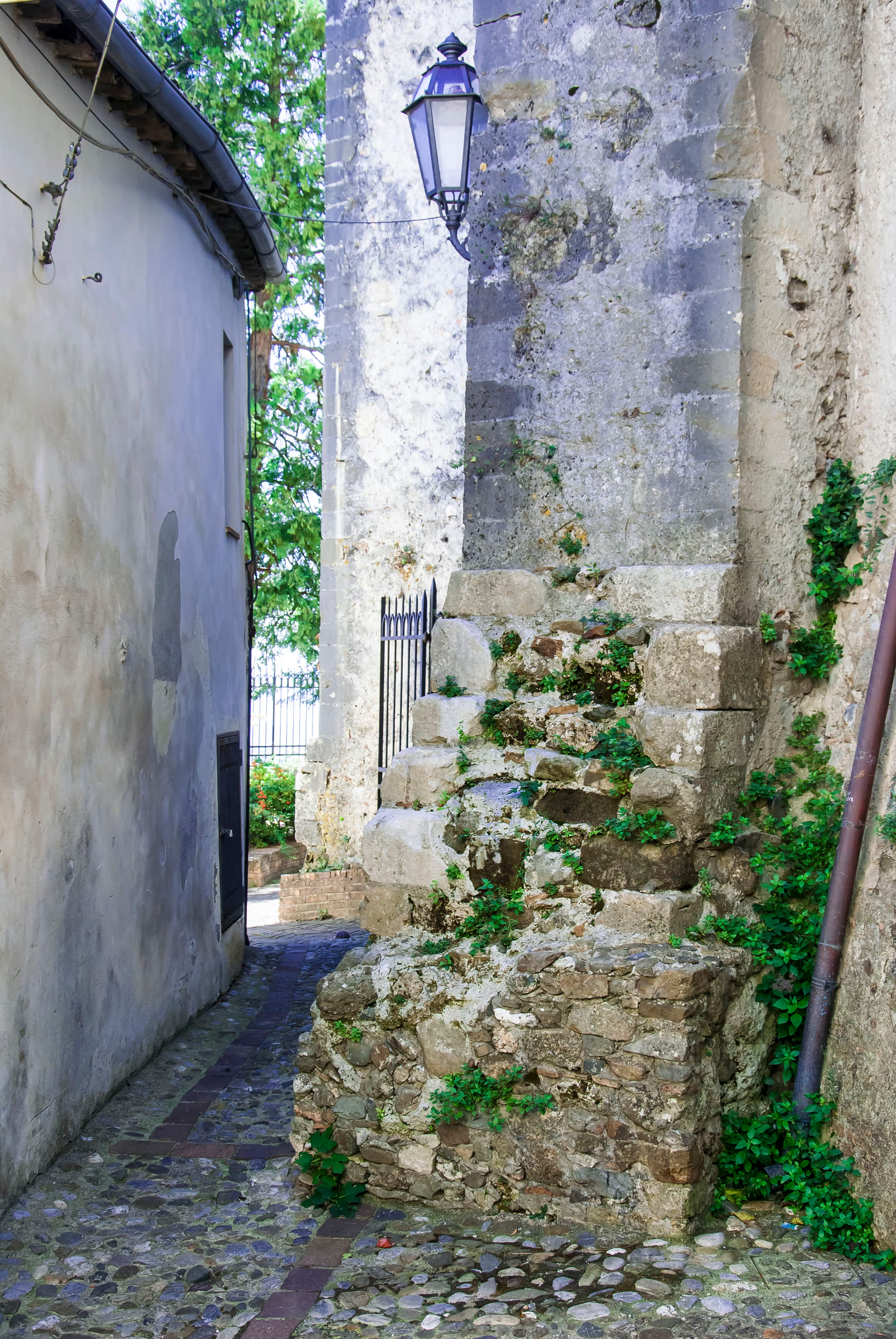
Sangineto’s hilltop village, gathered around the Sanseverino castle: Santa Maria della Neve with its 17th-century portal, the Convent of San Francesco di Paola and the chapels of San Giuseppe, the Carmine and San Michele.
- Beach
Sangineto Lido
Sangineto’s seaside at Le Crete, along the SS18, where the Riviera dei Cedri reaches its southern limit: the town’s beach quarter, lively in summer.
Nearby towns
Keep exploring the Upper Tyrrhenian Cosentino coast from here.
-
Bonifati
Two souls on the same coast: the village 425 metres up on the Coastal Range, with the ruins of Castel Bonifati, five churches rich in art and its historic palazzi, and Cittadella del Capo by the sea, ancient Fella, with the Capo and Fella towers from the 12th to the 16th century.
-
Belvedere Marittimo
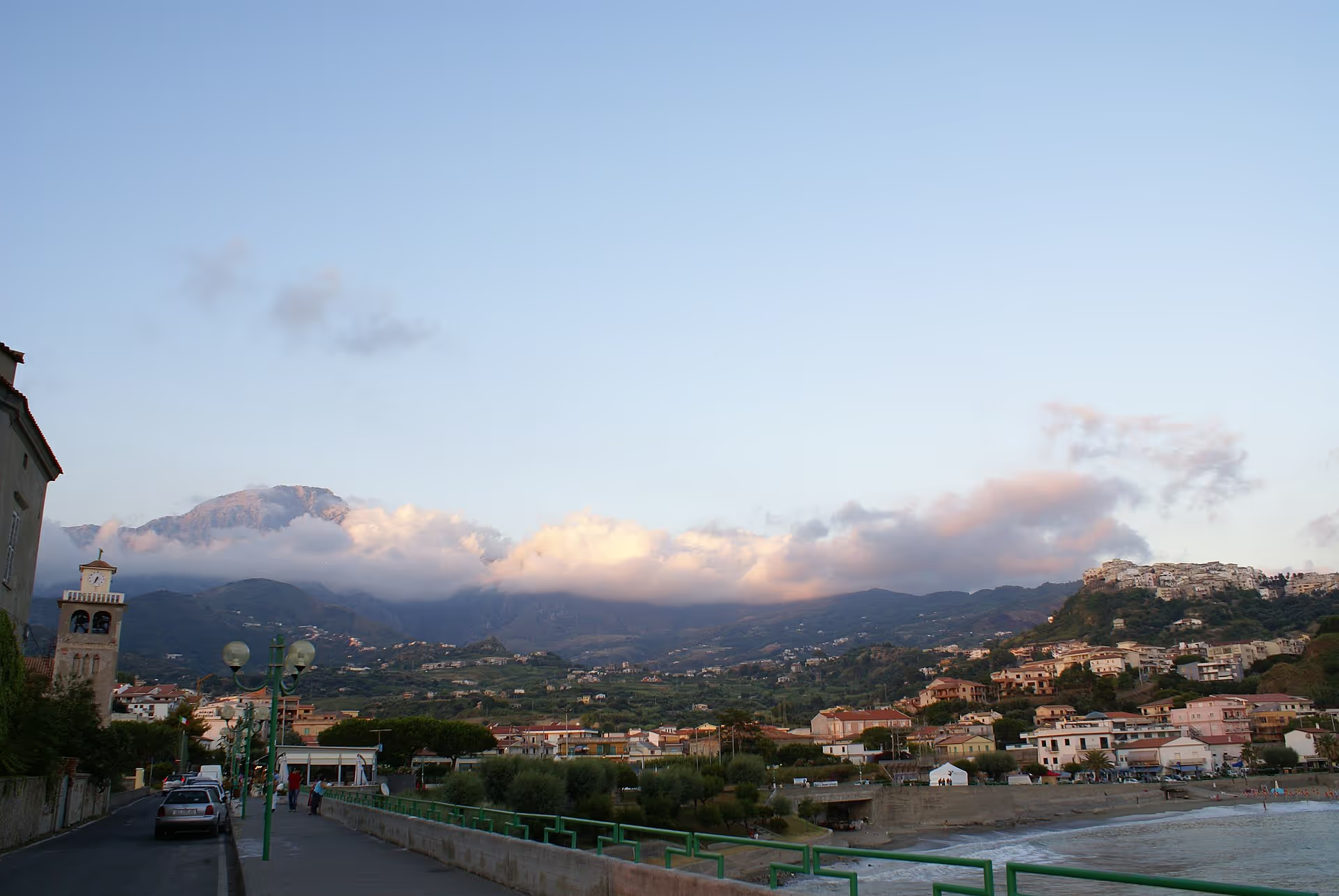
A medieval village 150 metres above the Tyrrhenian with the Sanseverino Renaissance castle, a wooden crucifix of 1711 and a chapel dated 1091; at its feet the Marina, the Bruttian tombs of Capo Tirone and the Note di Fuoco fireworks festival.
-
Buonvicino
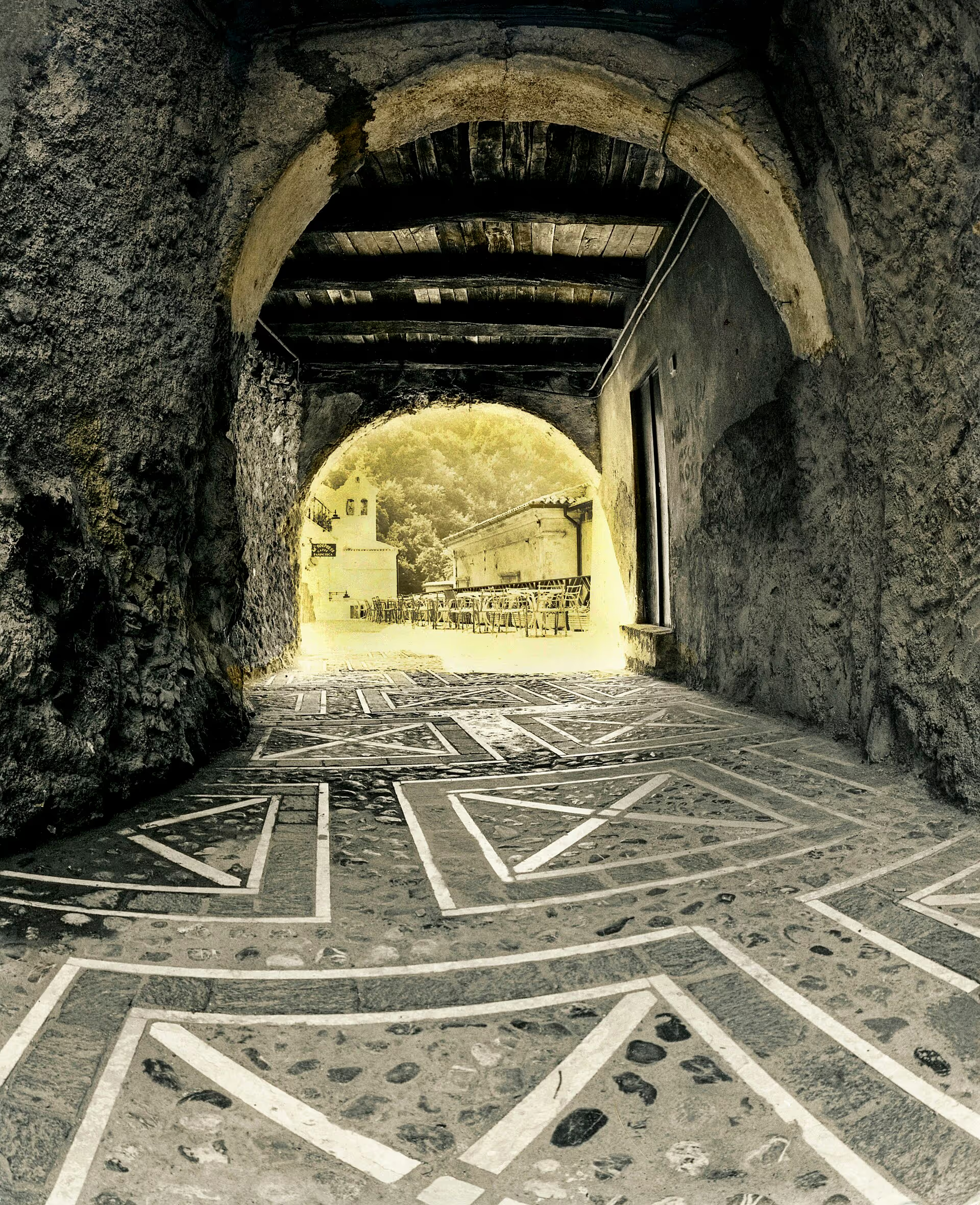
The village born of three hamlets on the route between the Tyrrhenian and the interior: at 400 metres above the Corvino stream, in the Pollino park, Buonvicino keeps the Stretto gorge with the Sasso dei Greci, the cave of Abbot Ciriaco, a disciple of Saint Nilus, and his great bronze statue watching over the village.
-
Cetraro
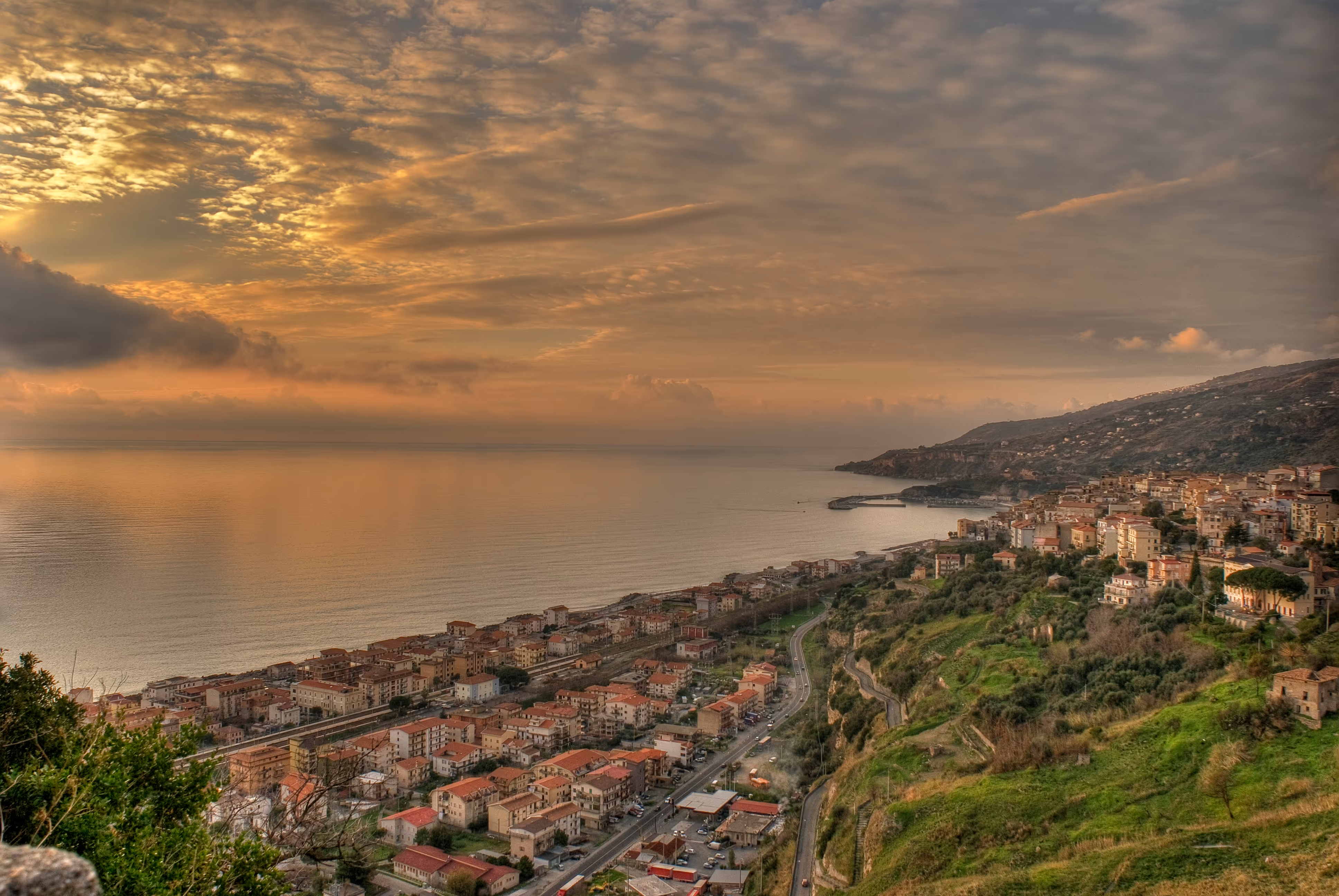
The abbot’s town: from 1086 to 1810 Cetraro was a fief of the Benedictines of Montecassino, remembered in the church of San Benedetto with its Baroque organ, the three gates of the old town and the sea procession of 11 July. Below, the Marina, Borgo San Marco and the marina.
Where to stay
- Hotel delle StelleHotel · Sangineto
- Residence Club SanginetoHotel · Sangineto
Indicative information from OpenStreetMap. Check availability and reviews on the external platforms.
Where to eat
- Ristorante La BetullaRestaurant · Sangineto
Indicative information from OpenStreetMap. Check availability and reviews on the external platforms.
Do you run a local business?
Update the listing or discover how to give your business more visibility.
Join the guide for freeHow to get to Sangineto
- Reference railway station
- Belvedere Marittimo
- about 5 km as the crow flies from the centre Also the reference station for Sangineto (stop closed since 2010).
- Train times (Trenitalia) ↗ Guide: by train
- Nearest airport
- Lamezia Terme International Airport (SUF)
- about 83 km as the crow flies from the centre
- Airport website ↗ Guide: by plane
- By car: A2 “del Mediterraneo” motorway
-
From the north · A2 Lagonegro north SS585 Fondo Valle del Noce → SS18 Tyrrhenian coastal road heading south
From the south · A2 Falerna SS18 Tyrrhenian coastal road heading north along the coast
- Driving directions (Google Maps) ↗ Guide: by car
Straight-line distances computed from verified coordinates: the road route is longer. Check times and connections on the operators’ websites.
Frequently asked questions
- In two cores: the old centre on the hill, around the castle, and Sangineto Lido (Le Crete) near the sea along the SS18; the hamlets are Brombolo, Cacciola, Pantana, San Basile and Santo Ianni.
- The Sanseverino princes of Bisignano in the second half of the 15th century; it has a rectangular plan, a wide arcade and, in the courtyard, the olive tree planted by Austrian prisoners on 4 November 1918.
- A family of Norman origin that took its surname from this fief: in the 14th century Ruggero was the first count of Corigliano and Filippo made Altomonte a centre of Angevin art; their estates passed to the Sanseverino through marriages.
- Yes: the Riviera dei Cedri is the coastal strip of the Upper Tyrrhenian Cosentino coast running from Tortora to Sangineto, and the town marks its southern limit.
- Santa Maria della Neve, on 5 August, and San Michele Arcangelo, on 28 and 29 September.
- Belvedere Marittimo, on the Tyrrhenian railway line; by car you arrive via the SS18.
- The reference station is Belvedere Marittimo, on the Tyrrhenian railway line, about 5 km as the crow flies from the centre of Sangineto. Times and connections on the Trenitalia website.
- The nearest airport is Lamezia Terme International Airport (SUF), about 83 km as the crow flies; from there you continue by train from Lamezia Terme Centrale along the Tyrrhenian line, or by car on the A2 motorway.
How is Sangineto arranged?
Who built the Castle of Sangineto?
Who were the Sangineto family?
Is Sangineto part of the Riviera dei Cedri?
Who are the patron saints of Sangineto?
Which is the nearest station to Sangineto?
Which is the nearest railway station to Sangineto?
Which is the nearest airport to Sangineto?
Discover locally
Live, up-to-date results with real reviews, on external platforms. We don’t hand-pick individual businesses we can’t verify.