Upper Tyrrhenian Cosentino · Riviera dei Cedri
Scalea
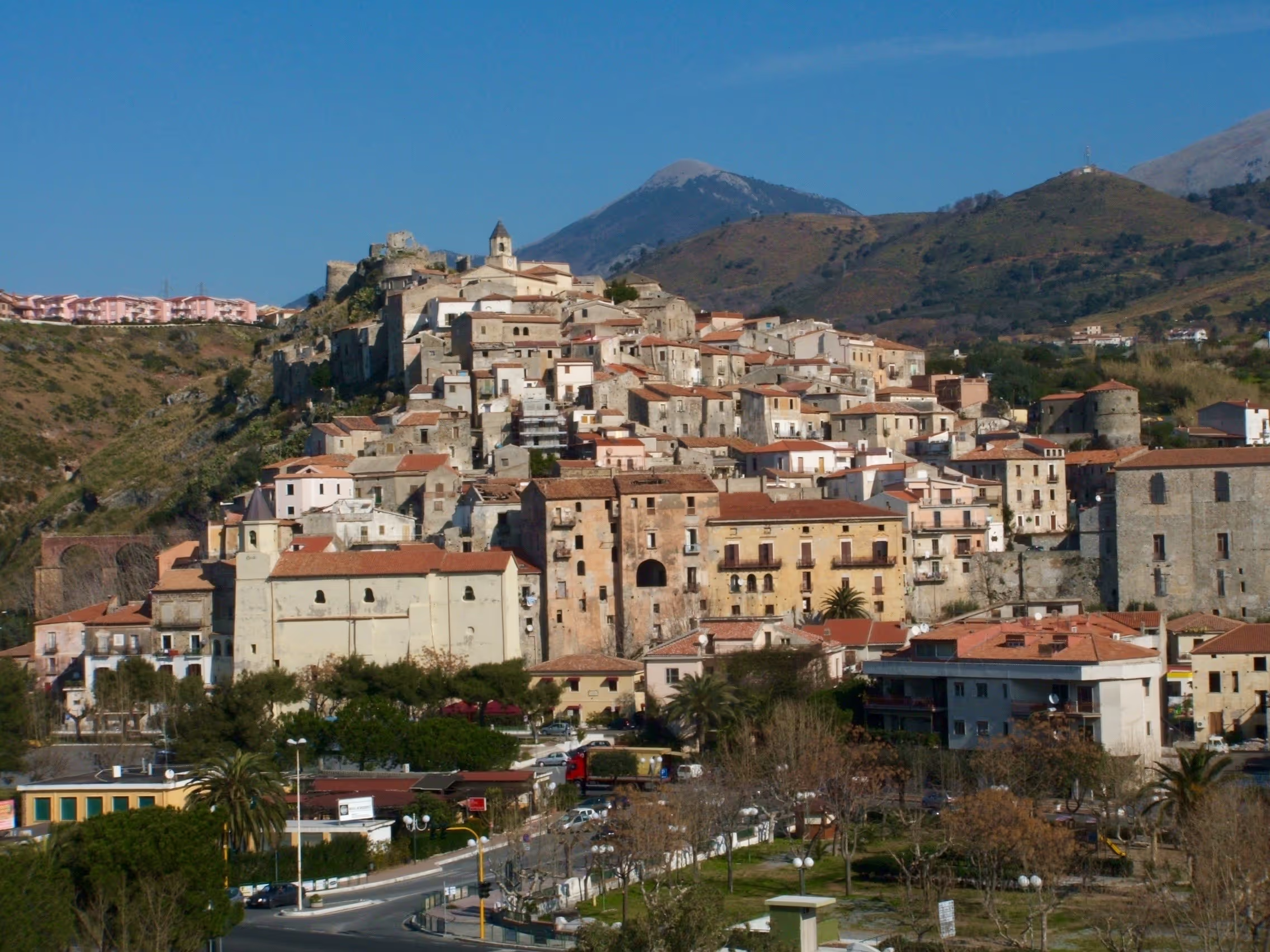
The town of the “landing” on the Riviera dei Cedri: a terraced old town of covered passages, churches born in Byzantine times and watchtowers, the Torre Talao with caves inhabited in the Palaeolithic, and the feast of the Madonna del Carmine with the cinte carried on the head.
Scalea (Scalìa in Calabrian, Skalia in Byzantine Greek) is a town of more than 11,000 inhabitants in the province of Cosenza, facing the Tyrrhenian Sea at the heart of the Riviera dei Cedri, on the Upper Tyrrhenian Cosentino coast. On 12 February 2018 it was granted the honorary title of city by the President of the Republic. Its name tells of an old bond with the sea: it most likely comes from the Greek skalíon, diminutive of skála, the word that in medieval Greek meant a sea landing, a pier, a quay. The natural landing was the islet of Torre Talao, an ideal mooring for boats from the mid-9th century, when the first settlement arose. The dialect form ’a Scalia recalls the plural ta skalía, “the little harbours”; the idea that the name comes from the stepped old town is folk etymology.
Geography
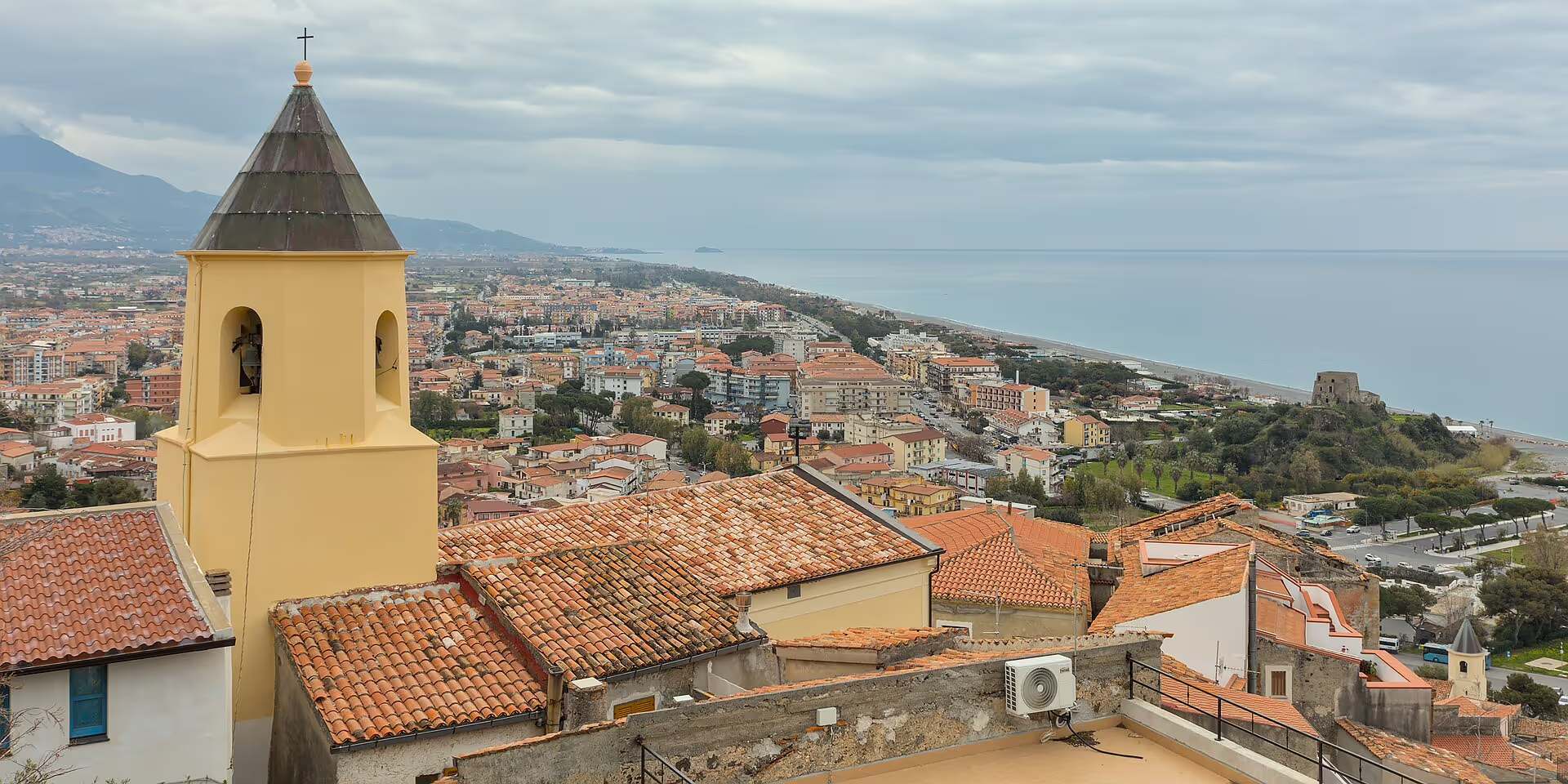
The municipality is roughly four-sided: about 8 km of Tyrrhenian coast and a depth of about 3 km inland, covering 22.5 km². It borders San Nicola Arcella, Santa Domenica Talao, Orsomarso and Santa Maria del Cedro. The town spreads over a broad promontory that closes the Gulf of Policastro to the south: the oldest districts climb in terraces to about 75 metres, while the modern town stretches along the coast. The shoreline changes from south to north: sandy and straight at first, then indented and rocky, with caves carved by the sea. Half the territory is plain, formed by sediment of the Lao river, which crosses the southern part for about 3 km before reaching the sea; the other half is hilly, rising to 408 metres. The Carpini stream marks the northern boundary.
History
The Torre Talao caves have yielded stone and bone artefacts from the Middle Palaeolithic, of the Mousterian phase, along with remains of Pleistocene fauna. The area was Oenotrian land until, in 600 BC, the Sybarite Greeks founded Laos on the first heights above the Lao to ease communications with their colony of Poseidonia: Scalea is considered its heir, as it is of the imperial-era Roman villas scattered across the plain.
The original nucleus arose during the struggles between Byzantines and Lombards, who occupied the area towards the end of the 6th century and built a stronghold. For about three centuries the town stayed perched on its hill, enclosed by its own houses linked one to another and opened by two gates: the military one, at the top, guarded by the gastald’s fortress that the Normans turned into a castle, and the town gate on the open space of Cimalonga. From the 7th century anchorites settled here, Greek-Byzantine hermit monks living in small refuges such as the Scalicella caves, joined in the 9th century by monks fleeing Sicily. By Norman times Scalea already had a busy merchant and seafaring life; at the start of the 14th century it became an important sea landing and, after rebelling against the Angevins, crown land, with tax relief that boosted trade: its ships reached the main ports of the Mediterranean. In the Angevin-Aragonese period the population passed 5,000, then wars, Saracen raids and epidemics halved it. In 1554 the Saracens of Dragut sacked the church of Santa Maria d’Episcopio; in the 16th century the town took part in anti-feudal uprisings, and the 17th brought earthquakes, plague and famine.
In the early 19th century Lorenzo Giustiniani’s Geographical Dictionary described a harbour handy for cargo boats, a lake called the Pantano and countryside rich in wheat, pulses, wine, melons and onions; dried figs and zibibbo grapes were sold to Genoese, Livornese and English traders. During the Second World War Scalea was bombed; from the 1960s the old town emptied and the town grew southwards along the sea, taking on its present look in the 1990s.
The old town
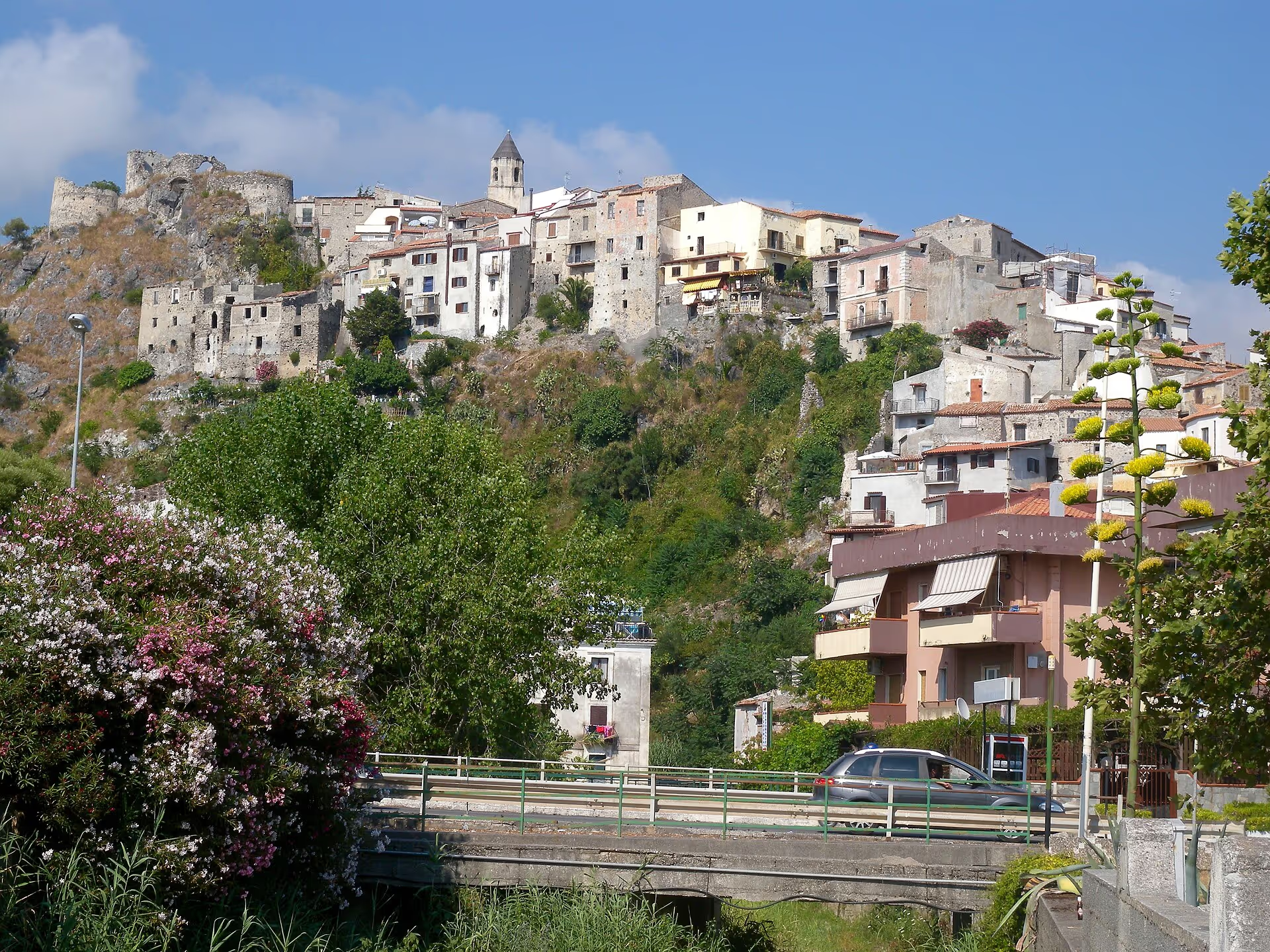
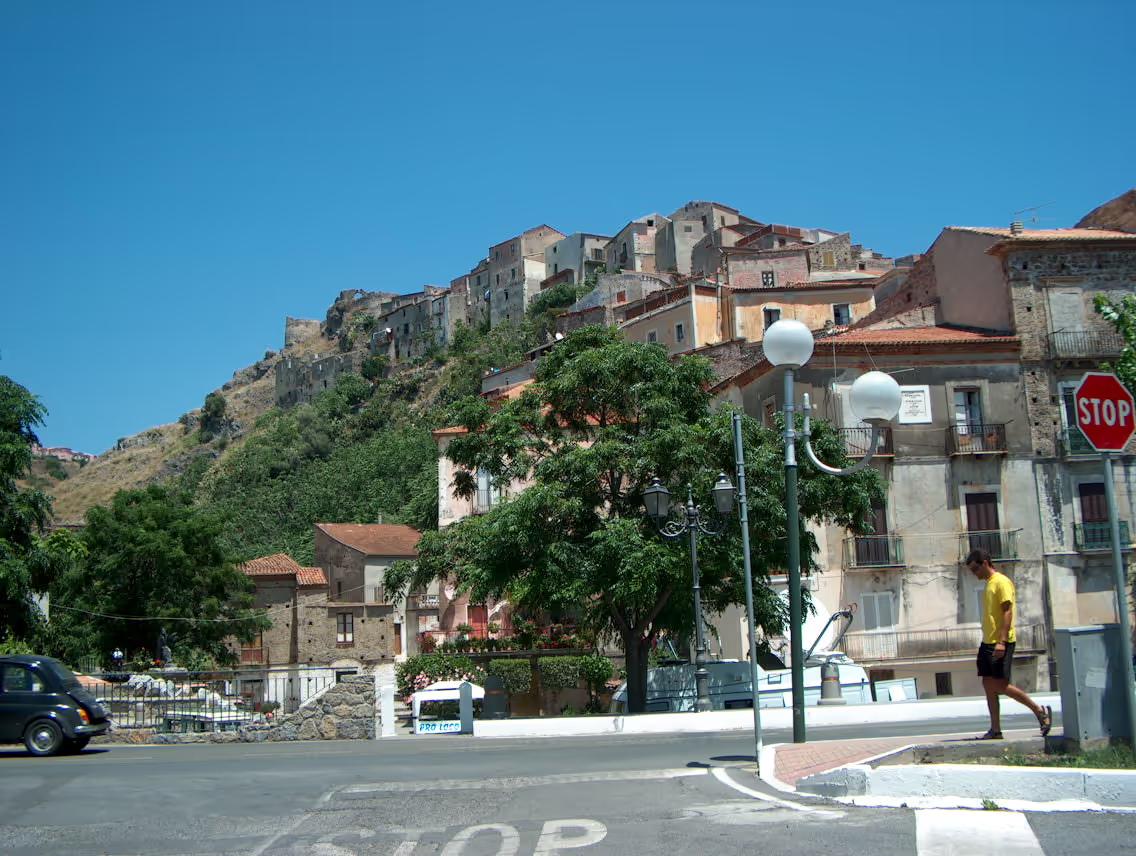
The old heart is a tangle of steps, alleys, small squares and arches. Typical are the suppuorti, covered stretches of street born of the need to build houses one on top of another for defence. Giustiniani recorded the town’s four gates: the sea gate, the bridge gate, the Cimalonga gate and the fort gate; at the top, the castle “almost in ruins” with its bastions. Among the civic buildings stand out the Palazzo dei Principi, from the 13th century, owned by the town and home to the library, with halls frescoed in the 17th century; the Norman palace known as the Episcopio, from the 12th century, which became a fortress under the Angevins and was the birthplace of Roger of Lauria, grand admiral of the Angevin-Aragonese fleet; and the Palazzo Palamolla, of the family that moved to Scalea in the 14th century for the sea trade. The town also keeps the bust of the philosopher Gregorio Caloprese, by Enrico Mossuti, from 1911.
The churches
The church of Santa Maria d’Episcopio, known as the Madonna del Carmine, has its first nucleus in the 8th century, when the area, known as Mercurion, was a centre of Basilian monasticism; in that period it may have been a bishop’s seat, hence the name. Under the Normans it was enlarged and entrusted to the Benedictines of Cava dei Tirreni, as the great apse window bears witness; after the 1554 sack it was enlarged, then rebuilt between the 18th and 19th centuries. Lower down rises the church of San Nicola in Plateis, recorded from the 8th century: on the high altar is a 17th-century painting by Giovanni Bernardo Azzolino, and in the 14th-century chapel of St Catherine the funerary monument of Admiral Ademaro Romano, attributed to the circle of Tino da Camaino. The small church of the Spedale, with two naves and three apses, was built by Basilian monks in the 9th century and keeps frescoes showing St Nicholas. The sanctuary of the Madonna del Lauro was built in the early 18th century by fishermen of Scalea and Meta di Sorrento to fulfil a vow made during a storm. In the 13th century Pietro Cathin, a disciple of St Francis, founded a Franciscan friary here.
Towers and coast
On the coast, the islet of Torre Talao has always been a natural landing; Giustiniani described a tower there from the time of Charles V, armed with three cannons. To the north, on a hill a few steps from the sea gate, stands the Torre della Scalicella, known as the Torre di Giuda (Judas Tower): according to the popular tale it is named after the watchman who in the early 17th century failed to warn the castle of approaching Saracens, while other historians link it to the nearby Jewish quarter. In the town there is also the Torre Cimalonga, which in Giustiniani’s day served as a prison. Along the rocky shore follow the Ajnella reef and the sea caves du trasi e jesci, della pecora and del bacio.
Feasts and traditions
The patron saint is the Madonna del Carmine, celebrated on 15 and 16 July. On the morning of the 16th the mayor offers the Madonna a votive candle on behalf of the townspeople, and the statue is carried in procession through the main streets; women carry on their heads the cinte, richly decorated wooden frames that hold candles. The Virgin was proclaimed patron on 7 March 1875, after a cholera epidemic; for the centenary the townspeople gave her a gold crown, melted down in the open air in the old square in front of the faithful. In summer the town hosts the Laos Fest, an independent music festival founded in 2003. Scalea has been twinned with the Polish town of Władysławowo since 2017.
Scalea today
Historically tied to farming and fishing, until the 1970s the land near the sea was planted with citron trees; then building development transformed the landscape, and today the economy is geared above all to tourism.
Getting there
Scalea is crossed by the SS18 Tirrena Inferiore and the SS504 di Mormanno state roads, and has a station on the Tyrrhenian line, Scalea-Santa Domenica Talao, where high-speed trains running along the coast also stop. From the A2 “del Mediterraneo” motorway you reach the coast from the Lagonegro nord exit via the SS585 Fondo Valle del Noce and the SS18. There is an airfield in the municipality; the nearest airport is Lamezia Terme, about 120 km away.
Images
Places
What to see around here.
- Culture
Norman Castle
The castle ruins overlooking the old town of Scalea, offering a view over the coast and the Tyrrhenian Sea.
- Old town
Old town of Scalea
The medieval core of Scalea, set on the promontory, with alleys, stairways, churches and palaces that tell the town's Norman and Angevin history.
-
 Culture
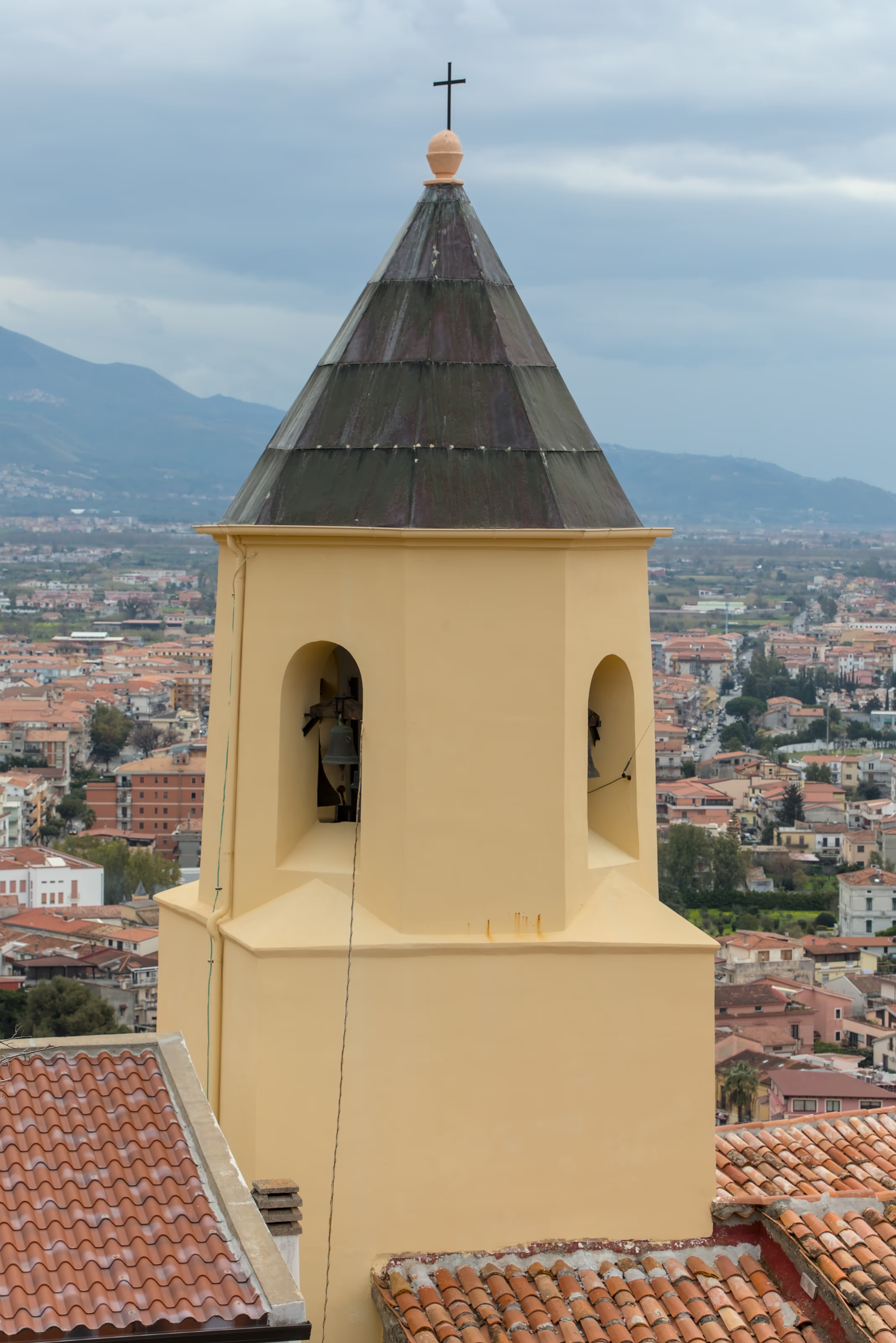
 Church of Santa Maria d'Episcopio (Madonna del Carmine)
The main church of Scalea's old town, dedicated to the Madonna del Carmine, patron of the city; its origins date back to the 8th century.
- Culture
Church of San Nicola in Plateis
The “lower church” of Scalea’s old town, recorded from the 8th century: the 17th-century painting by Giovanni Bernardo Azzolino and, in the chapel of St Catherine, the funerary monument of Admiral Ademaro Romano.
-
 Viewpoint
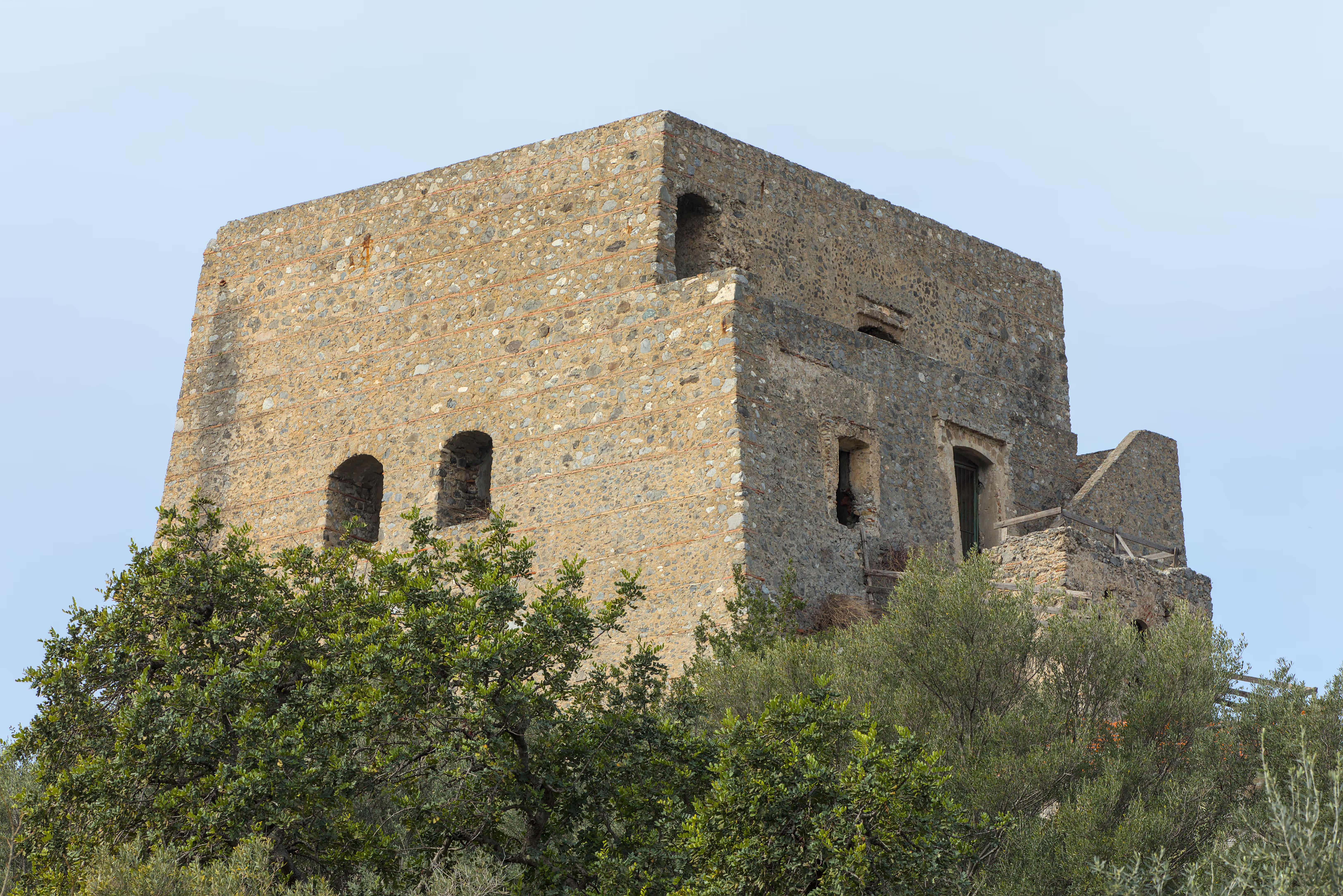
 Torre Talao
An islet and 16th-century tower on the Scalea coast, a historic natural landing; its caves preserve traces of the Palaeolithic.
Nearby towns
Keep exploring the Upper Tyrrhenian Cosentino coast from here.
-
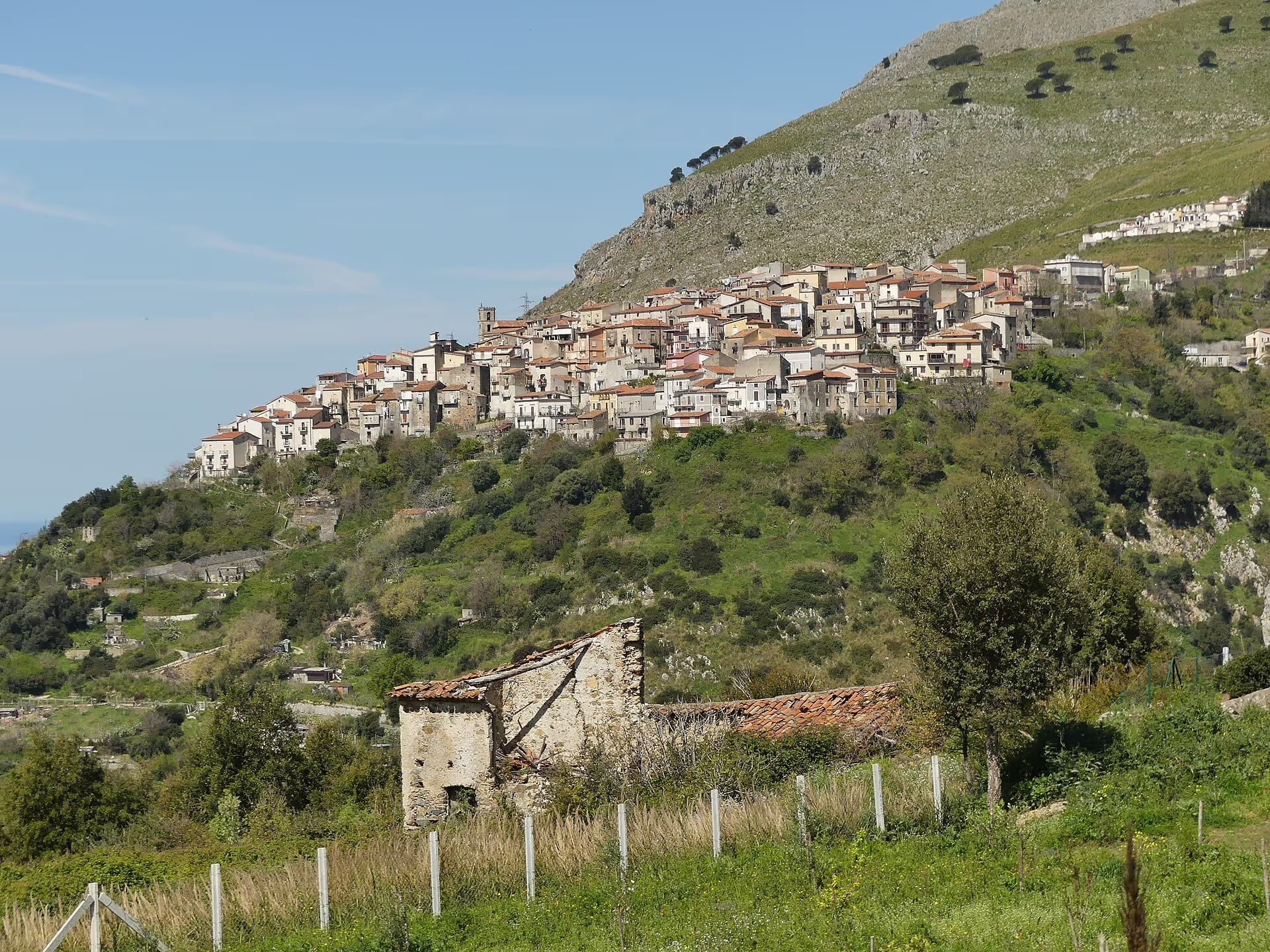
Santa Domenica Talao
The village that looks over the Riviera dei Cedri from the Lao valley: founded in the 17th century by the Spinelli princes, grown with noble palazzi and chapels, tied by a century of emigration to the Dominican Republic and twinned with Santo Domingo.
-
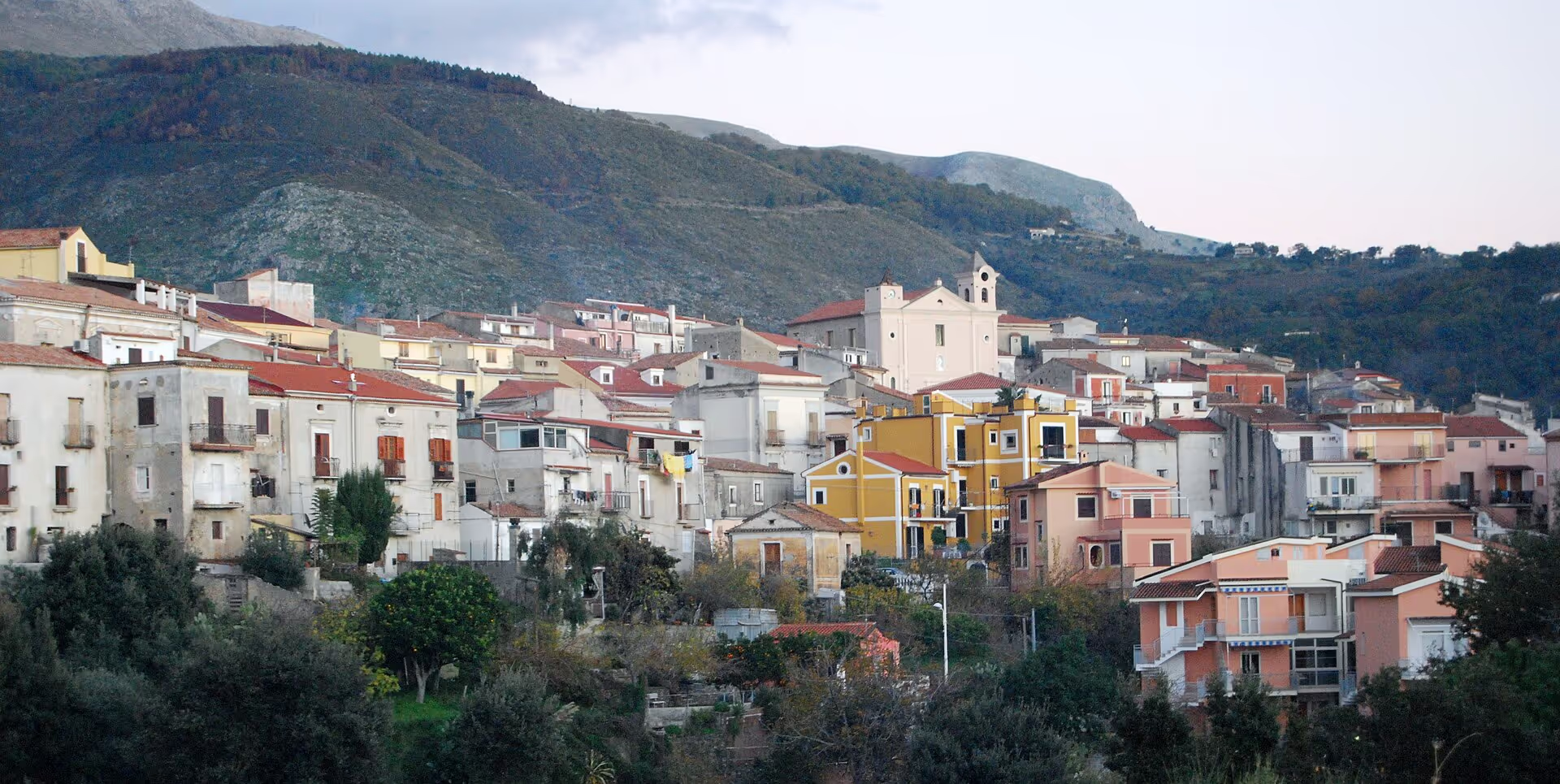
San Nicola Arcella
The cliff-top village of the Riviera dei Cedri: three bays in three kilometres, the rock arch of the Arcomagno, the Crawford Tower and a belvedere that takes in three regions.
-
Santa Maria del Cedro
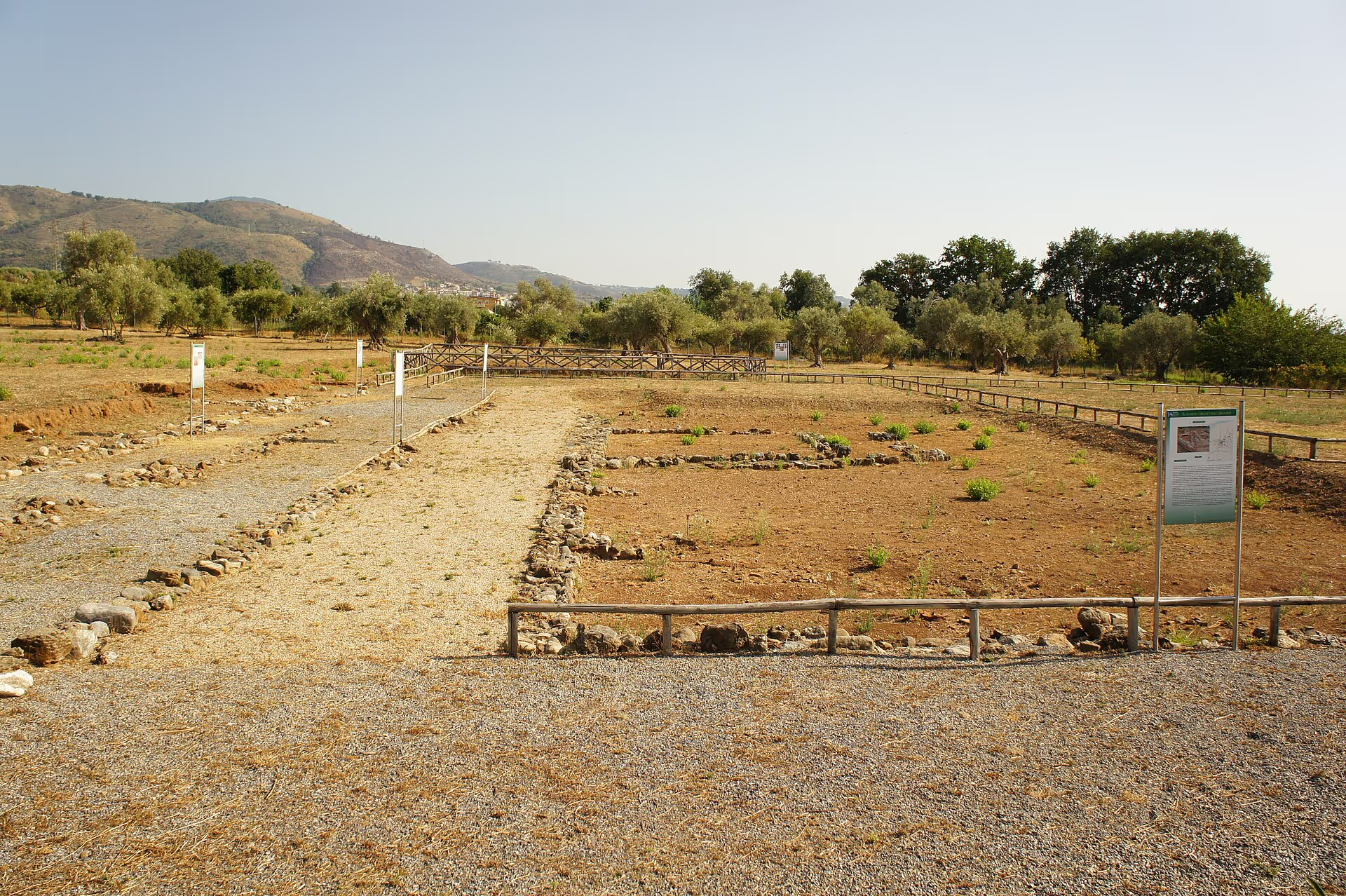
The town that gives the Riviera dei Cedri its name: the fertile plain between the Lao and the Abatemarco where the citron chosen by rabbis for Sukkot is grown, the remains of the Sybarite city of Laos at Marcellina and the Citron Museum in the Carcere dell’Impresa.
-
Orsomarso
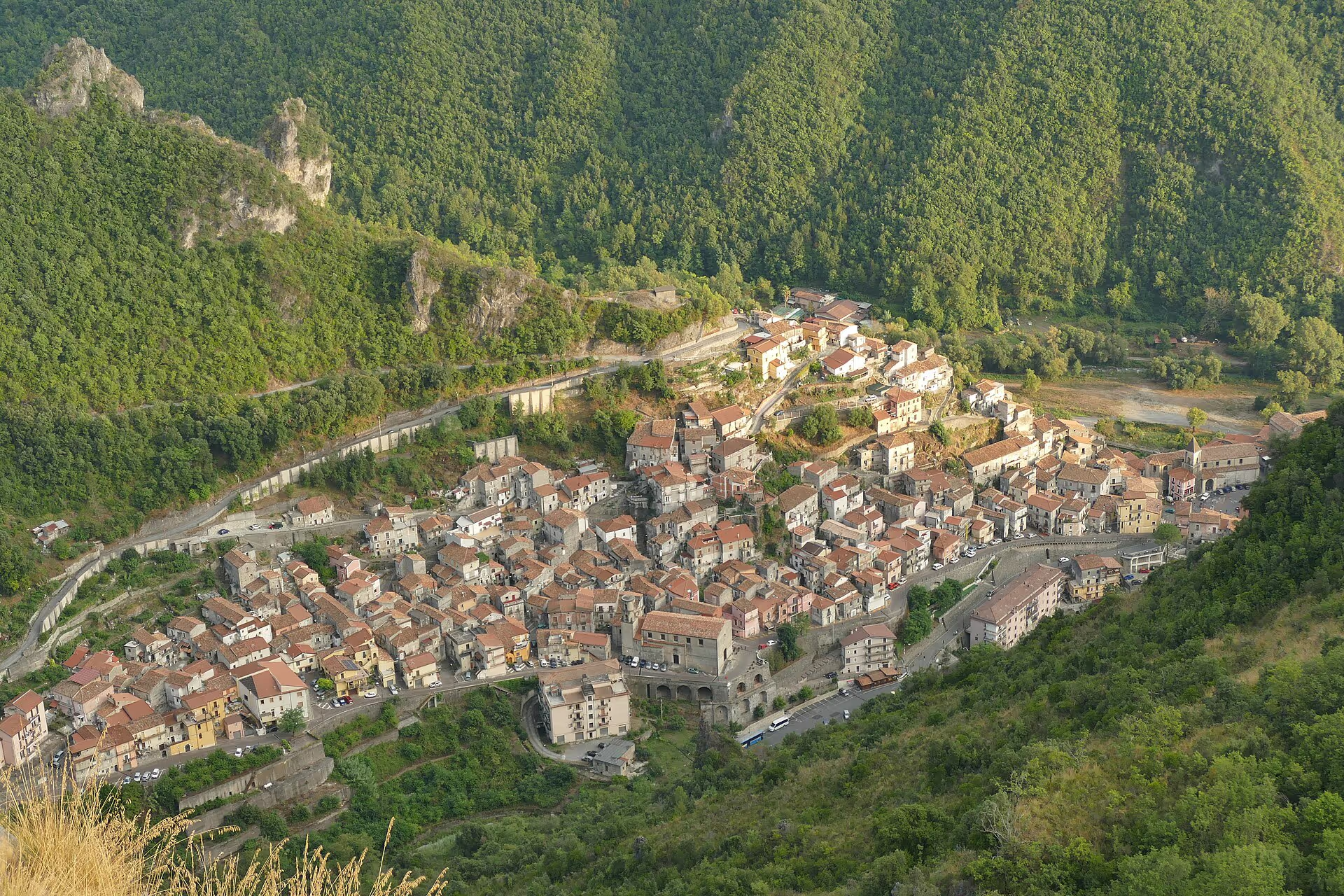
The village that gives its name to a mountain range: Orsomarso, in the Pollino park, keeps the Argentino valley with the last native roe deer and the Bosnian pine, the 10th-century Basilian chapel of Santa Maria di Mércuri and a village that grew around the fortress of Ursus Martius.
Itineraries through here
- 4 daysGrand tour
Grand Tour of the Riviera dei Cedri
Four days from north to south along the Upper Tyrrhenian Cosentino coast: islands, Norman towns, murals and sanctuaries.
11 stops8 townsMay–OctoberSee the stops -
 3 daysTowns & history
Towns & history
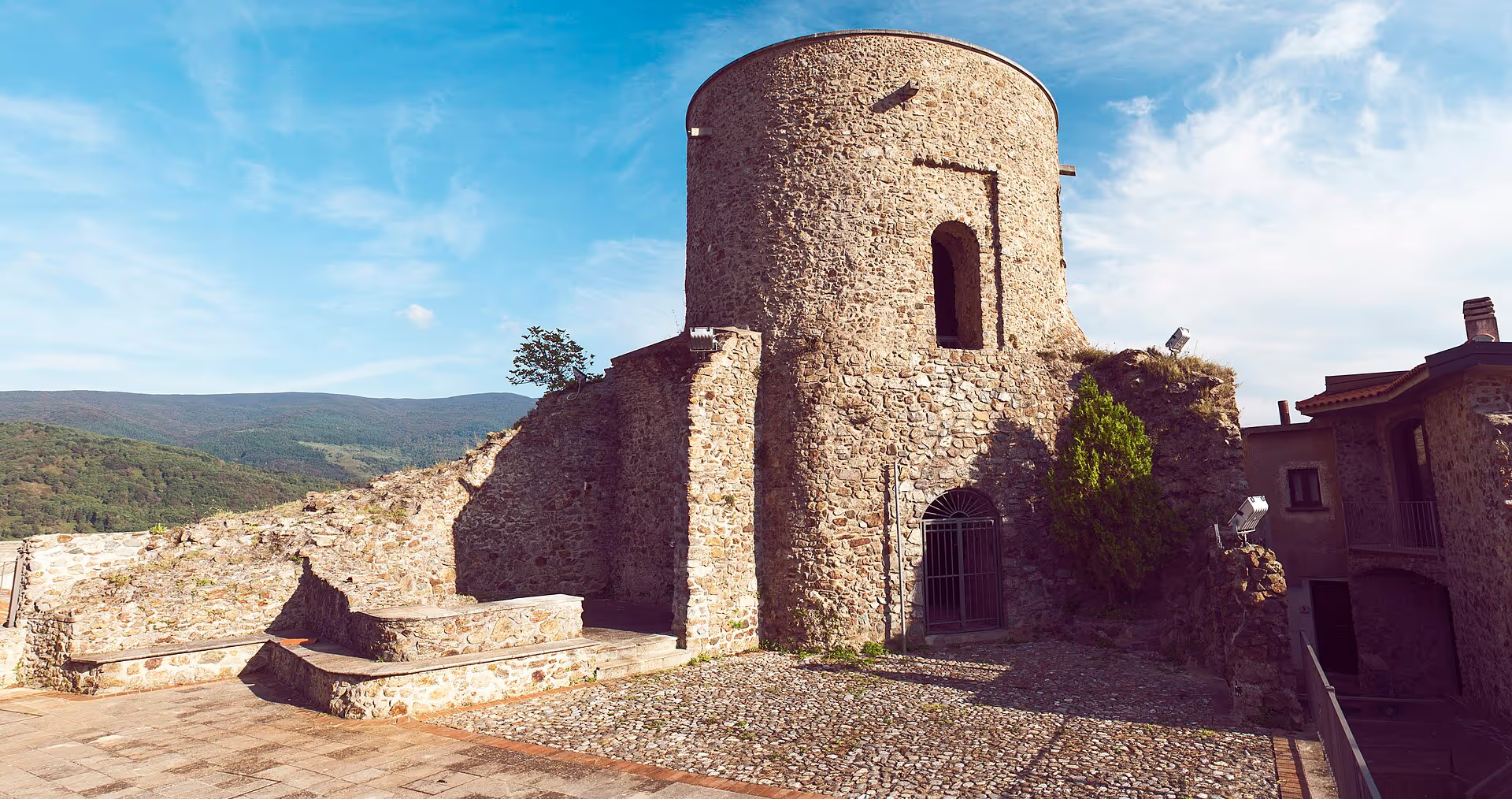
Three days among old towns, castles and the only Occitan language island in southern Italy.
6 stops5 townsAll year roundSee the stops -
 2 daysSacred & culture
In the footsteps of the sacred
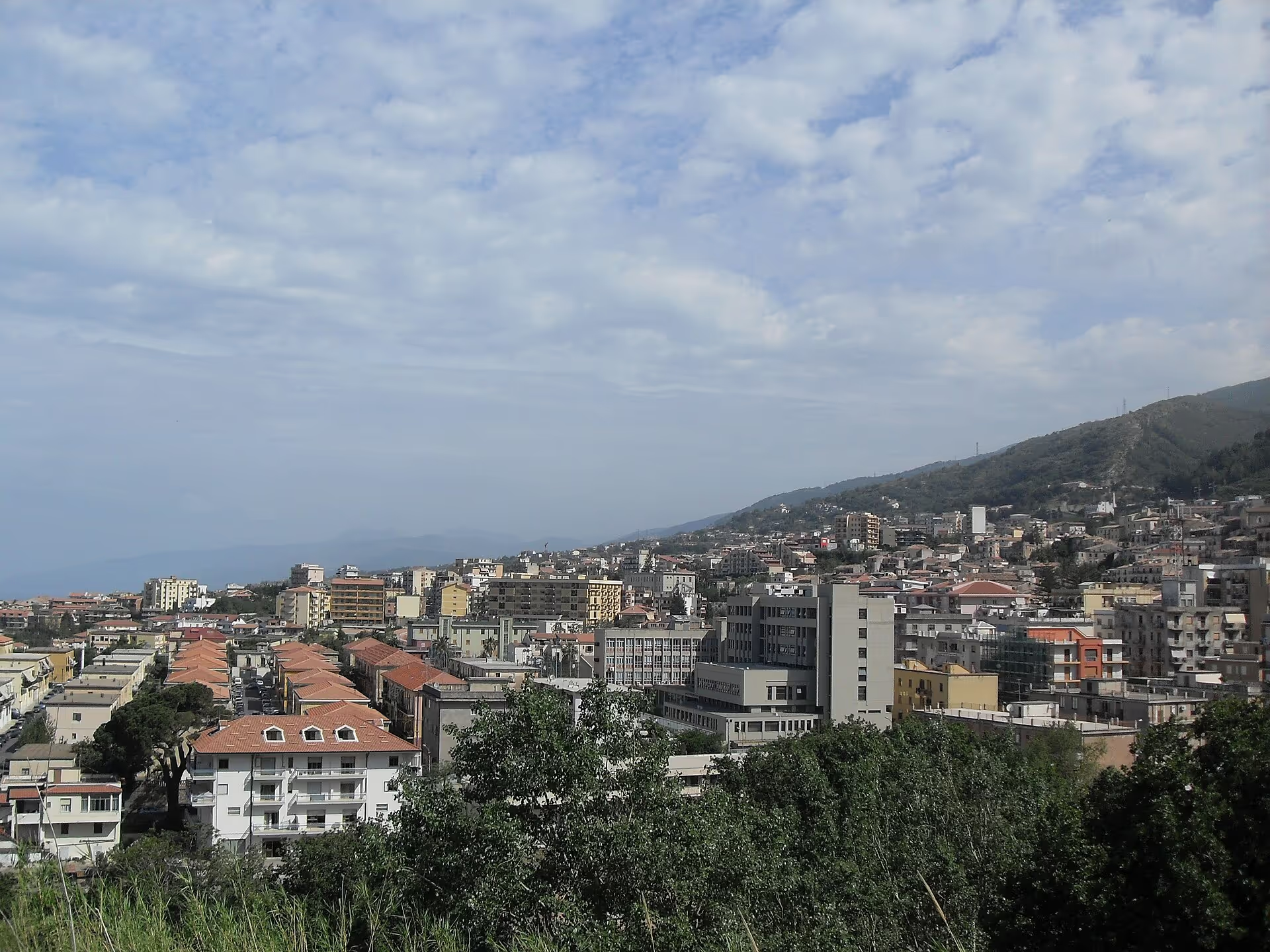
Two days among sanctuaries and devotion, from Saint Francis of Paola to the Madonna della Grotta.
3 stops3 townsAll year roundSee the stops - 4 daysSea & beaches
Four days on the Tyrrhenian coast
Four days devoted to the sea, from San Nicola Arcella to Cetraro: arches, islands, beaches and marina.
8 stops6 townsJune–SeptemberSee the stops -
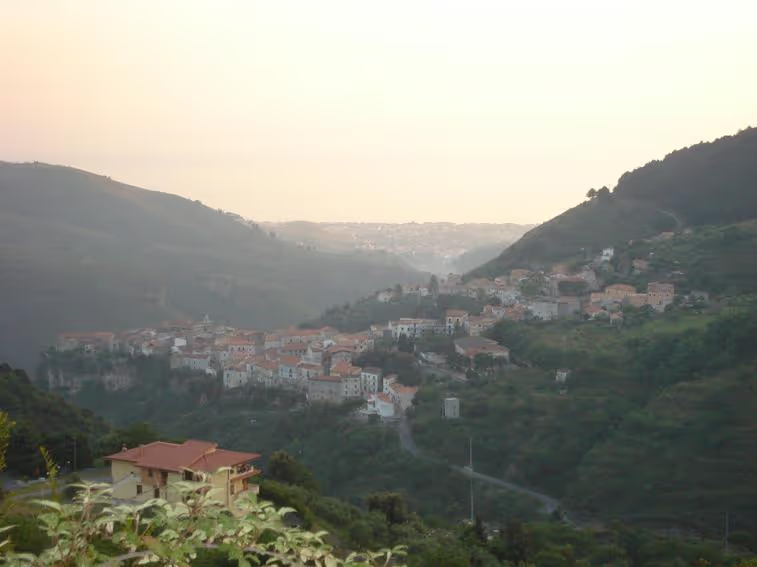 2 daysTowns & history
Weekend in the old towns
Two days among museum, stone village and murals: history and art without a devotional focus.
4 stops3 townsAll year roundSee the stops -
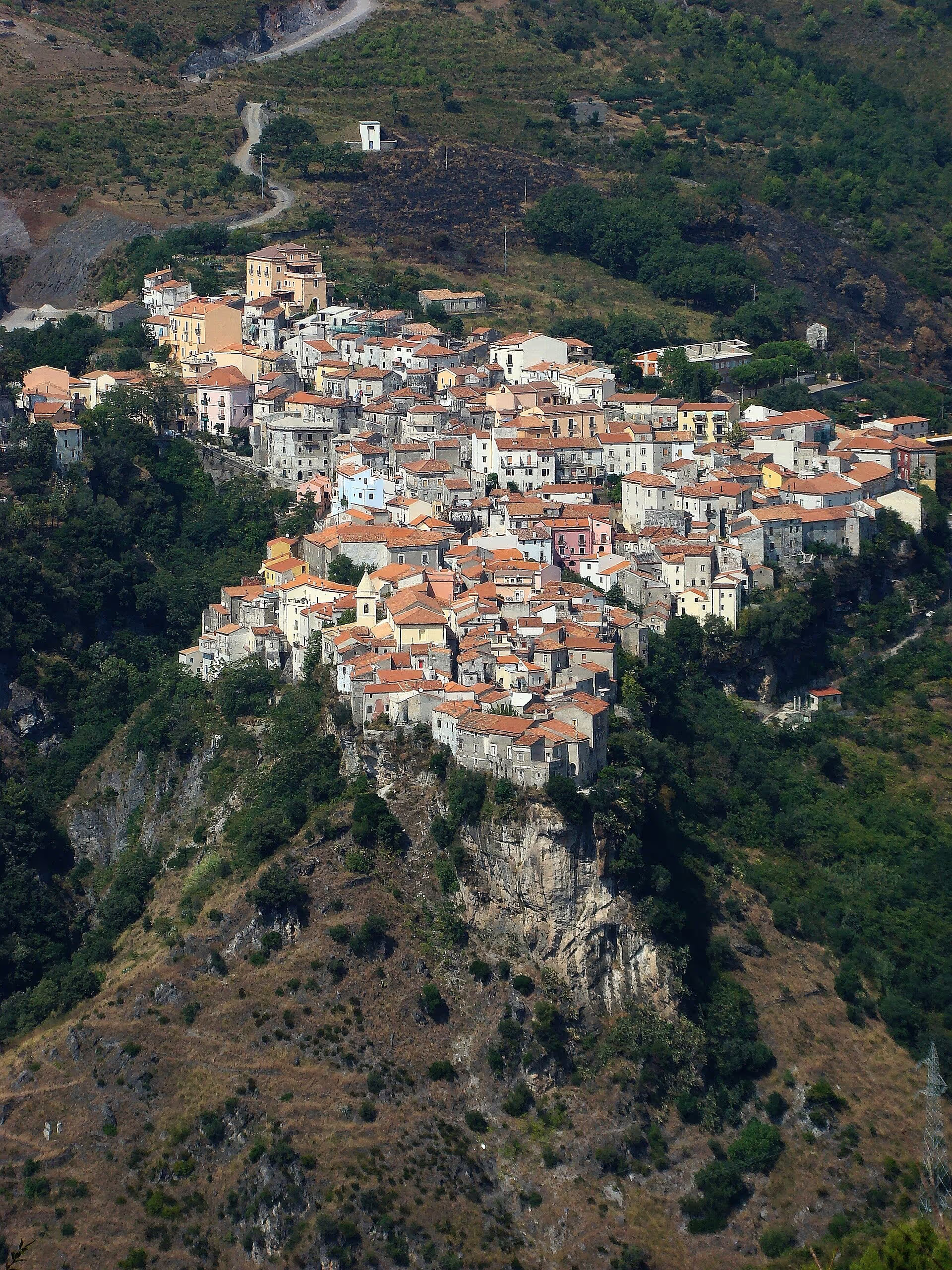 4 daysTowns & history
Four days among old towns
Four days among castles, Norman towns, sacred art and the Occitan language island.
8 stops5 townsAll year roundSee the stops -
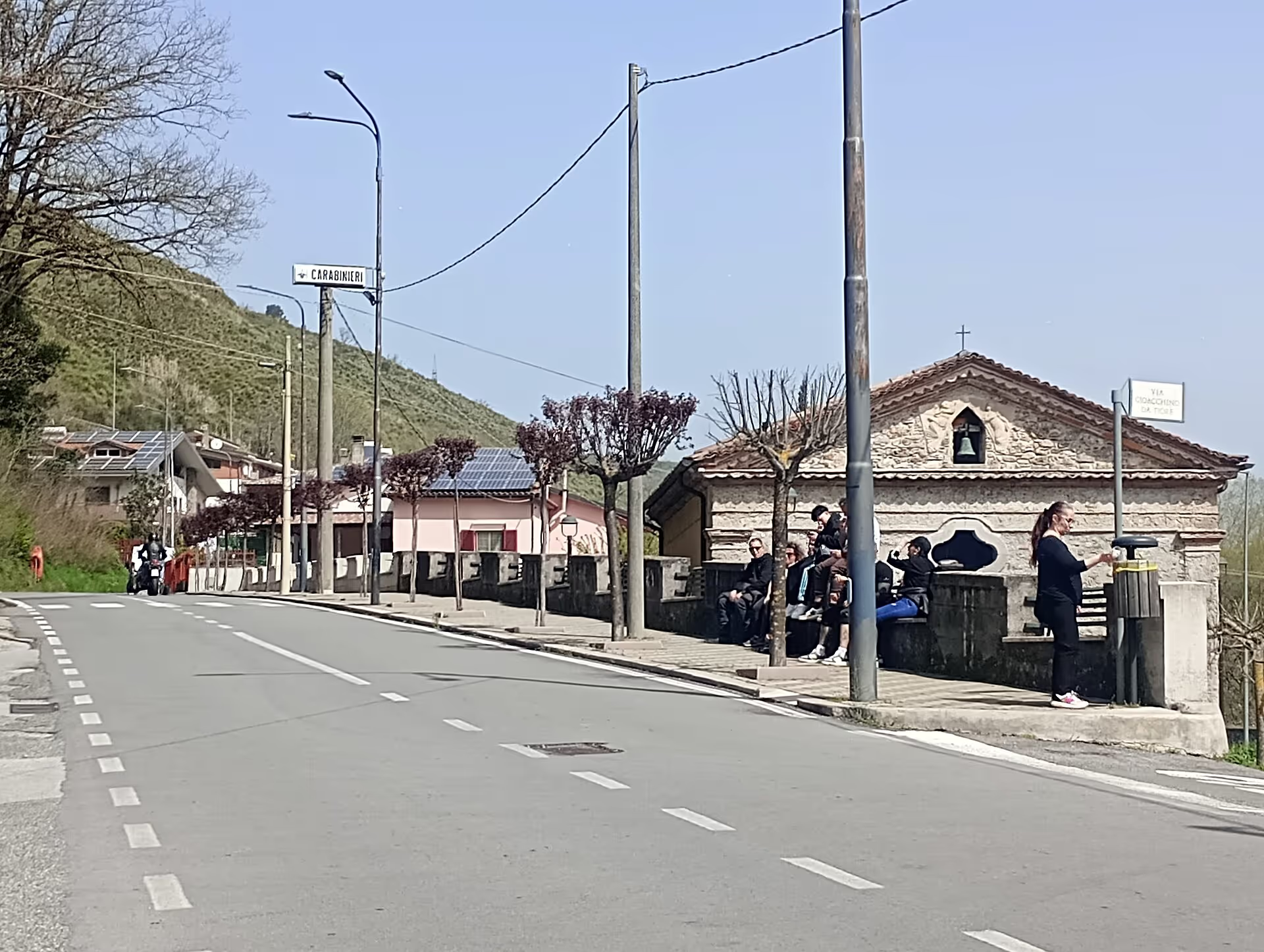 4 daysWellness & spa
Nature and Pollino in four days
Four days among spa, cave, mountains and river in the Pollino National Park.
8 stops5 townsMarch–NovemberSee the stops
Where to stay
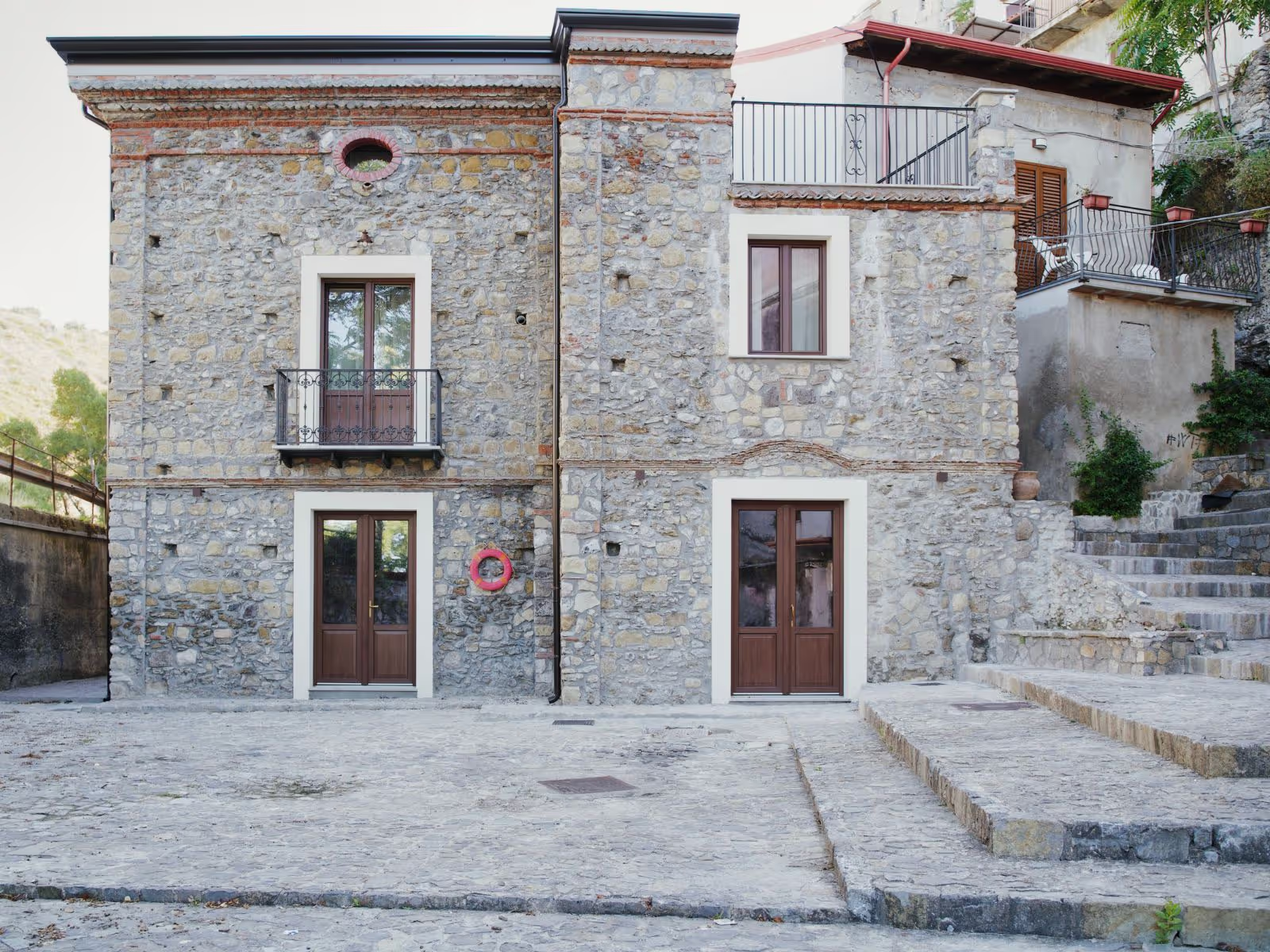
- Adriana's HomeHotel · Scalea
- AfroditeGuest house · Scalea
- Agriturismo La RondinellaGuest house · Scalea
- Albergo ContinentalHotel · Scalea
- B&B Oz HouseGuest house · Scalea
- B&B Punto di VistaGuest house · Scalea
- Campeggio LaoCampsite · Scalea
- Campeggio Scalea MareCampsite · Scalea
- Camping Moby DickCampsite · Scalea
- Carpino Bay RoomsGuest house · Scalea
- Casalbergo RoomsGuest house · Scalea
- Civico 33Guest house · Scalea
- Dancing Lizard ApartmentsGuest house · Scalea
- Grand Hotel De RoseHotel · Scalea
- Hotel FelixHotel · Scalea
- Hotel GenovaHotel · Scalea
- Hotel Parco dei PrincipiHotel · Scalea
- Hotel San DomenicoHotel · Scalea
- Hotel ScaleaHotel · Scalea
- Hotel TalaoHotel · Scalea
- Hotel Village Santa CaterinaHotel · Scalea
- Hotel Village Santa CaterinaHotel · Scalea
- Il GabbianoCampsite · Scalea
- Il Mare Sotto CasaGuest house · Scalea
- Porta Marina Guest RoomsGuest house · Scalea
- Scalea Beach ApartmentsGuest house · Scalea
- Sea ApartmentApartment · Scalea
- STEFY'S HOUSE b&bHotel · Scalea
- Villa LimoneGuest house · Scalea
- Villaggio ForteHotel · Scalea
Indicative information from OpenStreetMap. Check availability and reviews on the external platforms.
Where to eat
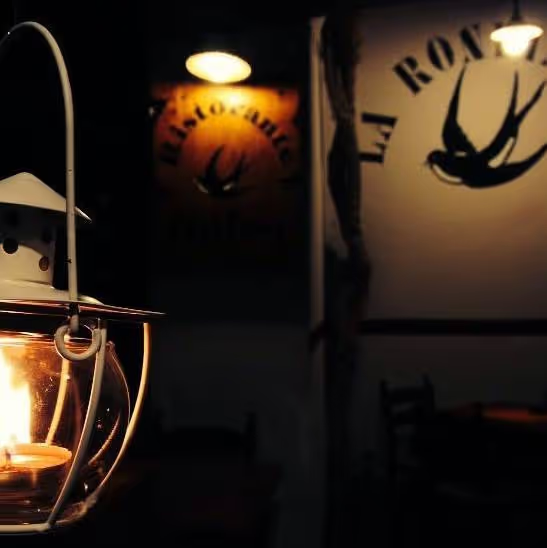
- AgostìRestaurant · Scalea
- Al MattatoioFast food · Scalea
- Antica trattoria A' TavernaRestaurant · Scalea
- AtipicoBar · Scalea
- Bar ArenileBar · Scalea
- Bar MelogranoCafé · Scalea
- Bar StadioBar · Scalea
- Bar TirrenoBar · Scalea
- BlendBar · Scalea
- Blue GardenCafé · Scalea
- Cafe & SnackCafé · Scalea
- Charlye ChipsFast food · Scalea
- ClifftopBar · Scalea
- Domani SmettoFast food · Scalea
- Doppio ZeroRestaurant · Scalea
- DragoneRestaurant · Scalea
- friggitoria e asportoRestaurant · Scalea
- GelatoCafé · Scalea
- Giò PubPub · Scalea
- Guindillas Pub ScaleaPub · Scalea
- Hotel GenovaRestaurant · Scalea
- Il Centro del GustoRestaurant · Scalea
- Il CorsaroRestaurant · Scalea
- Il fornaioRestaurant · Scalea
- Il GelatoCafé · Scalea
- Il peperoncinoRestaurant · Scalea
- Il Pescespada Beach ClubBar · Scalea
- Il RitrovoRestaurant · Scalea
- InsiemeRestaurant · Scalea
- Jeni's BakeryCafé · Scalea
- Kcafè ScaleaCafé · Scalea
- La dolce isolaBar · Scalea
- La Piccola TanaRestaurant · Scalea
- La PlayaBar · Scalea
- La ScoglieraRestaurant · Scalea
- Lido A StagliataCafé · Scalea
- Lido Da PietroCafé · Scalea
- Lido L'AncoraCafé · Scalea
- Lido Ragno DocCafé · Scalea
- Lido San DomenicoCafé · Scalea
- Lo ScoglioRestaurant · Scalea
- London Bus PubPub · Scalea
- Mangic GamingBar · Scalea
- MediterraneaRestaurant · Scalea
- Mickey Mouse PubPub · Scalea
- Molo 54Bar · Scalea
- Oz BeachBar · Scalea
- Paninoteca CaracasFast food · Scalea
- pizzeria "IL VESUVIO"Restaurant · Scalea
- pizzeria "OIMA'"Restaurant · Scalea
- Pizzeria La piazzettaRestaurant · Scalea
- Ristorante Pizzeria Le MimoseRestaurant · Scalea
- Ristorante TariRestaurant · Scalea
- Scacco MattoBar · Scalea
- Stabilimento Balneare La ScoglieraCafé · Scalea
- Studio BarCafé · Scalea
- VigrìRestaurant · Scalea
- VitazzurraRestaurant · Scalea
Indicative information from OpenStreetMap. Check availability and reviews on the external platforms.
Beaches and beach clubs
- CarpinoBeach · Scalea
- Lido A StagliataBeach club · Scalea
- Lido AjnellaBeach club · Scalea
- Lido ANMIBeach club · Scalea
- Lido Azzurro NatyBeach club · Scalea
- Lido Blue GardenBeach club · Scalea
- Lido CarnevaleBeach club · Scalea
- Lido Da PietroBeach club · Scalea
- Lido El MarineroBeach club · Scalea
- Lido GiacomoBeach club · Scalea
- Lido il coralloBeach club · Scalea
- Lido Il PescespadaBeach club · Scalea
- Lido L'AncoraBeach club · Scalea
- Lido La ScoglieraBeach club · Scalea
- Lido Mago di OzBeach club · Scalea
- Lido Marina dei PioppiBeach club · Scalea
- Lido MassimoBeach club · Scalea
- Lido OlgarinoBeach club · Scalea
- Lido Ragno DocBeach club · Scalea
- Lido San DomenicoBeach club · Scalea
- Lido Santa CaterinaBeach club · Scalea
- Lido ScorpionBeach club · Scalea
- Nuovo Lido La CasettaBeach club · Scalea
Indicative information from OpenStreetMap. Check availability and reviews on the external platforms.
Do you run a local business?
Update the listing or discover how to give your business more visibility.
Join the guide for freeHow to get to Scalea
- Reference railway station
- Scalea-Santa Domenica Talao
- about 1 km as the crow flies from the centre
- Train times (Trenitalia) ↗ Guide: by train
- Nearest airport
- Lamezia Terme International Airport (SUF)
- about 107 km as the crow flies from the centre
- Airport website ↗ Guide: by plane
- By car: A2 “del Mediterraneo” motorway
-
From the north · A2 Lagonegro north SS585 Fondo Valle del Noce → SS18 Tyrrhenian coastal road heading south
From the south · A2 Falerna SS18 Tyrrhenian coastal road heading north along the coast
- Driving directions (Google Maps) ↗ Guide: by car
Straight-line distances computed from verified coordinates: the road route is longer. Check times and connections on the operators’ websites.
Frequently asked questions
- Scalea is a town in the province of Cosenza, Calabria, facing the Tyrrhenian Sea along the Riviera dei Cedri. It sits on a promontory that closes the Gulf of Policastro to the south.
- The name most likely comes from the Greek skalíon, diminutive of skála, which in medieval Greek meant a “sea landing”, pier or quay: the natural landing was the islet of Torre Talao. The idea that it comes from the stepped shape of the old town is folk etymology.
- The terraced old town with its suppuorti, the church of Santa Maria d’Episcopio (Madonna del Carmine), San Nicola in Plateis with the monument to Admiral Ademaro Romano, the Palazzo dei Principi, the Norman palace, the castle ruins, the Torre Cimalonga, the Torre di Giuda and, on the coast, the Torre Talao with its caves.
- Palaeolithic artefacts were found in the Torre Talao caves; in 600 BC the Sybarites founded Laos nearby. The village arose between Lombards and Byzantines, was Norman and from the 14th century an important sea landing. In 2018 it was granted the title of city.
- On 15 and 16 July: on the 16th the mayor offers a votive candle on behalf of the town and the statue is carried in procession, with women bearing on their heads the cinte, decorated wooden frames holding candles.
- Covered stretches of the old town’s streets, born of the need to build houses one on top of another for defence.
- By car on the SS18 Tirrena Inferiore and the SS504 di Mormanno; by train at Scalea-Santa Domenica Talao station, where high-speed trains also stop. The nearest airport is Lamezia Terme, about 120 km away.
- The reference station is Scalea-Santa Domenica Talao, on the Tyrrhenian railway line, about 1 km as the crow flies from the centre of Scalea. Times and connections on the Trenitalia website.
- The nearest airport is Lamezia Terme International Airport (SUF), about 107 km as the crow flies; from there you continue by train from Lamezia Terme Centrale along the Tyrrhenian line, or by car on the A2 motorway.
Where is Scalea?
Why is it called Scalea?
What is there to see in Scalea?
What is the history of Scalea?
When is the feast of the Madonna del Carmine in Scalea?
What are the suppuorti of Scalea?
How do you get to Scalea?
Which is the nearest railway station to Scalea?
Which is the nearest airport to Scalea?
Discover locally
Live, up-to-date results with real reviews, on external platforms. We don’t hand-pick individual businesses we can’t verify.
Videos
Events
- Festa della Madonna del Carmine (patrona) 15–16 luglio
Festa patronale annuale.
Yearly
Useful info
Scalea
For offices, hours and institutional contacts, see the municipality’s official website.