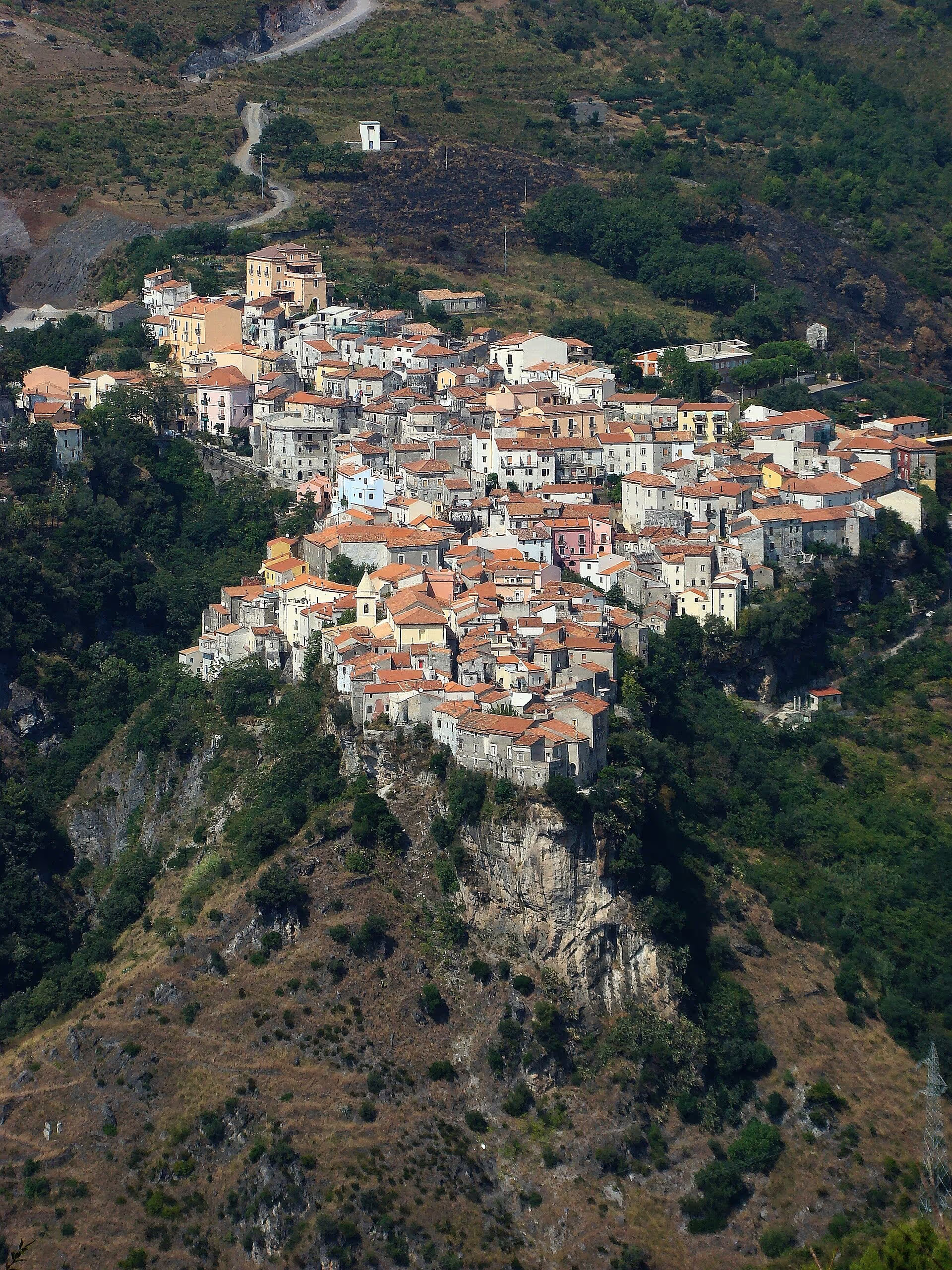
 Old town
Upper Tyrrhenian Cosentino · Riviera dei Cedri
Aieta historic centre
The village at 524 metres, one of the Borghi più belli d’Italia: the Renaissance Palazzo Martirano-Spinelli, sixteenth-century churches, the 1520 monastery of the Friars Minor and chapels of several centuries, above the Tortora valley.
Aieta’s historic centre occupies a ridge at 524 metres, looking north-west over the Tortora valley and south-east over the inner basin: it is the village that grew here after the Normans arrived, when the old stronghold on Monte Calimaro was abandoned. It is dominated by the Renaissance Palazzo Martirano-Spinelli, in via Cantogrande, a rare example of Renaissance architecture in Calabria. Its historically significant churches and palazzi have earned the village a place in the association of the Borghi più belli d’Italia. In piazza Monsignore Lomonaco stands the church of Santa Maria della Visitazione, from the 16th century, like the church of Santa Maria Assunta; in the Villaggio 1º maggio locality stands the church of the monastery of the Friars Minor Observant of St Francis of Assisi, built in 1520. The chapels mark other eras: San Biagio, in via Socastro, and Santa Lucia are given as 11th-century; San Vito Martire, dedicated to the patron celebrated on 15 June, dates from the 17th; completing the picture are the chapels of the Addolorata, San Giuseppe and Santa Maria della Purità. The eagle that gives the village its name, aetòs in Greek, returns in the town’s coat of arms.
Frequently asked questions
- The Renaissance palace that dominates the historic centre, a rare example of Renaissance architecture in Calabria.
- Santa Maria della Visitazione and Santa Maria Assunta, from the sixteenth century, the church of the 1520 monastery of the Friars Minor Observant and several chapels, including San Biagio, Santa Lucia and San Vito Martire.
What is the Palazzo Martirano-Spinelli in Aieta?
Which churches are in the centre of Aieta?
More places in Aieta
- Culture
Aieta Vetere and Monte Calimaro
The archaeological site of Aieta’s first settlement, on Monte Calimaro: the Lucanians’ lookout post, strengthened by the Byzantines against Goths and Lombards and abandoned after the Normans.
- Viewpoint
Monte Ciagola
The 1,463-metre peak overlooking Aieta, in the Pollino National Park.
Itineraries through here
-
 3 daysWellness & spa
Nature and Pollino in three days
Three days among spa, Palaeolithic cave and mountains of the Pollino National Park.
6 stops4 townsMarch–NovemberSee the stops -
 4 daysWellness & spa
Nature and Pollino in four days
Four days among spa, cave, mountains and river in the Pollino National Park.
8 stops5 townsMarch–NovemberSee the stops