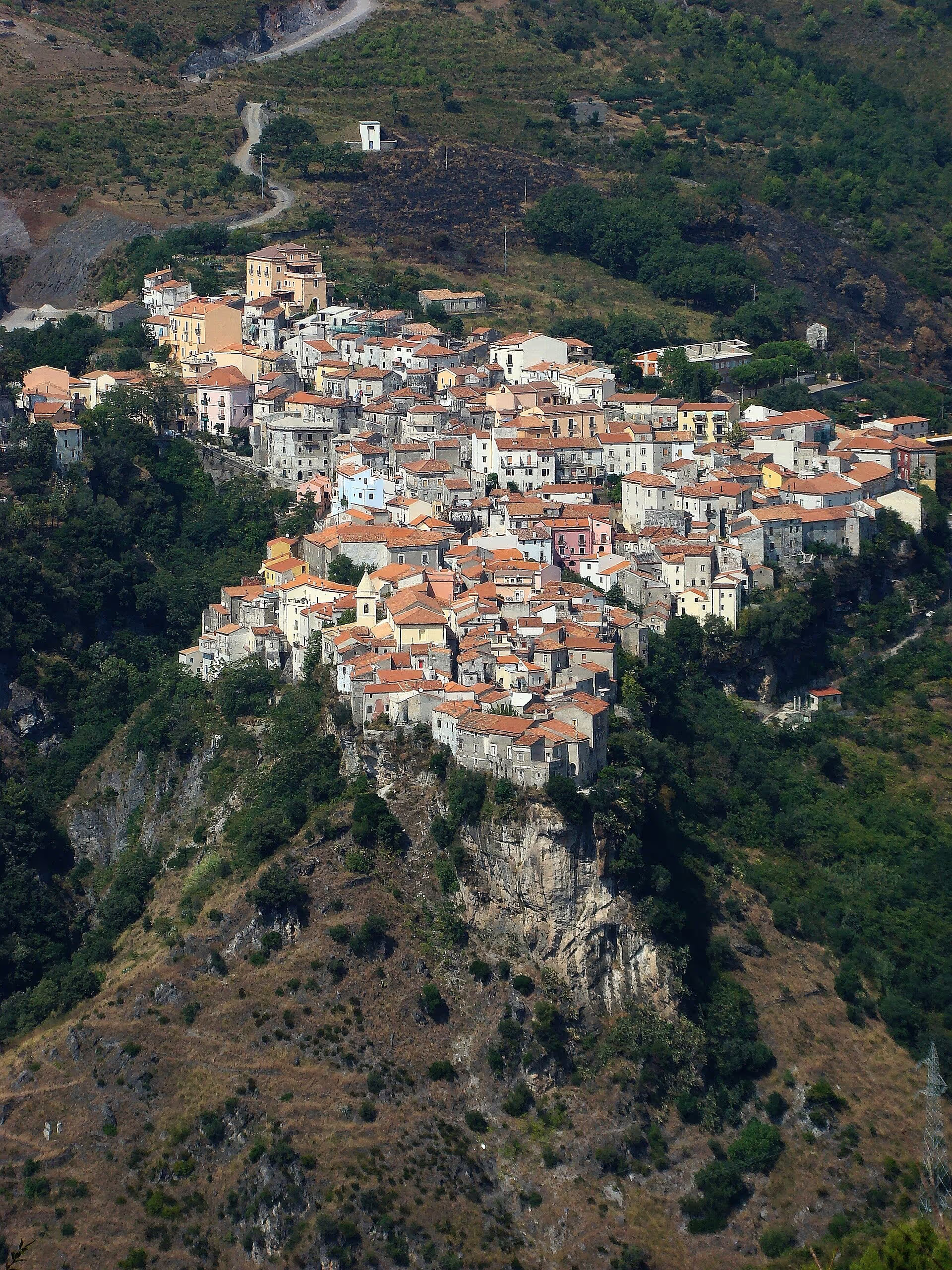
Upper Tyrrhenian Cosentino · Riviera dei Cedri
Aieta
The Pollino’s “city of the eagle”: at 524 metres, one of the Borghi più belli d’Italia, Aieta keeps the Renaissance Palazzo Martirano-Spinelli, sixteenth-century churches, the Valle dei Mulini and, on Monte Calimaro, the remains of Aieta Vetere, a few kilometres from the sea at Praia.
Aieta (also written Ajeta, Ajìta in the local dialect) is a small town of about 700 inhabitants in the province of Cosenza, behind Praia a Mare on the Upper Tyrrhenian Cosentino coast. Its territory is part of the Pollino National Park and rises to Monte Ciagola, at 1,463 metres; the historic centre stands at 524 metres and is dominated by the Renaissance Palazzo Martirano-Spinelli. For its churches and palazzi Aieta belongs to the association of the Borghi più belli d’Italia, the most beautiful villages of Italy. Though only a few kilometres from the Tyrrhenian, it keeps mountain traditions in its culture and food.
Geography
The village stands on a ridge that looks north-west over the Tortora valley and south-east over an inner basin, fertile and crossed by a small stream, ringed by the mountains Calimaro, Curatolo, Rosello, Gada, La Destra, Ciagola, Le Fabbriche and Schiena. Until 1928 the municipality reached the sea: with the creation of the municipality of Praia a Mare it lost its coastal strip, but the name lives on in the Praja-Ajeta-Tortora station. The inhabitants are called aietani; the patron saint is San Vito, celebrated on 15 June.
History
The name appears in documents as Asty Aetou, “city of the eagle”, from the Greek aetòs, and dates from the Byzantine era: perhaps for the village’s commanding position, perhaps for the eagles of the area; the eagle, gold on three green hills, also appears in the coat of arms, granted in 2016. The inner basin was inhabited and farmed from protohistoric times. Farm villas of the Oenotrians (6th–5th century BC) and the Lucanians (5th–4th century BC) stood here, and the latter built a first lookout fortification on Monte Calimaro against the Greeks of Thurii, who came up from the Mercure-Lao valley across the Piani del Carro of Tortora. After the Roman farms, the Byzantines made the basin the seat of a tourma, strengthened the Calimaro stronghold against Goths and Lombards coming from Laino and gave the place its present name; in the same period numerous lavras of Greek-Byzantine monks who had fled the East settled here, remembered in the saints’ names of many localities. With the Normans the Calimaro post lost its purpose and was abandoned, while the village on the ridge grew, following from then on the fortunes of the Tyrrhenian towns of the Kingdom of Naples until the unification of Italy. A twentieth-century chapter is that of the wool textile machines bought in 1925 at Morano by Giacomo Cosentino: worked by hand or by pulleys driven first by steam and then by electric motors, they turned raw wool into cloth and yarn for jumpers, socks and trousers, and ran at full pace until about 1970.
What to see
The historic centre is dominated by the Renaissance Palazzo Martirano-Spinelli, a rare example of Renaissance architecture in Calabria. Around it cluster the sixteenth-century churches: Santa Maria della Visitazione, Santa Maria Assunta and the church of the monastery of the Friars Minor Observant of St Francis of Assisi, built in 1520. The chapels tell of different centuries: San Biagio and Santa Lucia are given as 11th-century, San Vito Martire as 17th-century, and then the Addolorata, San Giuseppe and Santa Maria della Purità. Outside the village, in contrada Meiazzo, the Valle dei Mulini preserves restored old mills; on Monte Calimaro lies the archaeological site of Aieta Vetere, the first settlement.
Getting there
Aieta is reached from Praia a Mare on the SP13 provincial road. The nearest railway station is Praja-Ajeta-Tortora, in Praia a Mare on the Tyrrhenian line, about 10 km away; a scheduled bus service links the village with Praia. By car on the A2 “del Mediterraneo”: from the north take the Lagonegro nord exit and the SS585 Fondo Valle del Noce to the coast, then the SS18; from the south take the Falerna exit and the SS18 northwards. The nearest airport is Lamezia Terme.
Places
What to see around here.
- Culture
Aieta Vetere and Monte Calimaro
The archaeological site of Aieta’s first settlement, on Monte Calimaro: the Lucanians’ lookout post, strengthened by the Byzantines against Goths and Lombards and abandoned after the Normans.
- Old town
Aieta historic centre
The village at 524 metres, one of the Borghi più belli d’Italia: the Renaissance Palazzo Martirano-Spinelli, sixteenth-century churches, the 1520 monastery of the Friars Minor and chapels of several centuries, above the Tortora valley.
- Viewpoint
Monte Ciagola
The 1,463-metre peak overlooking Aieta, in the Pollino National Park.
Nearby towns
Keep exploring the Upper Tyrrhenian Cosentino coast from here.
-
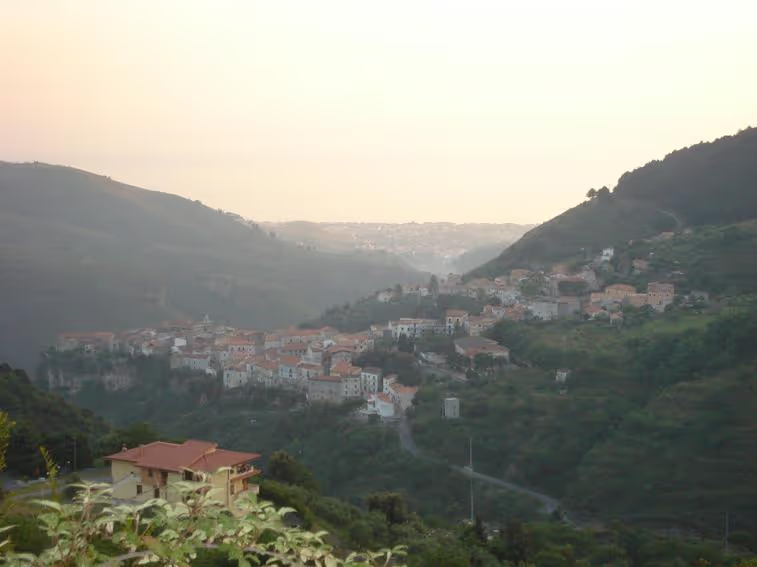
Tortora
The northern gateway of Tyrrhenian Calabria: the village born of refugees from Blanda, the Oenotrian, Lucanian and Roman city on the Palècastro hill, the Palaeolithic site of Rosaneto, the Pollino mountains and the Marina on the Gulf of Policastro.
-
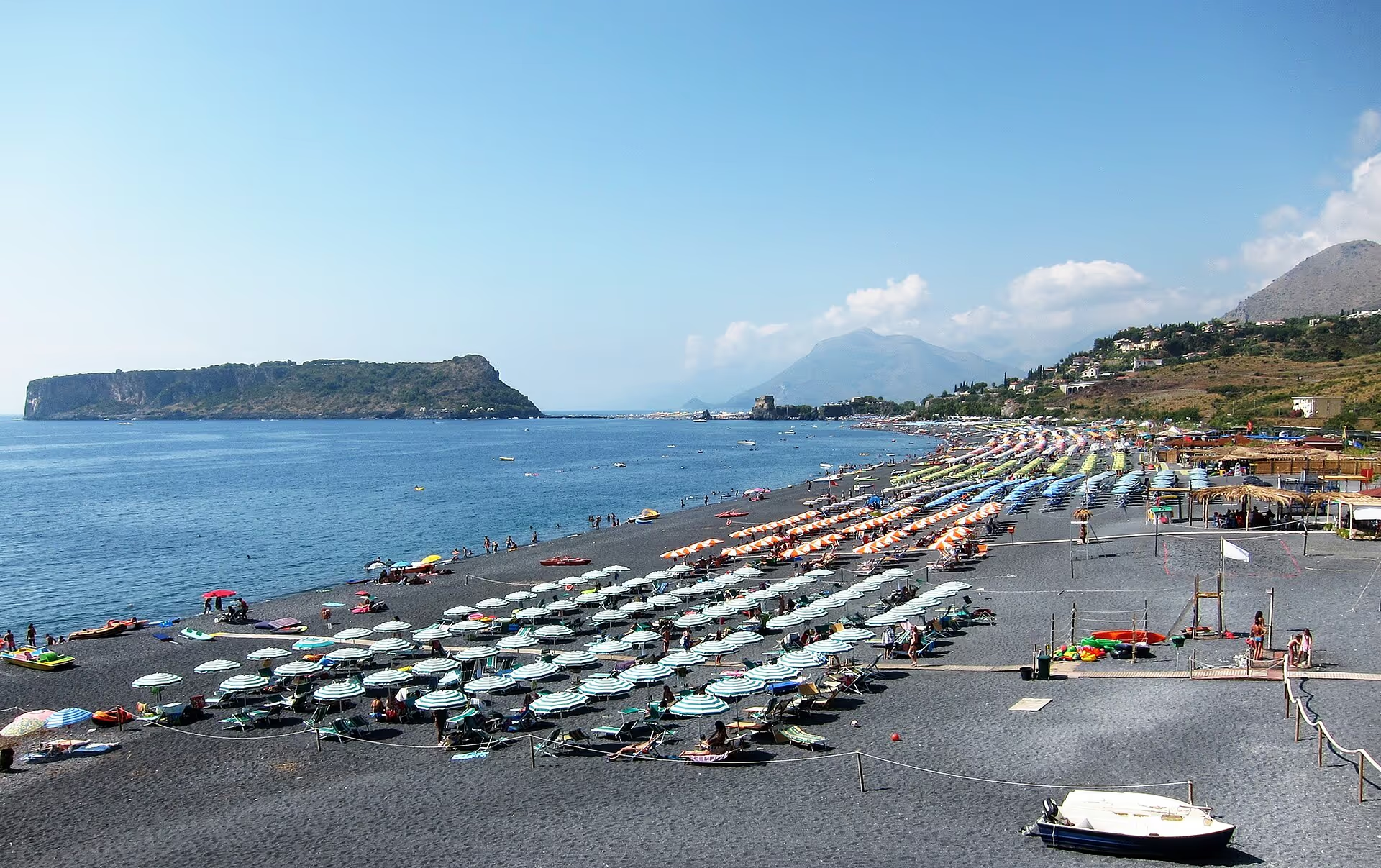
Praia a Mare
The beach town of the Upper Tyrrhenian Cosentino coast on the Basilicata border: the island of Dino with its sea caves, the rock sanctuary of the Madonna della Grotta and the towers that once watched over the shore.
-
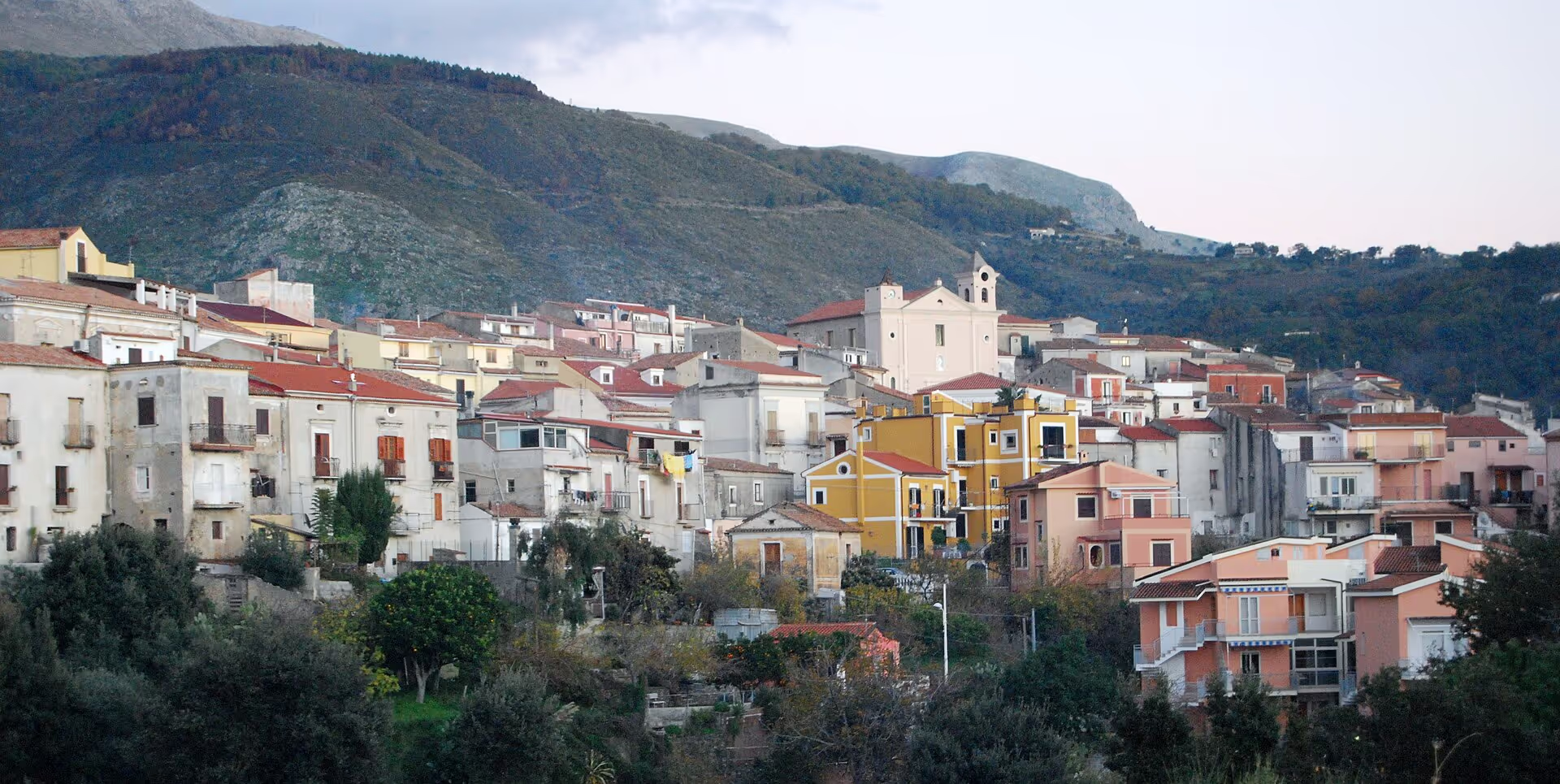
San Nicola Arcella
The cliff-top village of the Riviera dei Cedri: three bays in three kilometres, the rock arch of the Arcomagno, the Crawford Tower and a belvedere that takes in three regions.
-
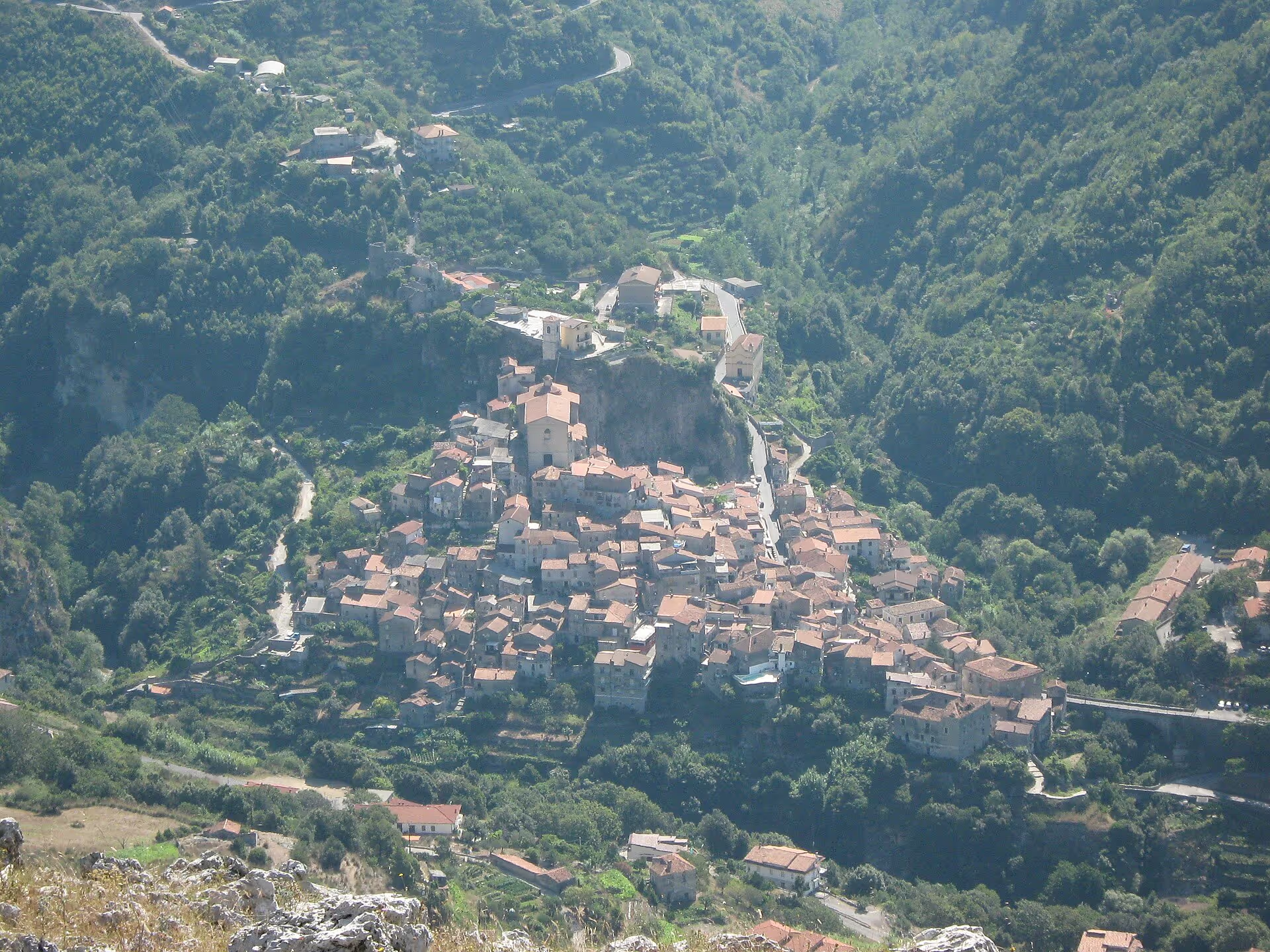
Papasidero
The Pollino village where the Upper Tyrrhenian Cosentino coast meets prehistory: the Grotta del Romito with the great aurochs engraved between 14,000 and 12,000 years ago, fifteen kilometres of the Lao river gorge inside a nature reserve and a medieval village with a Norman-Swabian castle and the gate of the changing of the Guard.
-
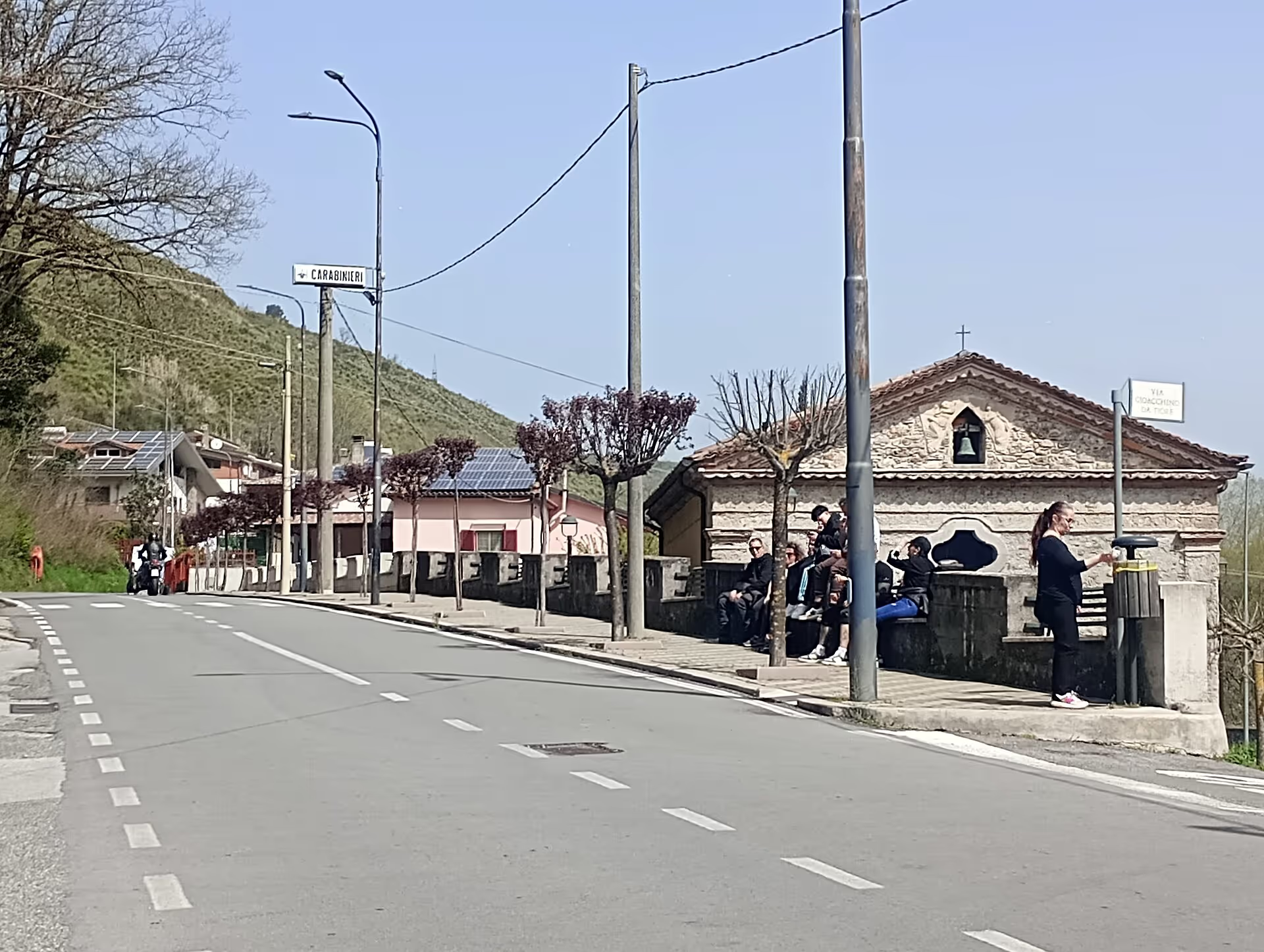
Laino Borgo
Calabria’s gateway to the Pollino, where the Lucanian Mercure becomes the Lao: Laino Borgo brings together the sixteenth-century chapels of the Sanctuary of the Madonna dello Spasimo, the Good Friday Giudaica, the memory of Blessed Pietro Paolo Navarro and the river gorges, for rafting and canyoning.
Itineraries through here
- 3 daysWellness & spa
Nature and Pollino in three days
Three days among spa, Palaeolithic cave and mountains of the Pollino National Park.
6 stops4 townsMarch–NovemberSee the stops - 4 daysWellness & spa
Nature and Pollino in four days
Four days among spa, cave, mountains and river in the Pollino National Park.
8 stops5 townsMarch–NovemberSee the stops
Where to stay
- B&B Casa GiroApartment · Aieta
Indicative information from OpenStreetMap. Check availability and reviews on the external platforms.
Where to eat
- Agriturismo Terre Rosse Di MassaditaRestaurant · Aieta
- Le Due LanterneRestaurant · Aieta
Indicative information from OpenStreetMap. Check availability and reviews on the external platforms.
Do you run a local business?
Update the listing or discover how to give your business more visibility.
Join the guide for freeHow to get to Aieta
- Nearest active station
- Praja-Ajeta-Tortora
- about 5 km as the crow flies from the centre
- Train times (Trenitalia) ↗ Guide: by train
- Nearest airport
- Lamezia Terme International Airport (SUF)
- about 120 km as the crow flies from the centre
- Airport website ↗ Guide: by plane
- By car: A2 “del Mediterraneo” motorway
- Inland town: the relevant A2 exits are described in the “By car” guide; use the directions link for the current route.
- Driving directions (Google Maps) ↗ Guide: by car
Straight-line distances computed from verified coordinates: the road route is longer. Check times and connections on the operators’ websites.
Frequently asked questions
- It comes from the Byzantine Asty Aetou, “city of the eagle”, from the Greek aetòs: perhaps for the village’s commanding position or for the eagles of the area. The eagle also appears in the coat of arms.
- The Renaissance Palazzo Martirano-Spinelli, the sixteenth-century churches of Santa Maria della Visitazione and Santa Maria Assunta, the 1520 monastery of the Friars Minor Observant, the chapels, the Valle dei Mulini and the Aieta Vetere site on Monte Calimaro.
- Yes: for its historically significant churches and palazzi it belongs to the association of the Borghi più belli d’Italia.
- The archaeological site of the first settlement, on Monte Calimaro, where the Lucanians and later the Byzantines had a lookout fortification, abandoned after the Norman conquest.
- Yes, until 1928: with the creation of the municipality of Praia a Mare it lost its coastal strip. The name lives on in the Praja-Ajeta-Tortora station.
- From Praia a Mare on the SP13 provincial road; the nearest station is Praja-Ajeta-Tortora, about 10 km away, and a scheduled bus links the village with Praia.
- Aieta has no station of its own: the nearest active station as the crow flies is Praja-Ajeta-Tortora, on the Tyrrhenian railway line, about 5 km from the centre. From there you continue by road; times and connections on the Trenitalia website.
- The nearest airport is Lamezia Terme International Airport (SUF), about 120 km as the crow flies; from there you continue by train from Lamezia Terme Centrale along the Tyrrhenian line, or by car on the A2 motorway.
What does the name Aieta mean?
What is there to see in Aieta?
Is Aieta one of the Borghi più belli d’Italia?
What is Aieta Vetere?
Did Aieta once reach the sea?
How do you get to Aieta?
Which is the nearest railway station to Aieta?
Which is the nearest airport to Aieta?
Discover locally
Live, up-to-date results with real reviews, on external platforms. We don’t hand-pick individual businesses we can’t verify.