 Old town
Upper Tyrrhenian Cosentino · Riviera dei Cedri
Grisolia historic centre
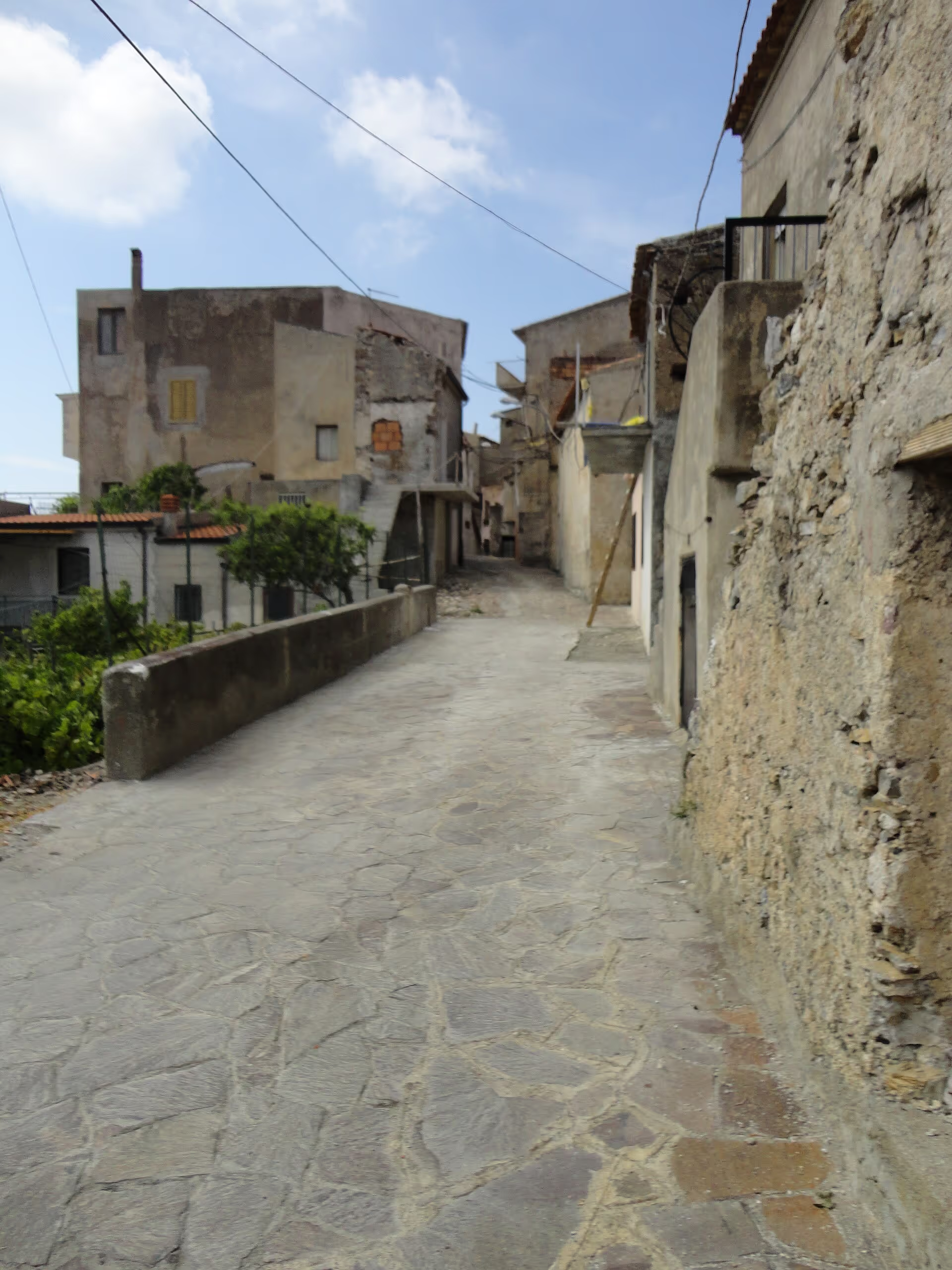
The village perched at 465 metres opposite Maierà: covered alleys called spuortu, exposed stone, ceramili tiled roofs, the 15th-century Palazzo Ducale and the Civic Ethnographic Museum, with the Riviera dei Cedri below.
Grisolia’s historic centre is perched on a hill at 465 metres, facing Maierà, from which a deep ravine divides it. Inside you walk through a tangle of alleys, steps and arches of every length and width, and pass under the supporti, spuortu in dialect: covered stretches where the houses lean on one another. The walls are of Grisolia stone, left rough and unplastered, and the roofs are covered with clay tiles, the ceramili, which trace a distinctive scalloped line along the edge of the wall. The vanelle, the lesser lanes that run into the streets, were once almost all stone stairways; today they are paved in porphyry with decorations and river pebbles. Among the palazzi stand out the Palazzo Ducale, from the 15th century and now owned by the municipality, the Palazzo de Patto in the castle area and the Palazzo Tosto, above the spuortu of via Sotto le Mura. In the upper part, through the spuortu of via Chiesa, you climb to the sanctuary of San Rocco. The Civic Ethnographic Museum keeps the objects of agro-pastoral life collected by the Italo Muti association and on display since 1991. From via Panoramica the view runs over the whole Riviera dei Cedri as far as Capo Palinuro.
Frequently asked questions
- A supporto, a covered stretch of alley where the houses lean on one another: a typical feature of the historic centre.
- Objects from Grisolia’s agro-pastoral life collected by the Italo Muti association, first exhibited in 1991 and later donated to the municipality.