Upper Tyrrhenian Cosentino · Riviera dei Cedri
Grisolia
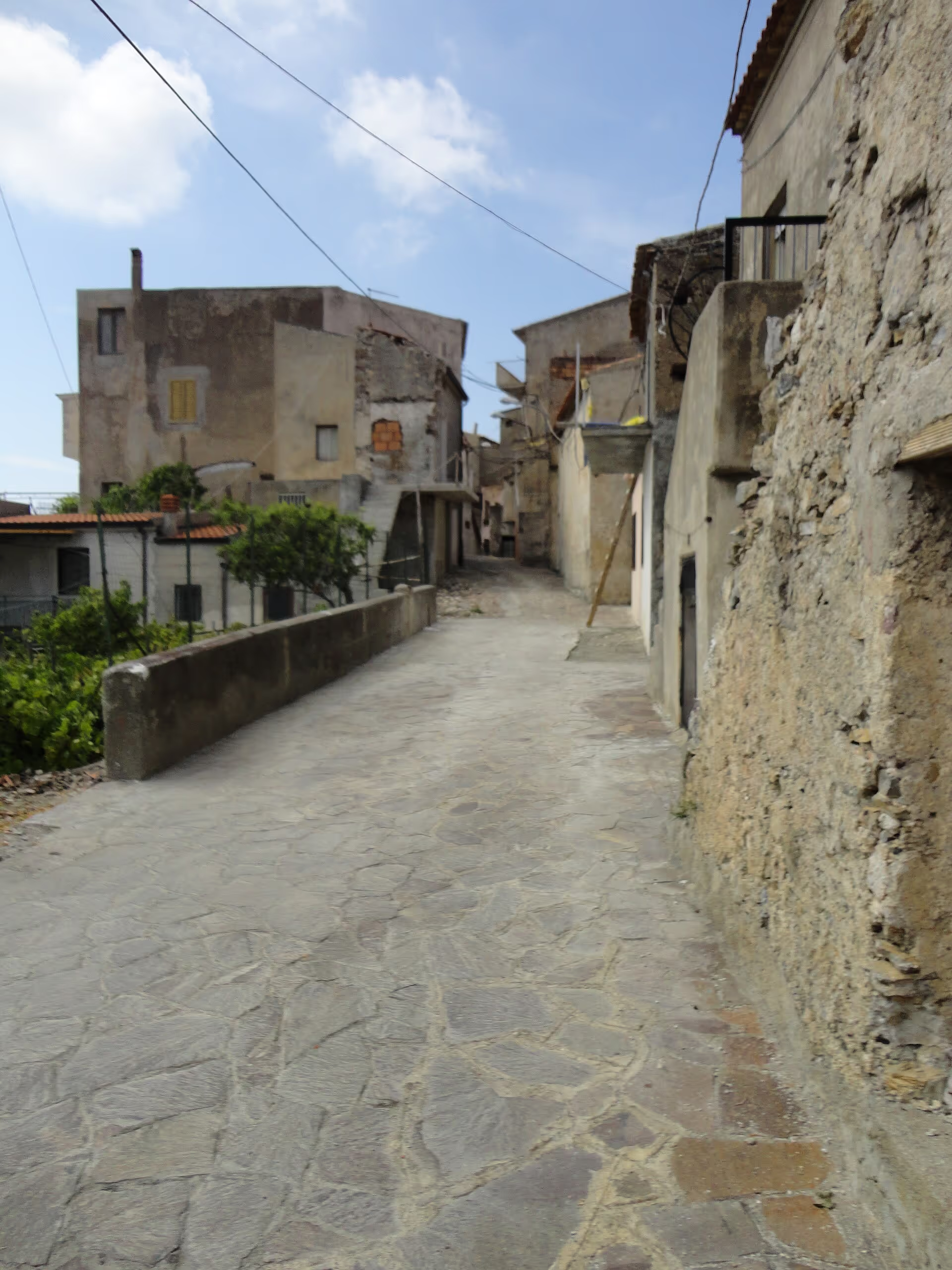
The village at 465 metres that looks out over the whole Riviera dei Cedri: from the sea at Acchio to the slopes of Monte La Mula, Grisolia combines covered stone alleys, the Palazzo Ducale, the ethnographic museum and the San Rocco procession with the caggie carried on the head.
Grisolia (Grìsulia in Calabrian) is a town of about 2,160 inhabitants in the province of Cosenza, at the heart of the Riviera dei Cedri, on the Upper Tyrrhenian Cosentino coast. It is a place of both sea and mountain: its territory starts on the Tyrrhenian shore and climbs to the western slope of Monte La Mula, at 1,905 metres, inside the Pollino National Park. The historic centre is perched on a hill at 465 metres, facing Maierà, from which a deep ravine separates it: as the crow flies the two villages are just 900 metres apart.
Geography
The territory is highly varied. On the coast lies the hamlet of Acchio; the town is split into three parts: the newer lido area by the sea, the intermediate marina around the station, and the hilltop historic centre. Climbing towards Monte La Mula you enter an area rich in biodiversity, symbolised by centuries-old chestnut trees such as the castagno del ramarro; the mountain is home to the native roe deer and the Apennine wolf, and on the ridges of La Mula grows the Bosnian pine (pino loricato), emblem of the Pollino. At Pantanelli there is a picnic area and a spring. From via Panoramica the view takes in the whole Riviera dei Cedri and the Gulf of Policastro as far as Capo Palinuro. The municipality borders Buonvicino, Diamante, Maierà, Mottafollone, San Donato di Ninea, San Sosti, Santa Maria del Cedro and Verbicaro. The inhabitants are called grisolioti; the patron saint is St Anthony of Padua, celebrated on 13 June, but the most heartfelt devotion goes to San Rocco.
History
Grisolia is a town of medieval origin. Several explanations of its name have been proposed: one links it to the Greek Chrousolea or the Latin Chrisena, both connected with gold, perhaps because of the fertile land or the presence of mines; another, considered more solid, traces it to a hegumen, Papàs Chryselios, who is said to have founded the original community in the 11th century. The link with metals is more than an etymological guess: on Monte La Mula, since prehistoric times, veins were worked to extract copper, iron and gold. In 1811 Grisolia became a municipality that also included Cipollina, which broke away in 1948 to become part of Santa Maria del Cedro: until then the municipality was listed as Grisolia-Cipollina, and under that name the station on the Tyrrhenian railway opened in 1895. Until the 1960s and 1970s the town had about 3,500 inhabitants; then many emigrated to northern Italy, particularly to Taino, in the province of Varese.
What to see
The historic centre is a tangle of alleys, steps, arches and supporti, spuortu in dialect: covered passages where the houses lean on one another. Buildings use exposed Grisolia stone, and roofs are covered with clay tiles, the ceramili, which form a distinctive scalloped edge where they meet the wall. Among the palazzi stand out the Palazzo Ducale, from the 15th century and now owned by the municipality, the Palazzo de Patto in the castle area and the Palazzo Tosto, above the spuortu of via Sotto le Mura. In the upper part, reached through the spuortu of via Chiesa, stands the sanctuary of San Rocco of Montpellier, a pilgrimage destination above all in August. The Civic Ethnographic Museum holds the collection of objects from Grisolia’s agro-pastoral life begun by the Italo Muti association and first exhibited in 1991.
The feast of San Rocco and the caggie
Grisolia’s most heartfelt tradition is the procession of San Rocco of Montpellier, held on 15 and 16 August, the day of his feast. Behind the band, many women, often barefoot, follow the saint’s statue in a double line carrying the caggie on their heads: wooden frames holding numerous candles, adorned with colourful flowers and ribbons, offered as ex-votos to the healing saint, while they sing songs of devotion. For the occasion streets and balconies are dressed with coloured ribbons, blankets bearing the saint’s image, flowers and candles, and as the statue passes, scented petals rain down from the windows. The cult is thought to have taken hold between the 16th and 17th centuries, after an outbreak of plague.
Getting there
Grisolia is crossed by the SS18 Tirrena Inferiore state road and has a railway stop, Grisolia-Santa Maria, in the station area, on the Tyrrhenian line: regional trains serve it to Paola, Cosenza and Sapri. By car on the A2 “del Mediterraneo”: from the north take the Lagonegro nord exit, then the SS585 Fondo Valle del Noce to the SS18 and the Santa Maria del Cedro, Grisolia or Cirella-Diamante junctions; from the south take the Falerna exit and the SS18 northwards. The region’s nearest airport is Lamezia Terme.
Places
What to see around here.
- Old town
Grisolia historic centre
The village perched at 465 metres opposite Maierà: covered alleys called spuortu, exposed stone, ceramili tiled roofs, the 15th-century Palazzo Ducale and the Civic Ethnographic Museum, with the Riviera dei Cedri below.
- Culture
Sanctuary of San Rocco
The sanctuary in the upper part of Grisolia, a pilgrimage destination in August: on 15 and 16 August the San Rocco procession, with women carrying caggie of candles, flowers and ribbons on their heads.
Nearby towns
Keep exploring the Upper Tyrrhenian Cosentino coast from here.
-
Buonvicino
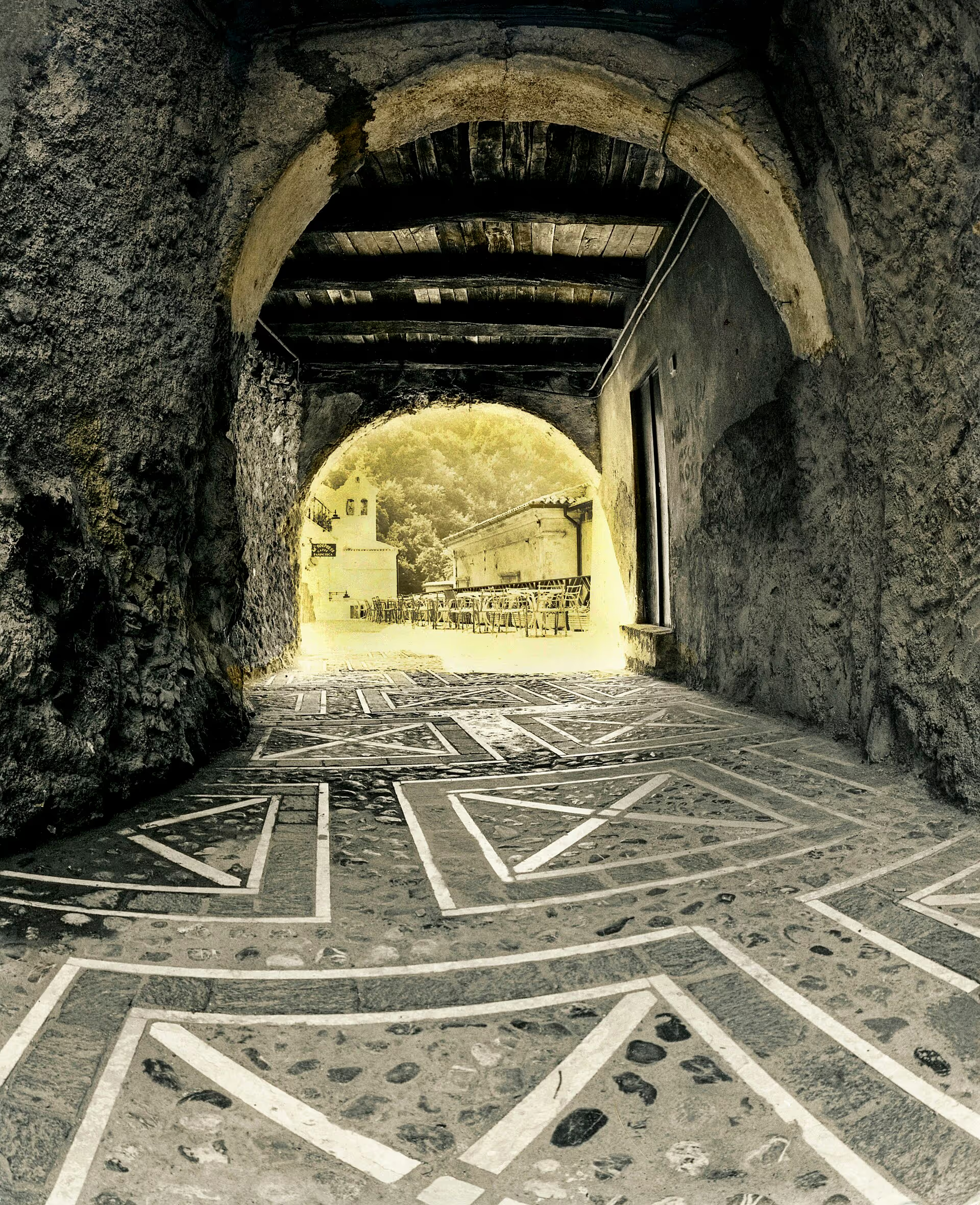
The village born of three hamlets on the route between the Tyrrhenian and the interior: at 400 metres above the Corvino stream, in the Pollino park, Buonvicino keeps the Stretto gorge with the Sasso dei Greci, the cave of Abbot Ciriaco, a disciple of Saint Nilus, and his great bronze statue watching over the village.
-
Maierà
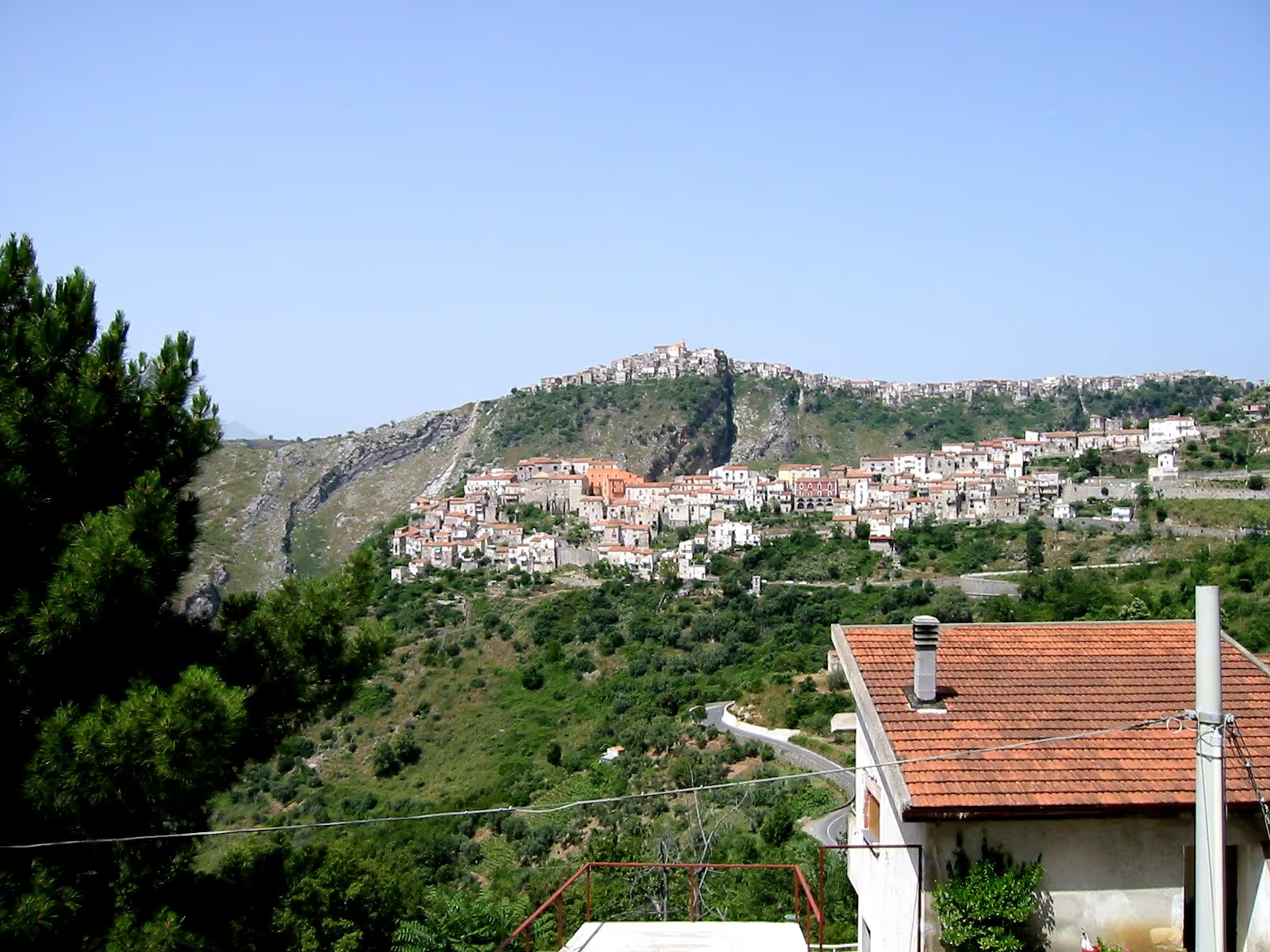
The village at 360 metres above the Vaccuta stream valley, separated from Grisolia by a ravine: in the Pollino park, behind Diamante, Maierà combines contemporary artworks in its lanes, the Chilli Pepper Museum and its four churches.
-
Verbicaro
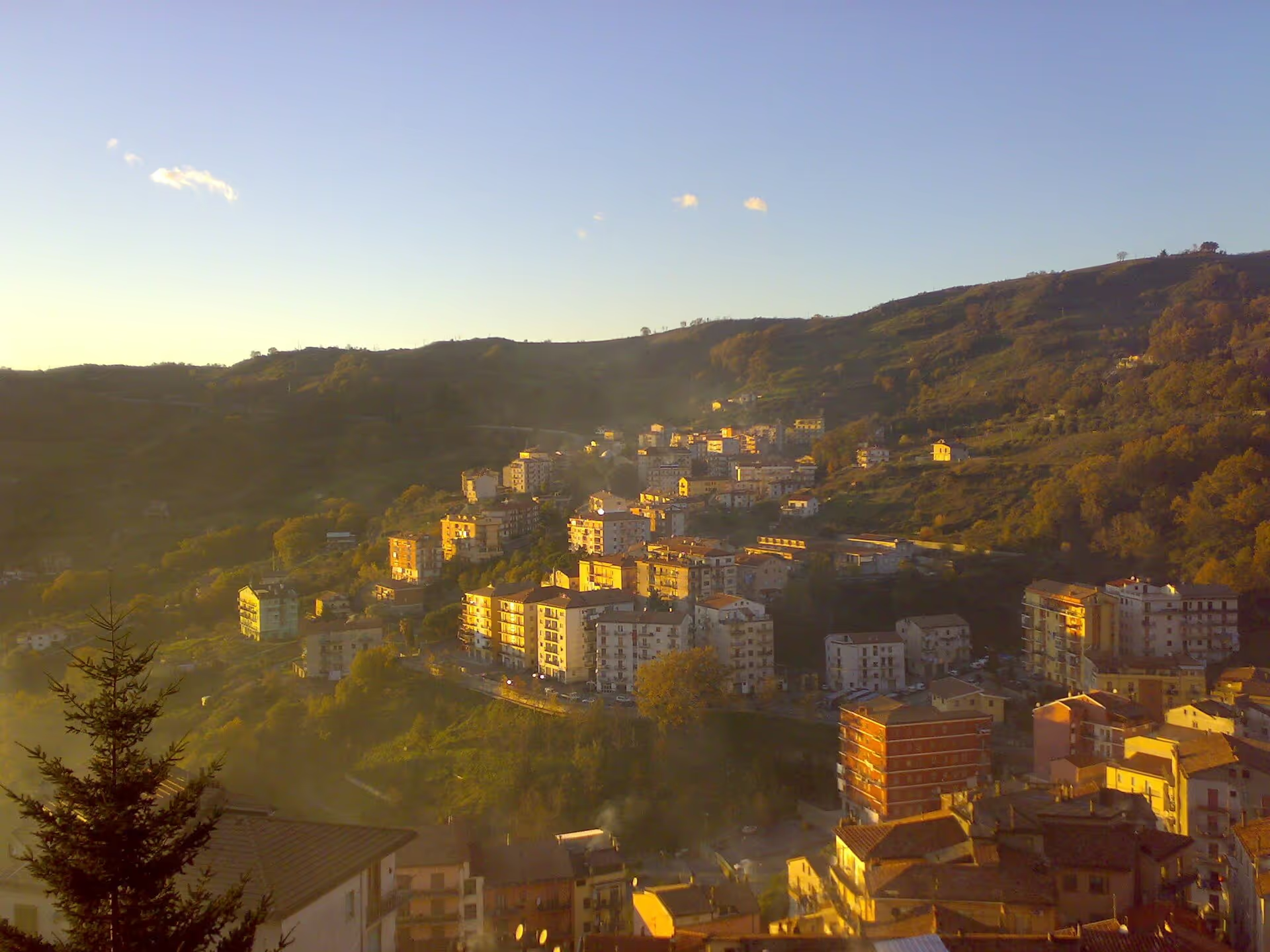
The village of the Battenti: at 428 metres in the Pollino park, behind the Riviera dei Cedri, Verbicaro keeps the night rite of Good Friday, the Zigni torchlight procession for the Madonna delle Grazie and a village of portals, alleys and seven churches, already described in 1797 by Lorenzo Giustiniani.
-
Santa Maria del Cedro
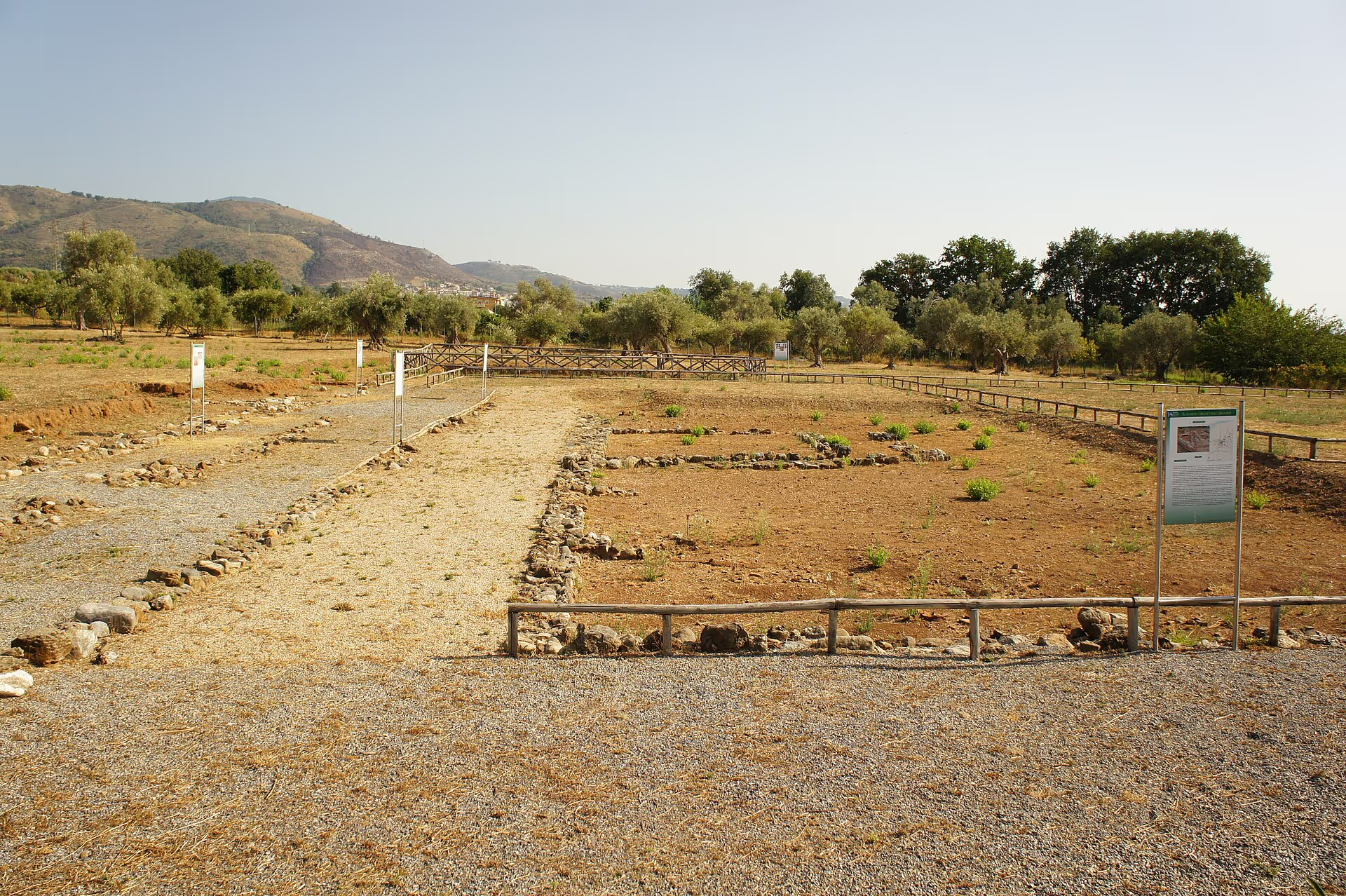
The town that gives the Riviera dei Cedri its name: the fertile plain between the Lao and the Abatemarco where the citron chosen by rabbis for Sukkot is grown, the remains of the Sybarite city of Laos at Marcellina and the Citron Museum in the Carcere dell’Impresa.
-
Diamante
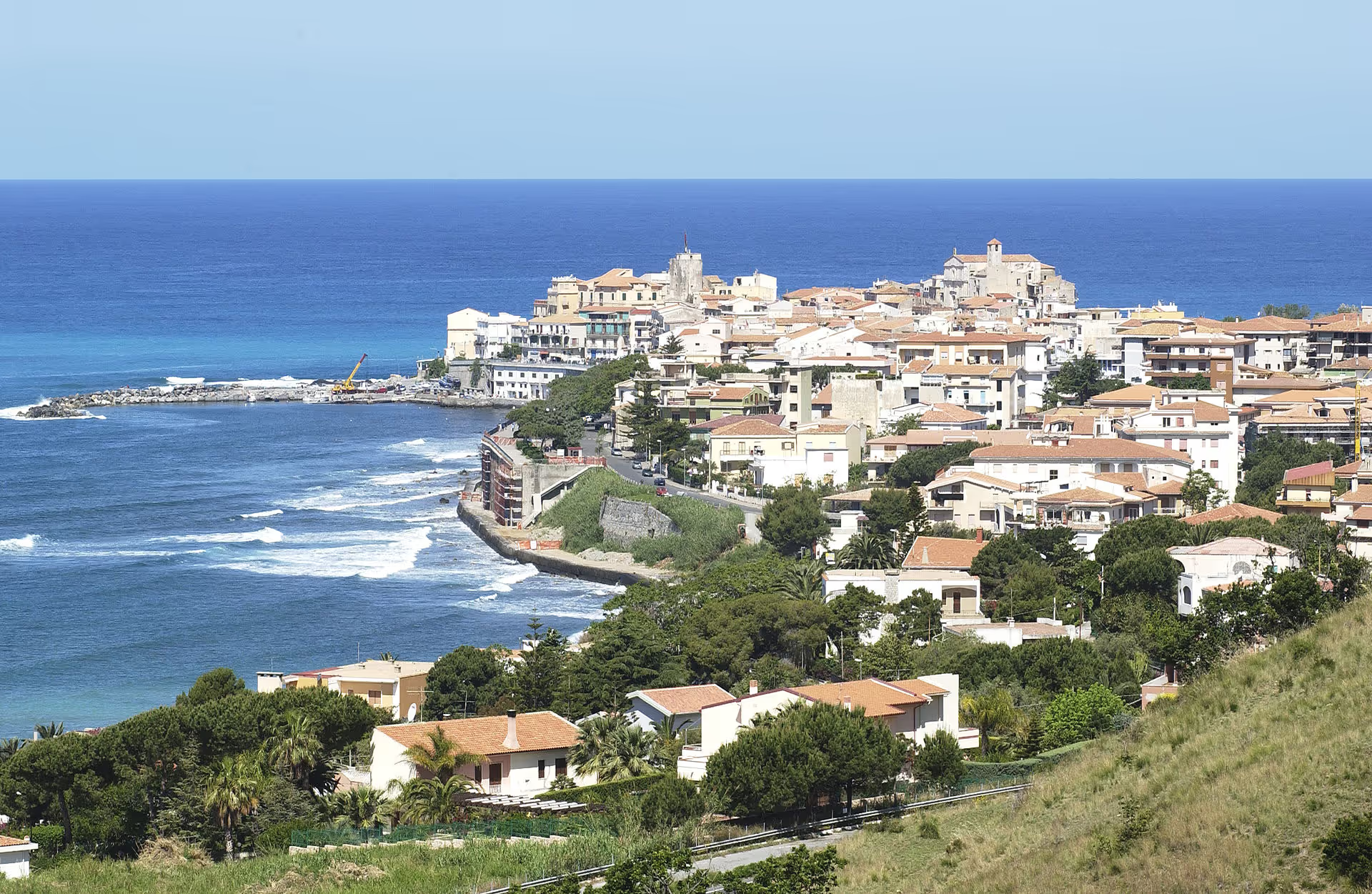
The “town of murals” and chilli-pepper capital at the heart of the Riviera dei Cedri: eight kilometres of beaches, the island of Cirella and a fishing village turned open-air art gallery.
Where to stay
- DominicusHotel · Grisolia
- EcostelloHostel · Grisolia
- San GaetanoHotel · Grisolia
- Villaggio Camping OrchideaCampsite · Grisolia
Indicative information from OpenStreetMap. Check availability and reviews on the external platforms.
Where to eat
- Majorica BeachRestaurant · Grisolia
Indicative information from OpenStreetMap. Check availability and reviews on the external platforms.
Beaches and beach clubs
- Lido Le PalmeBeach club · Grisolia
- Lido Ultima SpiaggiaBeach club · Grisolia
Indicative information from OpenStreetMap. Check availability and reviews on the external platforms.
Do you run a local business?
Update the listing or discover how to give your business more visibility.
Join the guide for freeHow to get to Grisolia
- Nearest active station
- Grisolia-Santa Maria
- about 7 km as the crow flies from the centre Serves Grisolia and Santa Maria del Cedro.
- Train times (Trenitalia) ↗ Guide: by train
- Nearest airport
- Lamezia Terme International Airport (SUF)
- about 95 km as the crow flies from the centre
- Airport website ↗ Guide: by plane
- By car: A2 “del Mediterraneo” motorway
- Inland town: the relevant A2 exits are described in the “By car” guide; use the directions link for the current route.
- Driving directions (Google Maps) ↗ Guide: by car
Straight-line distances computed from verified coordinates: the road route is longer. Check times and connections on the operators’ websites.
Frequently asked questions
- Wooden frames full of candles, adorned with flowers and ribbons, which women carry on their heads, often barefoot, during the San Rocco procession on 15 and 16 August, as ex-votos to the saint.
- Both: its territory runs from the Tyrrhenian shore, with the hamlet of Acchio, up to the western slope of Monte La Mula at 1,905 metres, in the Pollino park; the historic centre stands at 465 metres.
- The covered alleys called spuortu, the Grisolia stone and tiled roofs, the 15th-century Palazzo Ducale, the de Patto and Tosto palazzi, the San Rocco sanctuary and the Civic Ethnographic Museum.
- From via Panoramica, which takes in the whole Riviera dei Cedri and the Gulf of Policastro as far as Capo Palinuro.
- One hypothesis links it to the Greek Chrousolea or the Latin Chrisena, connected with gold; another to the hegumen Papàs Chryselios, said to have founded the community in the 11th century.
- Grisolia-Santa Maria, on the Tyrrhenian line, served by regional trains to Paola, Cosenza and Sapri.
- Grisolia has no station of its own: the nearest active station as the crow flies is Grisolia-Santa Maria, on the Tyrrhenian railway line, about 7 km from the centre. From there you continue by road; times and connections on the Trenitalia website.
- The nearest airport is Lamezia Terme International Airport (SUF), about 95 km as the crow flies; from there you continue by train from Lamezia Terme Centrale along the Tyrrhenian line, or by car on the A2 motorway.
What are the caggie of Grisolia?
Is Grisolia by the sea or in the mountains?
What is there to see in Grisolia’s historic centre?
Where can you see the Riviera dei Cedri from in Grisolia?
Where does the name Grisolia come from?
Which is Grisolia’s railway station?
Which is the nearest railway station to Grisolia?
Which is the nearest airport to Grisolia?
Discover locally
Live, up-to-date results with real reviews, on external platforms. We don’t hand-pick individual businesses we can’t verify.