 Culture
Upper Tyrrhenian Cosentino · Riviera dei Cedri
Church of Sotterra
Paola’s underground church, probably of the 9th–10th century, rediscovered in 1874 with its Byzantine frescoes and pilgrims’ graffiti.
In contrada Gaudimare, a staircase from the portico of the church of the Carmine leads down into a church beneath the ground: hence the name Sotterra. It was found in 1874 by Giovanni Battista Moscato and scientifically studied from 1925; scholars still debate its origins, but the most likely date is between the 9th and 10th centuries, when Byzantium’s return to Calabria and the Arab conquest of Sicily brought many Italo-Greek monks to the Tyrrhenian coast. Built above ground, it was buried by landslides and floods of the Palumbo stream probably in the early 1600s; a plaque of 1882 records that local farmers venerated the Virgin here “under the earth”.
The hall is about 16 metres long and just over four wide, divided into four bays by three arches, with a semicircular apse and, beside the entrance, a large basin perhaps used for baptism by immersion. The treasure is the frescoes of the apse and chancel: the Ascension with the Madonna at the centre among apostles and saints with the gaunt, hieratic faces typical of Byzantine painting; the Annunciation, with the archangel Gabriel and the Virgin holding a book, a stylised dove near her ear; the Madonna of the Pomegranate nursing the Child, with a praying figure and Saint Anthony Abbot. The polychrome brick floor draws geometric patterns, and on the walls remain the graffiti of medieval pilgrims: crosses, doves, fish and a galley beside a Jerusalem cross.
Frequently asked questions
- It was built above ground, probably in the 9th–10th century, and buried by landslides and floods of the Palumbo stream around the early 1600s; today you descend from the portico of the church of the Carmine.
- The Ascension with the Madonna among apostles and saints in the apse, the Annunciation on either side, and the Madonna of the Pomegranate nursing the Child beside Saint Anthony Abbot.
Why is the church of Sotterra underground?
What do the Sotterra frescoes depict?
More places in Paola
- Old town
Rocchetta and old town of Paola
Paola’s old quarter between the Porta di San Francesco, the Clock Tower, the saint’s birthplace, the Norman-Aragonese castle and the Pisciariddi fountain.
- Culture
Seven Channels Fountain
The monumental sandstone fountain at the foot of Paola’s stairway: a 15th-century trough, a basin of 1636 and the peacock symbol of the town.
-
 Culture
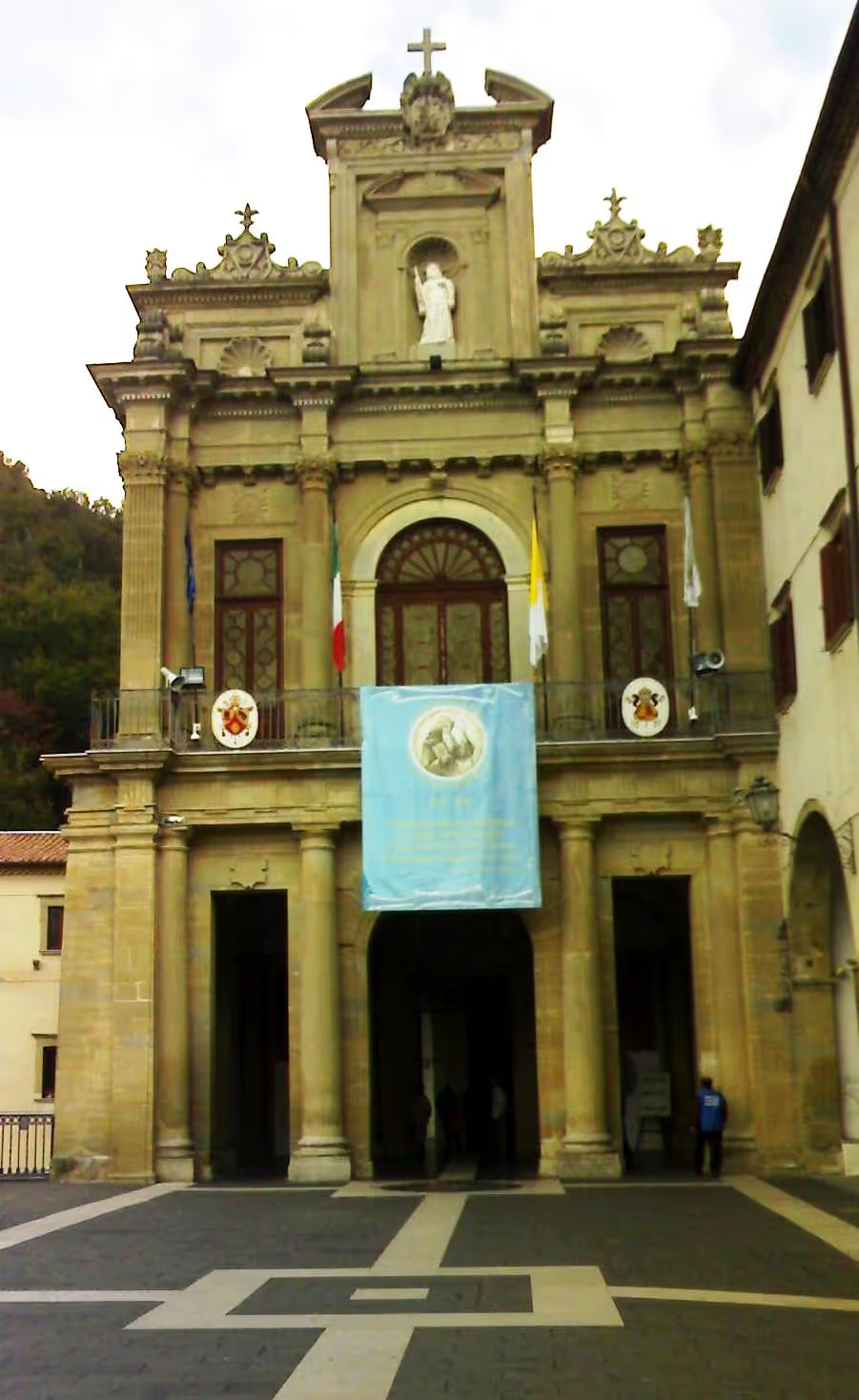
 Sanctuary of Saint Francis of Paola
The regional sanctuary of Calabria’s patron saint, in the Isca valley: old basilica, 1436 hermitage, Via dei Miracoli and the new basilica of 2000.
Itineraries through here
-
 4 daysGrand tour
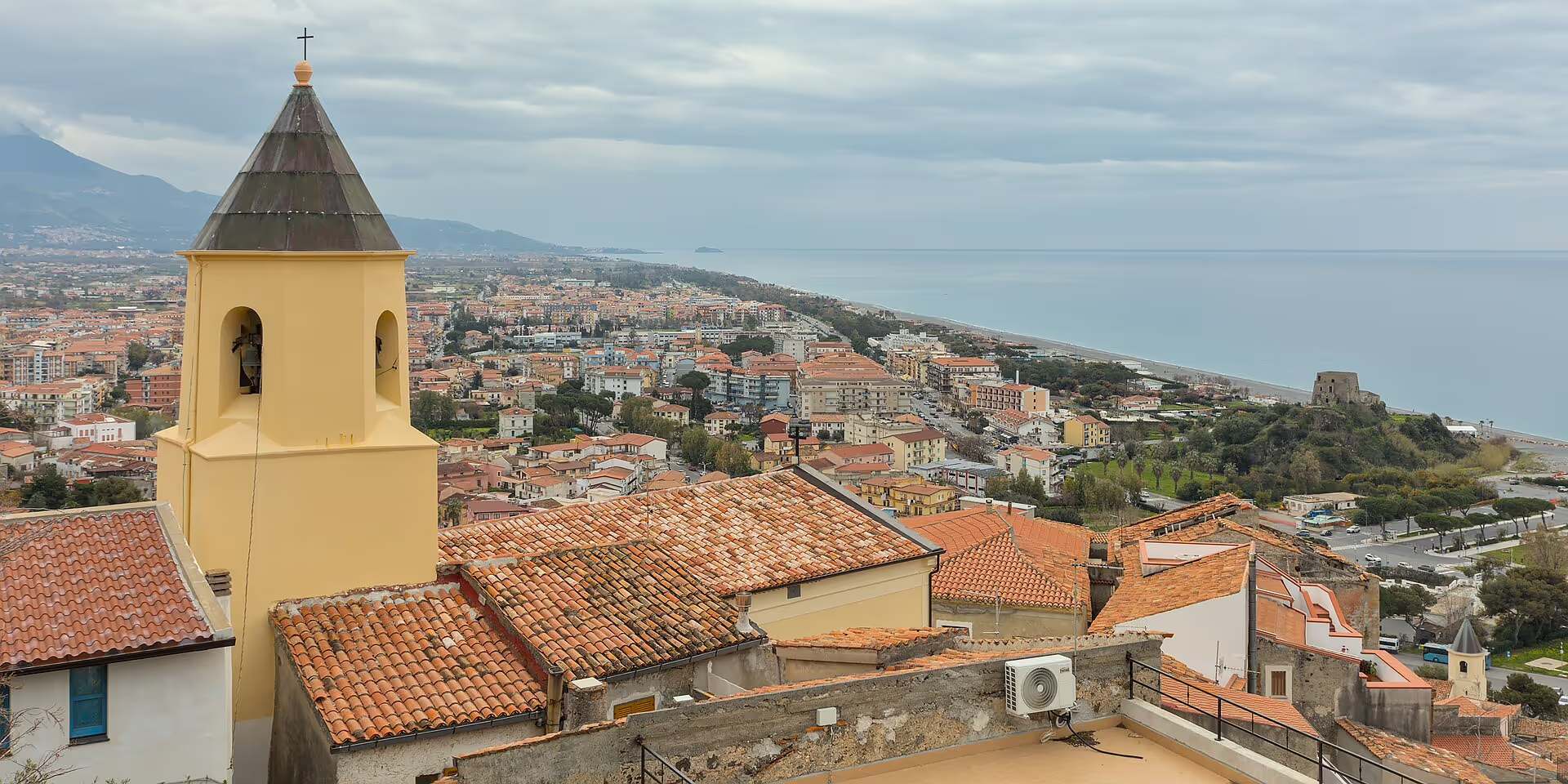
Grand Tour of the Riviera dei Cedri
Four days from north to south along the Upper Tyrrhenian Cosentino coast: islands, Norman towns, murals and sanctuaries.
11 stops8 townsMay–OctoberSee the stops - 2 daysSacred & culture
In the footsteps of the sacred
Two days among sanctuaries and devotion, from Saint Francis of Paola to the Madonna della Grotta.
3 stops3 townsAll year roundSee the stops