 Culture
Upper Tyrrhenian Cosentino · Riviera dei Cedri
Castle of Sangineto
The castle of the Sanseverino princes of Bisignano (second half of the 15th century), rectangular with a wide arcade: in the courtyard, the olive tree planted by Austrian prisoners on 4 November 1918.
The Angevin castle of Sangineto was built by the Sanseverino princes of Bisignano in the second half of the 15th century, by which time the fief had passed from the Sangineto to the Sanseverino through the marriages of Bionda (1342) and Margherita Sangineto. It has a rectangular plan and keeps a wide arcade, which also returns on the municipal coat of arms: there the castle is drawn in gold, without battlements, with windowed side towers and a central loggia of four arches. In the middle of the courtyard rises an old olive tree, planted by Austrian prisoners as a sign of peace on 4 November 1918, the day of the armistice: a living monument that ties the 15th-century fortress to the end of the Great War. The castle is the heart of the hilltop village, above the seaside of Sangineto Lido, at the southern end of the Riviera dei Cedri.
Frequently asked questions
- It was planted by Austrian prisoners as a sign of peace on 4 November 1918, the day of the armistice.
- The arms granted in 1996 show the castle in gold with its four-arched loggia, beneath a palm tree with dates: it is the symbol of the town.
What does the olive tree in the castle courtyard commemorate?
Why is the castle on Sangineto’s coat of arms?
More places in Sangineto
-
 Old town
 Old town of Sangineto
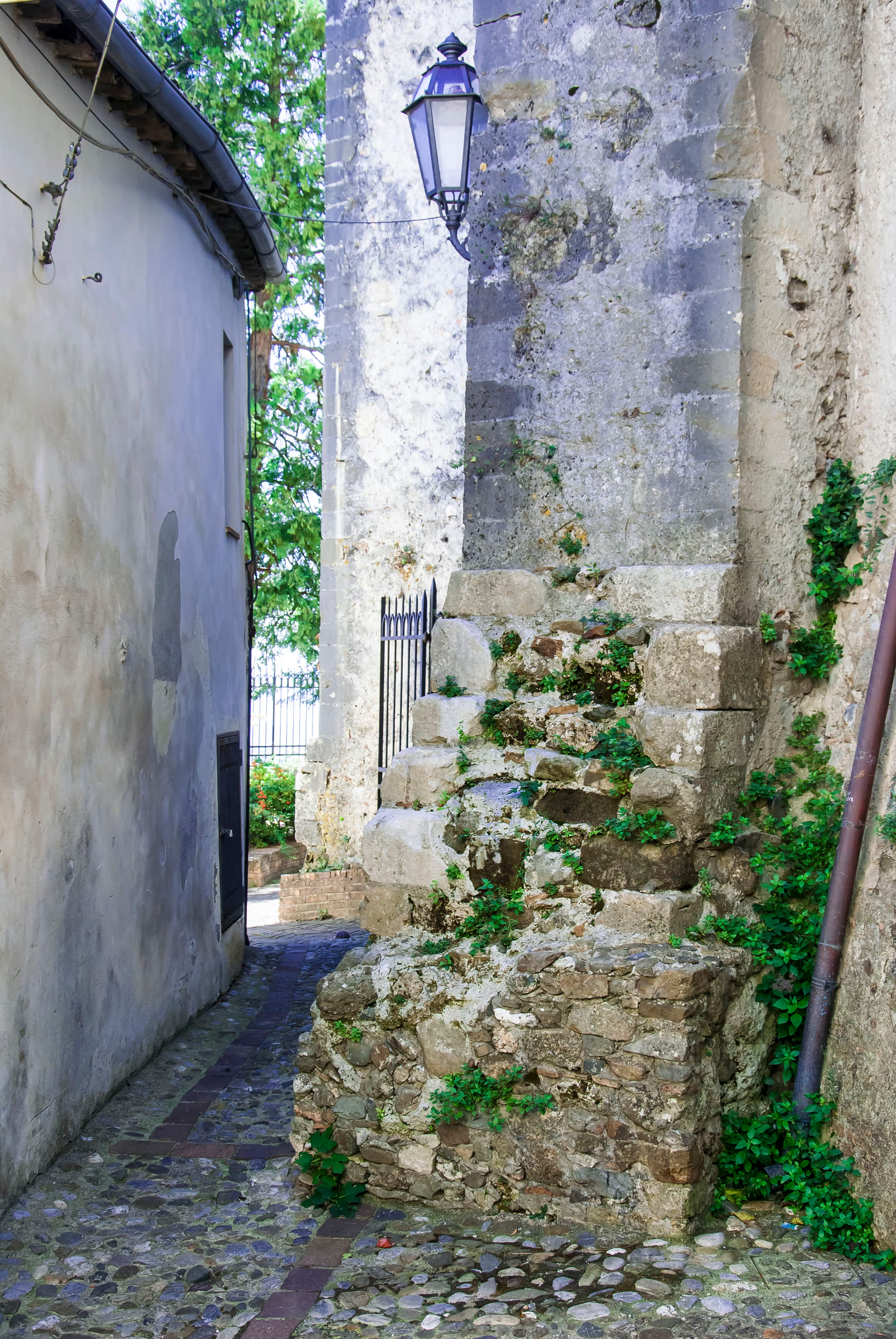
Sangineto’s hilltop village, gathered around the Sanseverino castle: Santa Maria della Neve with its 17th-century portal, the Convent of San Francesco di Paola and the chapels of San Giuseppe, the Carmine and San Michele.
- Beach
Sangineto Lido
Sangineto’s seaside at Le Crete, along the SS18, where the Riviera dei Cedri reaches its southern limit: the town’s beach quarter, lively in summer.