Upper Tyrrhenian Cosentino · Riviera dei Cedri
Laino Borgo
Calabria’s gateway to the Pollino, where the Lucanian Mercure becomes the Lao: Laino Borgo brings together the sixteenth-century chapels of the Sanctuary of the Madonna dello Spasimo, the Good Friday Giudaica, the memory of Blessed Pietro Paolo Navarro and the river gorges, for rafting and canyoning.
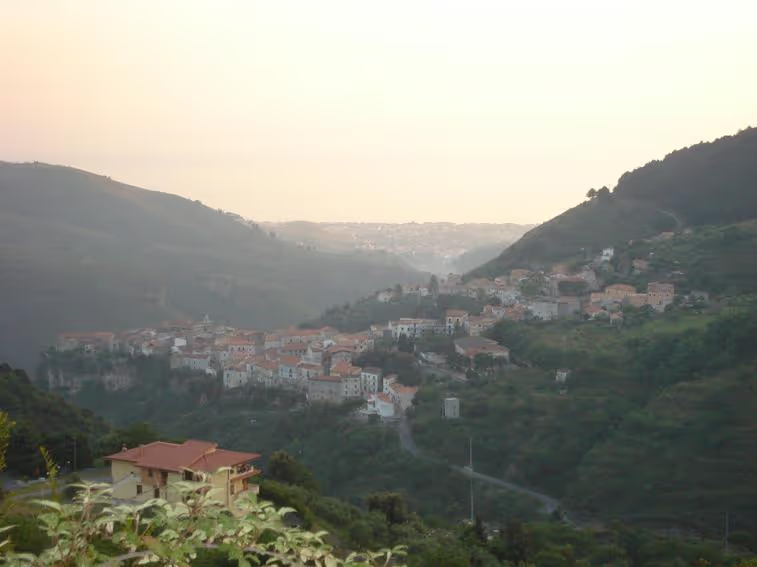
Laino Borgo (Laìnu in Calabrian) is a town of about 1,580 inhabitants in the province of Cosenza, in the northern hinterland of the Upper Tyrrhenian Cosentino coast, right on the line that divides Calabria from Basilicata. The village lies within the Pollino National Park, a UNESCO Geopark since 2015, at the point where the river coming down from the Lucanian mountains as the Mercure enters Calabria and becomes the Lao. Three stories meet here: the devotional one of the Cappelle and the Giudaica, the missionary one of Blessed Pietro Paolo Navarro, and that of the river, which for decades has drawn rafting enthusiasts.
Geography
The municipality borders Aieta, Tortora and Laino Castello on the Calabrian side and Castelluccio Inferiore, Castelluccio Superiore, Lauria, Rotonda and Viggianello in the province of Potenza: it is border country between two regions. Besides the main village it includes the hamlets of Pedali, Pianette, San Primo and Santo Ianni. The Lao rises in Basilicata on Serra del Prete, above 2,000 metres, between Viggianello and Rotonda; on entering Calabria at the two Lainos it collects the Battendiero and Iannello streams, changes its name and slips into a long, deep gorge. Walkers follow the Iannello on foot. The inhabitants are called lainesi.
History
The name points to the river: Lainos means “of the Lao”, and the Lao in turn takes its name from the ancient Greek city of Laos. Laino Borgo’s history has to be read together with that of Laino Castello: for centuries the two communities formed a single territory simply called Laino, divided on 4 November 1811, reunited on 11 March 1928 under the name Laino Bruzio and separated again on 19 October 1947. Laino’s origins are placed between the second half of the 7th and the early 6th century BC, although who founded it remains uncertain. At Santa Gada the remains of a Hellenistic settlement have come to light, with a place of worship dedicated to a female deity; at San Primo excavations have revealed a settlement covering at least 40 hectares and dating from around 500 BC, which some consider the original site of Laos, before the city that grew up near the river mouth. Local scholars, on the strength of the Laos coins found at Santa Gada, had already suggested two cities named Laos, one inland and one by the sea. The Byzantines brought the Basilian monks: at Santo Ianni, near the presumed monastery of S. Joanes di Cuzca, founded between 900 and 1000, paintings, weapons and coins of the Roman Republic and of the Byzantine emperor Theophilus were found in the first half of the nineteenth century. The Lombards built the Castrum Layni on the hill of San Teodoro, and from 851 the gastaldate of Laino was the seat of a large territory in the Principality of Salerno. Then came the Chiaromonte family, who in 1101 gave the territory of Mormanno, until then part of Laino, to the diocese of Cassano; the fortress was fought over by Angevins and Aragonese until, in 1496, Gonzalo de Córdoba took it by a ruse. From 1500 the fief passed to the de Cardenas, marquesses of Laino, who held it until feudalism was abolished in 1806. In 1812 the Carbonari lodge of the “Filantropi di Tebe” was founded in Laino Borgo, and on 21 October 1860 a plebiscite approved annexation to the Kingdom of Sardinia. Between 1940 and 1943 Laino was one of the 14 Calabrian towns designated for the civil internment of Jewish refugees: seven people, four of whom had travelled from Bratislava to Rhodes aboard the river boat Pentcho, freed when the Allies arrived in September 1943.
What to see
About 2 km from the village stands the Santuario delle Cappelle, also known as the Sanctuary of the Holy Sepulchre or of Maria Santissima dello Spasimo: a Sacred Mount dedicated to Our Lady of Sorrows, whose chapels were built from 1557 at the initiative of Domenico Longo, a Laino pilgrim back from Jerusalem, and later enlarged and decorated in several phases. Each chapel recalls a place from the life of Christ, the Virgin or the saints, from the grotto of Bethlehem to the crucifixion; the single-nave church has a ceiling frescoed with the Deposition and a façade remade at the end of the nineteenth century, and it looks towards the Pollino mountains. In the village, the church of the Santo Spirito has a chapel dedicated to Blessed Pietro Paolo Navarro, born in Laino Borgo in 1560. Out in the territory lie the excavation sites of Santa Gada and San Primo, bound up with the story of Laos. The town’s coat of arms, with a silver letter L above three green hills, was officially recognised in 1958.
The Lao: rafting and canyoning
Laino Borgo lies just above a series of gorges and ravines where the Lao enters its rapids, and since the 1990s it has become a rafting destination that matters to the local economy. The river suits it for clear reasons: its regime is torrential, yet its flow is plentiful all year and in summer rarely drops below 5 m³/s, thanks to the permeable rock of its basin; the water is clean and the enclosed stretch is long. Besides rafting, people come for kayaking and canyoning. The river and its tributaries are home to brown trout, rovella, bleak and eel. Further downstream the Lao crosses Papasidero, home to the Valle del Fiume Lao Nature Reserve, and reaches the Tyrrhenian at Scalea: a thread of water tying the Pollino to the Riviera dei Cedri.
The Giudaica and the feasts
On Good Friday Laino Borgo stages the Passion of Christ, known as “la Giudaica”. More than a hundred residents in period costume bring a series of settings across the village to life for the whole day, up to the enactment of the crucifixion; spectators follow the action on foot from one scene to the next. The script is based on a text by an anonymous seventeenth-century author, and the first recorded performance dates from 20 April 1832; the Giudaica is normally held every two years. On the third Sunday of September comes the feast of the Madonna delle Cappelle, which dates back to the eighteenth century: behind the statue of the Virgin walk faithful carrying arrangements of flowers and candles on their heads, accompanied by traditional music. 7 July is the feast of the patron, Blessed Pietro Paolo Navarro.
Blessed Pietro Paolo Navarro
Born in Laino Borgo on 25 December 1560 to a noble family, Pietro Paolo Navarro joined the Society of Jesus at eighteen and was ordained a priest in 1585. Sent as a missionary to India and Japan, he learned Japanese and preached in the regions of Bungo and Nagato and in the city of Yamaguchi, later settling in the domains of the Arima clan. During the persecutions he was imprisoned at Shimabara for eleven months and burned at the stake on 1 November 1622, aged 61, together with three other martyrs. His writings include an Apology of the Christian Faith and his Letters. Pope Pius IX beatified him on 6 July 1867; the Roman Martyrology commemorates him on 1 November.
At the table
Laino’s cooking has farming roots. First courses include lagani e fasuli, short tagliatelle with beans, and cavatieddi and rascatieddi dressed with a sauce of young goat; then come local meats, cured meats and cheeses, and peppers in several forms: zafarani cruschi, crisp, zafarani chini, stuffed, and patani e zafarani, with potatoes. Among the sweets are bocconotti, sospiri, pesche, fritto di nocciole, cannarìculi and purciddati.
Getting there
Laino Borgo has its own junction on the A2 “del Mediterraneo” motorway, the first in Calabria for those arriving from the north: the motorway enters the region just after the Galdo service area. Between Laino Borgo and Laino Castello, above the first stretch of the Lao, runs the Viadotto Italia, 260 metres high, part of the Laino Borgo–Campotenese section opened on 26 July 2016. The town borders Tortora and Aieta, the municipalities that run down to the coast. The region’s nearest airport is Lamezia Terme.
Places
What to see around here.
- Nature
The Lao at Laino Borgo
The point where the Lucanian Mercure enters Calabria and becomes the Lao: at Laino Borgo the river collects the Battendiero and Iannello and plunges into its gorges, for rafting, kayaking and canyoning in the Pollino park.
- Culture
Santuario delle Cappelle (Sanctuary of the Chapels)
The Sacred Mount of the Madonna dello Spasimo, 2 km from Laino Borgo: frescoed chapels recalling the places of the Holy Land, begun in 1557 by the pilgrim Domenico Longo, and the feast on the third Sunday of September.
Nearby towns
Keep exploring the Upper Tyrrhenian Cosentino coast from here.
-
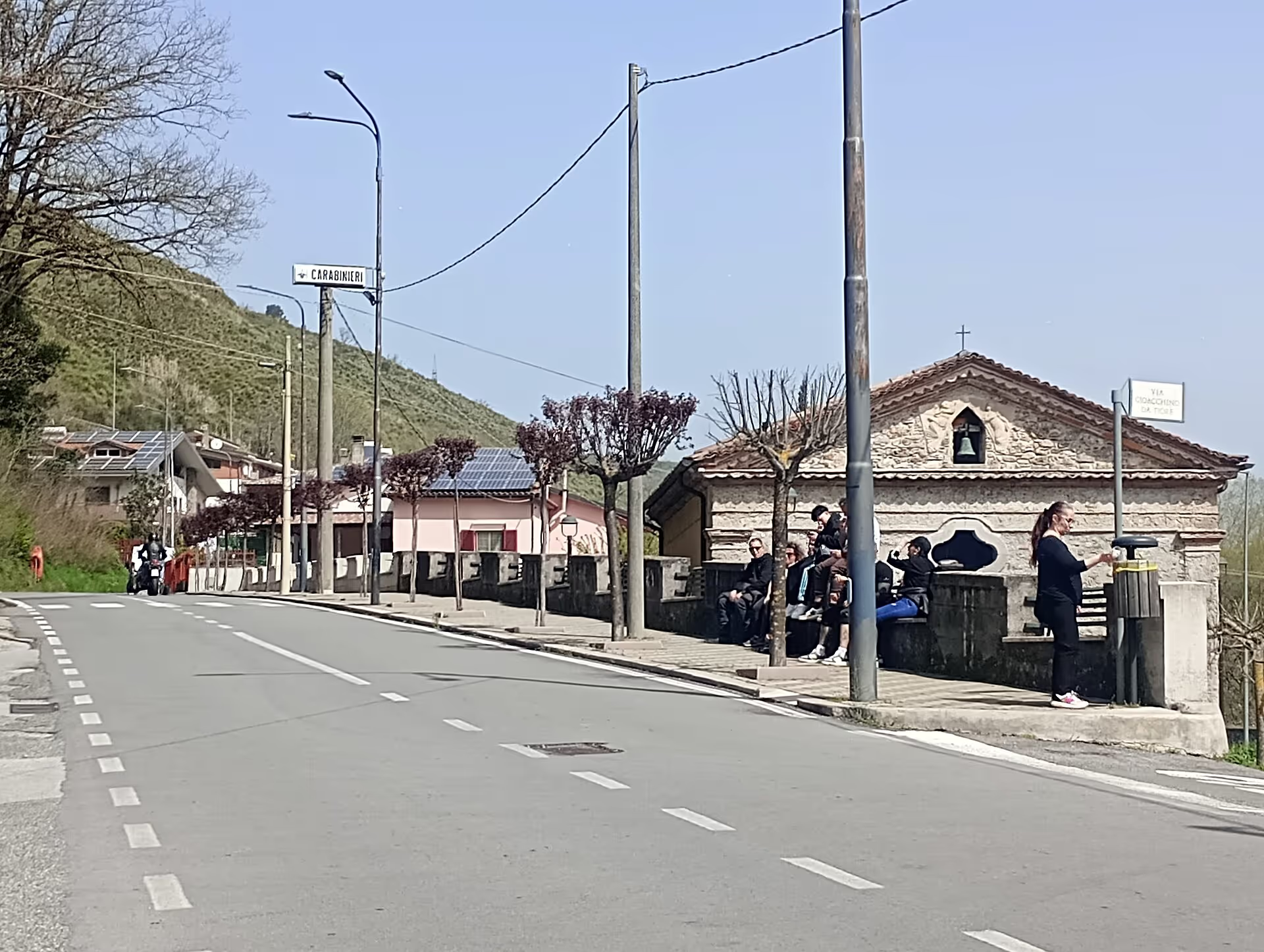
Mormanno
The mountain village at 820 metres between the Pollino and the Orsomarso Mountains: the 1928 votive lighthouse for the Calabrians who fell in the Great War, the Baroque mother church of Santa Maria del Colle, the 9th-century Annunziata and a town that looks from the Upper Tyrrhenian Cosentino hinterland over the Mercure valley.
-
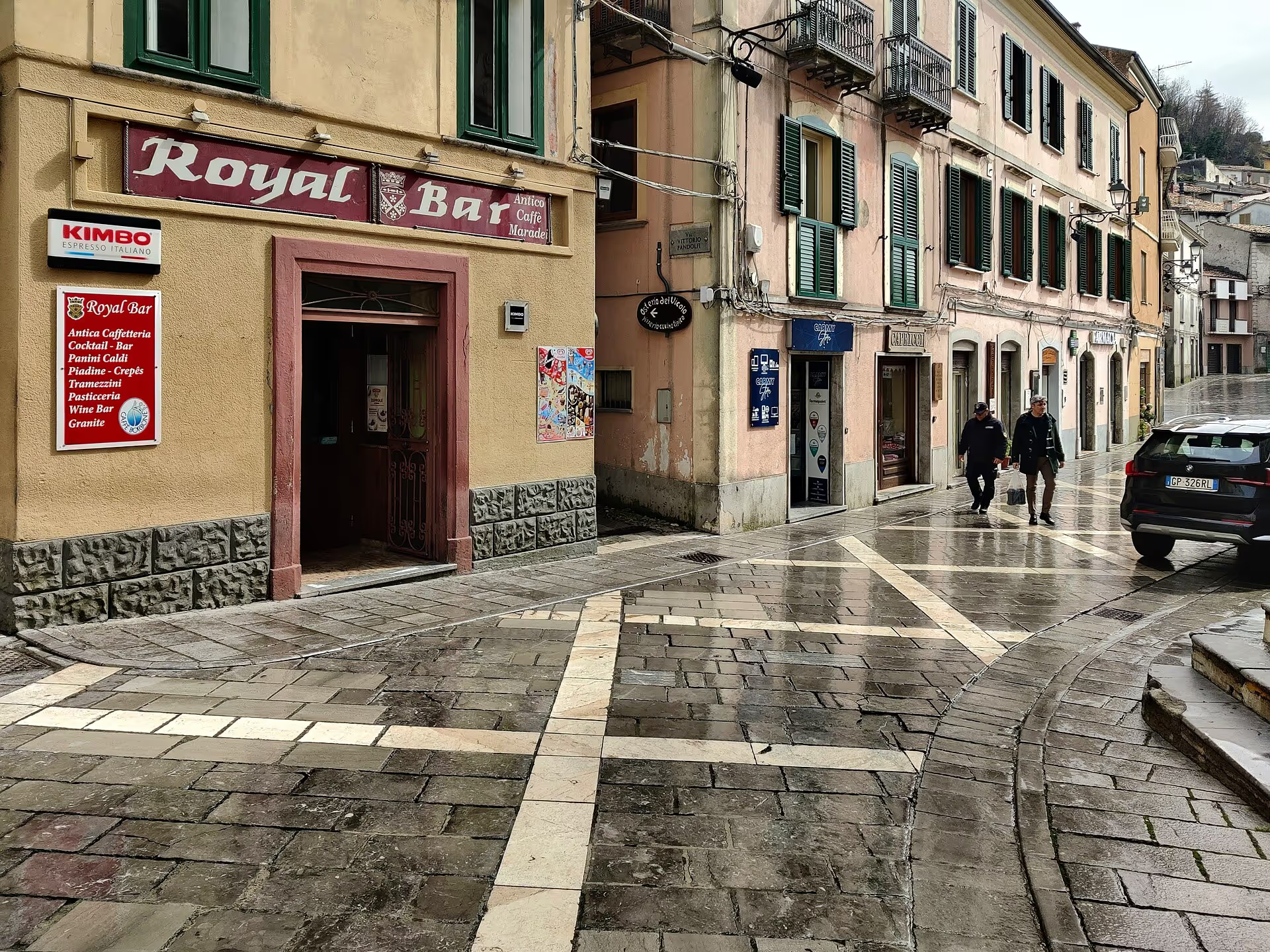
Papasidero
The Pollino village where the Upper Tyrrhenian Cosentino coast meets prehistory: the Grotta del Romito with the great aurochs engraved between 14,000 and 12,000 years ago, fifteen kilometres of the Lao river gorge inside a nature reserve and a medieval village with a Norman-Swabian castle and the gate of the changing of the Guard.
-
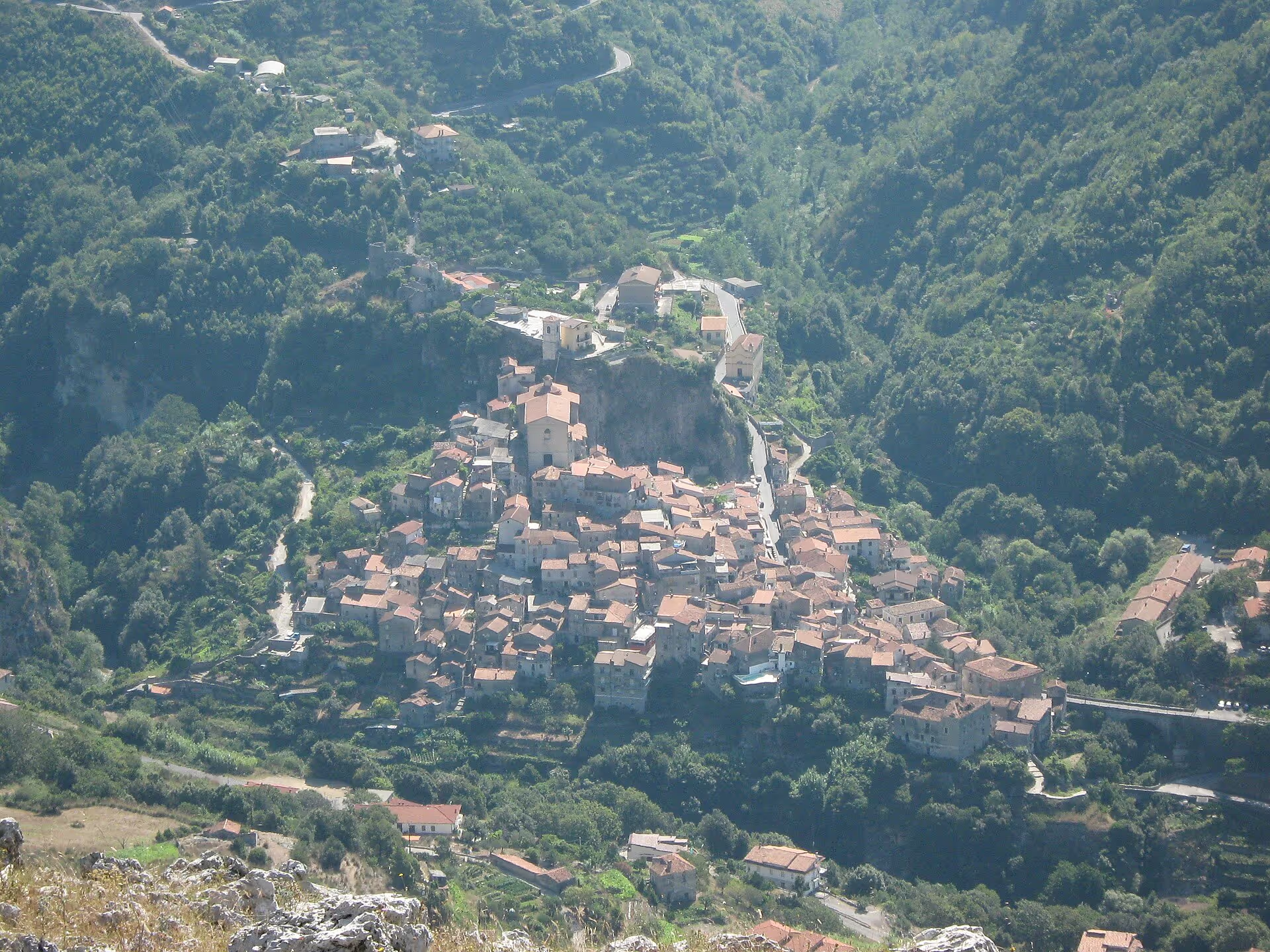
Aieta
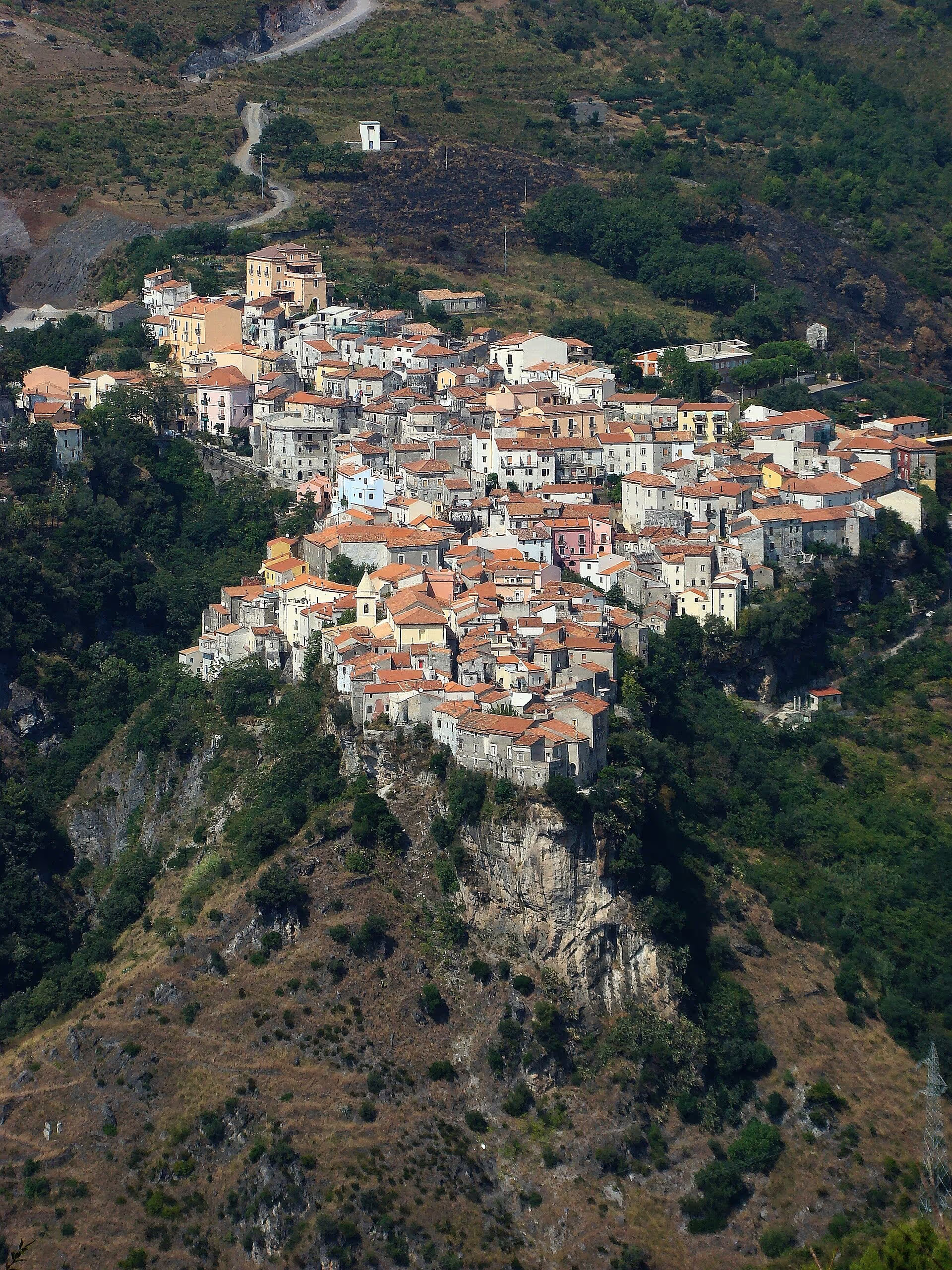
The Pollino’s “city of the eagle”: at 524 metres, one of the Borghi più belli d’Italia, Aieta keeps the Renaissance Palazzo Martirano-Spinelli, sixteenth-century churches, the Valle dei Mulini and, on Monte Calimaro, the remains of Aieta Vetere, a few kilometres from the sea at Praia.
-
Tortora
The northern gateway of Tyrrhenian Calabria: the village born of refugees from Blanda, the Oenotrian, Lucanian and Roman city on the Palècastro hill, the Palaeolithic site of Rosaneto, the Pollino mountains and the Marina on the Gulf of Policastro.
Itineraries through here
Where to stay
- B&B ErminiaGuest house · Laino Borgo
- EdelweissHotel · Laino Borgo
- Palia's Hotel RistoranteHotel · Laino Borgo
- Pollino RaftingCampsite · Laino Borgo
- River TribeCampsite · Laino Borgo
Indicative information from OpenStreetMap. Check availability and reviews on the external platforms.
Where to eat
- Agriturismo Al VernetoRestaurant · Laino Borgo
- CatàBar · Laino Borgo
- Chiar di LunaRestaurant · Laino Borgo
- Eden ParkBar · Laino Borgo
- Lanterna BluBar · Laino Borgo
- Lao PizzaRestaurant · Laino Borgo
- Taverna delle GhiandeRestaurant · Laino Borgo
Indicative information from OpenStreetMap. Check availability and reviews on the external platforms.
Do you run a local business?
Update the listing or discover how to give your business more visibility.
Join the guide for freeHow to get to Laino Borgo
- Nearest active station
- Praja-Ajeta-Tortora
- about 17 km as the crow flies from the centre
- Train times (Trenitalia) ↗ Guide: by train
- Nearest airport
- Lamezia Terme International Airport (SUF)
- about 118 km as the crow flies from the centre
- Airport website ↗ Guide: by plane
- By car: A2 “del Mediterraneo” motorway
- Inland town: the relevant A2 exits are described in the “By car” guide; use the directions link for the current route.
- Driving directions (Google Maps) ↗ Guide: by car
Straight-line distances computed from verified coordinates: the road route is longer. Check times and connections on the operators’ websites.
Frequently asked questions
- It is the Good Friday re-enactment of the Passion of Christ: more than a hundred residents in costume perform all day at various places around the village, up to the crucifixion. The script goes back to an anonymous seventeenth-century author and the first recorded performance was in 1832; it is normally held every two years.
- On the Lao river, which at Laino Borgo enters a series of gorges with rapids; besides rafting there is kayaking and canyoning, and walkers follow the Iannello stream on foot.
- A Sacred Mount dedicated to the Madonna dello Spasimo, about 2 km from the village: its chapels, which recall the places of the Holy Land, were begun in 1557 by the Laino pilgrim Domenico Longo on his return from Jerusalem.
- Blessed Pietro Paolo Navarro, a Jesuit born in Laino Borgo in 1560, missionary in Japan, martyred at Shimabara in 1622 and beatified in 1867; his feast is on 7 July.
- The name comes from *Lainos*, “of the Lao”, the river that crosses the territory and which is itself named after the ancient Greek city of Laos. Between 1928 and 1947, merged with Laino Castello, the municipality was called Laino Bruzio.
- By the A2 “del Mediterraneo” motorway, which has a Laino Borgo junction: it is the first in Calabria coming from the north.
- Laino Borgo has no station of its own: the nearest active station as the crow flies is Praja-Ajeta-Tortora, on the Tyrrhenian railway line, about 17 km from the centre. From there you continue by road; times and connections on the Trenitalia website.
- The nearest airport is Lamezia Terme International Airport (SUF), about 118 km as the crow flies; from there you continue by train from Lamezia Terme Centrale along the Tyrrhenian line, or by car on the A2 motorway.
What is the Giudaica of Laino Borgo?
Where can you go rafting at Laino Borgo?
What is the Santuario delle Cappelle?
Who is the patron saint of Laino Borgo?
Why is the town called Laino?
How do you get to Laino Borgo?
Which is the nearest railway station to Laino Borgo?
Which is the nearest airport to Laino Borgo?
Discover locally
Live, up-to-date results with real reviews, on external platforms. We don’t hand-pick individual businesses we can’t verify.