Upper Tyrrhenian Cosentino · Riviera dei Cedri
Mormanno
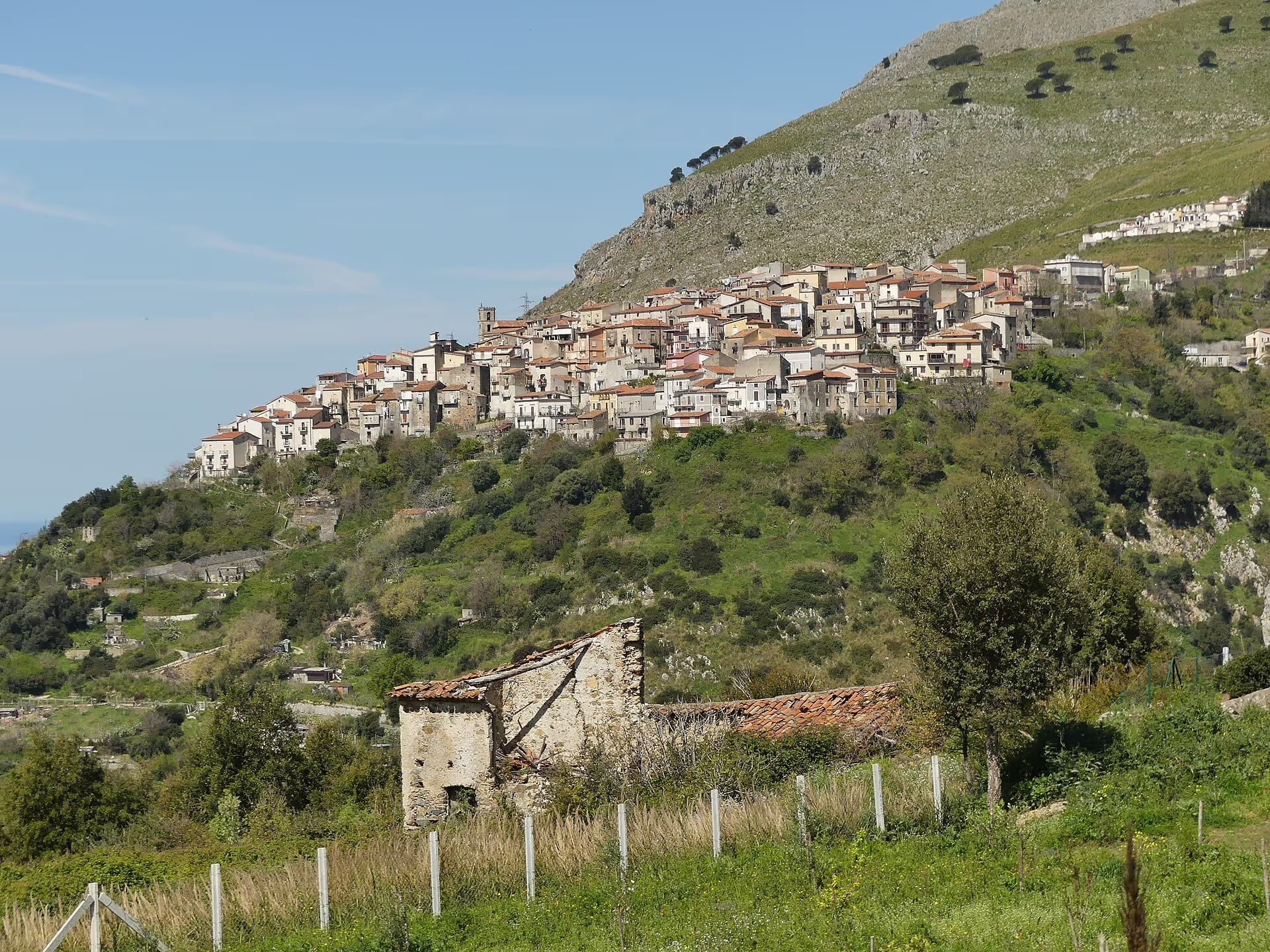
The mountain village at 820 metres between the Pollino and the Orsomarso Mountains: the 1928 votive lighthouse for the Calabrians who fell in the Great War, the Baroque mother church of Santa Maria del Colle, the 9th-century Annunziata and a town that looks from the Upper Tyrrhenian Cosentino hinterland over the Mercure valley.
Mormanno (Murmànnu in Calabrian) is a town of about 2,450 inhabitants in the province of Cosenza, in the mountainous hinterland of the Upper Tyrrhenian Cosentino coast, inside the Pollino National Park. The village stands at 820 metres, between the ridges of Mounts Costa and Santa Croce, and from here you can reach the main peaks of the Pollino massif and the Orsomarso Mountains, once known precisely as the mountains of Mormanno. On Monte San Michele rises the Votive Lighthouse to the Fallen of Calabria, built in 1928 and now the symbol of the town; on the main square stands the Baroque mother church of Santa Maria del Colle.
Geography
The municipal territory covers 78.88 km² and borders Laino Castello, Morano Calabro, Orsomarso, Papasidero and Saracena and, in Basilicata, Rotonda and Viggianello. The town occupies a commanding position north of the Lao valley and over the broad valley of the Mercure, the name under which the Lao flows in Lucanian territory. The old town, which once counted 28 districts, is today divided into four quarters: Costa to the west, Capo lo Serro to the east, Casalicchio to the south and Torretta to the north, where the votive lighthouse stands. Mormanno is a mountain resort: from the town the peaks of the Pollino and the Orsomarso Mountains are easy to reach.
History
Mormanno’s origins remain uncertain. Local historians suggest it existed in the Lombard era, with the first settlements on the Costa hill, commanding the Lao valley. The name appears as in montibus Miromanorum in the hagiography of Saint Leoluca of Corleone, who came to Mormanno to meditate; some derive it from the Germanic Marimannus or Merimannus, others from the arimanni, Germanic mercenaries granted land between the gastaldate of Laino and the fortress of Papasidero. Among its many variants, Miromagnum, which stresses the position over the Mercure valley, did more than others to shape the present form. The first document is a deed of donation in Greek from 1092. In the feudal era the town belonged to the Orsini and then to the Sanseverino of Bisignano, who held it until 1612; after several transfers it passed to the royal domain in the last decade of the 18th century, when the mother church was rebuilt in late Baroque style, in a period of impoverishment that also struck the minor local nobility. In 1866 Mormanno saw clashes linked to attempts at a Bourbon restoration, followed by heavy emigration. Between 1940 and 1943 it was one of 14 Calabrian towns chosen by the Fascist authorities for the “free internment” of Jewish refugees: four refugees were confined here and freed when the Allies arrived in September 1943. In 2012 the town was among those hardest hit by the Pollino earthquake.
What to see
The Votive Lighthouse to the Fallen of Calabria 1915–1918, a regional monument, was raised in 1928 on Monte San Michele, at Torretta, on the forecourt of the 17th-century church of Our Lady of Perpetual Help; it holds relics and memories of the 11 gold medals for military valour and of the Calabrians who fell in the Great War, and is surrounded by a Remembrance Park. On Piazza Umberto I stands the mother church of Santa Maria del Colle, built around 1700 in Neapolitan Baroque style and consecrated on 5 September 1790, with its three-portal tuff façade. Among the many churches and chapels of the town, the Annunziata stands out, considered the oldest in the village: built in the 9th century, it was enlarged in the 14th and 18th. About 3 kilometres from the town, at San Brancato, lies the sanctuary of the Madonna della Catena; at Montagnella there is the botanical garden named after the botanist Biagio Longo, and the modern church of Santa Maria Goretti was designed by the architect Mario Cucinella.
Churches and chapels
Mormanno is a town of churches: besides the mother church and the Annunziata, sanctuaries, chapels and oratories are scattered through the town, many of them private chapels of local families. The sanctuaries include Our Lady of Pity and Perpetual Help, next to the lighthouse, San Rocco on the Corso Municipale and Santa Maria degli Angeli by the former Capuchin convent in the Casalicchio quarter. Among the chapels are San Michele and San Francesco di Paola at Capo lo Serro, Santa Caterina d’Alessandria and Sant’Antonio da Padova near the Costa, San Giovanni Battista at Costa al Castello, the chapel of the Blessed Virgin of Carmel, known as Sant’Anna, at the Vallone, and the Immacolata on Piazza Umberto I; then the church of the Madonna del Suffragio, the oratory of the Blessed Virgin of the Assumption at the Scarnazzo and that of Santa Barbara, known as the Crucifix oratory.
Patron saints and twin towns
Mormanno’s patron saints are the Madonna Assunta and San Rocco, celebrated on 16 August. The town is twinned with Savigliano, in Piedmont, and with Diamante, on the Upper Tyrrhenian Cosentino coast. The inhabitants are called mormannesi.
Getting there
Mormanno is served by the A2 “del Mediterraneo” motorway through its own junction, near the former Papasidero station of the Lagonegro–Castrovillari–Spezzano Albanese railway. The municipality is crossed from north to south by the SS19 delle Calabrie state road; to the north the SP3 branches off, leading to the motorway, to Papasidero and to Scalea, on the coast. The railway that once served the town, with a station open from 1931 to 1979, is no longer active. The region’s nearest airport is Lamezia Terme.
Places
What to see around here.
- Old town
Old town of Mormanno
The village at 820 metres divided into the Costa, Capo lo Serro, Casalicchio and Torretta quarters: the 9th-century Annunziata, family chapels, sanctuaries, the botanical garden and Mario Cucinella’s church.
- Culture
Mother church of Santa Maria del Colle
Mormanno’s Neapolitan Baroque cathedral on Piazza Umberto I: built around 1700, consecrated in 1790, with Pietro Scardino’s tuff façade and the three portals of the confraternities.
- Culture
Votive Lighthouse to the Fallen of Calabria
The 1928 regional monument on Monte San Michele in Mormanno: a mountain lighthouse in memory of the Calabrians who fell in the Great War, with relics of the 11 gold medals and the Remembrance Park.
Nearby towns
Keep exploring the Upper Tyrrhenian Cosentino coast from here.
-
Papasidero
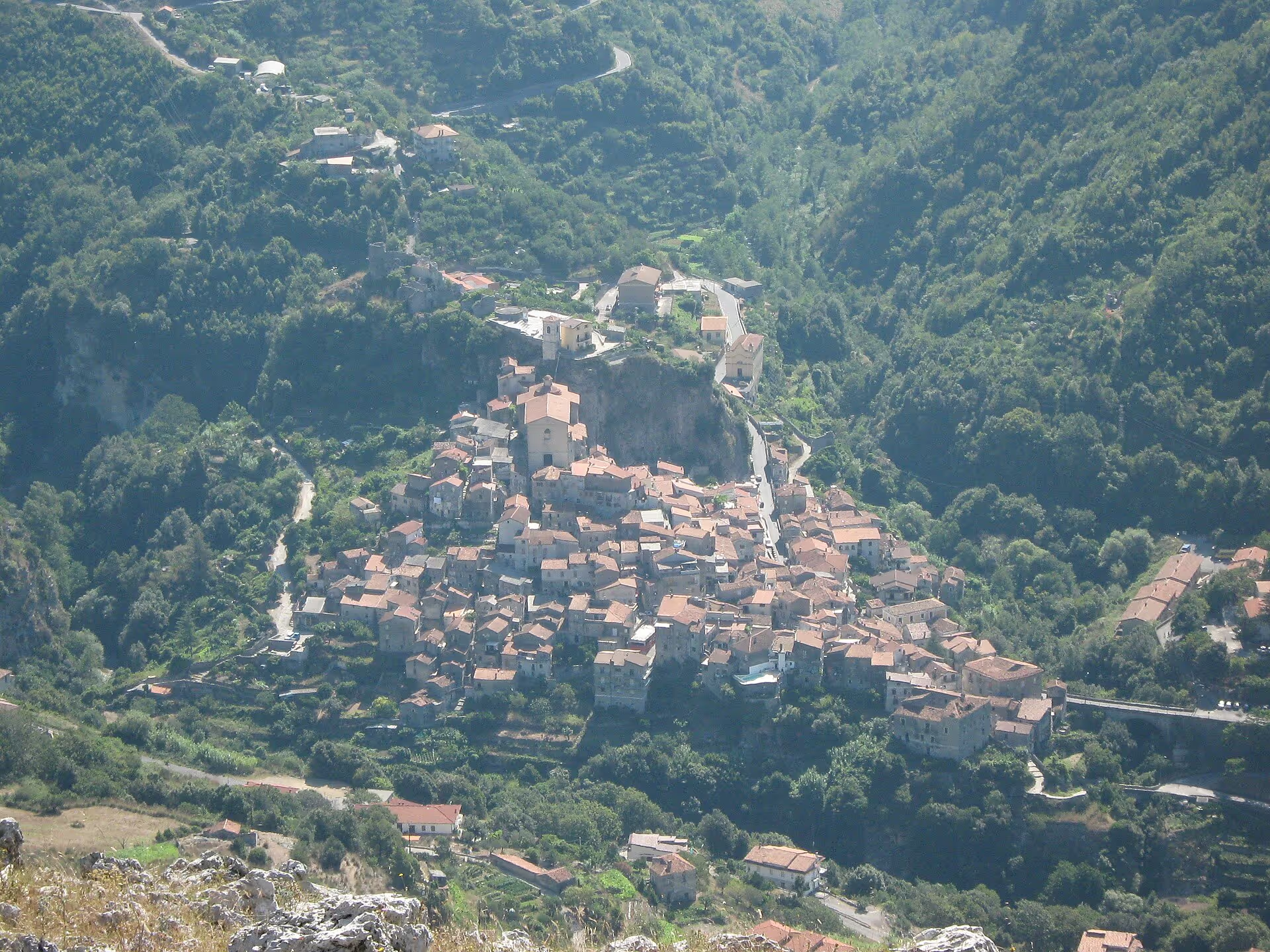
The Pollino village where the Upper Tyrrhenian Cosentino coast meets prehistory: the Grotta del Romito with the great aurochs engraved between 14,000 and 12,000 years ago, fifteen kilometres of the Lao river gorge inside a nature reserve and a medieval village with a Norman-Swabian castle and the gate of the changing of the Guard.
-
Laino Borgo
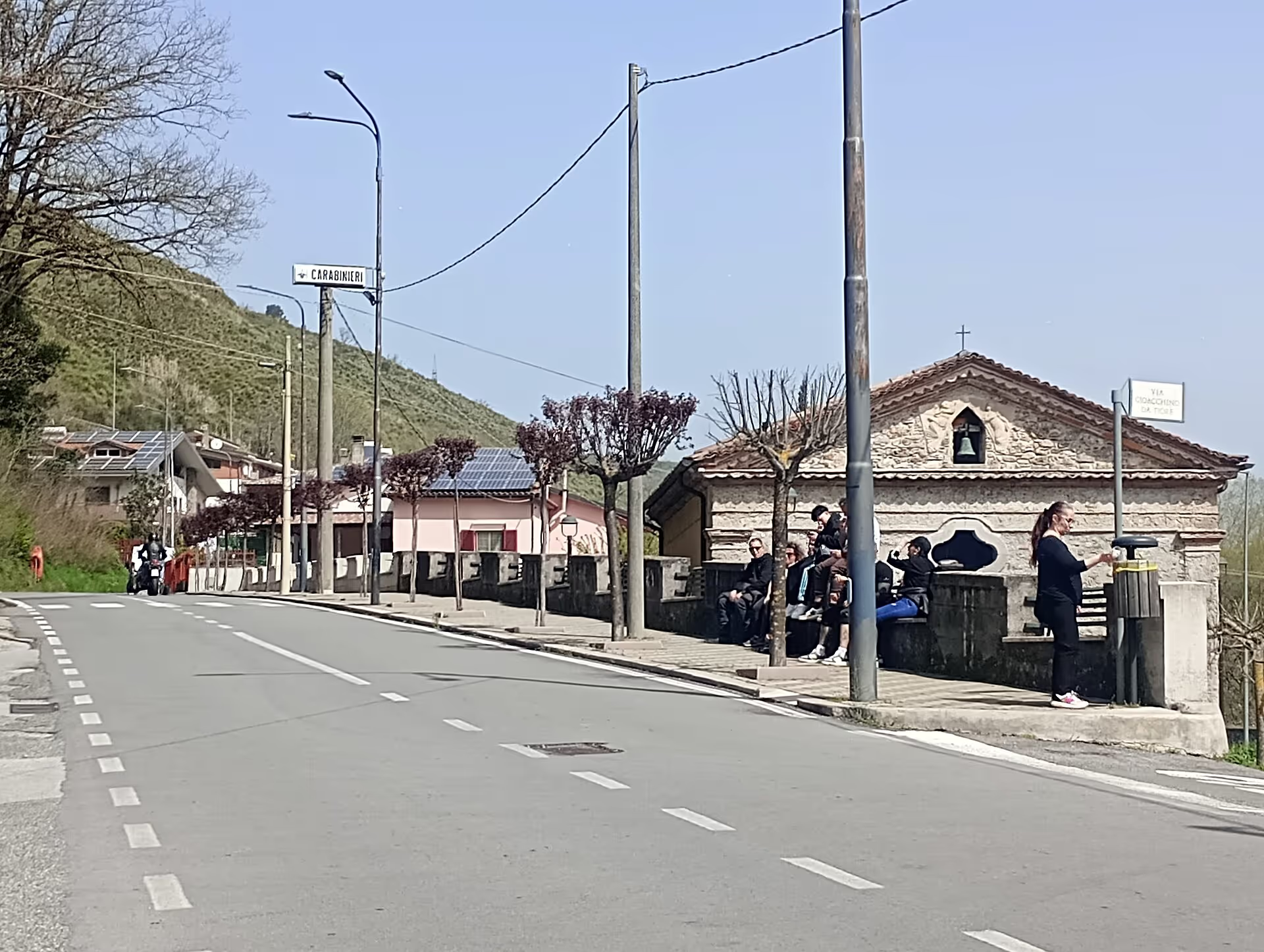
Calabria’s gateway to the Pollino, where the Lucanian Mercure becomes the Lao: Laino Borgo brings together the sixteenth-century chapels of the Sanctuary of the Madonna dello Spasimo, the Good Friday Giudaica, the memory of Blessed Pietro Paolo Navarro and the river gorges, for rafting and canyoning.
-
Orsomarso
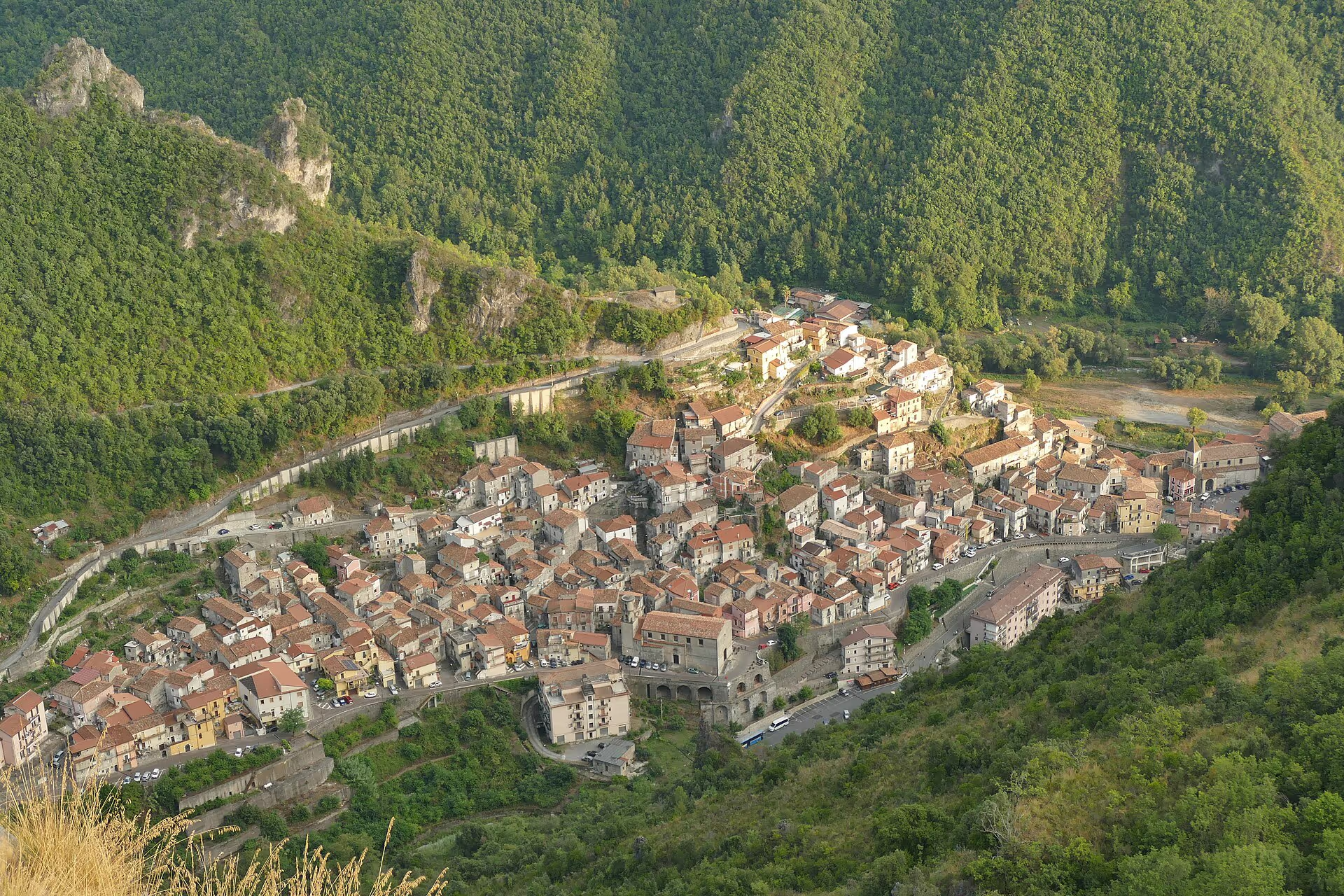
The village that gives its name to a mountain range: Orsomarso, in the Pollino park, keeps the Argentino valley with the last native roe deer and the Bosnian pine, the 10th-century Basilian chapel of Santa Maria di Mércuri and a village that grew around the fortress of Ursus Martius.
-
Santa Domenica Talao
The village that looks over the Riviera dei Cedri from the Lao valley: founded in the 17th century by the Spinelli princes, grown with noble palazzi and chapels, tied by a century of emigration to the Dominican Republic and twinned with Santo Domingo.
Where to stay
- Agriturismo Aria FinaGuest house · Mormanno
- Agriturismo Donna Bianca - Ristorante - Area Camper - B&B - Cucina TipicaGuest house · Mormanno
- Agriturismo Parco Villa ElenaGuest house · Mormanno
- B&B La Dimora della ZarinaHotel · Mormanno
Indicative information from OpenStreetMap. Check availability and reviews on the external platforms.
Where to eat
- Bar CentraleCafé · Mormanno
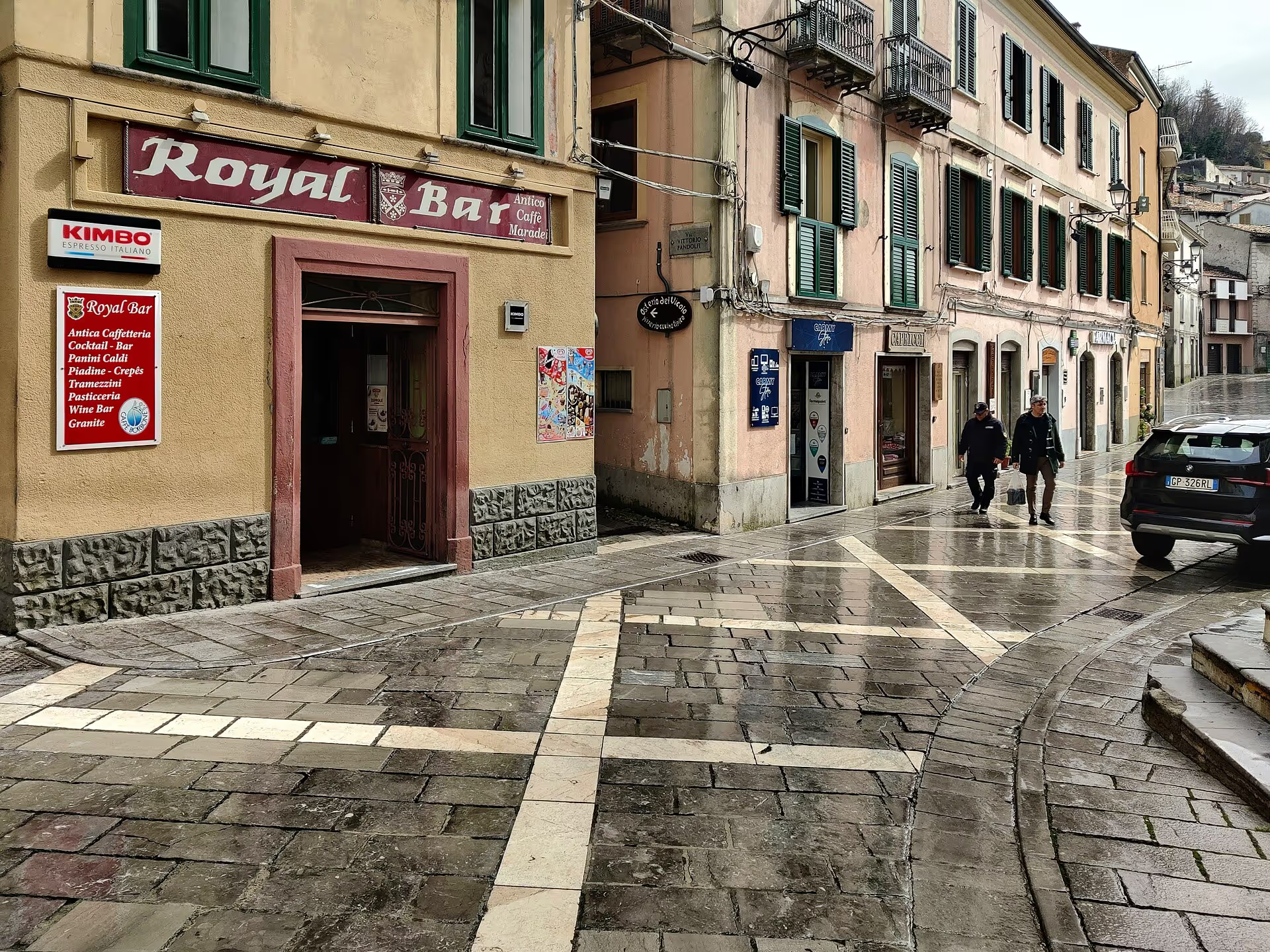
- Royal BarCafé · Mormanno
- Snack Bar Le delizie di MarperCafé · Mormanno
Indicative information from OpenStreetMap. Check availability and reviews on the external platforms.
Do you run a local business?
Update the listing or discover how to give your business more visibility.
Join the guide for freeHow to get to Mormanno
- Nearest active station
- Praja-Ajeta-Tortora
- about 17 km as the crow flies from the centre
- Train times (Trenitalia) ↗ Guide: by train
- Nearest airport
- Lamezia Terme International Airport (SUF)
- about 111 km as the crow flies from the centre
- Airport website ↗ Guide: by plane
- By car: A2 “del Mediterraneo” motorway
- Inland town: the relevant A2 exits are described in the “By car” guide; use the directions link for the current route.
- Driving directions (Google Maps) ↗ Guide: by car
Straight-line distances computed from verified coordinates: the road route is longer. Check times and connections on the operators’ websites.
Frequently asked questions
- A regional monument built in 1928 on Monte San Michele in honour of the Calabrians who fell in the First World War; it holds relics of the 11 gold medals for military valour and is the symbol of the town.
- At 820 metres, between the ridges of Mounts Costa and Santa Croce, in the Pollino National Park.
- Hypotheses link it to the Germanic Marimannus or to the arimanni, Germanic mercenaries settled between Laino and Papasidero; in the hagiography of Saint Leoluca it appears as “in montibus Miromanorum”.
- The Annunziata, built in the 9th century and enlarged in the 14th and 18th; the mother church of Santa Maria del Colle is Baroque and was consecrated in 1790.
- On 16 August, for the Madonna Assunta and San Rocco.
- By the A2 motorway, Mormanno exit, or along the SS19 delle Calabrie; from the Scalea coast take the SP3 via Papasidero.
- Mormanno has no station of its own: the nearest active station as the crow flies is Praja-Ajeta-Tortora, on the Tyrrhenian railway line, about 17 km from the centre. From there you continue by road; times and connections on the Trenitalia website.
- The nearest airport is Lamezia Terme International Airport (SUF), about 111 km as the crow flies; from there you continue by train from Lamezia Terme Centrale along the Tyrrhenian line, or by car on the A2 motorway.
What is the votive lighthouse of Mormanno?
At what altitude is Mormanno?
Where does the name Mormanno come from?
Which is the oldest church in Mormanno?
When are Mormanno’s patron saints’ feasts?
How do you get to Mormanno?
Which is the nearest railway station to Mormanno?
Which is the nearest airport to Mormanno?
Discover locally
Live, up-to-date results with real reviews, on external platforms. We don’t hand-pick individual businesses we can’t verify.