Upper Tyrrhenian Cosentino · Riviera dei Cedri
Santa Domenica Talao
The village that looks over the Riviera dei Cedri from the Lao valley: founded in the 17th century by the Spinelli princes, grown with noble palazzi and chapels, tied by a century of emigration to the Dominican Republic and twinned with Santo Domingo.
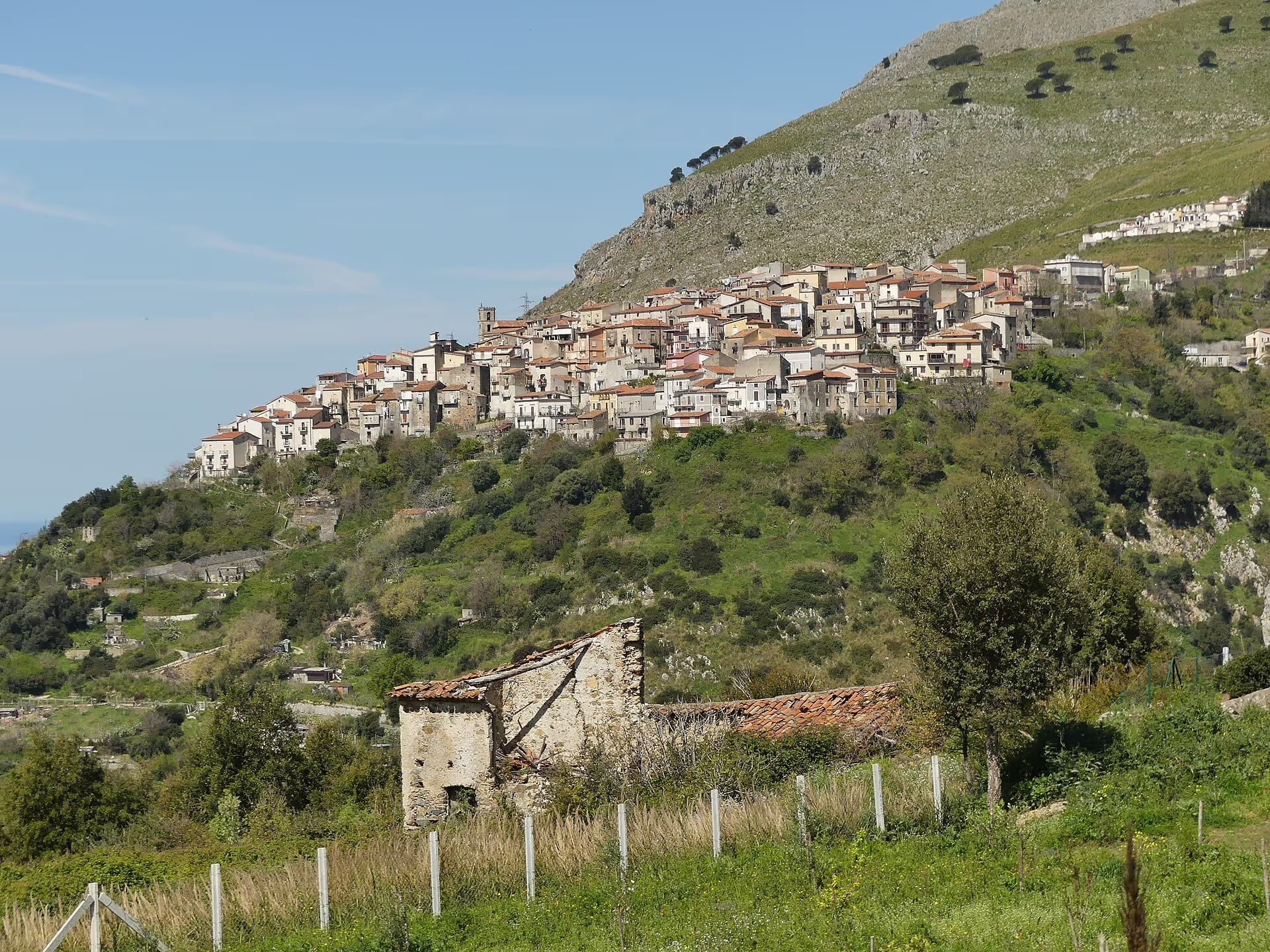
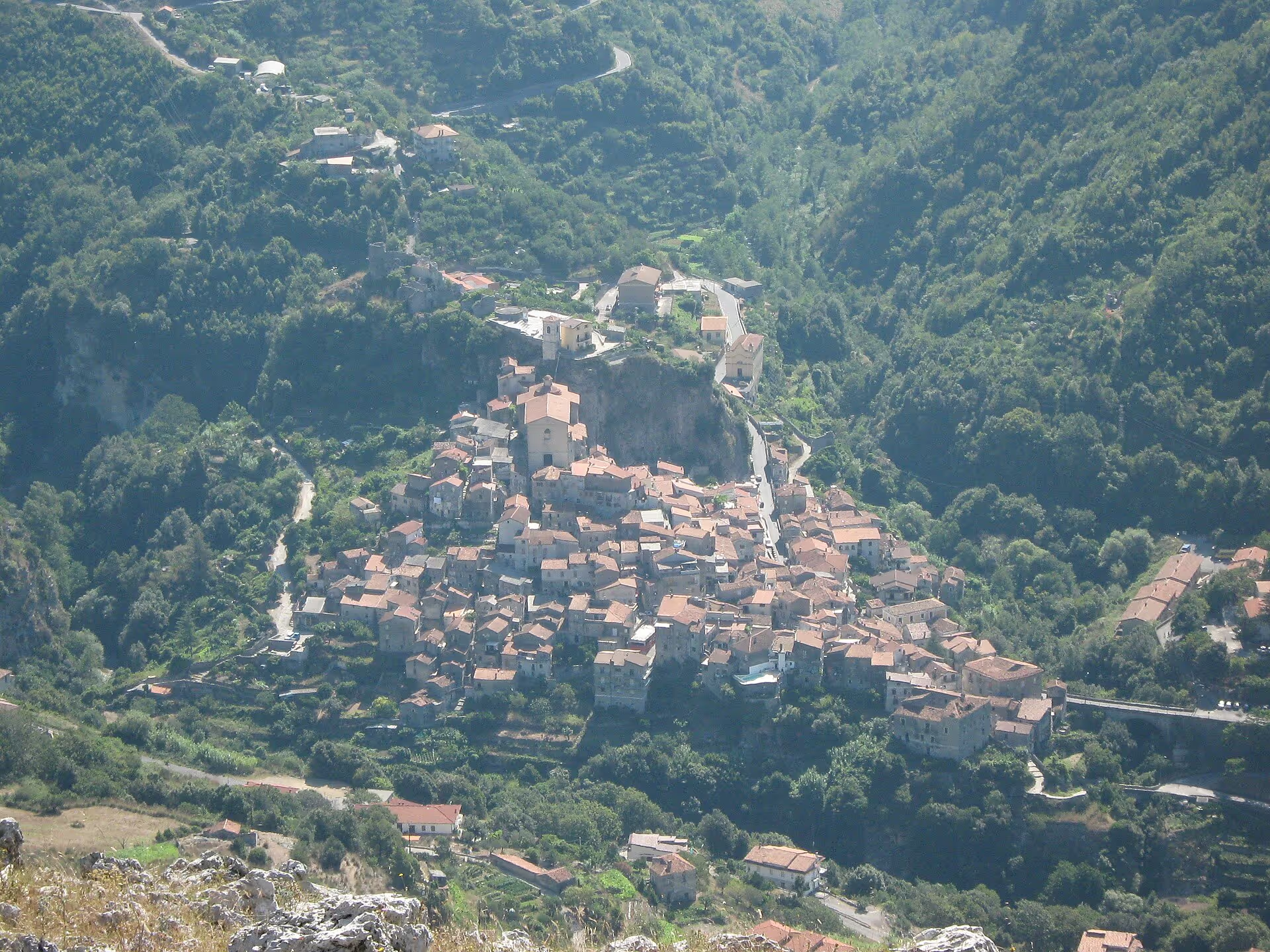
Santa Domenica Talao (Santa Duminica in the local dialect) is a town of about 1,130 inhabitants in the province of Cosenza, on the Upper Tyrrhenian Cosentino coast. The village stands at 304 metres on a hill at the foot of the Serra La Limpida and overlooks the final stretch of the Lao valley, with a view that runs from the Orsomarso Mountains to the Riviera dei Cedri, from Capo Cirella to Scalea. The name Talao recalls the Lao itself, the river the Greeks called Laos, which gave its name to the ancient Sybarite colony; one hypothesis derives it from katà Lâos, “by the Lao”.
Geography
The territory climbs from the hill belt, with Mediterranean scrub and olive groves, up to the heights of the Serra La Limpida, over 1,000 metres, on the Tyrrhenian side of the Pollino massif; a significant part lies within the Pollino National Park. The rocks are Mesozoic limestones and dolomites, with karst features, gorges and sinkholes; higher up grow chestnut and oak woods and forests of beech and silver fir; the Pollino park’s protected wildlife includes roe deer, wolves and golden eagles. The municipality borders Orsomarso to the south-east, Papasidero to the north-east, Scalea to the west and San Nicola Arcella and Praia a Mare to the north-west.
History
The name Santa Domenica already appears in 1563 in a list of the lands of the Kingdom of Naples, but the village arose as an organised community in the first half of the 17th century, when the Spinelli princes of Scalea began colonising the land along the Lao. In the 1620s the prince encouraged families from Mormanno and nearby towns to settle and turn pastures and woods into fields: he had the first houses built, granted plots and supported the village with festivities and concessions. In 1651 a document of the Regia Camera della Sommaria records the hamlet with about sixty taxable households. The church of San Giuseppe became a parish in 1662, and soon after the village was recognised as a feudal Università; with new arrivals from Orsomarso, Papasidero and Lauria an economy of wheat, vines, figs and later olives grew up. In the 18th century the town reached about 3,000 inhabitants and the old town took on much of its present look, with palazzi and chapels; in 1799 it was divided between republicans and Bourbon loyalists. After Italian unification it became an independent municipality and in 1864 took the name Santa Domenica Talao, to distinguish itself from towns of the same name. The 20th century was the century of emigration: besides the Americas, many santadomenicani settled in the Dominican Republic, in Puerto Plata, Santiago and La Vega, where in 1917 the Società Pro-Santa Domenica Talao was founded to support the home town. In 2022 the town was twinned with Santo Domingo.
What to see
The mother church of San Giuseppe, from the second half of the 17th century, was enlarged in 1701 with a transept and apse; its façade has a two-arched loggia, the bell tower and a sinuous stone staircase, and inside are Baroque stuccoes, a polychrome marble high altar from 1774, a wooden choir and a Holy Family canvas of the Neapolitan school. In front opens Piazza Italia, with the ancient wild olive tree that symbolises the village and a panoramic terrace over the rooftops, the coast and the Lao valley. The old town keeps noble palazzi: Palazzo Campagna of 1774, with arcaded loggias and a rusticated portal with little lions, Palazzo Perrone with over sixty rooms, Palazzo Schiffino, birthplace of the Jesuit philosopher Sante Schiffino, Palazzo La Greca and Palazzo Longo. The route is completed by the chapel of the Madonna del Rosario of 1725, the chapel of San Giovanni Evangelista in the upper town, and the Museo della Terra, devoted to rural culture.
Feasts and quarters
The main feast is that of the patron saint San Giuseppe, on the first Sunday after 20 July, with a week of preparation, the solemn procession and the fair in the upper town, ’A Codda, hence its popular name Fera ’a Codda. The neighbourhood games between ’A Codda, U’ Chianu and Girone/Mezzacosta have traditionally been held for the feast, though more occasionally today: the most awaited is the Cursa du Pannu, a foot race that awards the winning quarter the blessed banner, later carried in the procession. On the first Sunday of May comes San Giuseppe all’Accovata, with the procession to the chapel of that district; the Madonna del Rosario, co-patron, is tied to the feast known as Fera ’u Chianu, in the lower town.
The bond with the Dominican Republic
Santa Domenica Talao has a particular bond with the Caribbean. In the 20th century many santadomenicani emigrated to the Dominican Republic, to Puerto Plata, Santiago and La Vega, where they started businesses and built an Italian-Dominican community that keeps its ties with Calabria. In 1917 the Società Pro-Santa Domenica Talao was founded in Puerto Plata to send remittances and support charitable projects; in the 1920s and 1930s the emigrants’ contributions also helped enlarge Piazza Italia. In 2022 the twinning with Santo Domingo recognised this contribution.
Getting there
Santa Domenica Talao borders Scalea to the west, where Scalea-Santa Domenica Talao station lies on the Tyrrhenian line; from the coast you climb to the village on its hill. By car from the A2 “del Mediterraneo” motorway, you reach the coast from the north via the Lagonegro nord exit and the SS585 Fondo Valle del Noce, then the SS18 southwards; from the south via the Falerna exit and the SS18 northwards. The region’s nearest airport is Lamezia Terme.
Places
What to see around here.
- Old town
Old town of Santa Domenica Talao
The Spinellis’ 17th-century village at 304 metres over the Lao valley: Piazza Italia with the wild olive tree and the panoramic terrace, the Campagna, Perrone, Schiffino, La Greca and Longo palazzi, the chapels and the Museo della Terra.
- Culture
Mother church of San Giuseppe
Santa Domenica Talao’s parish church of 1662, enlarged in 1701: two-arched loggia, sinuous stone staircase, Baroque stuccoes, a polychrome marble altar of 1774 and a small crypt.
Nearby towns
Keep exploring the Upper Tyrrhenian Cosentino coast from here.
-
Scalea
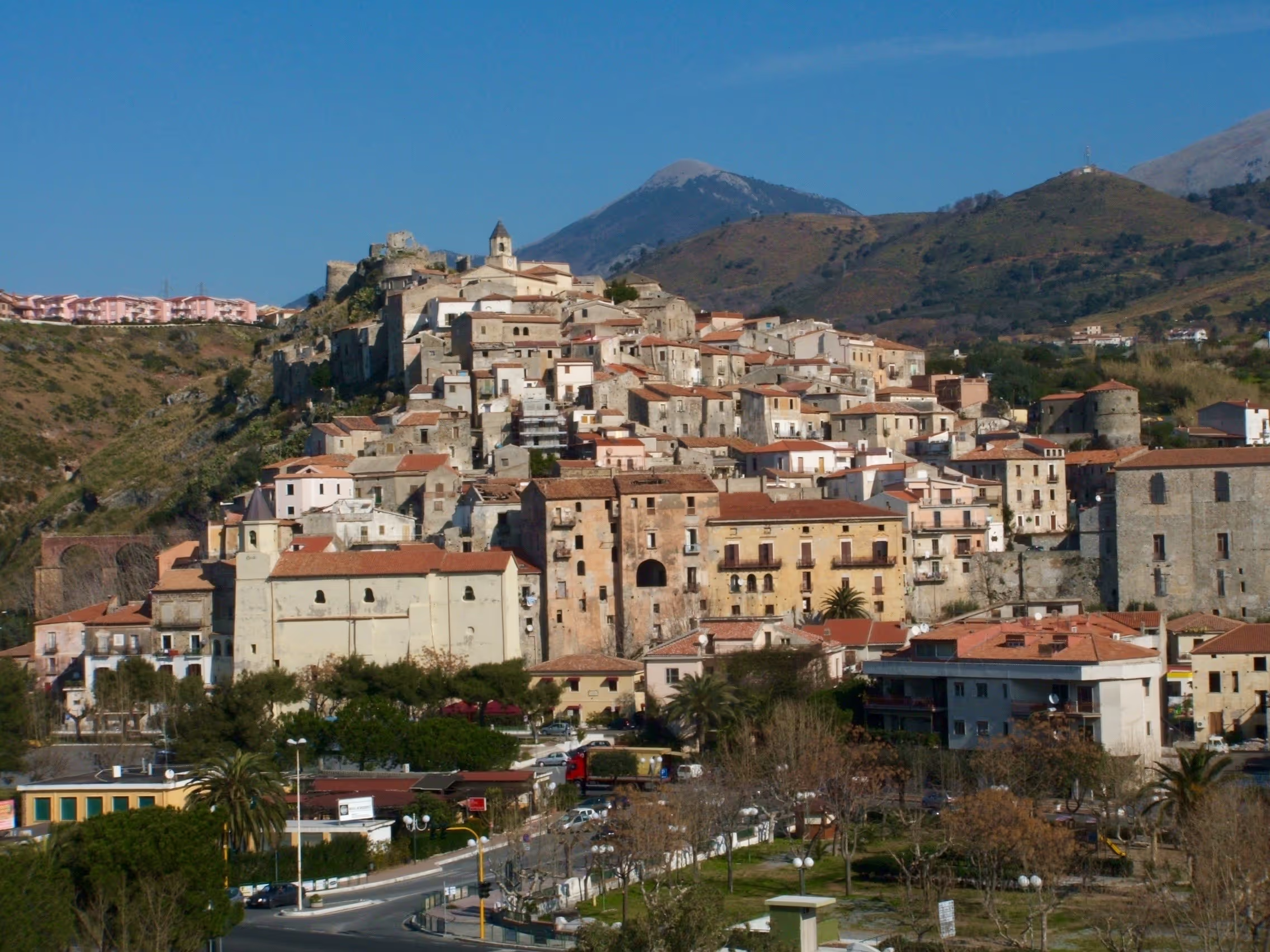
The town of the “landing” on the Riviera dei Cedri: a terraced old town of covered passages, churches born in Byzantine times and watchtowers, the Torre Talao with caves inhabited in the Palaeolithic, and the feast of the Madonna del Carmine with the cinte carried on the head.
-
San Nicola Arcella
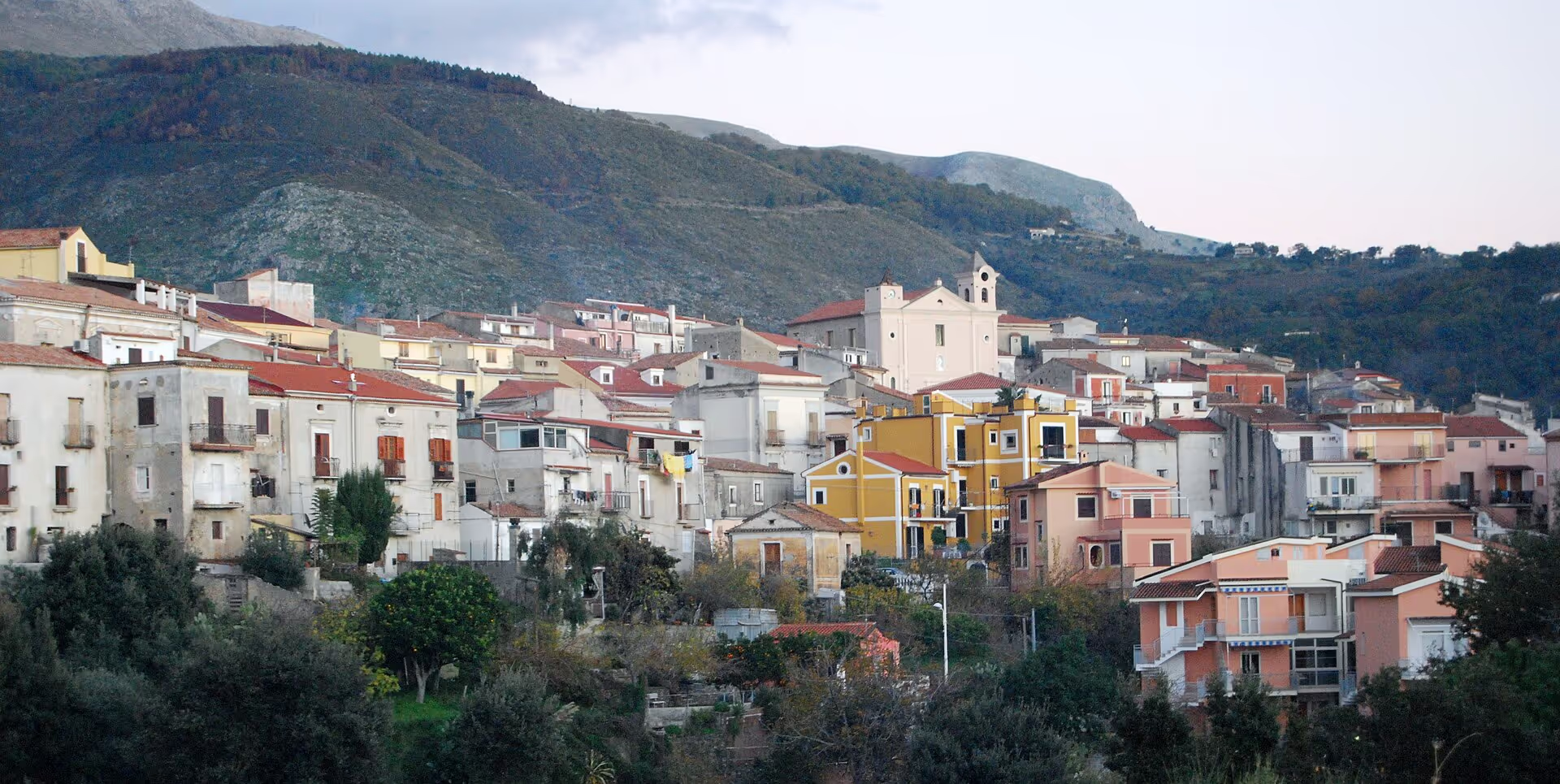
The cliff-top village of the Riviera dei Cedri: three bays in three kilometres, the rock arch of the Arcomagno, the Crawford Tower and a belvedere that takes in three regions.
-
Orsomarso
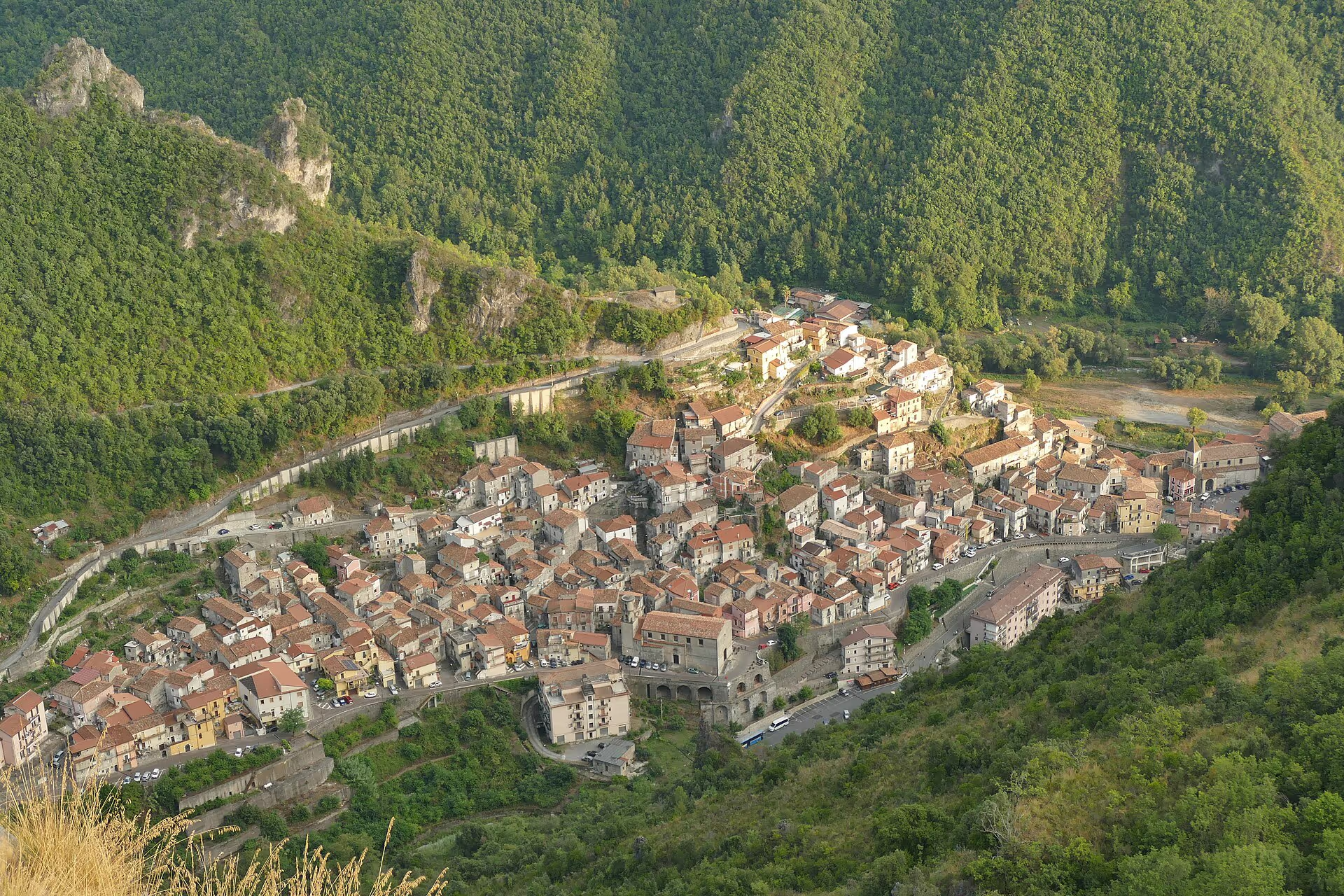
The village that gives its name to a mountain range: Orsomarso, in the Pollino park, keeps the Argentino valley with the last native roe deer and the Bosnian pine, the 10th-century Basilian chapel of Santa Maria di Mércuri and a village that grew around the fortress of Ursus Martius.
-
Papasidero
The Pollino village where the Upper Tyrrhenian Cosentino coast meets prehistory: the Grotta del Romito with the great aurochs engraved between 14,000 and 12,000 years ago, fifteen kilometres of the Lao river gorge inside a nature reserve and a medieval village with a Norman-Swabian castle and the gate of the changing of the Guard.
-
Mormanno
The mountain village at 820 metres between the Pollino and the Orsomarso Mountains: the 1928 votive lighthouse for the Calabrians who fell in the Great War, the Baroque mother church of Santa Maria del Colle, the 9th-century Annunziata and a town that looks from the Upper Tyrrhenian Cosentino hinterland over the Mercure valley.
How to get to Santa Domenica Talao
- Nearest active station
- Scalea-Santa Domenica Talao
- about 4 km as the crow flies from the centre
- Train times (Trenitalia) ↗ Guide: by train
- Nearest airport
- Lamezia Terme International Airport (SUF)
- about 107 km as the crow flies from the centre
- Airport website ↗ Guide: by plane
- By car: A2 “del Mediterraneo” motorway
- Inland town: the relevant A2 exits are described in the “By car” guide; use the directions link for the current route.
- Driving directions (Google Maps) ↗ Guide: by car
Straight-line distances computed from verified coordinates: the road route is longer. Check times and connections on the operators’ websites.
Frequently asked questions
- The village took its present name in 1864 to distinguish itself from towns of the same name; Talao recalls the Lao river, perhaps from katà Lâos, “by the Lao”.
- The Spinelli princes of Scalea, who in the 1620s encouraged families from Mormanno and nearby towns to settle, building the first houses and granting land.
- Because of the bond born of 20th-century emigration to the Dominican Republic, where the Società Pro-Santa Domenica Talao was founded in Puerto Plata in 1917; the twinning dates from 2022.
- The mother church of San Giuseppe with its 1774 altar, Piazza Italia with the wild olive tree and the panoramic terrace, the Campagna, Perrone, Schiffino, La Greca and Longo palazzi and the Museo della Terra.
- On the first Sunday after 20 July, for San Giuseppe, with the procession and the Fera ’a Codda in the upper town.
- Scalea-Santa Domenica Talao, on the Tyrrhenian line, in the neighbouring town of Scalea.
- Santa Domenica Talao has no station of its own: the nearest active station as the crow flies is Scalea-Santa Domenica Talao, on the Tyrrhenian railway line, about 4 km from the centre. From there you continue by road; times and connections on the Trenitalia website.
- The nearest airport is Lamezia Terme International Airport (SUF), about 107 km as the crow flies; from there you continue by train from Lamezia Terme Centrale along the Tyrrhenian line, or by car on the A2 motorway.
Where does the name Santa Domenica Talao come from?
Who founded Santa Domenica Talao?
Why is Santa Domenica Talao twinned with Santo Domingo?
What is there to see in Santa Domenica Talao?
When is Santa Domenica Talao’s patron saint’s feast?
Which is Santa Domenica Talao’s station?
Which is the nearest railway station to Santa Domenica Talao?
Which is the nearest airport to Santa Domenica Talao?
Discover locally
Live, up-to-date results with real reviews, on external platforms. We don’t hand-pick individual businesses we can’t verify.