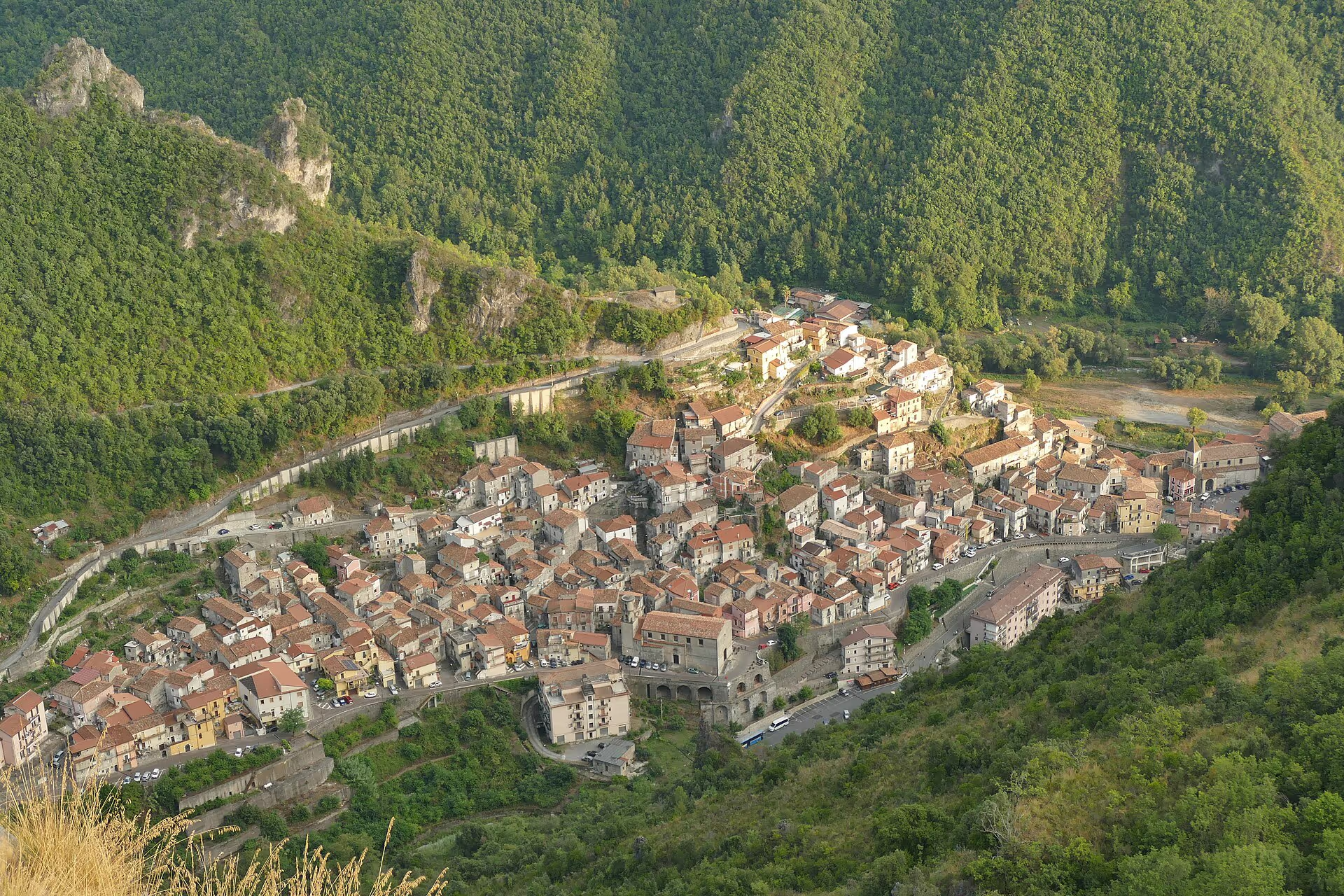
Upper Tyrrhenian Cosentino · Riviera dei Cedri
Orsomarso
The village that gives its name to a mountain range: Orsomarso, in the Pollino park, keeps the Argentino valley with the last native roe deer and the Bosnian pine, the 10th-century Basilian chapel of Santa Maria di Mércuri and a village that grew around the fortress of Ursus Martius.
Orsomarso (Ursumàrzu in Calabrian) is a town of about 1,050 inhabitants in the province of Cosenza, in the hinterland of the Upper Tyrrhenian Cosentino coast, inside the Pollino National Park. The village gives its name to the Orsomarso Mountains, the range that forms the south-western extension of the park, and is home to the Valle del Fiume Argentino nature reserve, where Calabria’s last native roe deer live. The village, which according to tradition grew around the fortress of a commander named Ursus Martius, keeps the traces of Basilian monasticism: caves, hermitages and the 10th-century chapel of Santa Maria di Mércuri.
Geography
The municipal territory is mountainous and rugged, and borders Lungro, Mormanno, Papasidero, San Donato di Ninea, Santa Domenica Talao, Santa Maria del Cedro, Saracena, Scalea and Verbicaro; the hamlets are Bonicose, Buonangelo, Castiglione, Marina di Orsomarso, Molina, Scorpari and Vallementa. The Orsomarso Mountains stretch from the Campotenese plain to the Scalone pass; the peaks include Monte Palanuda (1,632 m), Monte Caramolo (1,827 m), Cozzo del Pellegrino (1,987 m), Monte La Mula (1,935 m) and the Montea (1,825 m), a peak with Dolomite-like walls loved by climbers. On the slopes of the Montea grows the Bosnian pine (pino loricato), which in Italy lives only in the Pollino park and bears witness to an ancient link with the Balkans; the woods and cliffs are home to the wolf, the otter and the golden eagle. From the mountains rises the Argentino, a tributary of the Lao, with remarkably pure waters.
History
Orsomarso probably has Roman origins, not as a village but as a fortress defending the outposts along the Lao plain. Reliable records of the settlement only appear around the year 1000, when the area became an important centre of Basilian monasticism, visited by saints such as Saint Nilus, Saint Leo Luke, Saint Sabas and Saint Fantinus the Younger during the Saracen raids inland. At the confluence of the Argentino and the Porta La Terra a fortress arose, one of whose commanders was Ursus Martius, “Orso Marso”: from him the village that grew around it took its name. The settlement developed in small clusters around monasteries and palazzi. In 1498 the fief was taken from Barnaba Sanseverino, count of Lauria, and sold by King Frederick to Perrotto Bisach, who gave it as a dowry to his daughter Barbara; in 1538 it passed to Count Silvestro Tomacello Ferrante di Alarçon, in 1640 to the Ametrano and in 1668 to Andrea I Brancati of Naples, who lived in the baronial castle beneath the clock tower. The fief was then leased to the duke of Giovene and by him to Nicola Cavalcanti, marquis of Verbicaro. With the end of feudalism Orsomarso took an active part in the struggles of the Risorgimento, after suffering harsh reprisals from the Bourbon commander Necco.
What to see
The chapel of Santa Maria di Mércuri, from the 10th century, is the only trace of the vanished settlement of Mercourion and of the monasteries and hermitages around it: it has a single nave, a semicircular apse and, along the walls, the masonry benches used by the Basilian monks; it holds a plaster statuette of the Madonna combining features of the Hodegetria and the Crowned Madonna. In the village, on the central square, the parish church of San Giovanni Battista was built in the 17th century on the remains of a medieval chapel; it keeps canvases by the local painter Francesco Antonio Collimodio, eight 18th-century altars in polychrome marble, a painted organ and a wooden choir. Just above rise the clock tower, a viewpoint, and the baronial castle. The route is completed by the Byzantine chapel of San Cosimo, the Franciscan convent founded in 1610 on the remains of a Basilian monastery and closed after the 1783 earthquake, the church of San Leonardo, formerly Santa Sofia, with the remains of a 10th-century monastery and a water mill, the ruins of the castle of Mercurion and, at Timpone Simara, the cave of San Michele or of the Angel with the hermitage of San Nilo.
The Argentino valley
The Valle del Fiume Argentino nature reserve, established in 1987, covers 3,980 hectares in the Pollino park and is the starting point for many hiking routes. Its most precious presence is the native roe deer: the last specimens of this species indigenous to the Calabrian mountains, estimated at a few dozen, live in a small area of which the valley is the heart. There are also wild boar, foxes, martens, black squirrels and colonies of birds of prey. The woods alternate Bosnian pine, beech and silver fir, which in the small side valleys descend to 200 metres, with holm oaks, chestnuts, alders and Mediterranean scrub. Places in the reserve include the Tavolara pond, the Ficara waterfall, the Pietra Campanara on the slopes of the Palanuda and the cave of the Madonna di Lourdes, rich in stalactites. You can hike the Argentino gorges, while on the nearby Lao you can go canoeing and rafting; the valley also has a climbing crag.
Patron saint
Orsomarso’s patron saint is San Sebastiano, celebrated on 20 January. The inhabitants are called orsomarsesi.
Getting there
Orsomarso is reached from Scalea, on the coast, along the SP 9-10 provincial road, which climbs the right bank of the Lao river. The reference railway station is Marcellina-Verbicaro-Orsomarso, on the Tyrrhenian line. The region’s nearest airport is Lamezia Terme.
Places
What to see around here.
- Old town
Old town of Orsomarso
The village born around the fortress of Ursus Martius: the panoramic clock tower, the Brancati baronial castle, the church of San Giovanni Battista with Collimodio’s canvases, the Franciscan convent and the water mill.
- Culture
Church of Santa Maria di Mércuri
The 10th-century Basilian chapel at Orsomarso, the only trace of the vanished settlement of Mercourion: single nave, semicircular apse, the monks’ masonry benches and a plaster Madonna.
- Nature
Valle del Fiume Argentino nature reserve
The 1987, 3,980-hectare reserve at Orsomarso: Calabria’s last native roe deer, the Bosnian pine, the Ficara waterfall, the Tavolara pond and the Argentino gorges.
Nearby towns
Keep exploring the Upper Tyrrhenian Cosentino coast from here.
-
Verbicaro
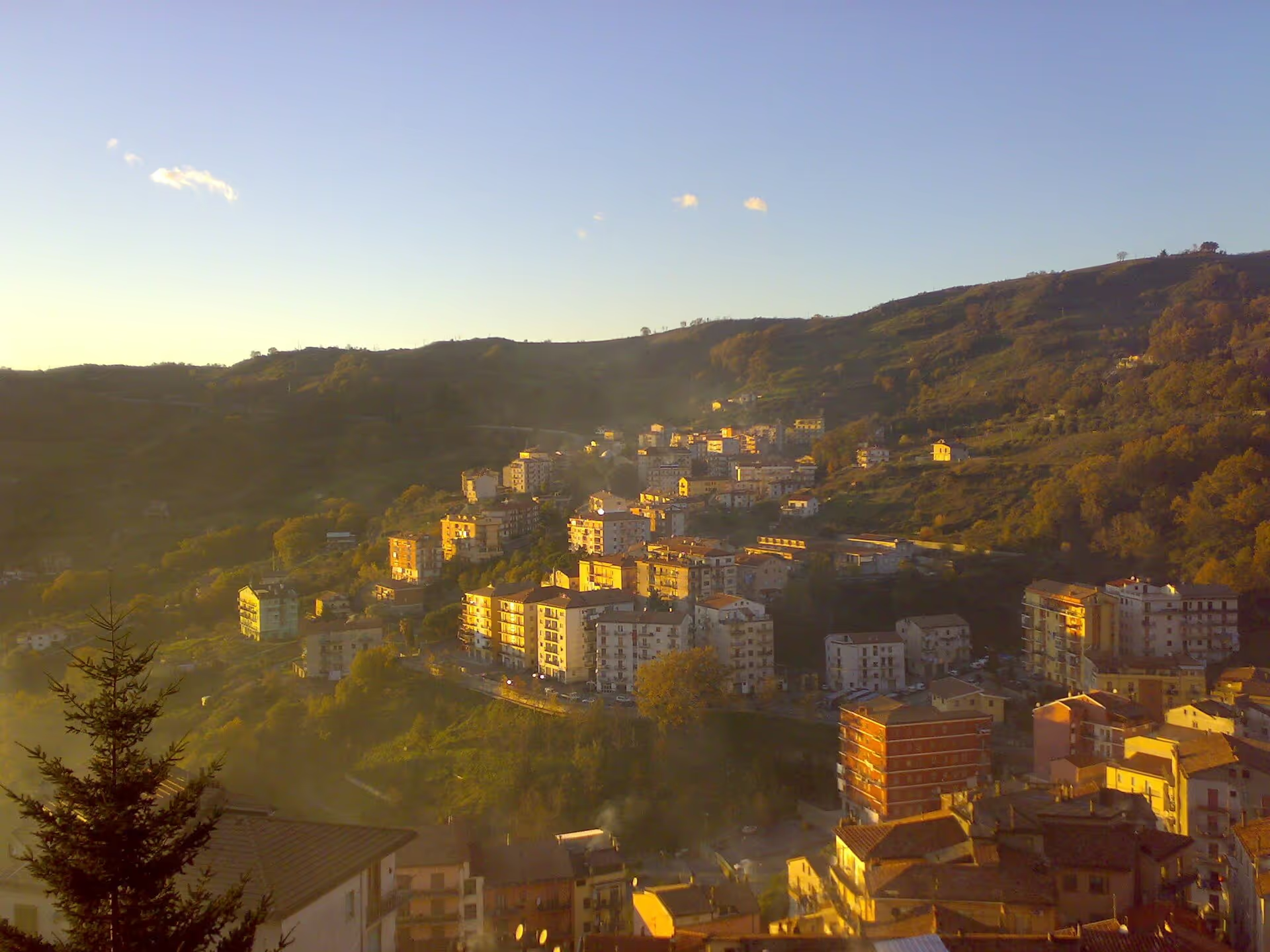
The village of the Battenti: at 428 metres in the Pollino park, behind the Riviera dei Cedri, Verbicaro keeps the night rite of Good Friday, the Zigni torchlight procession for the Madonna delle Grazie and a village of portals, alleys and seven churches, already described in 1797 by Lorenzo Giustiniani.
-
Santa Domenica Talao
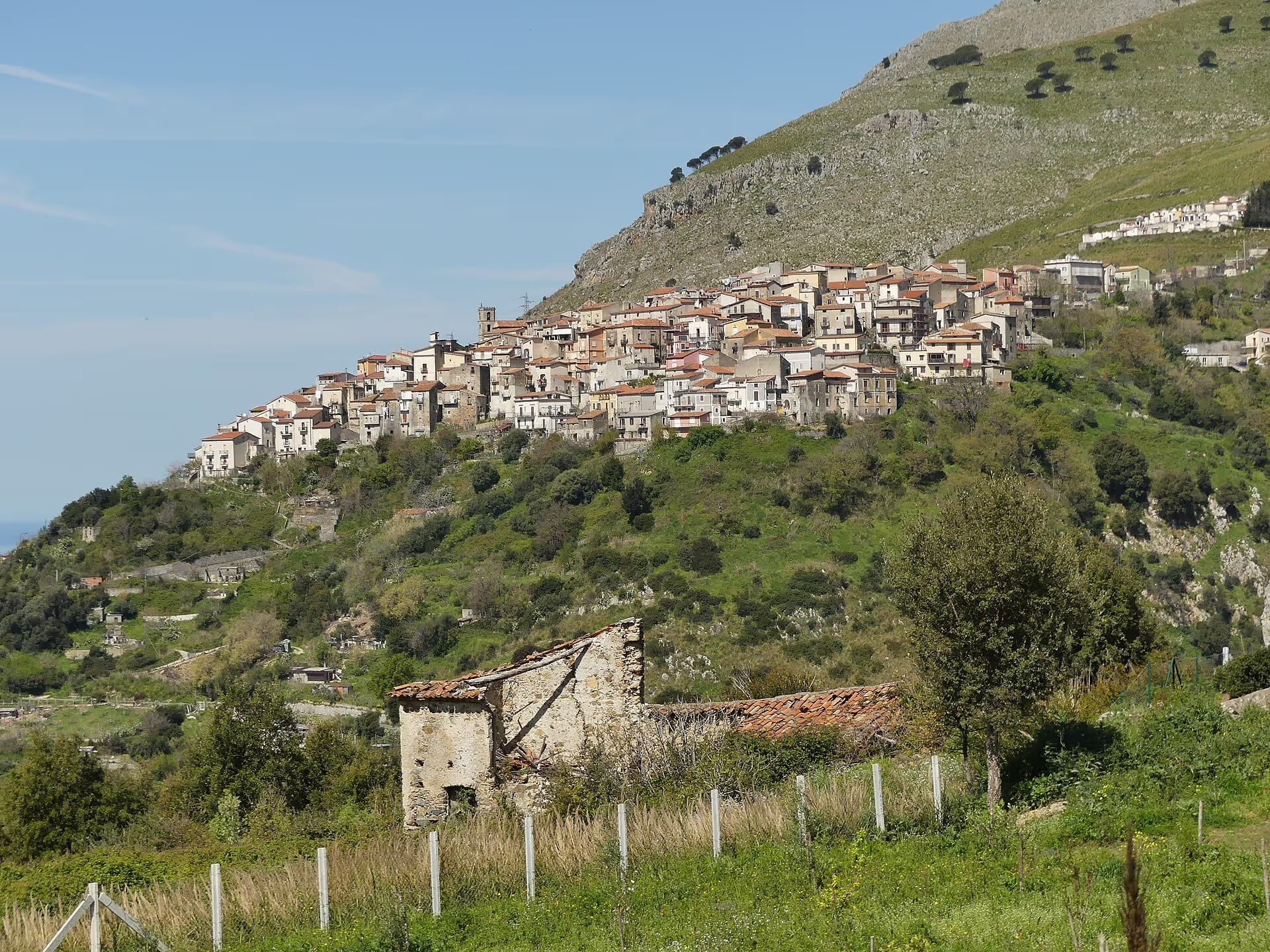
The village that looks over the Riviera dei Cedri from the Lao valley: founded in the 17th century by the Spinelli princes, grown with noble palazzi and chapels, tied by a century of emigration to the Dominican Republic and twinned with Santo Domingo.
-
Papasidero
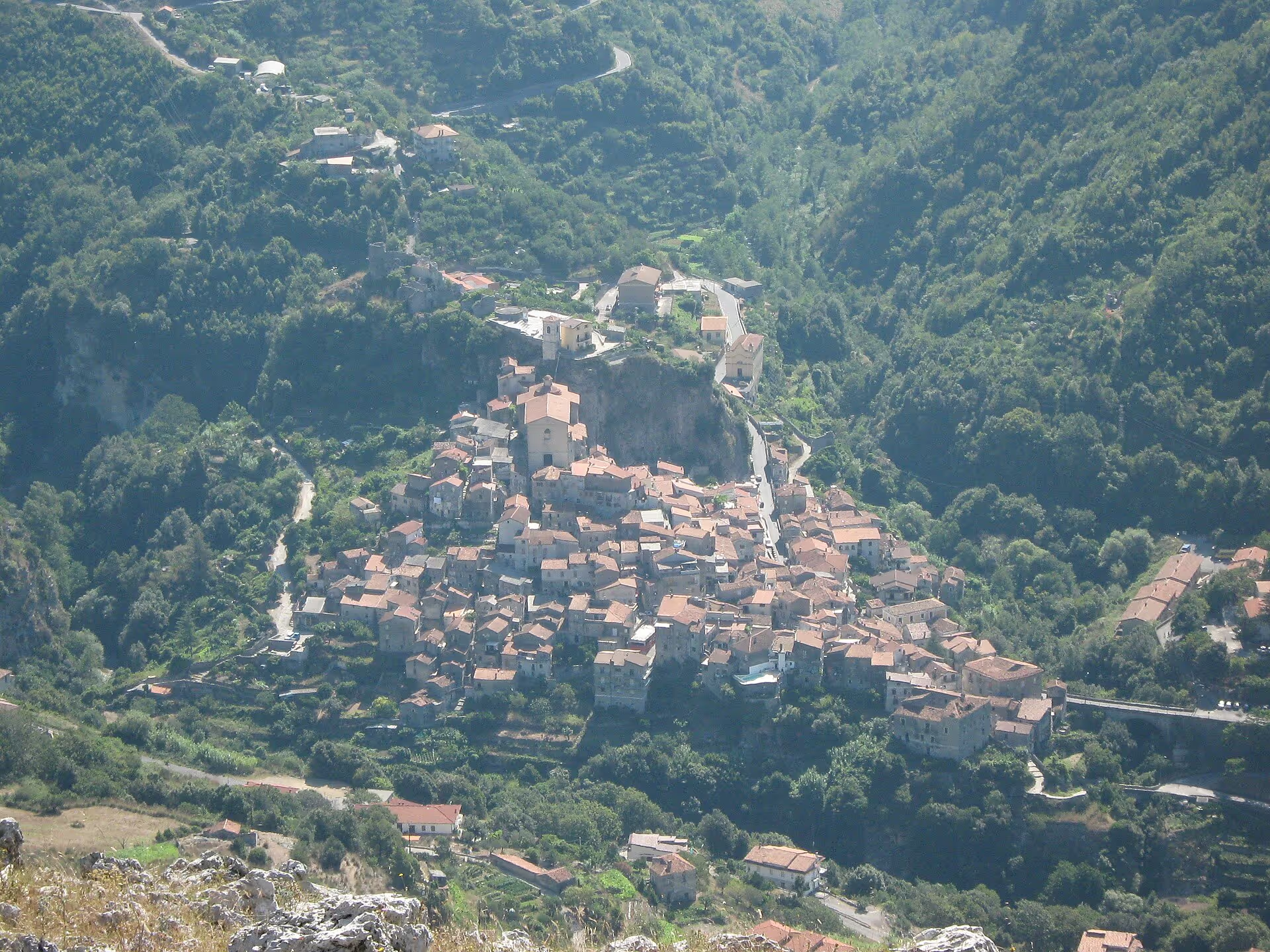
The Pollino village where the Upper Tyrrhenian Cosentino coast meets prehistory: the Grotta del Romito with the great aurochs engraved between 14,000 and 12,000 years ago, fifteen kilometres of the Lao river gorge inside a nature reserve and a medieval village with a Norman-Swabian castle and the gate of the changing of the Guard.
-
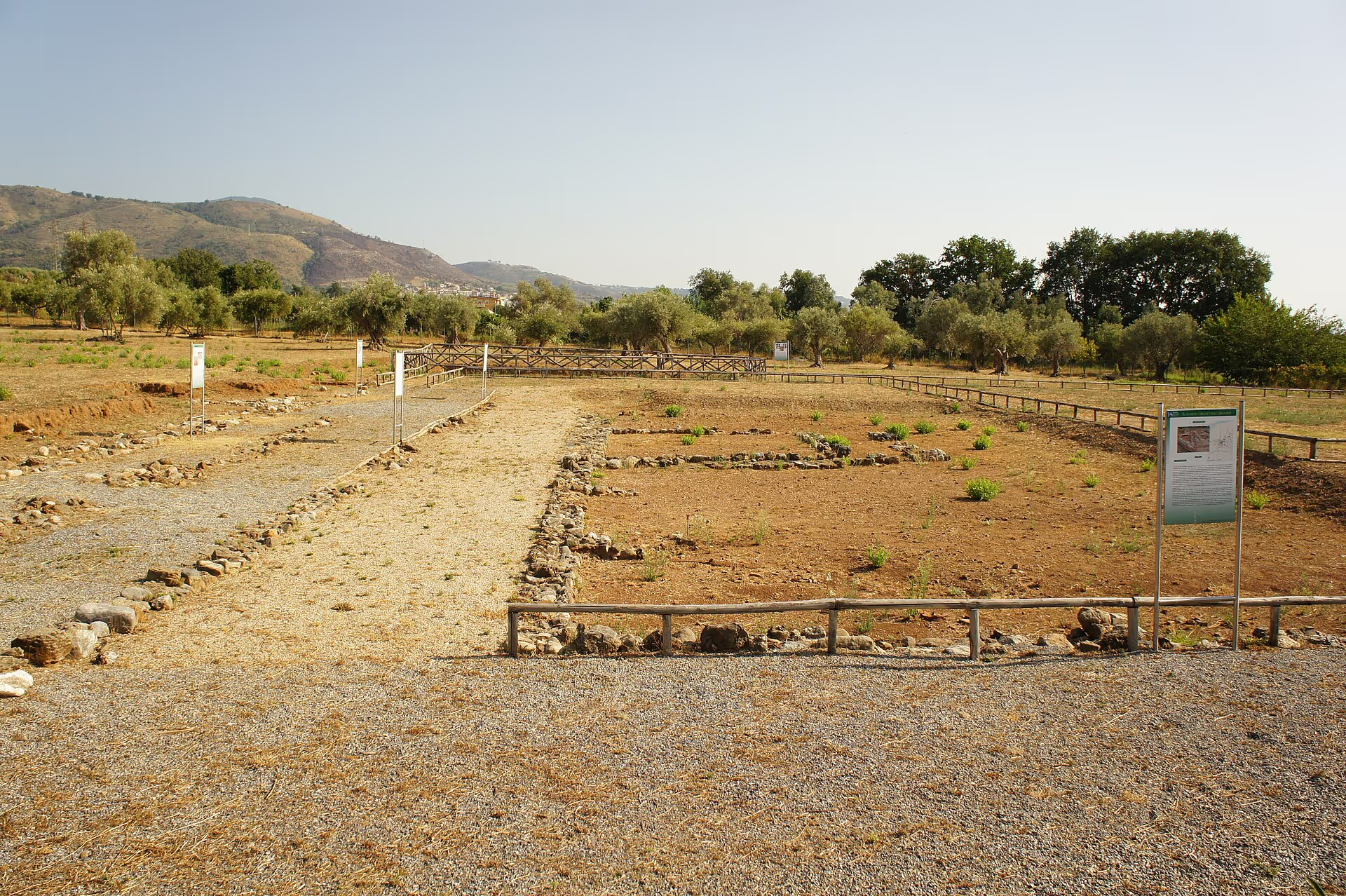
Santa Maria del Cedro
The town that gives the Riviera dei Cedri its name: the fertile plain between the Lao and the Abatemarco where the citron chosen by rabbis for Sukkot is grown, the remains of the Sybarite city of Laos at Marcellina and the Citron Museum in the Carcere dell’Impresa.
-
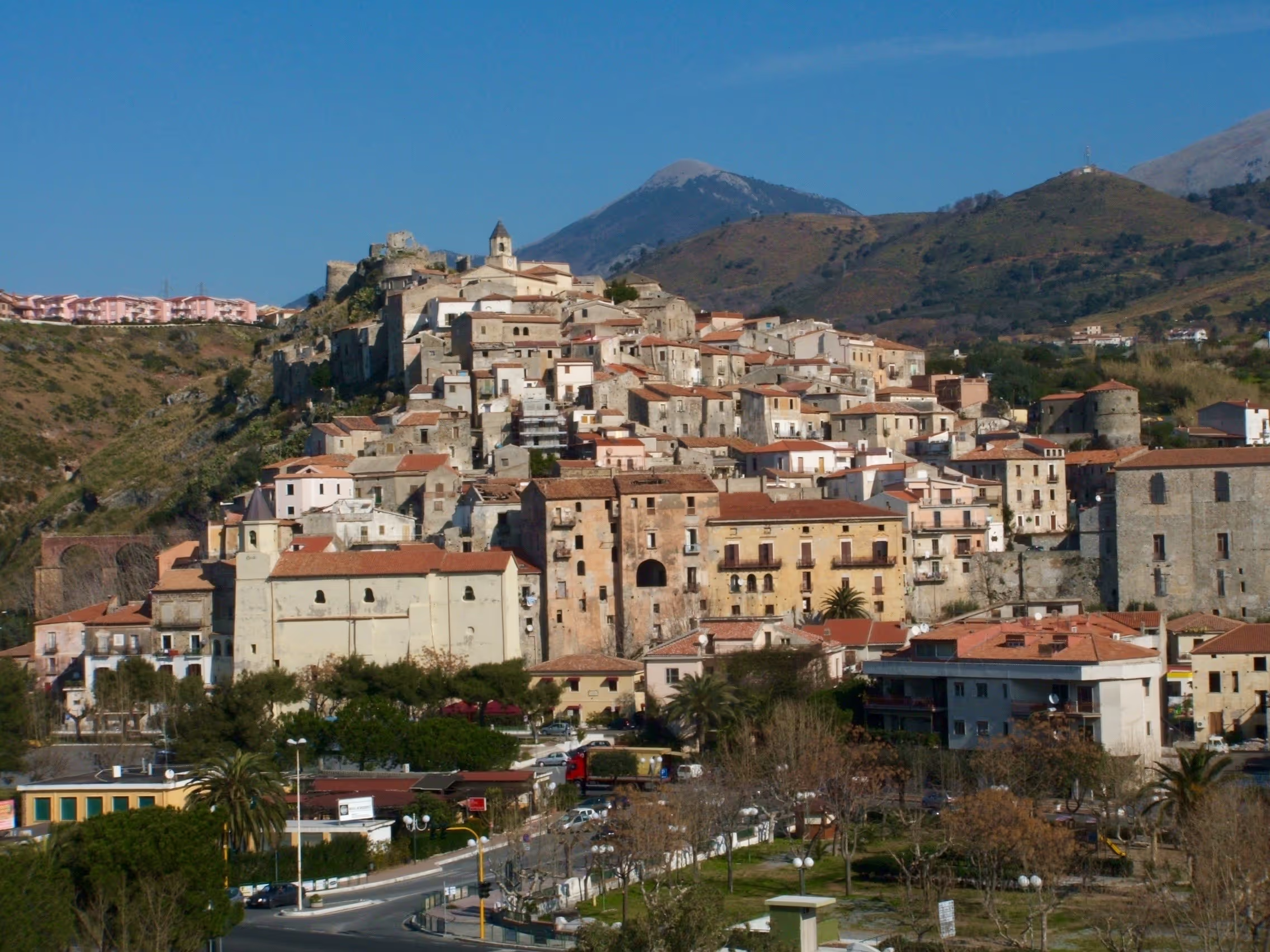
Scalea
The town of the “landing” on the Riviera dei Cedri: a terraced old town of covered passages, churches born in Byzantine times and watchtowers, the Torre Talao with caves inhabited in the Palaeolithic, and the feast of the Madonna del Carmine with the cinte carried on the head.
-
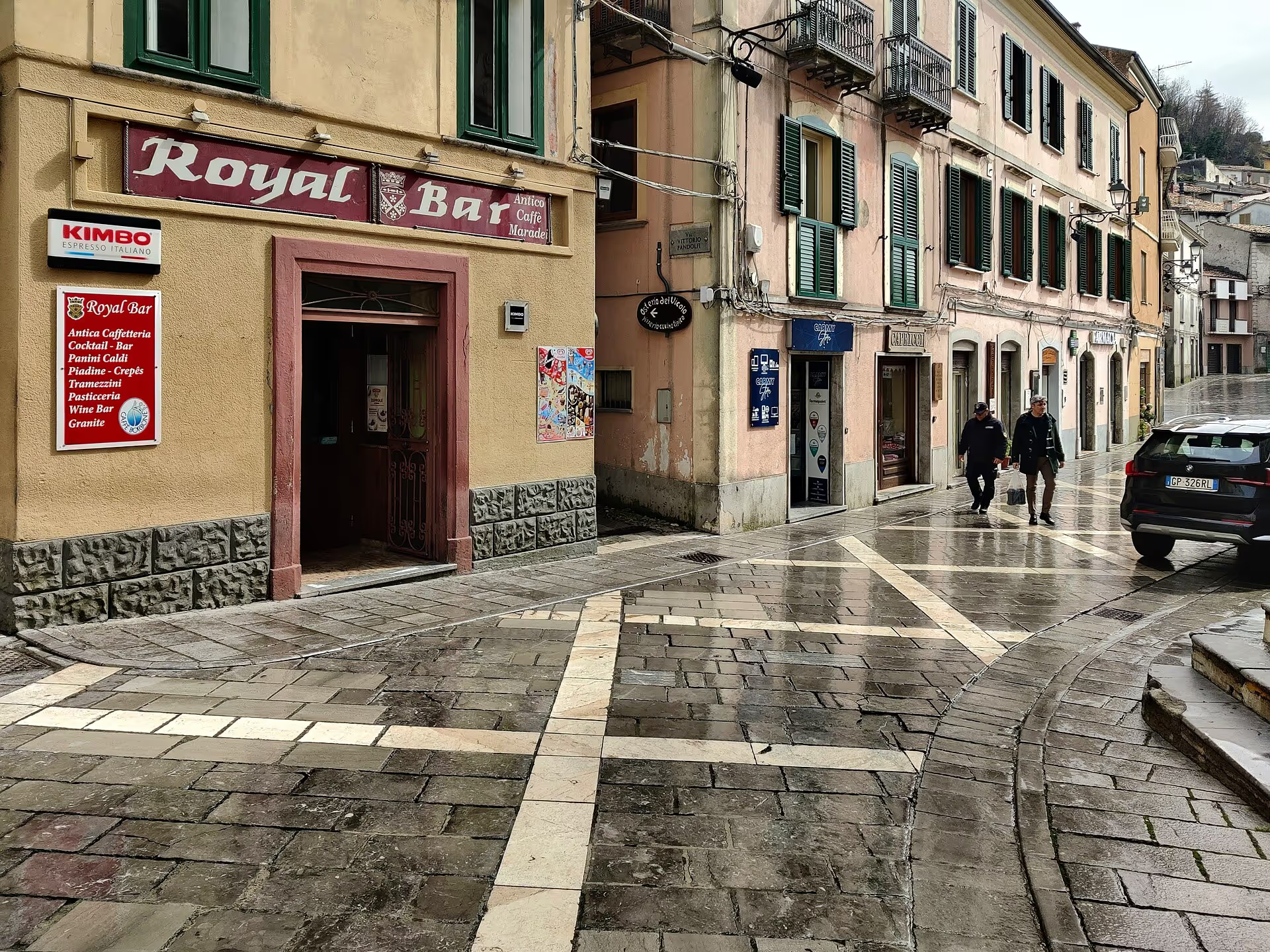
Mormanno
The mountain village at 820 metres between the Pollino and the Orsomarso Mountains: the 1928 votive lighthouse for the Calabrians who fell in the Great War, the Baroque mother church of Santa Maria del Colle, the 9th-century Annunziata and a town that looks from the Upper Tyrrhenian Cosentino hinterland over the Mercure valley.
Where to eat
- ristorante Castello di Mercuri.Restaurant · Orsomarso
- Ristorante Golden Park RanchRestaurant · Orsomarso
- Ristorante La CostaRestaurant · Orsomarso
Indicative information from OpenStreetMap. Check availability and reviews on the external platforms.
Do you run a local business?
Update the listing or discover how to give your business more visibility.
Join the guide for freeHow to get to Orsomarso
- Nearest active station
- Scalea-Santa Domenica Talao
- about 10 km as the crow flies from the centre
- Train times (Trenitalia) ↗ Guide: by train
- Nearest airport
- Lamezia Terme International Airport (SUF)
- about 103 km as the crow flies from the centre
- Airport website ↗ Guide: by plane
- By car: A2 “del Mediterraneo” motorway
- Inland town: the relevant A2 exits are described in the “By car” guide; use the directions link for the current route.
- Driving directions (Google Maps) ↗ Guide: by car
Straight-line distances computed from verified coordinates: the road route is longer. Check times and connections on the operators’ websites.
Frequently asked questions
- From Ursus Martius, “Orso Marso”, one of the commanders of the fortress built at the confluence of the Argentino and the Porta La Terra, around which the village grew.
- A 3,980-hectare protected area established in 1987 in the Pollino park, where Calabria’s last native roe deer live and the Bosnian pine grows.
- The mountain range named after the village, forming the south-western extension of the Pollino park, from the Campotenese plain to the Scalone pass, with peaks such as Cozzo del Pellegrino, Monte La Mula and the Montea.
- A 10th-century Basilian chapel, the only trace of the vanished settlement of Mercourion, with the monks’ masonry benches along its walls.
- Hike the Argentino gorges, climb on the crag, go canoeing and rafting on the nearby Lao and explore the Pollino park.
- From Scalea along the SP 9-10 on the right bank of the Lao; the reference station is Marcellina-Verbicaro-Orsomarso.
- Orsomarso has no station of its own: the nearest active station as the crow flies is Scalea-Santa Domenica Talao, on the Tyrrhenian railway line, about 10 km from the centre. From there you continue by road; times and connections on the Trenitalia website.
- The nearest airport is Lamezia Terme International Airport (SUF), about 103 km as the crow flies; from there you continue by train from Lamezia Terme Centrale along the Tyrrhenian line, or by car on the A2 motorway.
Where does the name Orsomarso come from?
What is the Valle del Fiume Argentino reserve?
What are the Orsomarso Mountains?
What is Santa Maria di Mércuri?
What can you do in Orsomarso?
How do you get to Orsomarso?
Which is the nearest railway station to Orsomarso?
Which is the nearest airport to Orsomarso?
Discover locally
Live, up-to-date results with real reviews, on external platforms. We don’t hand-pick individual businesses we can’t verify.