Upper Tyrrhenian Cosentino · Riviera dei Cedri
Verbicaro
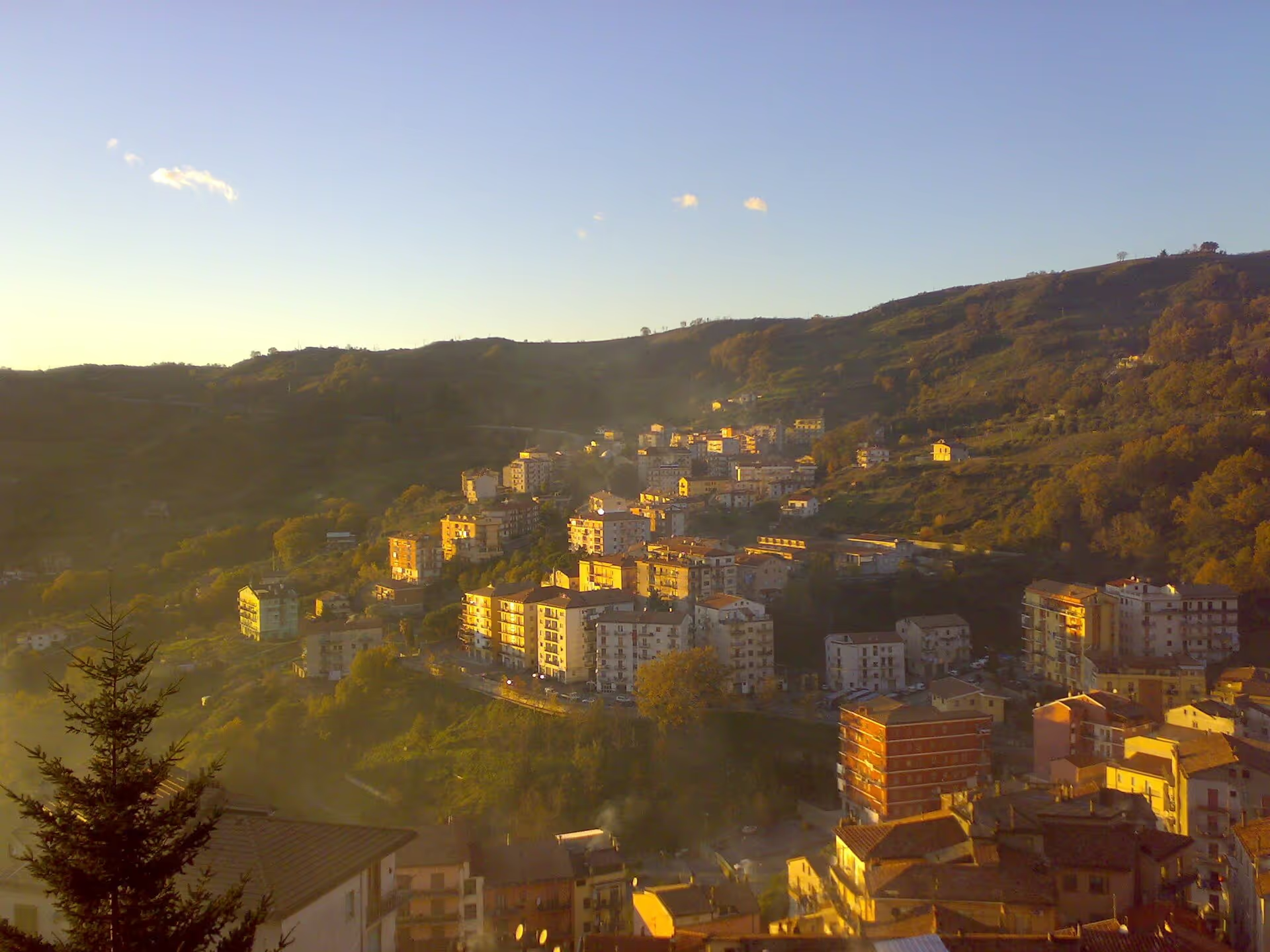
The village of the Battenti: at 428 metres in the Pollino park, behind the Riviera dei Cedri, Verbicaro keeps the night rite of Good Friday, the Zigni torchlight procession for the Madonna delle Grazie and a village of portals, alleys and seven churches, already described in 1797 by Lorenzo Giustiniani.
Verbicaro (Vruvëcàrë in Calabrian) is a town of about 2,500 inhabitants in the province of Cosenza, in the hinterland of the Upper Tyrrhenian Cosentino coast, inside the Pollino National Park. The village lies at 428 metres, in a valley ringed by mountains, 11 kilometres from Marcellina station, on the Tyrrhenian coast. The village calendar is marked by its rites: on the night between Maundy Thursday and Good Friday the Battenti walk the streets of the village, and in early July the Zigni torchlight procession and the flower carpets accompany the feast of the patron saint, the Madonna delle Grazie.
Geography
The territory borders Grisolia, Orsomarso, San Donato di Ninea and Santa Maria del Cedro; the hamlet is San Francesco. The village lies in a valley, with a small part on a rise, surrounded by nearby mountains; two streams run beside the town and, about a mile away, the river the 18th century called the Innicari rises in the territory of San Donato and runs down to the sea. From the coast you climb along the SS18 and the SP5 through Marcellina; the nearest stations are 11 and 20 kilometres away, at Marcellina and Scalea.
History
The name is said to derive from the Latin vervecarius, “shepherd”, or, according to other historians, from the Greek personal name Nicolaus Berbecaris. A precise portrait of the village appears in the Dizionario geografico-ragionato del Regno di Napoli by Lorenzo Giustiniani, printed in Naples in 1797. It describes “Bervicaro”, in the diocese of Cassano, 50 miles from Cosenza along broken roads and 6 miles from the Bruca shore, where the river met the sea near a royal tower. Giustiniani notes the mild air, the two bridges to be maintained over the streams, the zibibbo grapes that could have been dried and sold, and above all the weight of pastoralism: sheep and goats took up much of the land, and the livestock dealers were the most powerful people in town. He also records that in 1630 the marquis Antonio Castillas sold the estate to Angelo di Matera for 40,500 ducats, and that at the end of the 18th century the fief belonged to Francesco Maria Cavalcanti, marquis of Verbicaro; the population, taxed at 206 households in 1532, then numbered about 3,400, devoted to farming and herding. In August 1911, during a cholera epidemic that struck much of the population, the town saw a riot in which three people were killed, including the mayor and the municipal secretary, and the town hall was set on fire.
What to see
The old town is explored on foot, among stone portals and alleys: the Via Giardino portal, the Vico Vignale, the Old Fountain by the former town hall, the Buonifanti portal, the Clock Tower and Piazza Mons. Francesco Cava. The village churches are the mother church of the Assunta, the church of San Giuseppe, the sanctuary of San Francesco di Paola, the churches of the Madonna del Carmine, the Madonna della Neve and Santa Maria La Nova and the little church of the Madonna di Loreto: the same streets and squares that the rites of Holy Week and the patron’s feast fill every year.
The Battenti of Good Friday
On the night between Maundy Thursday and Good Friday Verbicaro renews the ancient rite of the Battenti Flagellanti. Some penitents, dressed in red, barefoot and bare-legged, strike their legs with the cardillo, a piece of cork set with nine glass points, until they bleed; meanwhile they walk around the village three times, marking the streets with their bloodied hands. At three in the morning the procession of the Mystery of the Passion of Christ sets out, with statues and living tableaux inspired by the Way of the Cross.
The Madonna delle Grazie and the Zigni
Verbicaro’s patron saint is the Madonna delle Grazie, celebrated on 2 July. On the evening before, 1 July, the Zigni torchlight procession takes place: pine trees and branches, gathered on the nearby mountains of the Pollino park, are carried on the shoulders of groups of people along the main streets, until halfway they meet the procession in honour of the patron saint. On the morning of 2 July volunteers lay flower carpets along the streets the procession will cross in the late afternoon.
Coat of arms and twin towns
The coat of arms, granted by decree of the President of the Republic on 7 December 1964, is blue with a silver three-peaked mountain on green ground; the central peak bears a silver letter V, the whole set against two conifer branches and topped by three gold stars. The banner is a cloth divided vertically into white and blue. Verbicaro has been twinned with Oberstenfeld since 2005 and with Taggia since 2016. The inhabitants are called verbicaresi.
Getting there
By car you leave the SS18 state road at Marcellina and climb along the SP5. The nearest railway stations, on the Tyrrhenian line, are Marcellina-Verbicaro-Orsomarso, 11 km from the village, and Scalea-Santa Domenica Talao, 20 km away. The reference airports are Lamezia Terme, to the south, and Naples Capodichino, to the north.
Places
What to see around here.
Nearby towns
Keep exploring the Upper Tyrrhenian Cosentino coast from here.
-
Grisolia
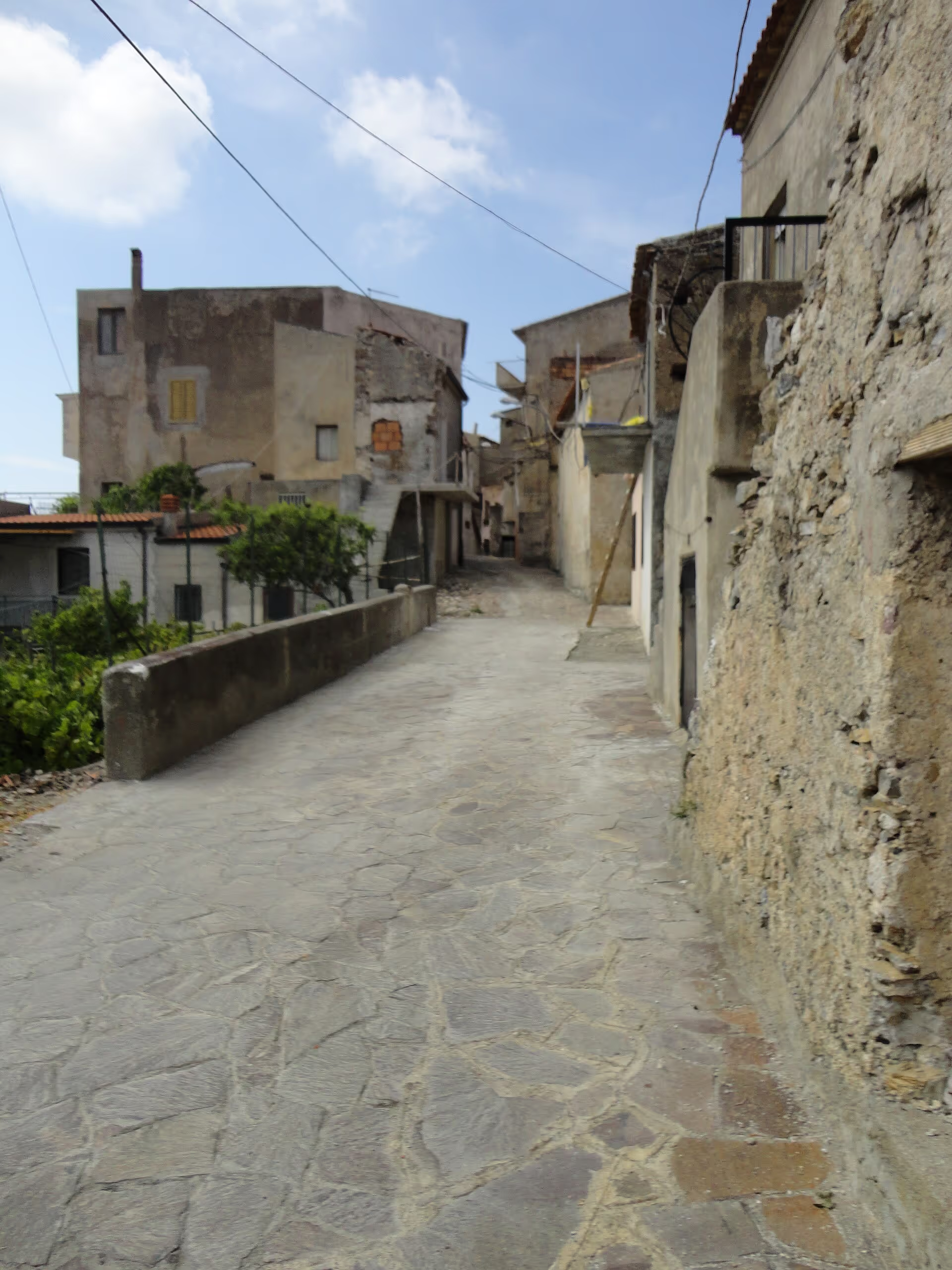
The village at 465 metres that looks out over the whole Riviera dei Cedri: from the sea at Acchio to the slopes of Monte La Mula, Grisolia combines covered stone alleys, the Palazzo Ducale, the ethnographic museum and the San Rocco procession with the caggie carried on the head.
-
Orsomarso
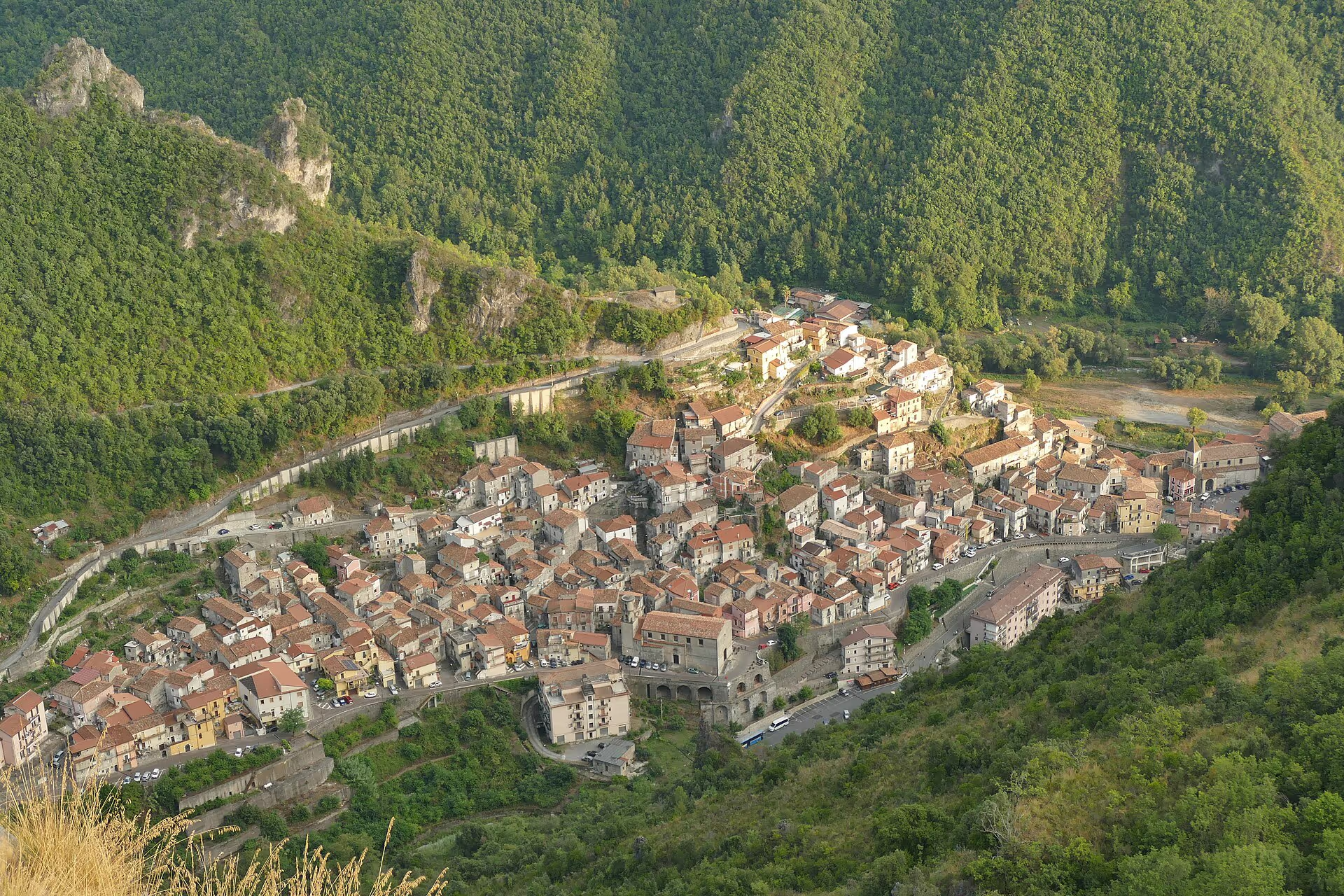
The village that gives its name to a mountain range: Orsomarso, in the Pollino park, keeps the Argentino valley with the last native roe deer and the Bosnian pine, the 10th-century Basilian chapel of Santa Maria di Mércuri and a village that grew around the fortress of Ursus Martius.
-
Maierà
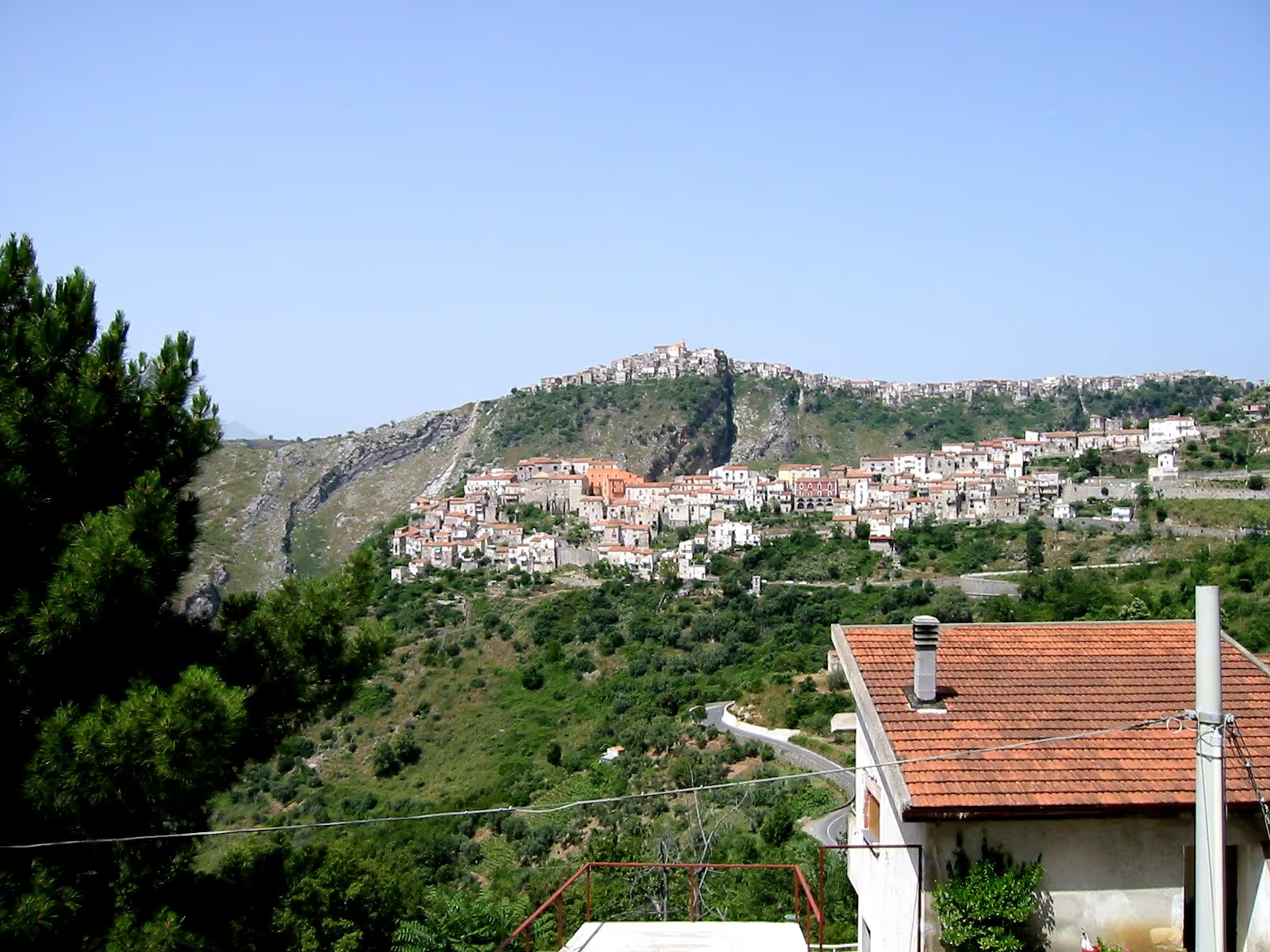
The village at 360 metres above the Vaccuta stream valley, separated from Grisolia by a ravine: in the Pollino park, behind Diamante, Maierà combines contemporary artworks in its lanes, the Chilli Pepper Museum and its four churches.
-
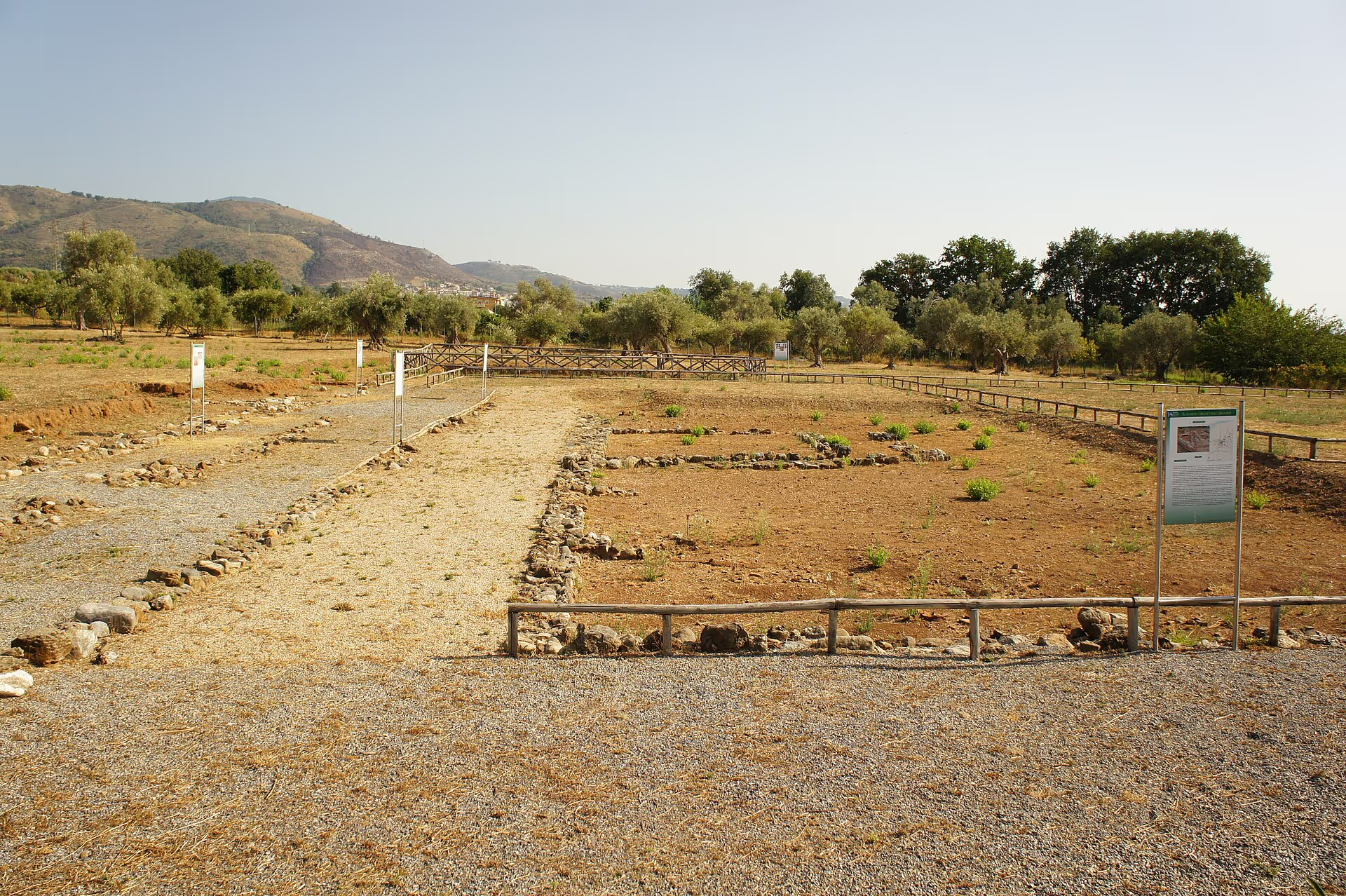
Santa Maria del Cedro
The town that gives the Riviera dei Cedri its name: the fertile plain between the Lao and the Abatemarco where the citron chosen by rabbis for Sukkot is grown, the remains of the Sybarite city of Laos at Marcellina and the Citron Museum in the Carcere dell’Impresa.
Where to eat
- PizzeriaRestaurant · Verbicaro
- Pub Bar TrinitàBar · Verbicaro
Indicative information from OpenStreetMap. Check availability and reviews on the external platforms.
Do you run a local business?
Update the listing or discover how to give your business more visibility.
Join the guide for freeHow to get to Verbicaro
- Nearest active station
- Grisolia-Santa Maria
- about 8 km as the crow flies from the centre Serves Grisolia and Santa Maria del Cedro.
- Train times (Trenitalia) ↗ Guide: by train
- Nearest airport
- Lamezia Terme International Airport (SUF)
- about 98 km as the crow flies from the centre
- Airport website ↗ Guide: by plane
- By car: A2 “del Mediterraneo” motorway
- Inland town: the relevant A2 exits are described in the “By car” guide; use the directions link for the current route.
- Driving directions (Google Maps) ↗ Guide: by car
Straight-line distances computed from verified coordinates: the road route is longer. Check times and connections on the operators’ websites.
Frequently asked questions
- Penitents dressed in red who, on the night between Maundy Thursday and Good Friday, strike their legs with the cardillo, a cork set with nine glass points, and walk around the village three times; at three in the morning the procession of the Mystery of the Passion follows.
- On the evening of 1 July, the eve of the feast of the Madonna delle Grazie, pine trees and branches gathered on the Pollino mountains are carried on shoulders through the village streets until they meet the patron saint’s procession.
- From the Latin vervecarius, “shepherd”, or from the Greek personal name Nicolaus Berbecaris.
- On 2 July, for the Madonna delle Grazie, with flower carpets in the morning and the procession in the afternoon; the evening before comes the Zigni torchlight procession.
- The Via Giardino and Buonifanti portals, the Vico Vignale, the Old Fountain, the Clock Tower and the churches, including the mother church of the Assunta and the sanctuary of San Francesco di Paola.
- From the SS18 at Marcellina along the SP5; the nearest stations are Marcellina-Verbicaro-Orsomarso (11 km) and Scalea-Santa Domenica Talao (20 km).
- Verbicaro has no station of its own: the nearest active station as the crow flies is Grisolia-Santa Maria, on the Tyrrhenian railway line, about 8 km from the centre. From there you continue by road; times and connections on the Trenitalia website.
- The nearest airport is Lamezia Terme International Airport (SUF), about 98 km as the crow flies; from there you continue by train from Lamezia Terme Centrale along the Tyrrhenian line, or by car on the A2 motorway.
Who are the Battenti of Verbicaro?
What is the Zigni torchlight procession?
Where does the name Verbicaro come from?
When is Verbicaro’s patron saint’s feast?
What is there to see in the old town of Verbicaro?
How do you get to Verbicaro?
Which is the nearest railway station to Verbicaro?
Which is the nearest airport to Verbicaro?
Discover locally
Live, up-to-date results with real reviews, on external platforms. We don’t hand-pick individual businesses we can’t verify.