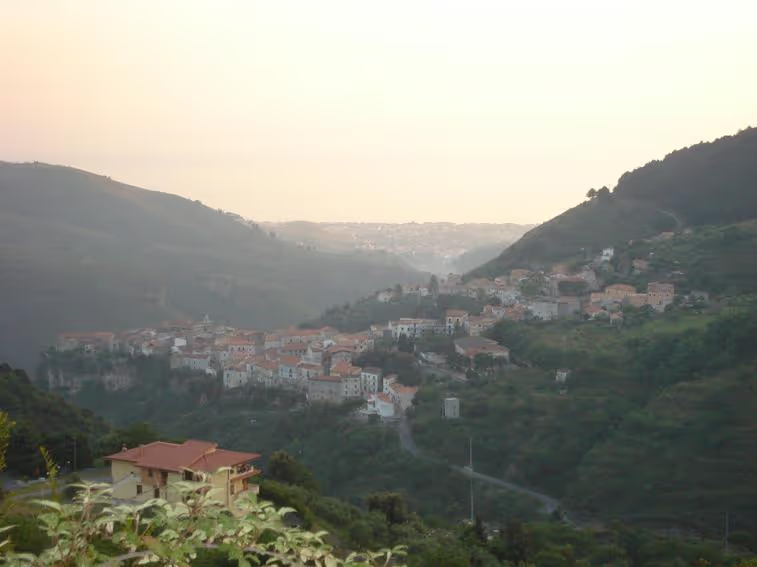
 Old town
Upper Tyrrhenian Cosentino · Riviera dei Cedri
Old town of Tortora
The village of Julitta on its rocky spur: the stone portals of the palaces, the mother church of San Pietro Apostolo, the Annunziata and the memory of the Basilian monks and of Garibaldi.
The old town of Tortora is the village that refugees from Blanda founded on an inland rocky spur, around the Castello delle Tortore, and named Julitta in memory of the lost city; only in the second millennium did it take the name of the turtle dove that filled the woods, and as Turtura it is cited in the bull of 1079. About 600 people live here today, and the climate is mild all year, with cool, breezy summers.
Walking the narrow streets you meet the stone portals adorning the old palaces, the mother church of San Pietro Apostolo in piazza Plebiscito, the church of the Annunziata in piazza Monastero, the church of the Souls in Purgatory in piazza Dante and the Materdomini chapel; the Casapesenna palace housed the first archaeological exhibition, now the Museum of Blanda, and since 2008 the village has also had the municipal library. Here, on 3 September 1860, the Lo Monaco Melazzi family hosted Garibaldi and his generals, and here in 1806 the people of Tortora received the French troops without resistance, avoiding the looting that struck Lagonegro, Lauria and Cirella. The names of the surrounding districts, from San Sago to Santi Quaranta, recall the lauras of the Basilian monks who between the 8th and 10th centuries sought solitude here.
Frequently asked questions
- Because it was founded by refugees from Blanda, who abandoned the ancient city after the Saracen raids of the 9th century and gave the new village a name in its honour.
- The mother church of San Pietro Apostolo, the church of the Annunziata, the church of the Souls in Purgatory and the Materdomini chapel.
Why was the old town of Tortora called Julitta?
Which churches are in the old town of Tortora?
More places in Tortora
- Culture
Blanda: the Palècastro and San Brancato
The hill where the Oenotrian, Lucanian and Roman city of Blanda Julia rose, with its walls, forum, three small temples and the San Brancato necropolis: the site identified in 1891 and excavated from 1990.
-
 Culture
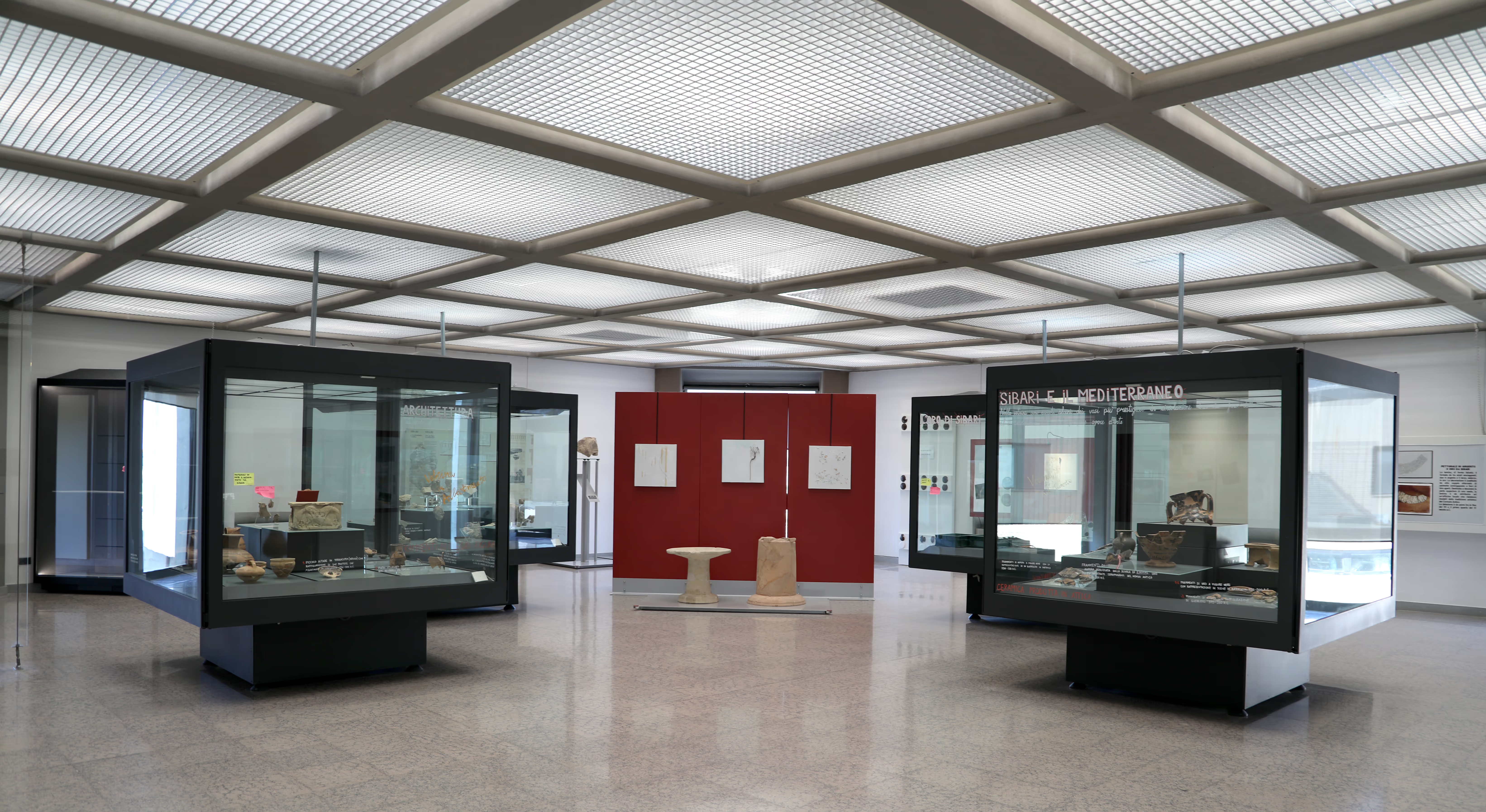
 Museum of Blanda
The old-town museum that tells of ancient settlement south of the Noce: the Oenotrian and Lucanian grave goods of San Brancato and the finds from Roman Blanda on the Palècastro.
- Beach
Tortora Marina and the Gulf of Policastro
The plain on the Gulf of Policastro where most of Tortora’s people live: beaches, ten districts joined in one settlement, the Palaeolithic site of Rosaneto and the Torre Nave cliff.
Itineraries through here
-
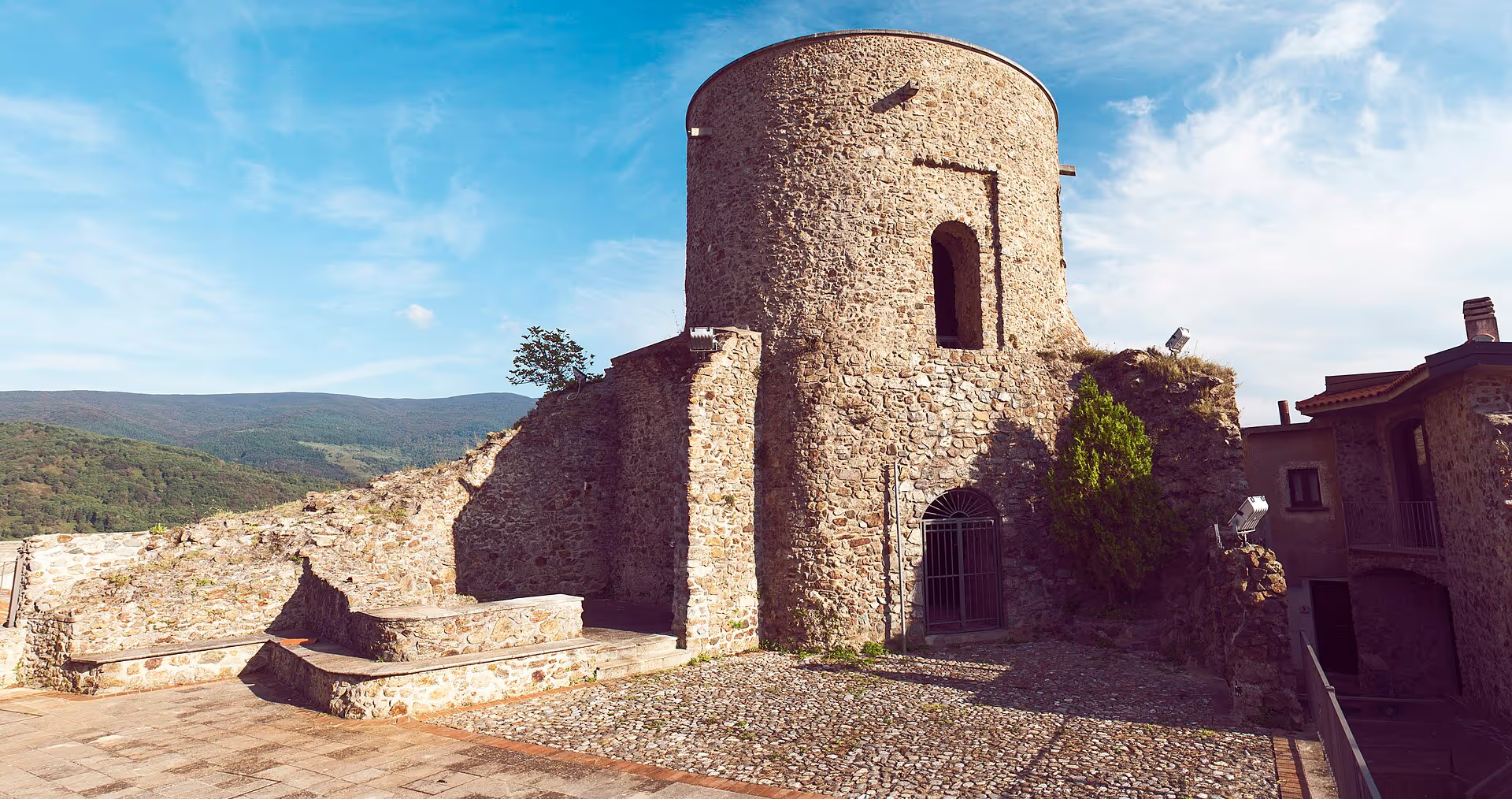 3 daysTowns & history
Towns & history
Three days among old towns, castles and the only Occitan language island in southern Italy.
6 stops5 townsAll year roundSee the stops - 2 daysTowns & history
Weekend in the old towns
Two days among museum, stone village and murals: history and art without a devotional focus.
4 stops3 townsAll year roundSee the stops -
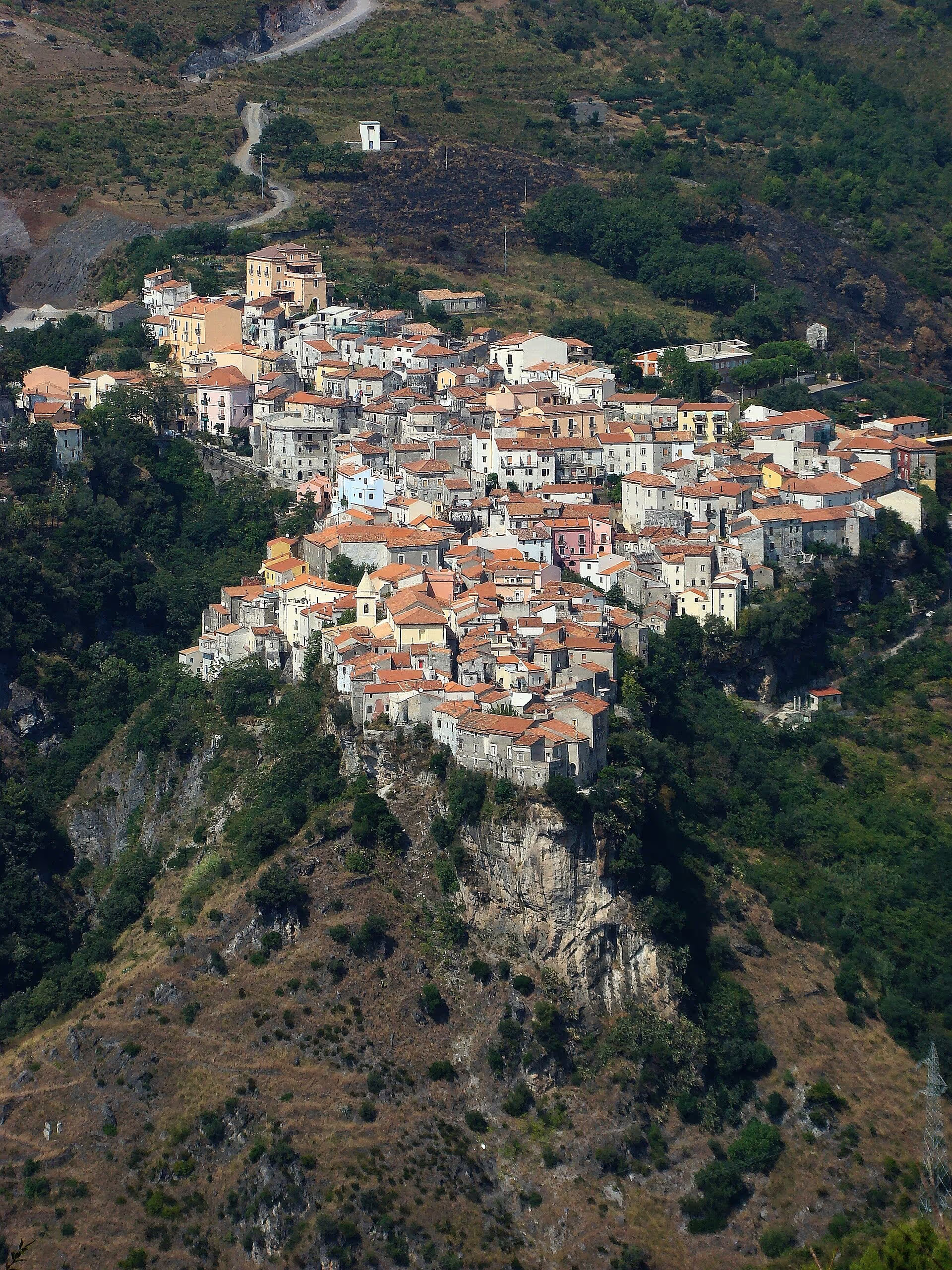 4 daysTowns & history
Four days among old towns
Four days among castles, Norman towns, sacred art and the Occitan language island.
8 stops5 townsAll year roundSee the stops