Upper Tyrrhenian Cosentino · Riviera dei Cedri
Praia a Mare
The beach town of the Upper Tyrrhenian Cosentino coast on the Basilicata border: the island of Dino with its sea caves, the rock sanctuary of the Madonna della Grotta and the towers that once watched over the shore.
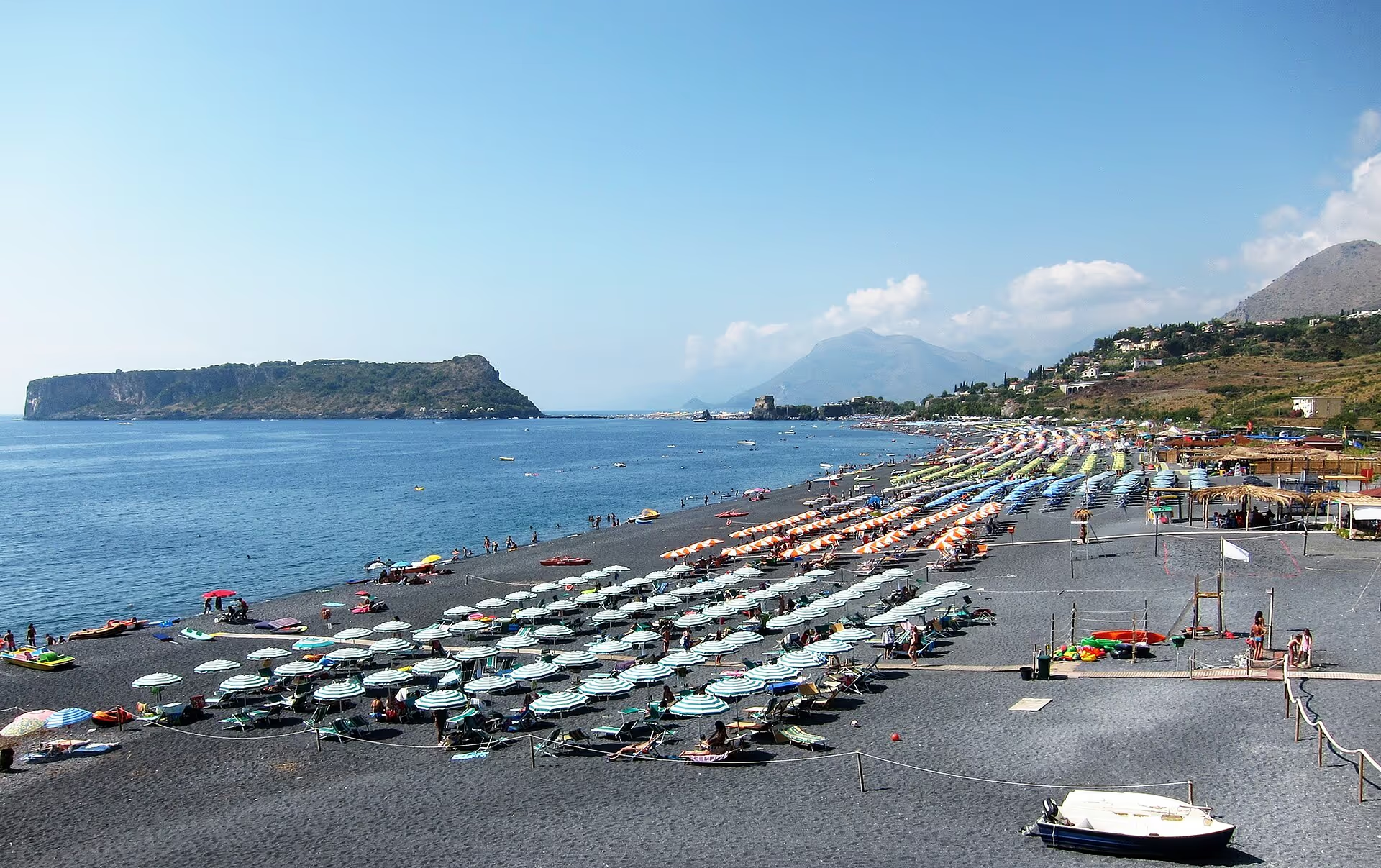
Praia a Mare is a town of about 6,200 inhabitants in the province of Cosenza, the first you meet coming down the Calabrian Tyrrhenian coast from Basilicata. It grew up as the seaside district of Aieta and only became independent in 1928; today it lives on beach tourism and owes its fame to the island of Dino, which closes the bay to the south with its sea caves.
Geography
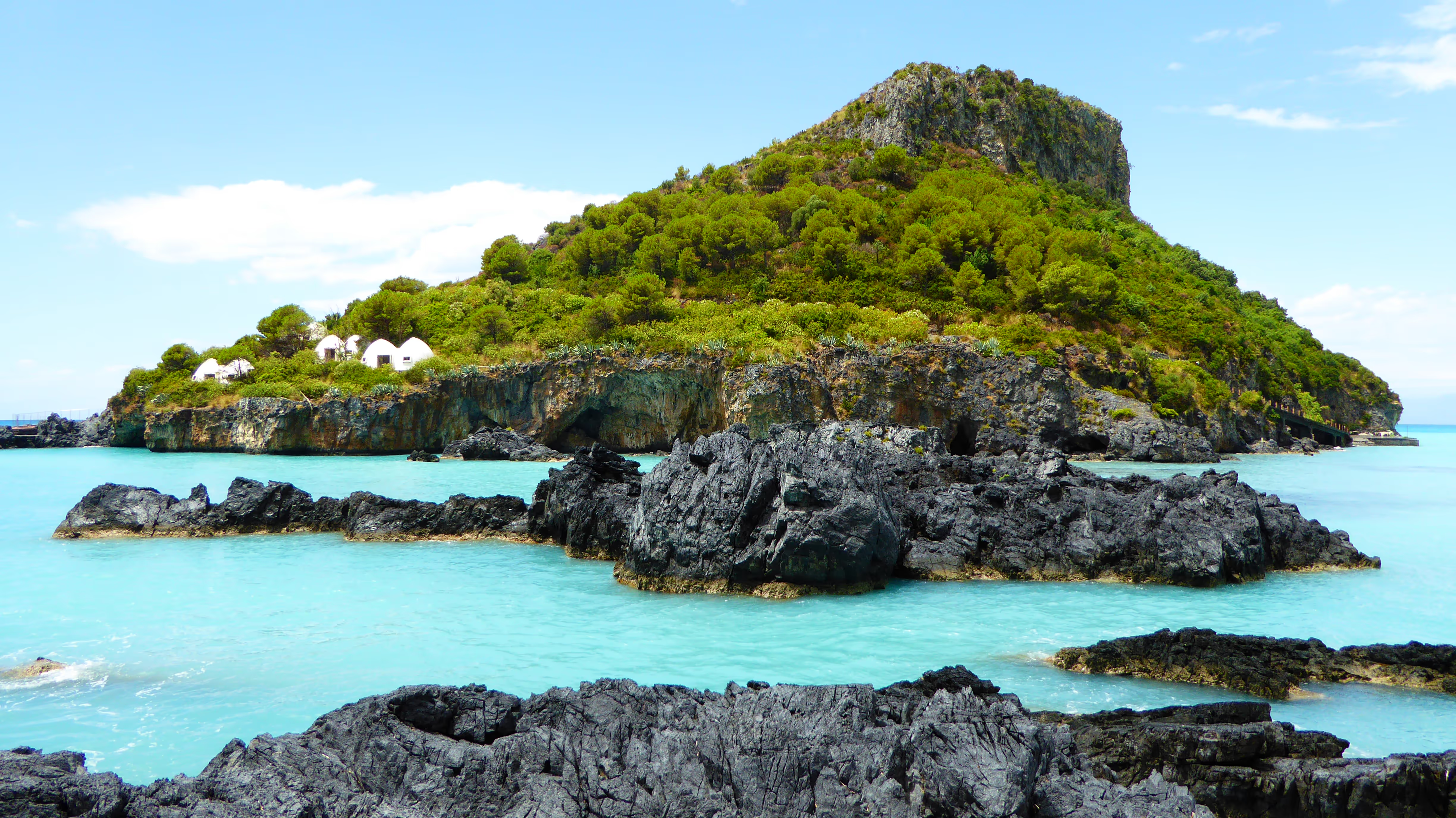
The municipal territory is small but climbs fast: from the beaches at sea level to the 1,158 metres of the Catena Costiera ridge that forms the backdrop to the town. To the north the Noce river marks the border with Basilicata; to the south opens the alluvial plain of the Lao river. The climate is Mediterranean, with hot summers and rain concentrated in winter. Off the Fiuzzi area rises the island of Dino, one of only two islands in Calabria (the other is the island of Cirella, at Diamante).
History
Praia began as a village of fishermen and farmers squeezed between the Noce and the rocky buttress that closes the Lao plain. The name has ancient, debated roots: Plaga Sclavorum, “beach of the Schiavoni”, recalling the trade in goods and people along this coast, or Plaga Slavorum after a Slavic colony; at its root in any case is the Greek plagia, “beach”. For centuries the village was the seaside district of Aieta, the town perched three hours’ walk higher up, and was called Praia d’Aieta.
In 1928 the marina became an independent municipality with its present name and, for a few years, even absorbed the municipalities of Aieta and Tortora, which regained their independence in 1937. Between the 1960s and 1990s the town grew quickly thanks to investment by the Marzotto group and the Agnelli family, who for a time made it one of Calabria’s main textile districts. Today the economy revolves around the sea, with small-scale production of oil, medicinal herbs and myrtle, which grows abundantly on the island of Dino.
What to see
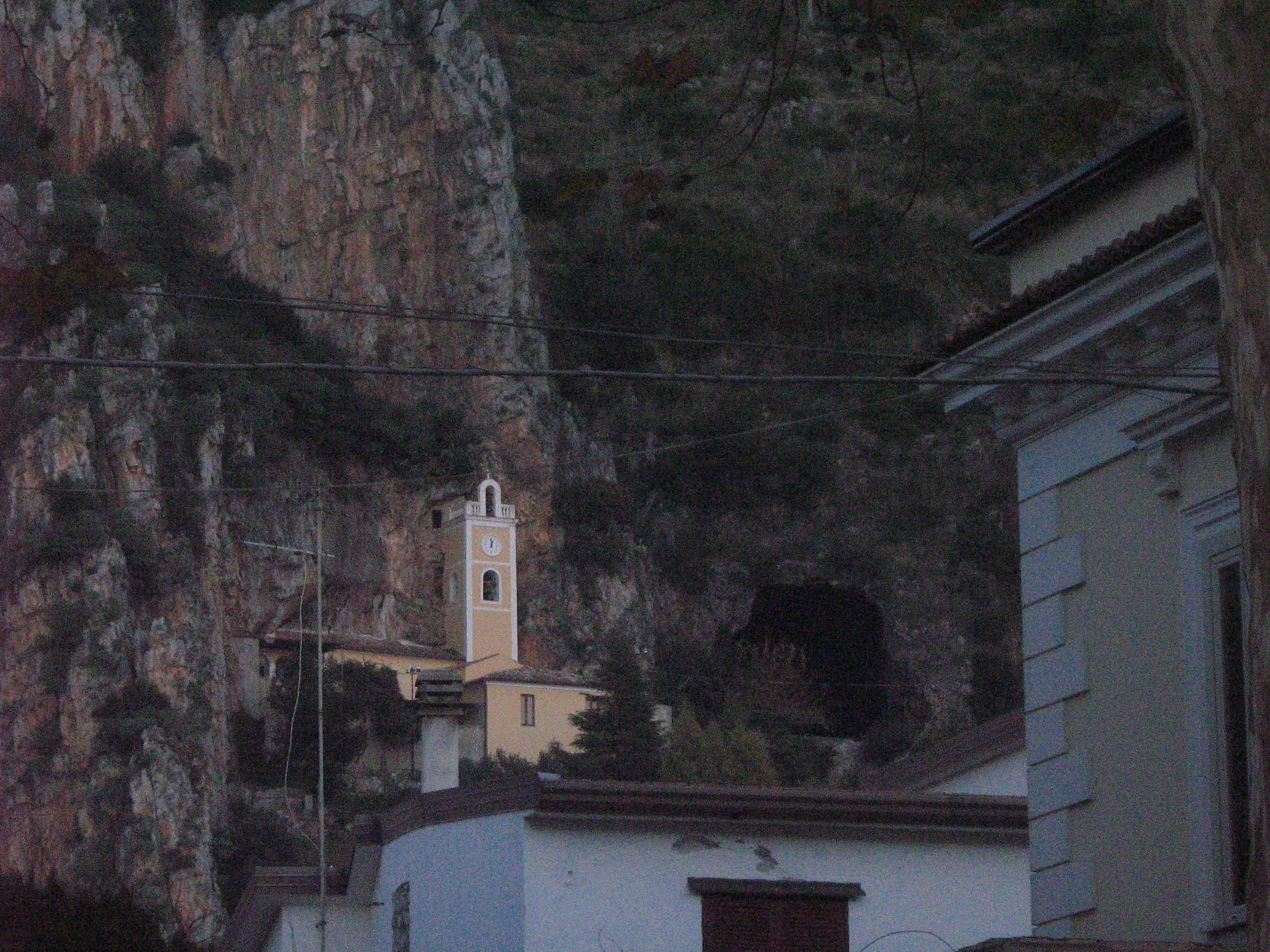
The place dearest to the people of Praia is the Sanctuary of the Madonna della Grotta, carved into a natural cave in the hillside. Tradition, recorded in the 17th century by Girolamo Marafioti, tells that in August 1326 a Turkish ship stopped inexplicably off the island of Dino: the crew blamed a wooden statue of the Virgin and Child kept by the Christian captain, who rather than throw it into the sea left it in the cave on the shore. It was found by a young mute shepherd from Aieta, who ran to the village and regained his speech; carried to Aieta’s mother church, the statue is said to have returned on its own to its cave, where it is still venerated today. Every year in mid-August the statue is carried in procession through the streets and out to sea.
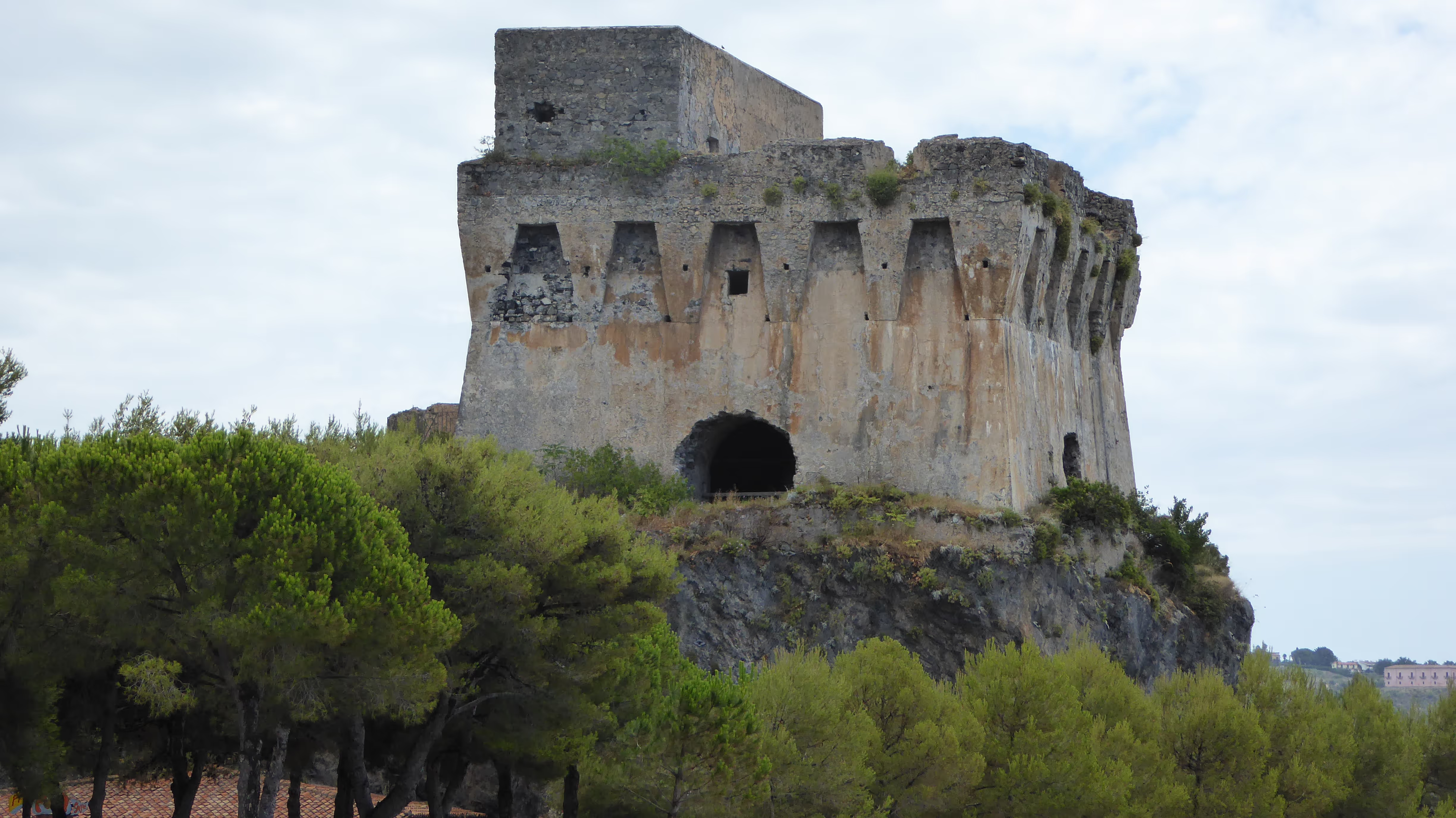
Along the coast the old defences remain: the Rocca di Praia, a 14th-century fortified complex of Norman construction; the Fortino of Fumarulo, built in the 1500s by the lords of Aieta to protect the shore; and the Torre di Fiuzzi, one of the largest towers in the area, raised against Saracen raids on a 15-metre sea stack where an Angevin tower already stood. On the shore you can also spot the concrete pillboxes of the Second World War. The Grotta delle Sardine recalls fishing with the cianciorro, the net once used to catch sardines. In town, the Municipal Museum gathers more than two hundred works of modern and contemporary art donated by Italian and foreign artists.
The island of Dino
A few metres from Fiuzzi beach, the island of Dino is the emblem of Praia a Mare and belongs to the municipality. Its cliffs hide sea caves visited by boat: the Grotta Azzurra, named after the intense colour of the water inside, and the Grotta del Leone, where a rock recalls the outline of a lying lion. Myrtle grows abundantly on the island, and the community has begun to cultivate and process it on the mainland too.
Town life: festivals, beaches and the Giro d’Italia
Praia’s summer has its fixtures: the Praia World Festival, an international world-music showcase in Piazza della Resistenza; the Premio Sonora, devoted to film music; the cultural salon “Praia a Mare con…”, which brings philosophers and writers to Piazza Italia; and since 2017 the Prajacoustic fest, acoustic concerts promoted by the cantiere505 association. The beaches hold the Blue Flag and, since 2010, the paediatricians’ Green Flag for child-friendly shores.
Praia is also cycling country: the Giro d’Italia has finished here twice in recent years, with wins by Diego Ulissi in 2016 and Sam Bennett in 2018, and on both occasions the next stage set off from the town. In football the local club, born from a merger with Tortora, plays at the Mario Tedesco municipal stadium.
Getting there
Praia a Mare is served by Praja-Ajeta-Tortora station on the Salerno–Reggio Calabria Tyrrhenian line. By car you arrive from the A2 “del Mediterraneo” motorway: from the north, exit Lagonegro nord, then SS585 Fondo Valle del Noce and SS18; from the south, exit Falerna and SS18 northbound. The nearest airport is Lamezia Terme.
Places
What to see around here.
-
 Nature
 Island of Dino
The island off Praia a Mare, one of only two islands in Calabria, famous for its sea caves and myrtle.
-
 Culture
 Sanctuary of the Madonna della Grotta
The rock sanctuary of Praia a Mare, in a hillside cave, with the wooden statue of the Madonna that tradition says came from the sea in 1326.
-
 Culture
 Torre di Fiuzzi
The coastal tower on a 15-metre sea stack at Praia a Mare, facing the island of Dino, heir to an Angevin tower.
Nearby towns
Keep exploring the Upper Tyrrhenian Cosentino coast from here.
-
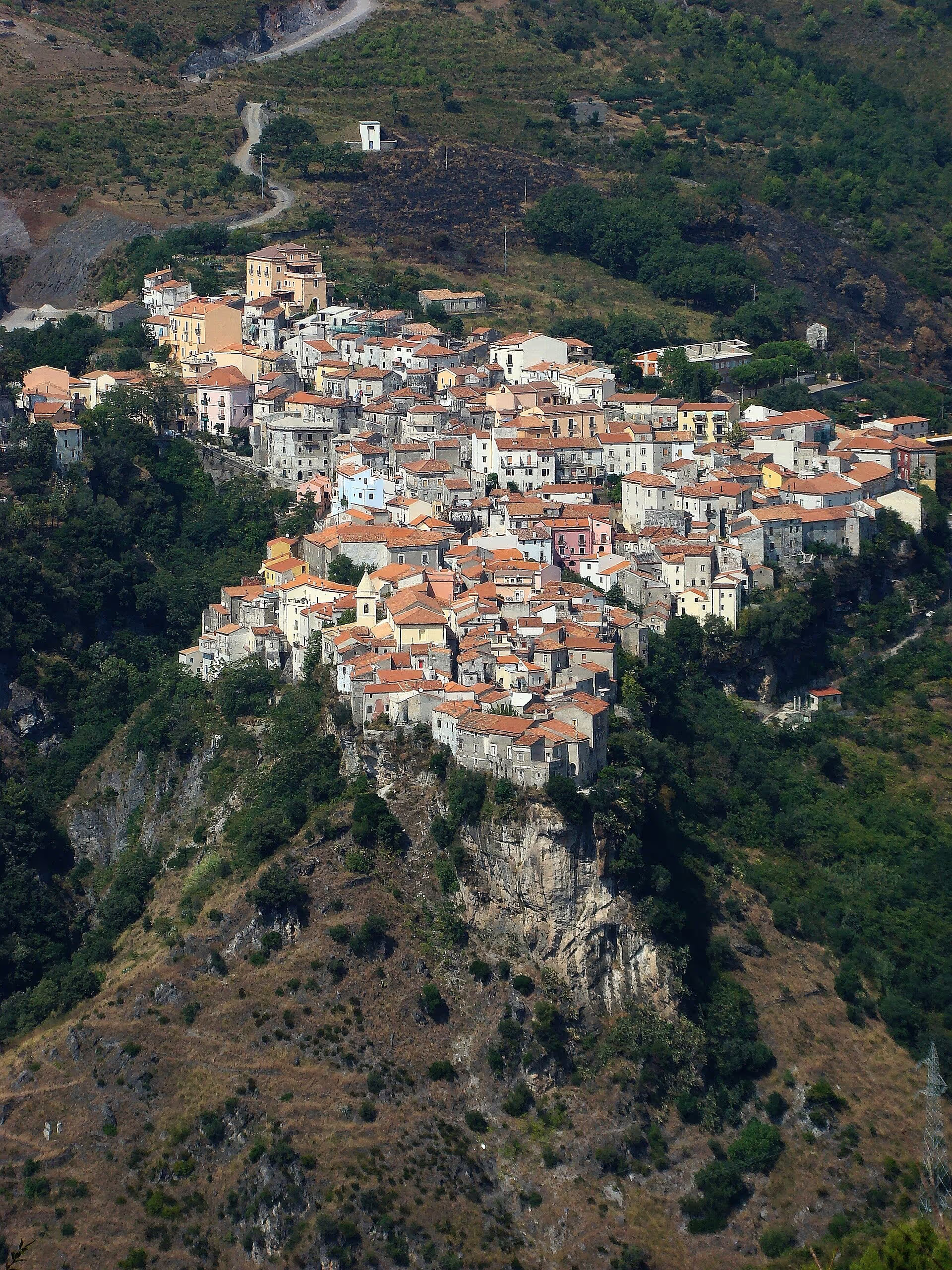
Aieta
The Pollino’s “city of the eagle”: at 524 metres, one of the Borghi più belli d’Italia, Aieta keeps the Renaissance Palazzo Martirano-Spinelli, sixteenth-century churches, the Valle dei Mulini and, on Monte Calimaro, the remains of Aieta Vetere, a few kilometres from the sea at Praia.
-
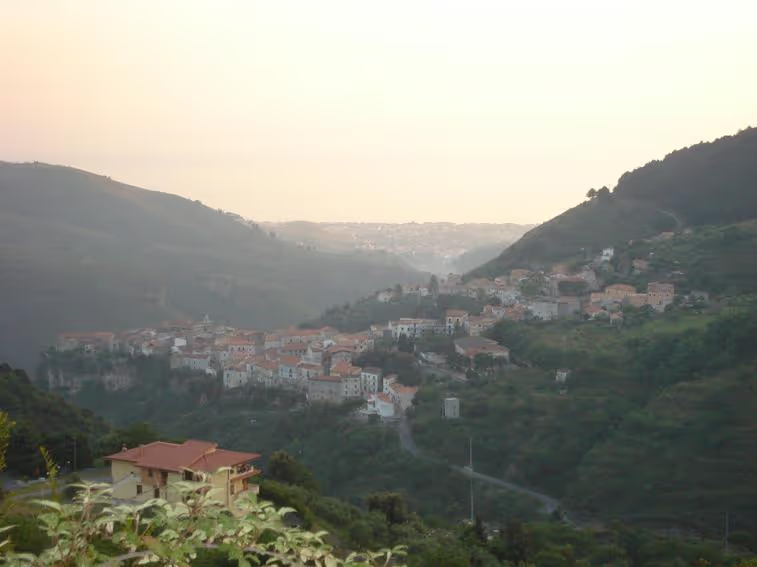
Tortora
The northern gateway of Tyrrhenian Calabria: the village born of refugees from Blanda, the Oenotrian, Lucanian and Roman city on the Palècastro hill, the Palaeolithic site of Rosaneto, the Pollino mountains and the Marina on the Gulf of Policastro.
-
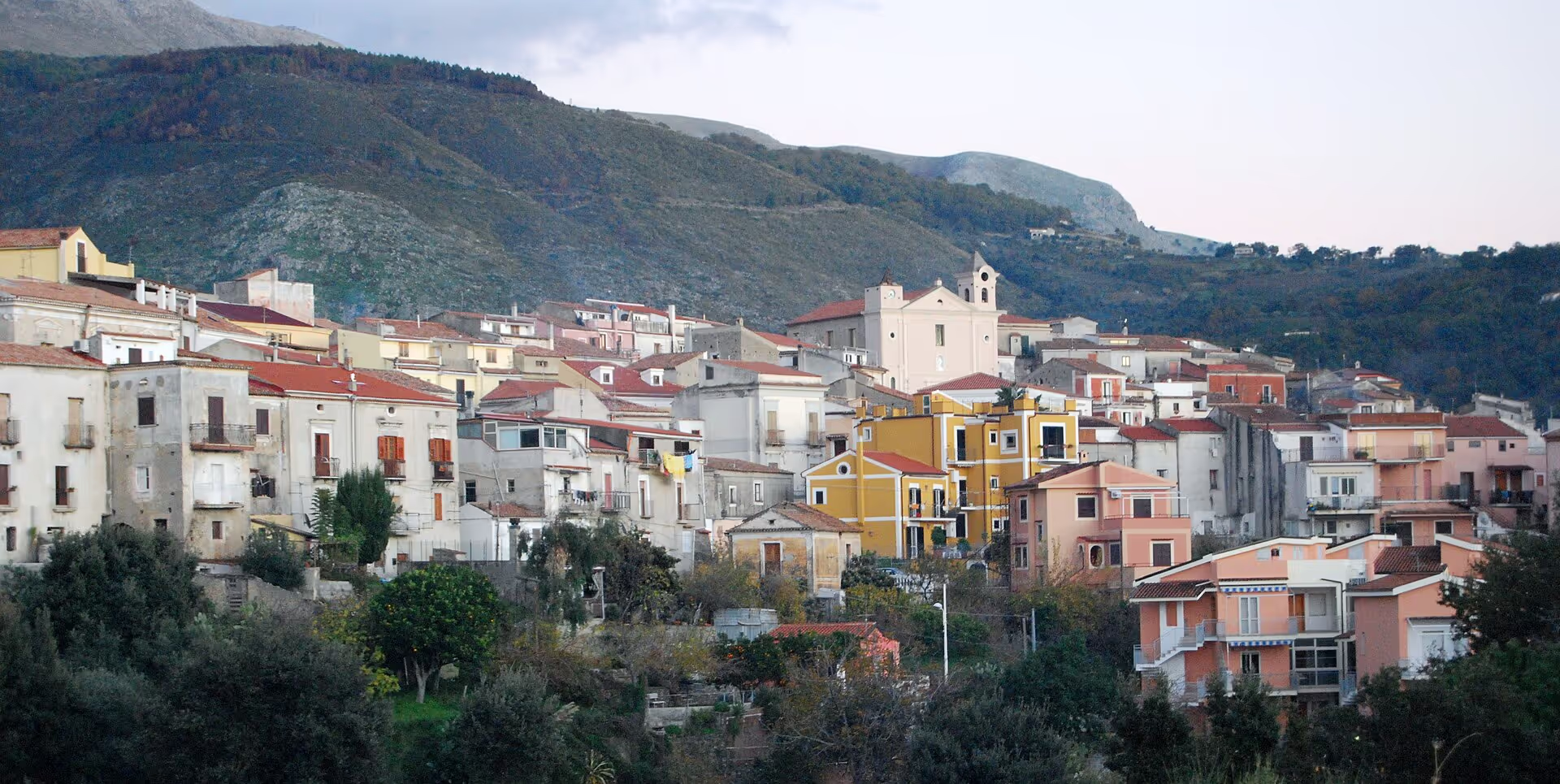
San Nicola Arcella
The cliff-top village of the Riviera dei Cedri: three bays in three kilometres, the rock arch of the Arcomagno, the Crawford Tower and a belvedere that takes in three regions.
-
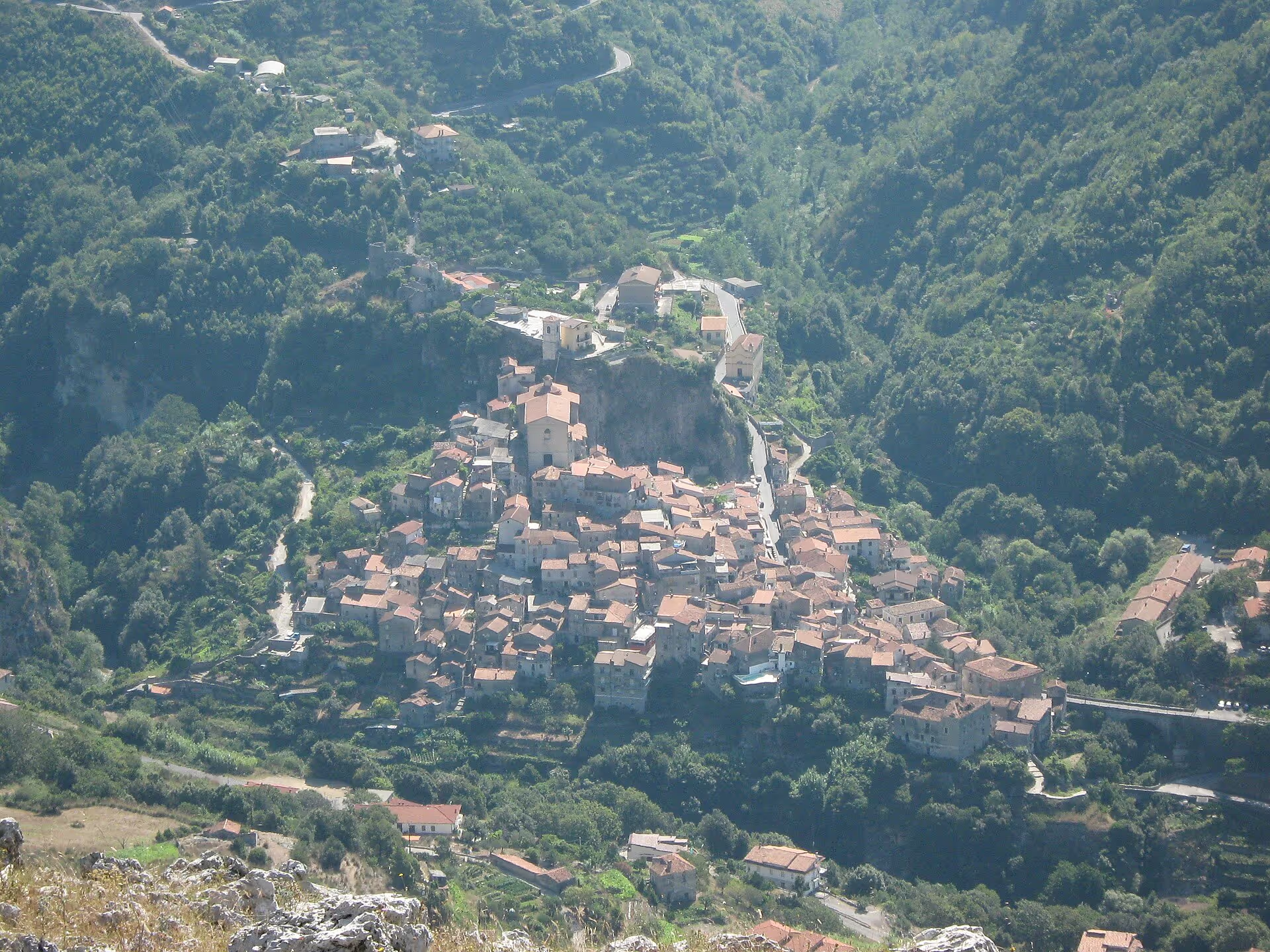
Papasidero
The Pollino village where the Upper Tyrrhenian Cosentino coast meets prehistory: the Grotta del Romito with the great aurochs engraved between 14,000 and 12,000 years ago, fifteen kilometres of the Lao river gorge inside a nature reserve and a medieval village with a Norman-Swabian castle and the gate of the changing of the Guard.
Itineraries through here
-
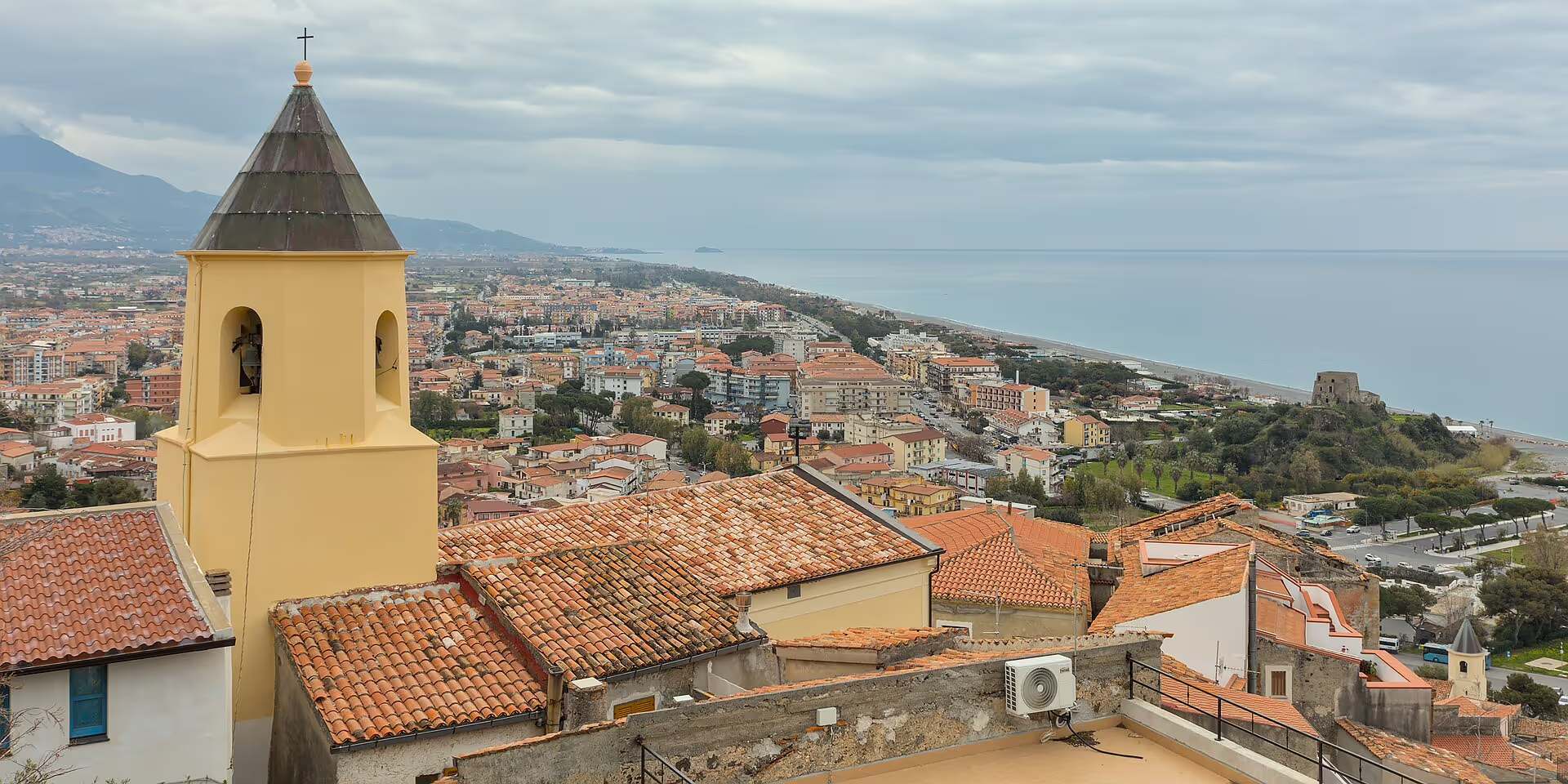 4 daysGrand tour
Grand Tour of the Riviera dei Cedri
Four days from north to south along the Upper Tyrrhenian Cosentino coast: islands, Norman towns, murals and sanctuaries.
11 stops8 townsMay–OctoberSee the stops -
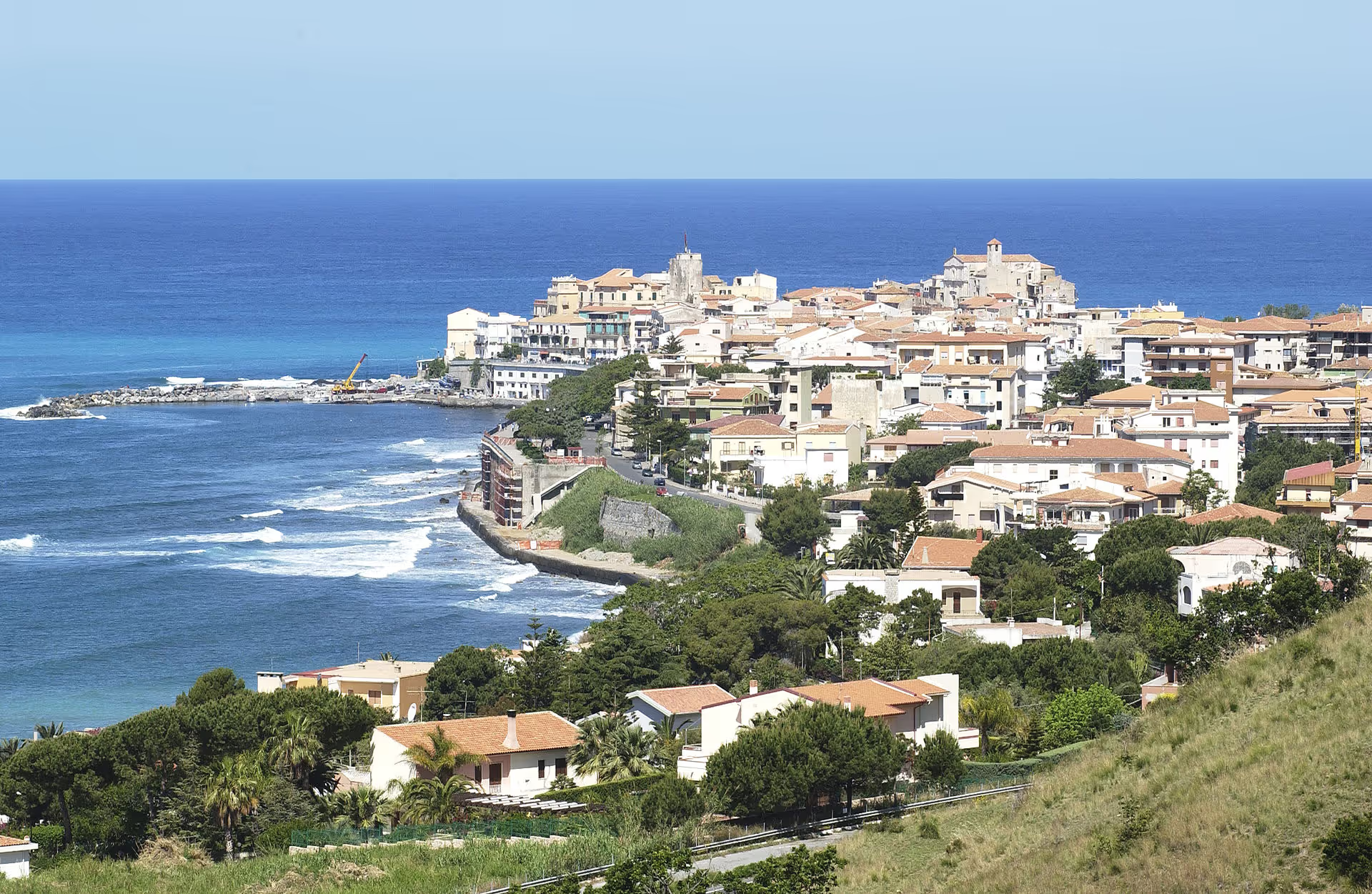 2 daysSea & beaches
Sea & beaches
Two days among rock arches, islands and lidos of the Cosentino Tyrrhenian coast.
4 stops4 townsJune–SeptemberSee the stops -
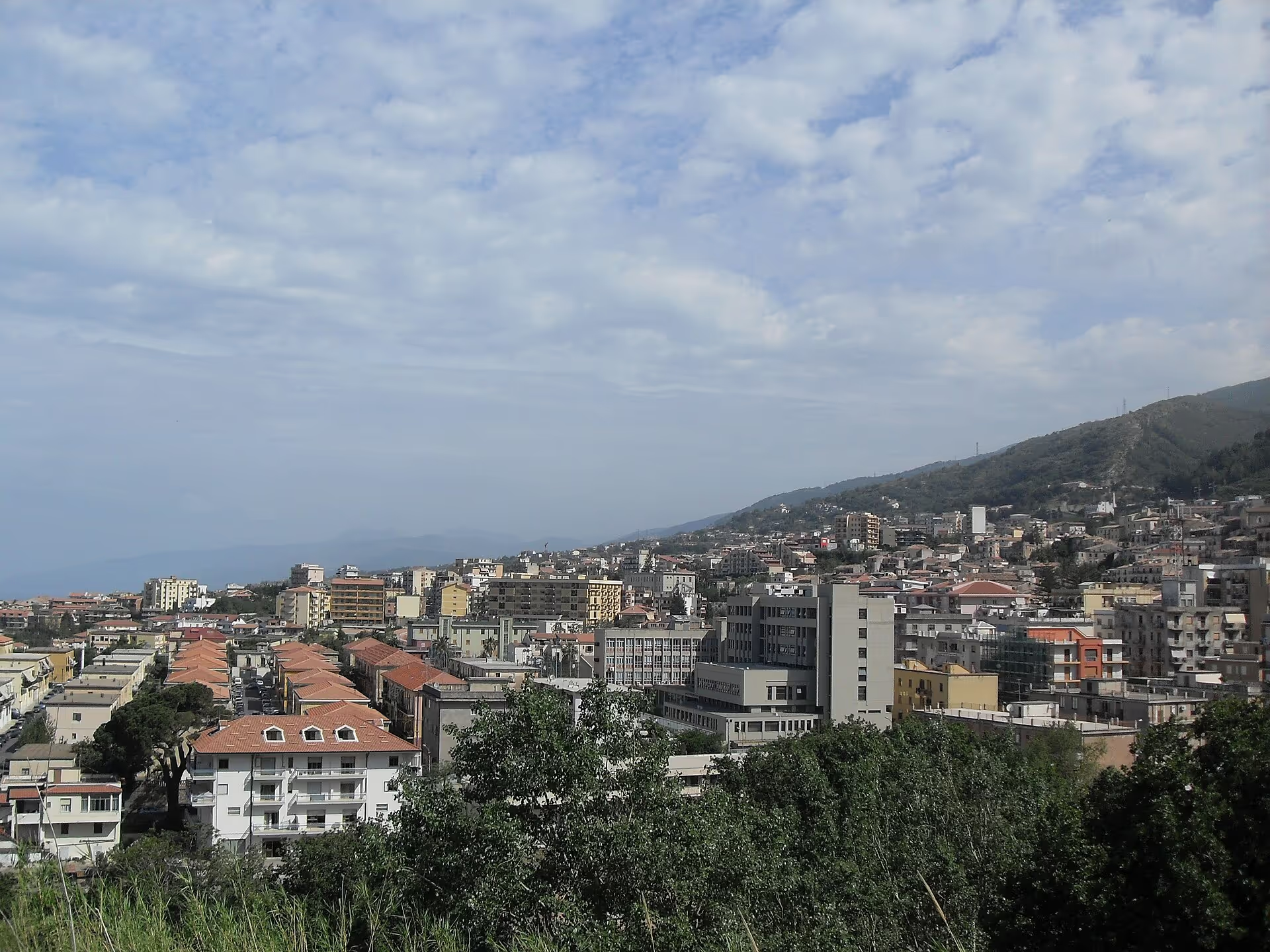 2 daysSacred & culture
In the footsteps of the sacred
Two days among sanctuaries and devotion, from Saint Francis of Paola to the Madonna della Grotta.
3 stops3 townsAll year roundSee the stops - 3 daysSea & beaches
Three days by the sea
Three days along the Tyrrhenian coast: islands, rock arches and beaches from north to south.
6 stops5 townsJune–SeptemberSee the stops - 4 daysSea & beaches
Four days on the Tyrrhenian coast
Four days devoted to the sea, from San Nicola Arcella to Cetraro: arches, islands, beaches and marina.
8 stops6 townsJune–SeptemberSee the stops - 3 daysFamily
Family on the coast
Three easy days for families: beaches, murals and a boat trip to the island of Dino.
6 stops3 townsJune–SeptemberSee the stops
Where to stay
- Al Vecchio PioppoApartment · Praia a Mare
- Borgo di Fiuzzi ResortHotel · Praia a Mare
- Casa Vacanze Castello FortinoGuest house · Praia a Mare
- Hotel Blu EdenHotel · Praia a Mare
- Hotel GardenHotel · Praia a Mare
- Hotel Pian delle VigneHotel · Praia a Mare
- Hotel Residenza del GolfoHotel · Praia a Mare
- Hotel TEA Praia a MareHotel · Praia a Mare
- International Camping VillageCampsite · Praia a Mare
- Isola Dino ApartmentsGuest house · Praia a Mare
- MondialHotel · Praia a Mare
- Villaggio Turistico La MantineraHotel · Praia a Mare
Indicative information from OpenStreetMap. Check availability and reviews on the external platforms.
Where to eat
- Bar Da EnzoCafé · Praia a Mare
- Bar Scalzipenna BuoncoreCafé · Praia a Mare
- Bar SmileCafé · Praia a Mare
- di AnnaIce cream · Praia a Mare
- Esco Poco di SeraRestaurant · Praia a Mare
- La PiedigrottaRestaurant · Praia a Mare
- Moran’sIce cream · Praia a Mare
- Ristorante Pizzeria AnnarèRestaurant · Praia a Mare
- Taverna AnticaRestaurant · Praia a Mare
- The Friends PubRestaurant · Praia a Mare
Indicative information from OpenStreetMap. Check availability and reviews on the external platforms.
Beaches and beach clubs
- CopacabanaBeach club · Praia a Mare
Indicative information from OpenStreetMap. Check availability and reviews on the external platforms.
Do you run a local business?
Update the listing or discover how to give your business more visibility.
Join the guide for freeHow to get to Praia a Mare
- Reference railway station
- Praja-Ajeta-Tortora
- about 2 km as the crow flies from the centre
- Train times (Trenitalia) ↗ Guide: by train
- Nearest airport
- Lamezia Terme International Airport (SUF)
- about 116 km as the crow flies from the centre
- Airport website ↗ Guide: by plane
- By car: A2 “del Mediterraneo” motorway
-
From the north · A2 Lagonegro north SS585 Fondo Valle del Noce → SS18 Tyrrhenian coastal road heading south
From the south · A2 Falerna SS18 Tyrrhenian coastal road heading north along the coast
- Driving directions (Google Maps) ↗ Guide: by car
Straight-line distances computed from verified coordinates: the road route is longer. Check times and connections on the operators’ websites.
Frequently asked questions
- On the Tyrrhenian coast of the province of Cosenza, Calabria: it is the first town of the Riviera dei Cedri coming down from Basilicata, with the Noce river marking the border to the north.
- An island off the Fiuzzi area, in the territory of Praia a Mare, one of only two islands in Calabria: it is known for sea caves such as the Grotta Azzurra and the Grotta del Leone, and for the myrtle that grows there.
- A sanctuary carved into a natural cave in the hill of Praia, where a wooden statue of the Virgin and Child is venerated; tradition dates its arrival to August 1326, left on the shore by the captain of a Turkish ship.
- The Sanctuary of the Madonna della Grotta, the Torre di Fiuzzi with its view of the island of Dino, a boat trip to the island’s caves, the Rocca and the Fortino, and the municipal museum of contemporary art.
- Its beaches have held the paediatricians’ Green Flag since 2010, the award for child-friendly shores, as well as the Blue Flag.
- Every year in mid-August, with the procession of the statue through the streets and out to sea, the fair and the bonfires on the beach on the evening of the 15th.
- No: for centuries it was the seaside district of Aieta (Praia d’Aieta) and became an independent municipality in 1928.
- The reference station is Praja-Ajeta-Tortora, on the Tyrrhenian railway line, about 2 km as the crow flies from the centre of Praia a Mare. Times and connections on the Trenitalia website.
- The nearest airport is Lamezia Terme International Airport (SUF), about 116 km as the crow flies; from there you continue by train from Lamezia Terme Centrale along the Tyrrhenian line, or by car on the A2 motorway.
Where is Praia a Mare?
What is the island of Dino?
What is the Sanctuary of the Madonna della Grotta?
What can you see in Praia a Mare in one day?
Is Praia a Mare suitable for children?
When is the feast of the Madonna della Grotta?
Has Praia a Mare always been a municipality?
Which is the nearest railway station to Praia a Mare?
Which is the nearest airport to Praia a Mare?
Discover locally
Live, up-to-date results with real reviews, on external platforms. We don’t hand-pick individual businesses we can’t verify.
Videos
Events
- Festa della Madonna della Grotta 14–16 agosto
Processioni a terra e a mare con la statua della Madonna.
Yearly