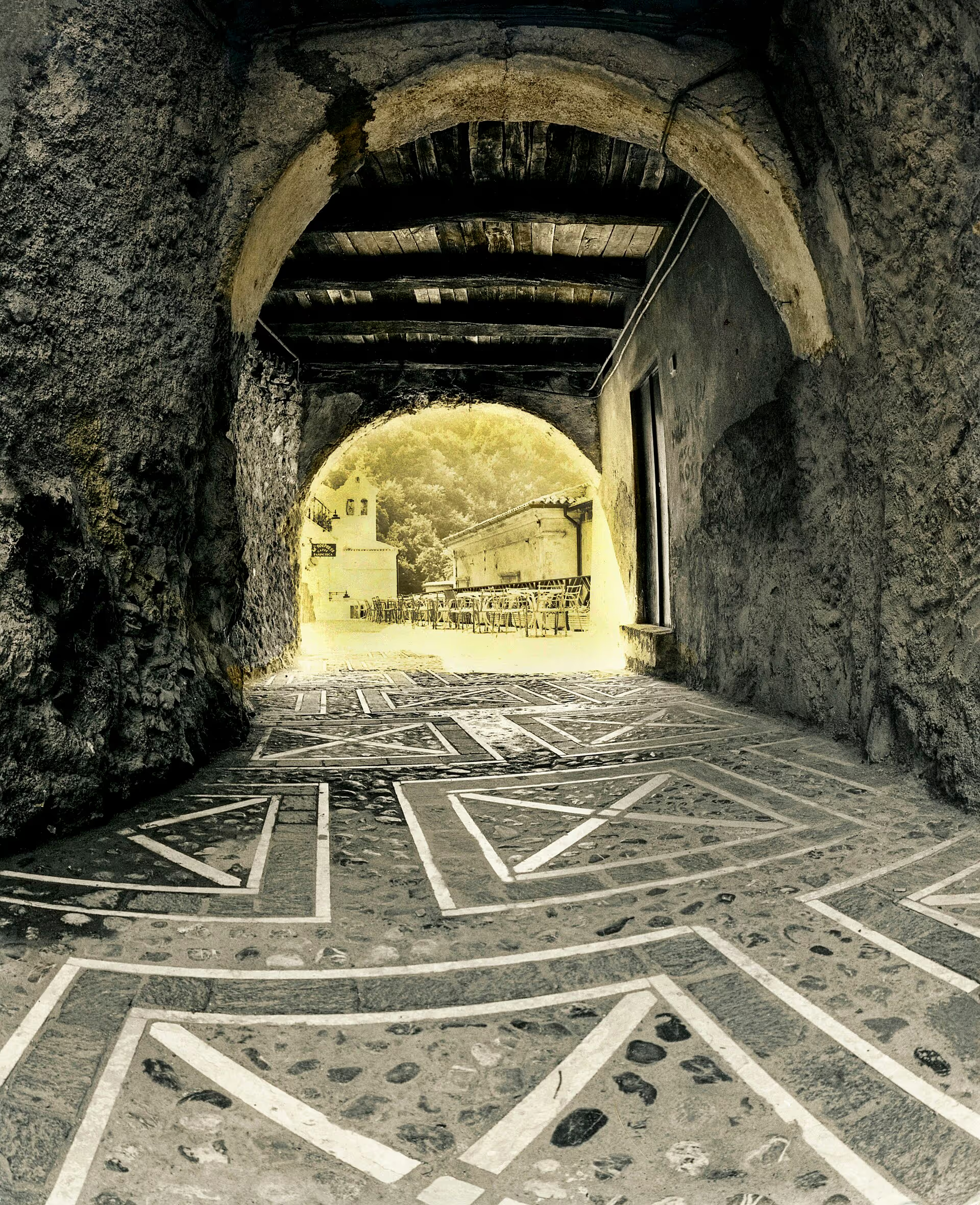
Upper Tyrrhenian Cosentino · Riviera dei Cedri
Buonvicino
The village born of three hamlets on the route between the Tyrrhenian and the interior: at 400 metres above the Corvino stream, in the Pollino park, Buonvicino keeps the Stretto gorge with the Sasso dei Greci, the cave of Abbot Ciriaco, a disciple of Saint Nilus, and his great bronze statue watching over the village.
Buonvicino (Vommicìnu in Calabrian, Βομβακίω in Byzantine Greek) is a town of about 1,960 inhabitants in the province of Cosenza, in the hinterland of the Upper Tyrrhenian Cosentino coast, a short distance from the sea. The village sits on a hill at 400 metres, on the left of the Corvino stream, and is part of the Pollino National Park, in the area of the Orsomarso Mountains. On a rocky spur above the houses rises the great bronze figure of San Ciriaco Abate, the patron saint, 7 metres high: the sign of a town bound to the memory of a Greek monk of the year 1000.
Geography
The territory borders Belvedere Marittimo, Diamante, Grisolia, Maierà, Mottafollone, San Sosti and Sant’Agata di Esaro and climbs from the Corvino valley towards the heights of the Orsomarso Mountains. Going up the isthmus route that leads from the Corvino valley to the Varco del Palombaro, you pass through a gorge barely 5 metres wide, the Stretto, enclosed between two towering cliffs: to the right of the Corvino lies the Sasso dei Greci, a small plateau in the Salvato area, to the left a small valley between three knolls called Tripidone. The town is overlooked by the rocky spur of the Zaccaniello, where the patron’s statue stands.
History
The name is said to come from the Byzantine-Calabrian surname Bombaci or from the dialect word bombaci, meaning “snail”. Local history has Buonvicino born of the union of three hamlets set along the isthmus route, in naturally defended positions from which traffic could be watched without risk. Salvato was perched on the Sasso dei Greci, on the right-hand cliff of the Stretto: excavations in 1978 and on 20 February 1997 yielded fragments of tiles and plates and animal bones. On the opposite cliff was Tripidone, where a hand-forged iron dagger was found among some walls; the two villages lived from herding and woodland work. Farther off, towards Belvedere, the hamlet of Trigiano owned the farmland of today’s Buonvicino and lived from agriculture. According to tradition, the refuges on the cliffs took in people from the coast fleeing wars, invasions and Saracen raids. The union of the three hamlets, at the end of the 13th century, gave rise to Buonvicino. The town is bound to the figure of Ciriaco da Buonvicino, a Greek monk and disciple of Saint Nilus of Rossano by the age of twenty, who wrote in Greek a biblical Lectionary dated 2 June 991, now in the Vatican Library, followed his master to Serperi, Rome and Grottaferrata and later returned to Calabria; he died on 19 September, according to tradition in 1030, and was buried in the monastery of Santa Maria dei Padri, later called San Ciriaco.
What to see
Above the old town, on the Zaccaniello spur, rises the bronze statue of San Ciriaco Abate, 7 metres high, the work of the artist Michele Zappino. At the foot of that rock opens Piazza Vittoria, where on 17 September 2006, the saint’s feast day, a large boulder broke away from the top and fell without injuring anyone or damaging any cars: an episode the community attributes to its patron. Along the Corvino stream, at the foot of Monte Romano, lies the cave of Venicelle, where Ciriaco alternated the hermit’s life with that of the monastery. Going up the valley you reach the Stretto gorge, the Sasso dei Greci and Tripidone, the sites of the hamlets from which the town was born.
San Ciriaco Abate
Ciriaco was a hieromonk, that is a priest-monk, and an exorcist, and tradition remembers him for his learning, miracles and healings. He alternated the communal life of the monastery with retreat in the cave of Venicelle. He was buried in the church of the monastery of Santa Maria dei Padri, later named after San Ciriaco, in the Mercurito area, at Scala. His feast falls in September: every year on 17 September people climb in pilgrimage to the cave, and 19 September, the day of his death, is Buonvicino’s patron saint’s feast. The inhabitants are called buonvicinesi.
Getting there
Buonvicino borders Diamante, on the coast, where Diamante-Buonvicino station lies on the Tyrrhenian line; from the shore you go up the Corvino valley to the village. By car from the A2 “del Mediterraneo” motorway you reach the coast from the north via the Lagonegro nord exit and the SS585 Fondo Valle del Noce, then the SS18 southwards; from the south via the Falerna exit and the SS18 northwards. The region’s nearest airport is Lamezia Terme.
Places
What to see around here.
- Culture
Cave of San Ciriaco
The cave of Venicelle at the foot of Monte Romano, on the Corvino, where Abbot Ciriaco, a disciple of Saint Nilus, withdrew to pray: destination of the 17 September pilgrimage.
- Nature
The Stretto and the Sasso dei Greci
The 5-metre-wide gorge on the route between the Corvino valley and the Varco del Palombaro, with the vanished hamlets of Salvato, on the Sasso dei Greci, and Tripidone, from which Buonvicino was born.
Nearby towns
Keep exploring the Upper Tyrrhenian Cosentino coast from here.
-
Grisolia
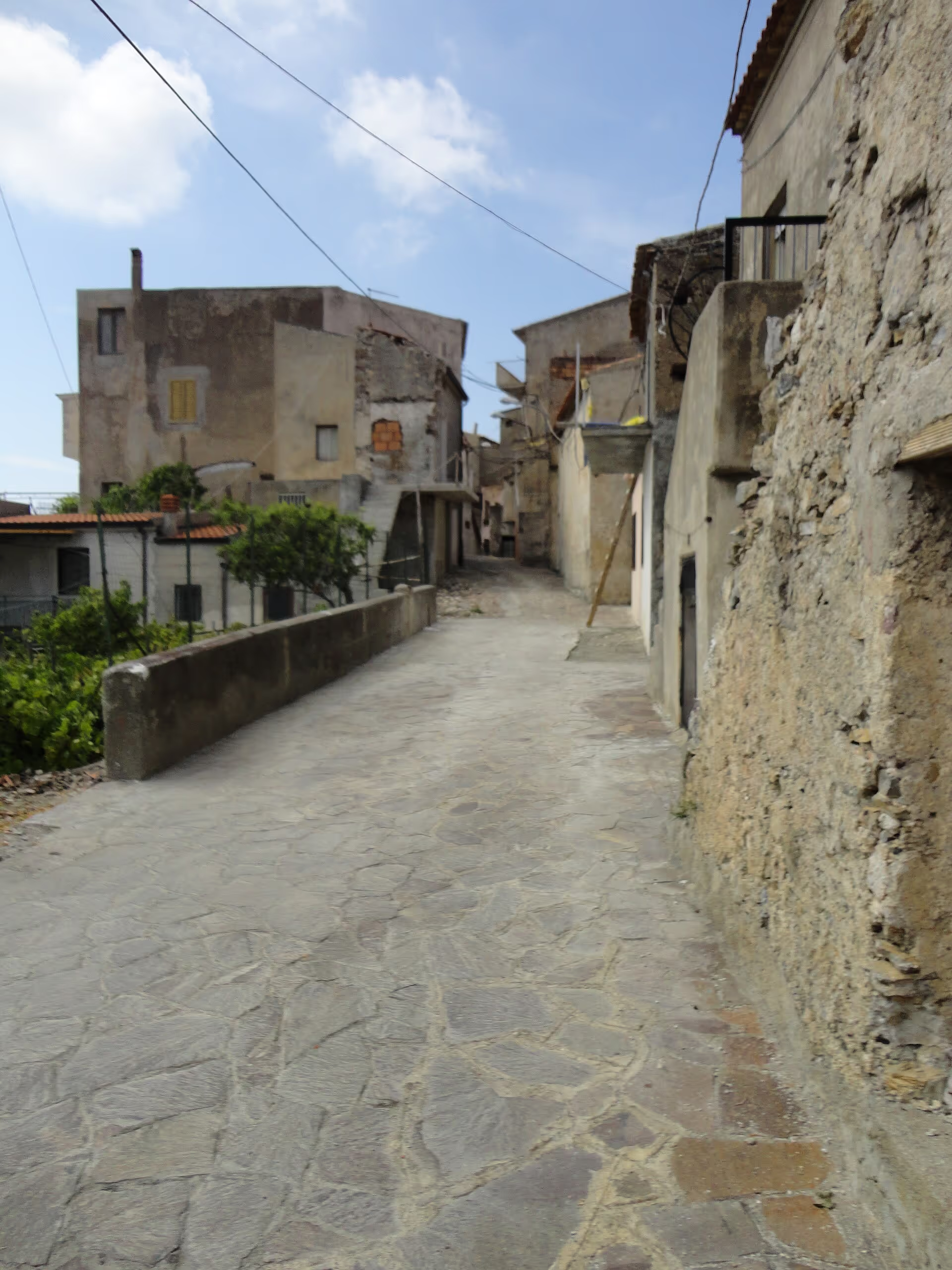
The village at 465 metres that looks out over the whole Riviera dei Cedri: from the sea at Acchio to the slopes of Monte La Mula, Grisolia combines covered stone alleys, the Palazzo Ducale, the ethnographic museum and the San Rocco procession with the caggie carried on the head.
-
Maierà
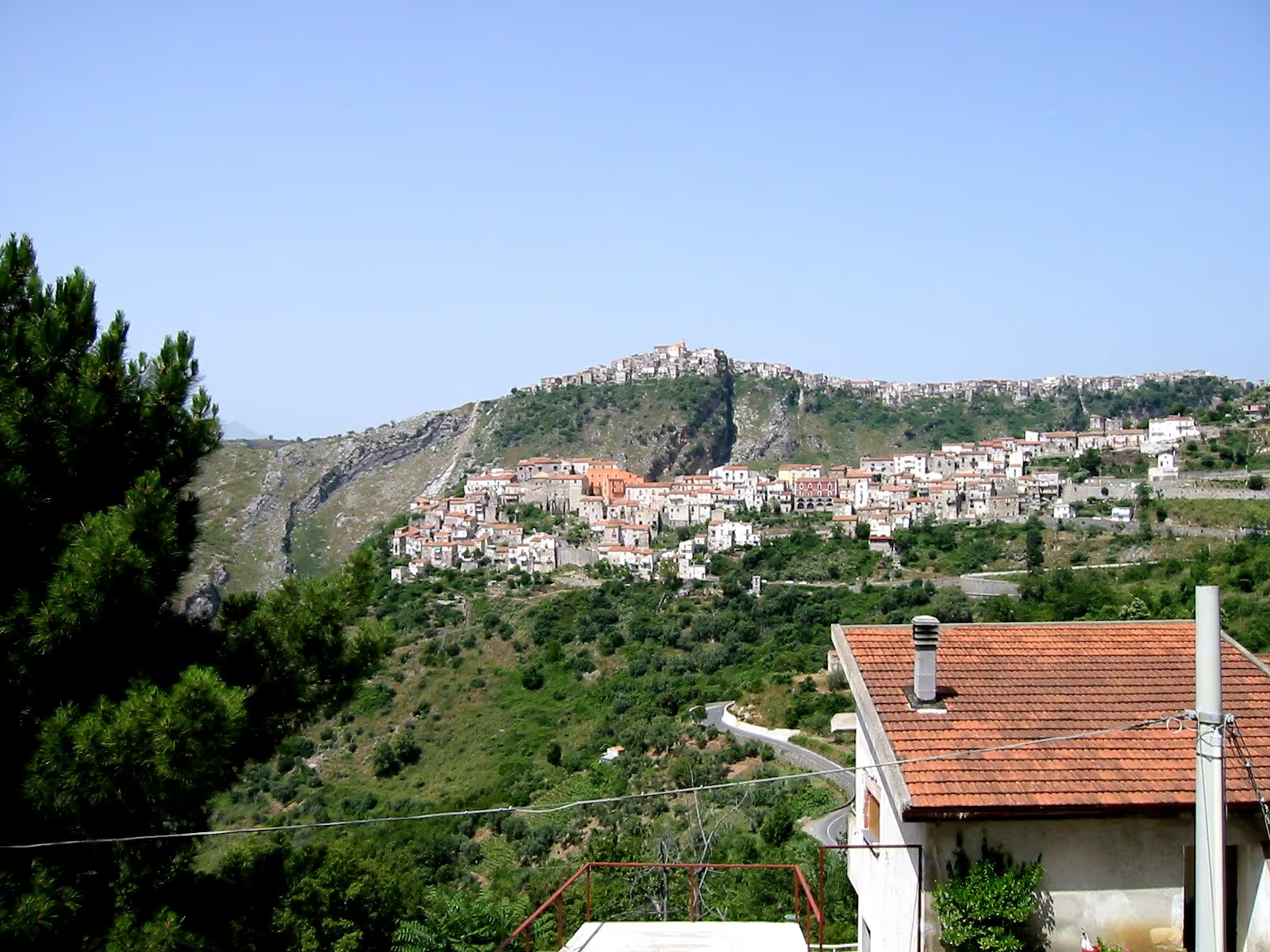
The village at 360 metres above the Vaccuta stream valley, separated from Grisolia by a ravine: in the Pollino park, behind Diamante, Maierà combines contemporary artworks in its lanes, the Chilli Pepper Museum and its four churches.
-
Diamante
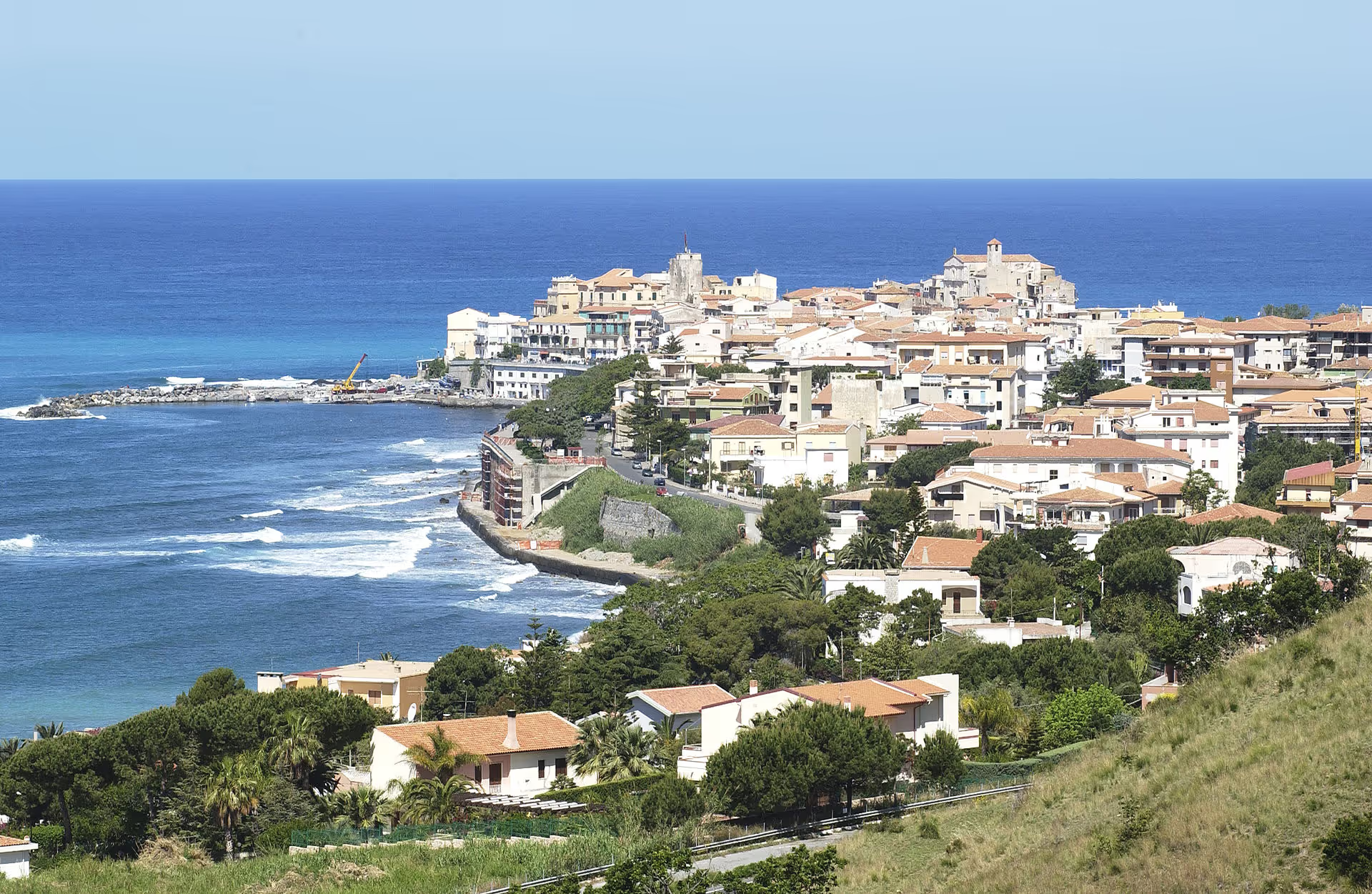
The “town of murals” and chilli-pepper capital at the heart of the Riviera dei Cedri: eight kilometres of beaches, the island of Cirella and a fishing village turned open-air art gallery.
-
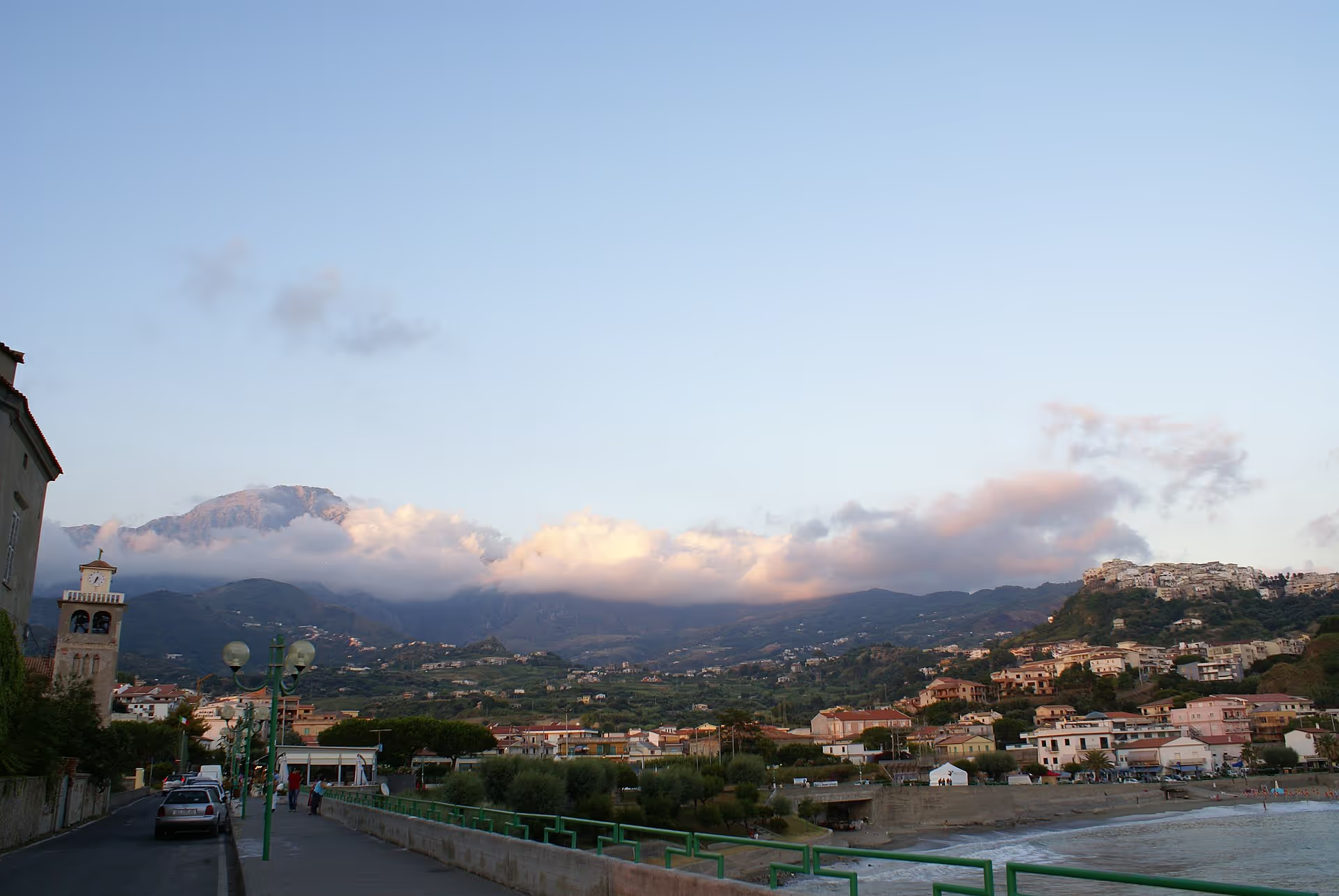
Belvedere Marittimo
A medieval village 150 metres above the Tyrrhenian with the Sanseverino Renaissance castle, a wooden crucifix of 1711 and a chapel dated 1091; at its feet the Marina, the Bruttian tombs of Capo Tirone and the Note di Fuoco fireworks festival.
-
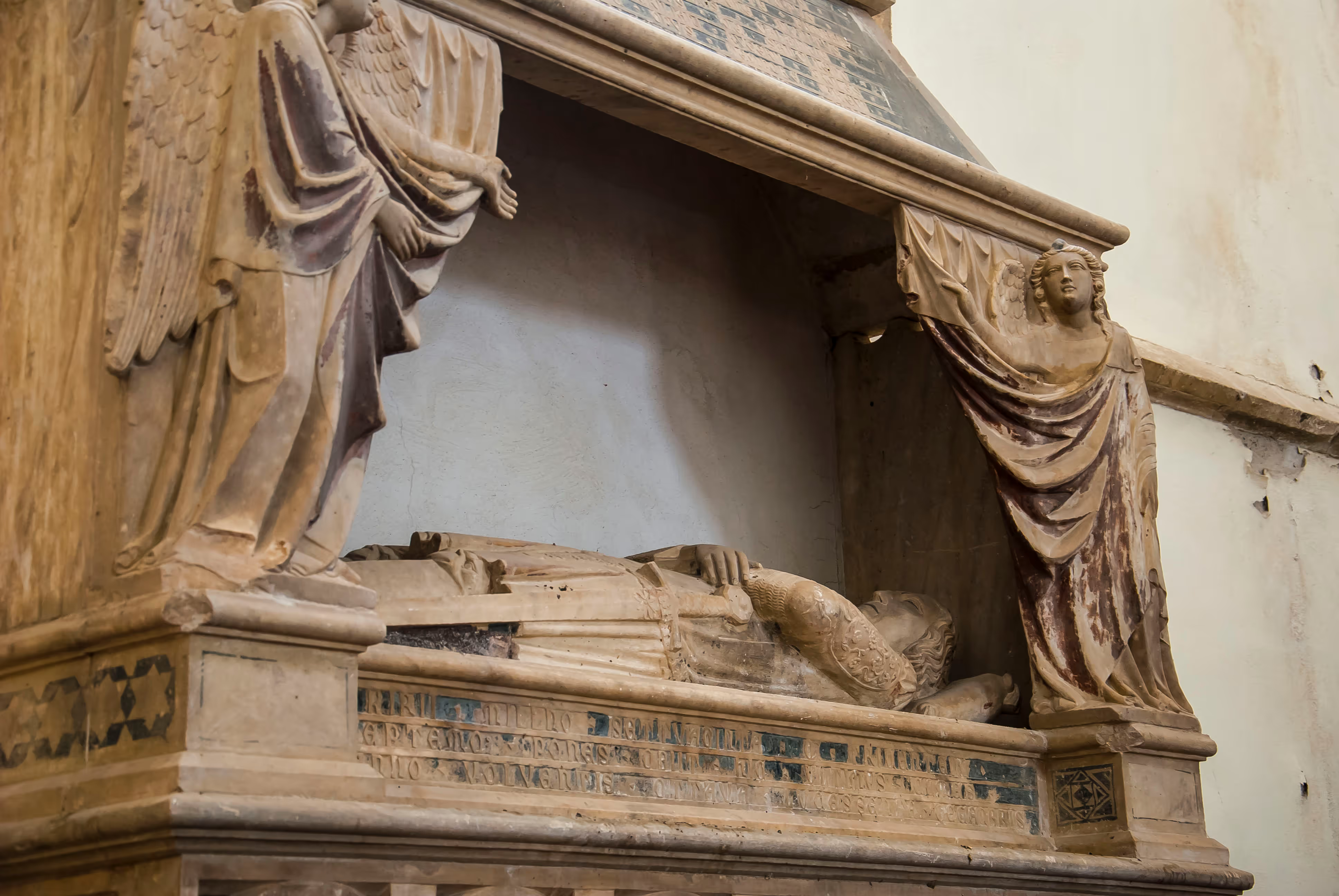
Sangineto
The village where the Riviera dei Cedri ends: a hilltop old centre with the castle of the Sanseverino of Bisignano and the peace olive tree of 1918, the 13th-century church of Santa Maria della Neve and, by the sea along the SS18, Sangineto Lido. One of the great feudal families of Angevin Calabria took its name from here.
Where to stay
- Albergo diffuso Borgo dei GreciGuest house · Buonvicino
- Antica locanda San CiriacoGuest house · Buonvicino
Indicative information from OpenStreetMap. Check availability and reviews on the external platforms.
Where to eat
- Bar AgoràCafé · Buonvicino
- Bar TrattoriaCafé · Buonvicino
- Don IppolitoRestaurant · Buonvicino
- Vecchio FrantoioRestaurant · Buonvicino
Indicative information from OpenStreetMap. Check availability and reviews on the external platforms.
Do you run a local business?
Update the listing or discover how to give your business more visibility.
Join the guide for freeHow to get to Buonvicino
- Nearest active station
- Diamante-Buonvicino
- about 5 km as the crow flies from the centre
- Train times (Trenitalia) ↗ Guide: by train
- Nearest airport
- Lamezia Terme International Airport (SUF)
- about 92 km as the crow flies from the centre
- Airport website ↗ Guide: by plane
- By car: A2 “del Mediterraneo” motorway
- Inland town: the relevant A2 exits are described in the “By car” guide; use the directions link for the current route.
- Driving directions (Google Maps) ↗ Guide: by car
Straight-line distances computed from verified coordinates: the road route is longer. Check times and connections on the operators’ websites.
Frequently asked questions
- A Greek monk, a disciple of Saint Nilus of Rossano, author of a biblical Lectionary of 991 kept in the Vatican Library; he is Buonvicino’s patron saint and died on 19 September, according to tradition in 1030.
- Seven metres: it is a bronze figure by the artist Michele Zappino, on the rocky spur of the Zaccaniello above the old town.
- From the union, at the end of the 13th century, of three hamlets: Salvato on the Sasso dei Greci, Tripidone on the opposite cliff of the Stretto and Trigiano towards Belvedere.
- A gorge barely 5 metres wide between two towering cliffs, on the route from the Corvino valley to the Varco del Palombaro; the hamlets of Salvato and Tripidone stood on the cliffs.
- On 17 September with the pilgrimage to the cave of Venicelle and on 19 September, Buonvicino’s patron saint’s feast.
- Diamante-Buonvicino, on the Tyrrhenian line, in the neighbouring town of Diamante.
- Buonvicino has no station of its own: the nearest active station as the crow flies is Diamante-Buonvicino, on the Tyrrhenian railway line, about 5 km from the centre. From there you continue by road; times and connections on the Trenitalia website.
- The nearest airport is Lamezia Terme International Airport (SUF), about 92 km as the crow flies; from there you continue by train from Lamezia Terme Centrale along the Tyrrhenian line, or by car on the A2 motorway.
Who was San Ciriaco of Buonvicino?
How tall is the statue of San Ciriaco in Buonvicino?
How was Buonvicino born?
What is the Stretto of Buonvicino?
When is San Ciriaco celebrated?
Which is Buonvicino’s station?
Which is the nearest railway station to Buonvicino?
Which is the nearest airport to Buonvicino?
Discover locally
Live, up-to-date results with real reviews, on external platforms. We don’t hand-pick individual businesses we can’t verify.