Upper Tyrrhenian Cosentino · Riviera dei Cedri
Diamante
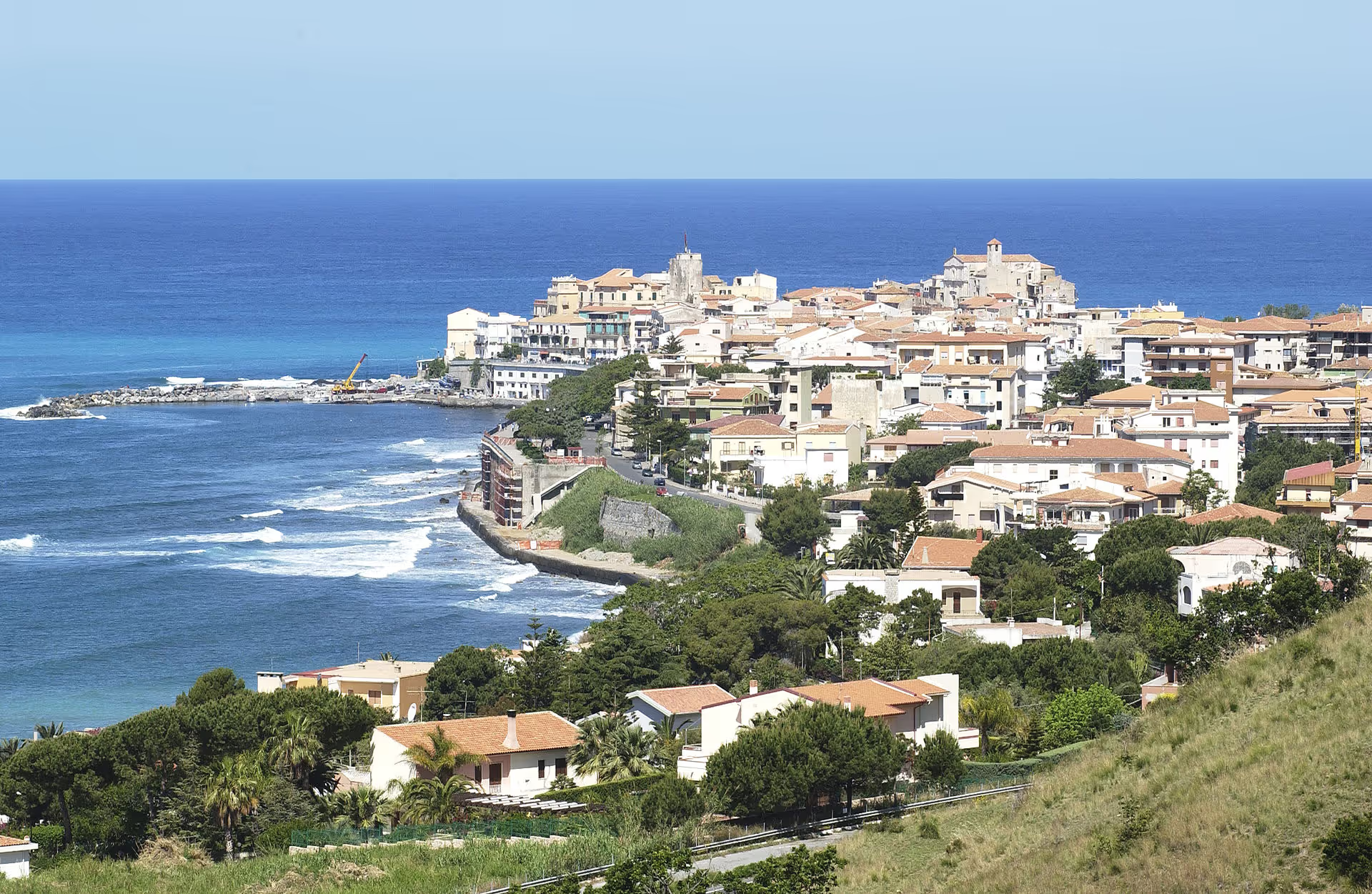
The “town of murals” and chilli-pepper capital at the heart of the Riviera dei Cedri: eight kilometres of beaches, the island of Cirella and a fishing village turned open-air art gallery.
Diamante is a town of about 4,900 inhabitants in the province of Cosenza, at the heart of the Upper Tyrrhenian Cosentino coast. It sits on the central stretch of the Riviera dei Cedri and packs into a few kilometres a painted fishing village, some 8 km of shoreline and, offshore, one of only two islands in Calabria. Since 2021 its coast has held the Blue Flag.
Geography
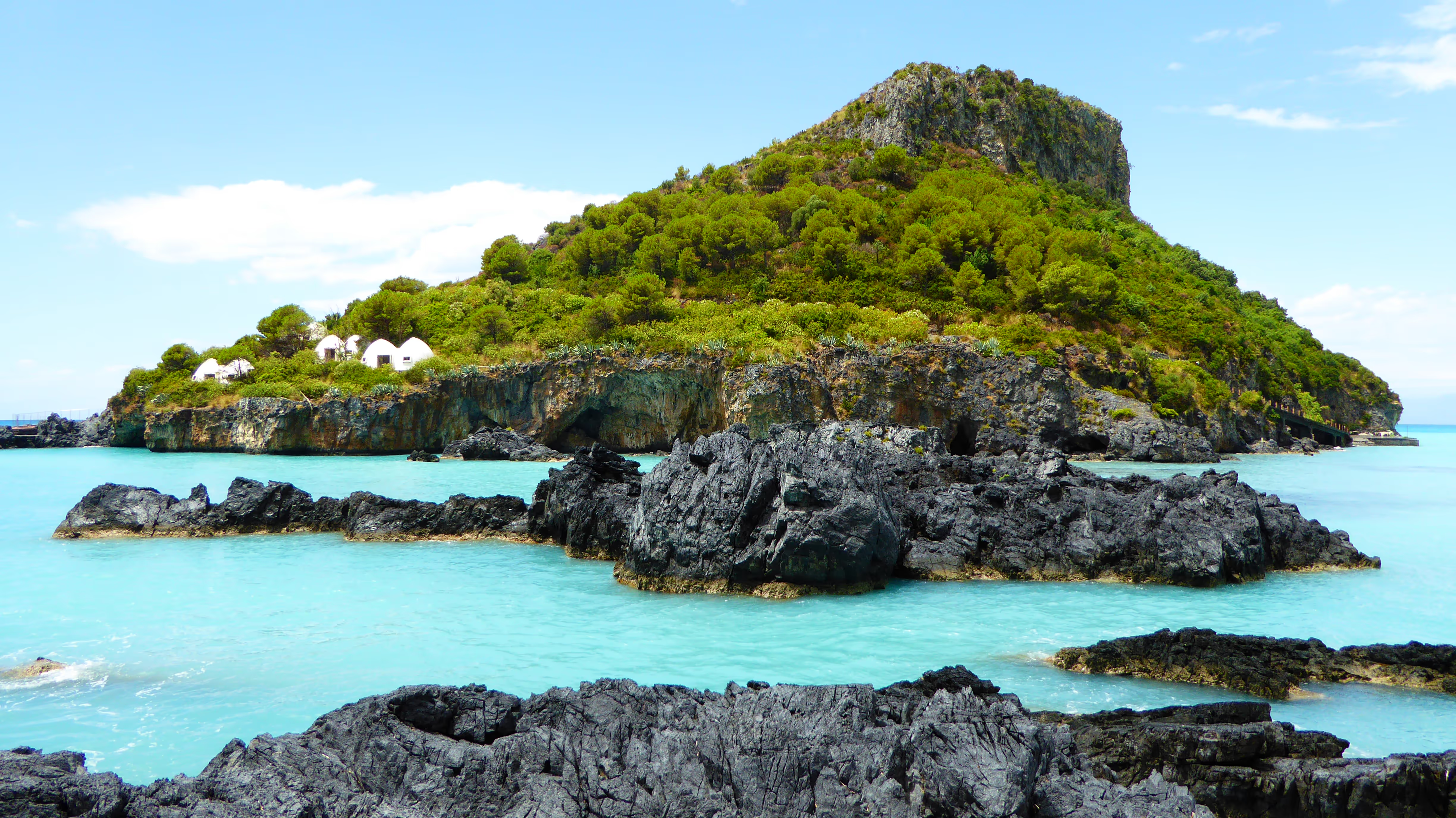
The old town gathers on a small headland over the Tyrrhenian Sea, just south of the Corvino stream, which flows down from the hinterland and is lined by the Enzo La Valva park. To the north, the hamlet of Cirella is split in two: the beach village on the coast and, on a hill 172 metres up, the ruins of the medieval settlement. Facing Cirella rises the island of Cirella, which together with the island of Dino makes up Calabria’s pair of islands.
History
The name evokes the gem, though nobody can say for sure why: a local legend tells of a crow that, drinking from the stream, fished out a diamond, and from it the stream itself took the name Corvino.
Traces of Greek and Roman presence surface here and there, but today’s settlement was born in the 16th century, when the Sanseverino princes had a tower built against Saracen raids. Around that stronghold the prince of Bisignano Tiberio Carafa, lord of Belvedere and Diamante from 1622, raised a wider fortification. Once the sea raids ended, country people moved down to the coast; merchants from Naples, Amalfi and Salerno and noble families of Spanish origin followed, and the village took shape.
Fishing and farming long underpinned the economy. The star crop was the citron, in its “liscio Diamante” variety: a large, fragrant fruit grown mainly for candying, which every summer drew rabbis from Jewish communities in search of the perfect etrog for the Feast of Tabernacles. Exports to Israel and the United States made the citron a resource for the whole area, which takes its name from it: Riviera dei Cedri. In 1826 a hoard of six thousand Roman coins came to light on a plot at Cirella.
Cirella’s history is older than Diamante’s: classical authors (Strabo, Diodorus Siculus, Silius Italicus) record Cerillae, a city founded by the Ausones that prospered on trade between Rome and Magna Graecia and was destroyed in 203 BC by the Carthaginian general Hanno for its loyalty to Rome. The medieval hill town, founded between 850 and 1000, was hit by the French fleet in 1806 and finally abandoned in 1808; that same year, 1806, Napoleonic troops built the small fort there.
What to see
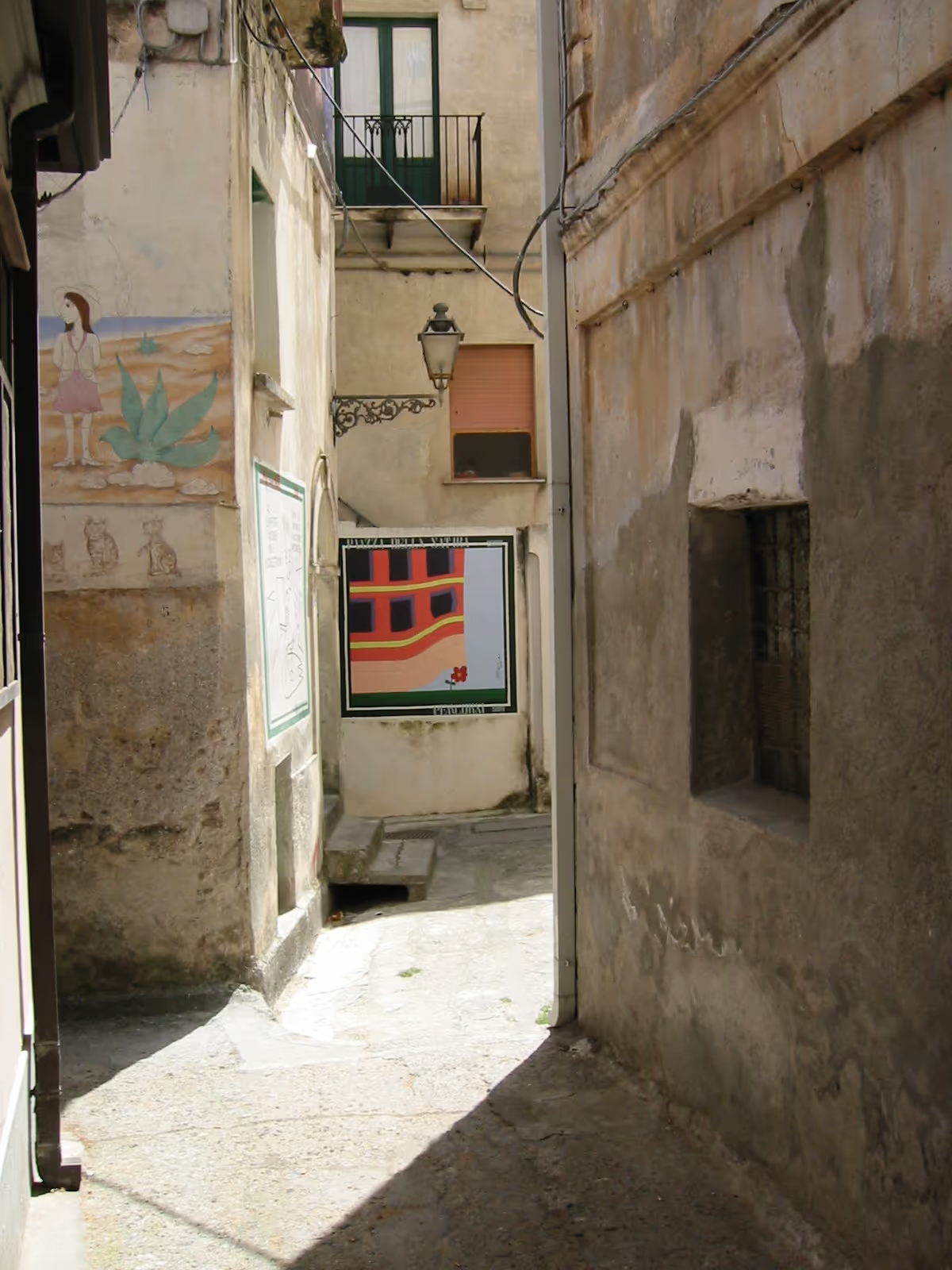
The best way to get to know Diamante is on foot. In the village of murals the walls of the alleys are an open-air gallery: the idea came from painter Nani Razetti, who in 1981, with mayor Evasio Pascale, invited 85 artists from around the world to paint Diamante and Cirella. More works were added over the years and in 2021, for the fortieth anniversary, the Murales40 project brought new pieces (including one by Jorit on the town hall) and the restoration of historic murals such as those by Eva Krump and Ibrahim Kodra.
Above the old town rises the Torre del Semaforo, a 16th-century watchtower commissioned by Girolamo Sanseverino, prince of Bisignano: a customs house by the mid-1600s, it was raised in the late 1800s and fitted with a 40-metre mast for the merchant navy. Since 2016 it has belonged to the town and houses a museum and the tourist information point.
The Basilica of the Immaculate Conception, built in the 17th century and restored in 1787 and 1880, keeps the monumental statue of the Immaculate donated by Tiberio Carafa: about two metres tall, carved from an olive trunk around 1656. In February 2025 the church was granted the title of minor basilica. Nearby, the Church of San Biagio (early 1800s) holds the wooden statue of the saint and a painting of the Virgin and Child.
The old seafront, opened in 1965, is still the town’s “drawing room”: from here the eye runs along the whole coast and, at night, to the fishermen’s lamp boats. Behind the centre, the Enzo La Valva park follows the Corvino stream and within a few metres shifts from seaside to an almost mountain landscape; it hosts the multimedia aquarium and the Italian Chilli Pepper Academy.
Cirella, the village and the ruins
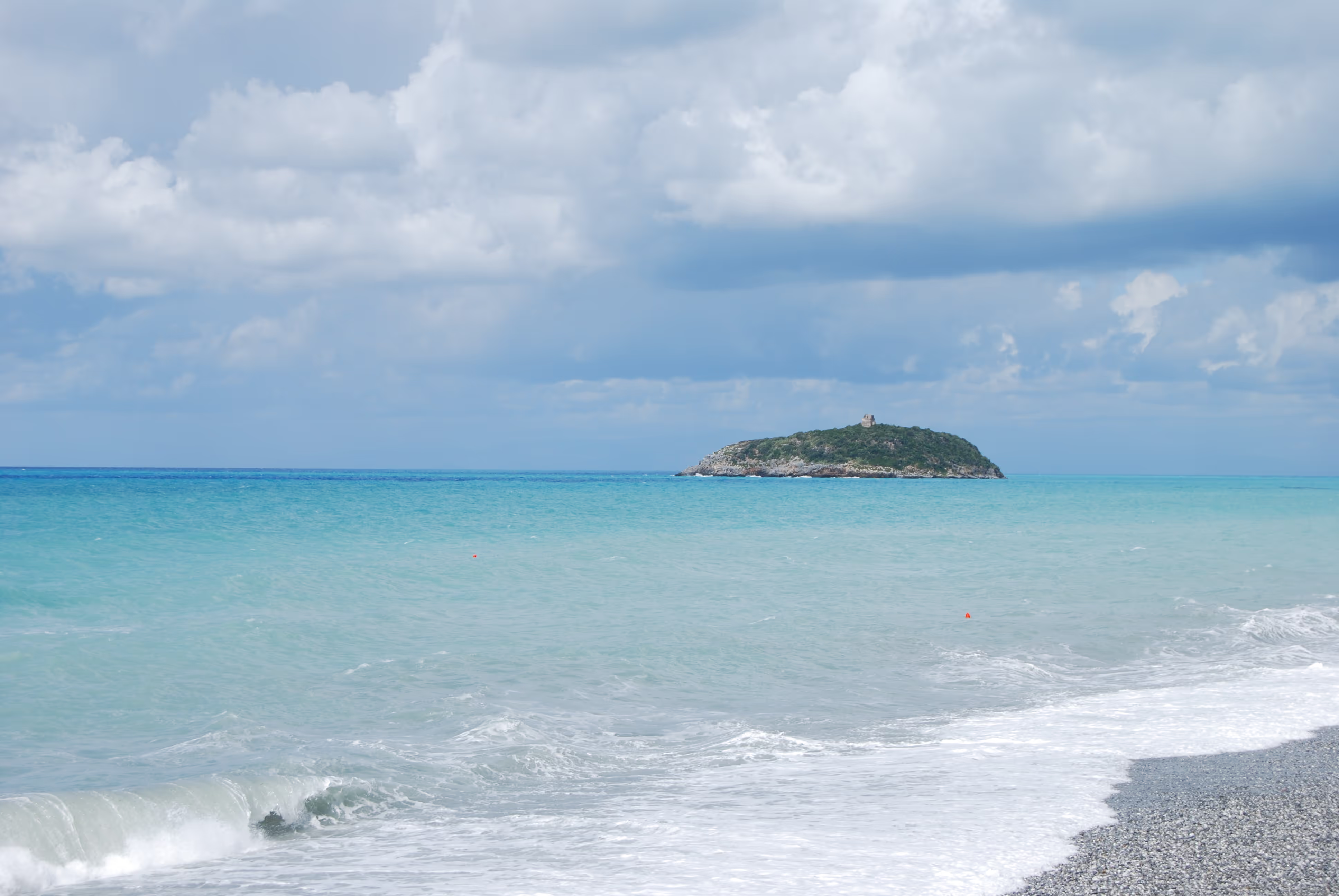
A few minutes from the centre, Cirella deserves half a day. On the hill, the ruins of old Cirella preserve the remains of a castle, a church with a Romanesque bell tower and traces of frescoes; between the ruins and the Monastery of the Minims (1545, left by the friars in 1810 and restored in 2018 as a place of worship and events venue) stands the Teatro dei Ruderi, built between 1994 and 1997 in Greek style for summer performances. At the foot of the hill lies the Roman mausoleum, a monumental tomb of the 2nd–3rd century AD later used as a church and finally as a farm store, while excavations on the headland have uncovered the foundations of a large Roman villa. On the coast, the church of Santa Maria dei Fiori (recorded in 1617, tufa portal of 1637) gathers Roman columns, 15th- and 16th-century frescoes removed from old Cirella and the wooden statue of the Madonna dei Fiori. Offshore, on the islet, the watchtower built between the late 1500s and early 1600s against Turkish raids still stands.
Flavours and traditions
The table tells of the sea: pitticelle fritters of rosamarina, rosamarina with pepper (the “poor man’s caviar”) and anchovies preserved in salt and chilli in clay cugnitti. The citron goes into sweet and savoury dishes, the liqueur made from its peel, candied fruit and panicilli, Christmas sweets of raisins wrapped in citron leaves that Gabriele D’Annunzio was fond of. Chilli pepper is the other emblem: since 1992 Diamante has hosted the annual Peperoncino Festival, conceived by journalist Enzo Monaco on the 500th anniversary of the discovery of America, with tastings, workshops, exhibitions and a “spicy” film showcase; the Italian Chilli Pepper Academy is based in town. Since 2011 the Mediterraneo Festival Corto has awarded short films from around the world, and among the ruins of Cirella “Calici sotto le stelle” celebrates Calabrian wines.
Diamante also has a cultural and cinematic bent: philosopher Nuccio Ordine, born here, brought the seminars of the Italian Institute for Philosophical Studies to town, and the village has been a film set for L’abbuffata by Mimmo Calopresti, Per sempre by Alessandro Di Robilant and L’ultimo Re by Aurelio Grimaldi. Cycling fans remember the Giro d’Italia: in 1982 Francesco Moser won the stage from Castellammare di Stabia on the seafront and took the pink jersey; stages later set off from Diamante in 2005 towards Giffoni Valle Piana and in 2022 towards Potenza.
Getting there
Diamante lies on the SS18 Tirrena Inferiore state road, which links every town on the coast, and is served by Diamante-Buonvicino station on the Tyrrhenian railway. By car you arrive from the A2 “del Mediterraneo” motorway (from the north, exit Lagonegro nord then SS585 and SS18; from the south, exit Falerna and SS18 northbound). The nearest airport is Lamezia Terme.
Places
What to see around here.
- Culture
Ruins of Cirella and Teatro dei Ruderi
The abandoned medieval village on the hill of Cirella, with castle, Romanesque church, Monastery of the Minims and an open-air theatre.
-
 Nature
 Island of Cirella
The islet facing Cirella, one of only two islands in Calabria, with a watchtower on top.
-
 Culture
 The murals of Diamante
The wall paintings that since 1981 have turned the alleys of Diamante and Cirella into an open-air gallery.
- Culture
Torre del Semaforo
The 16th-century tower overlooking Diamante’s old town, today a museum and information point.
Nearby towns
Keep exploring the Upper Tyrrhenian Cosentino coast from here.
-
Maierà
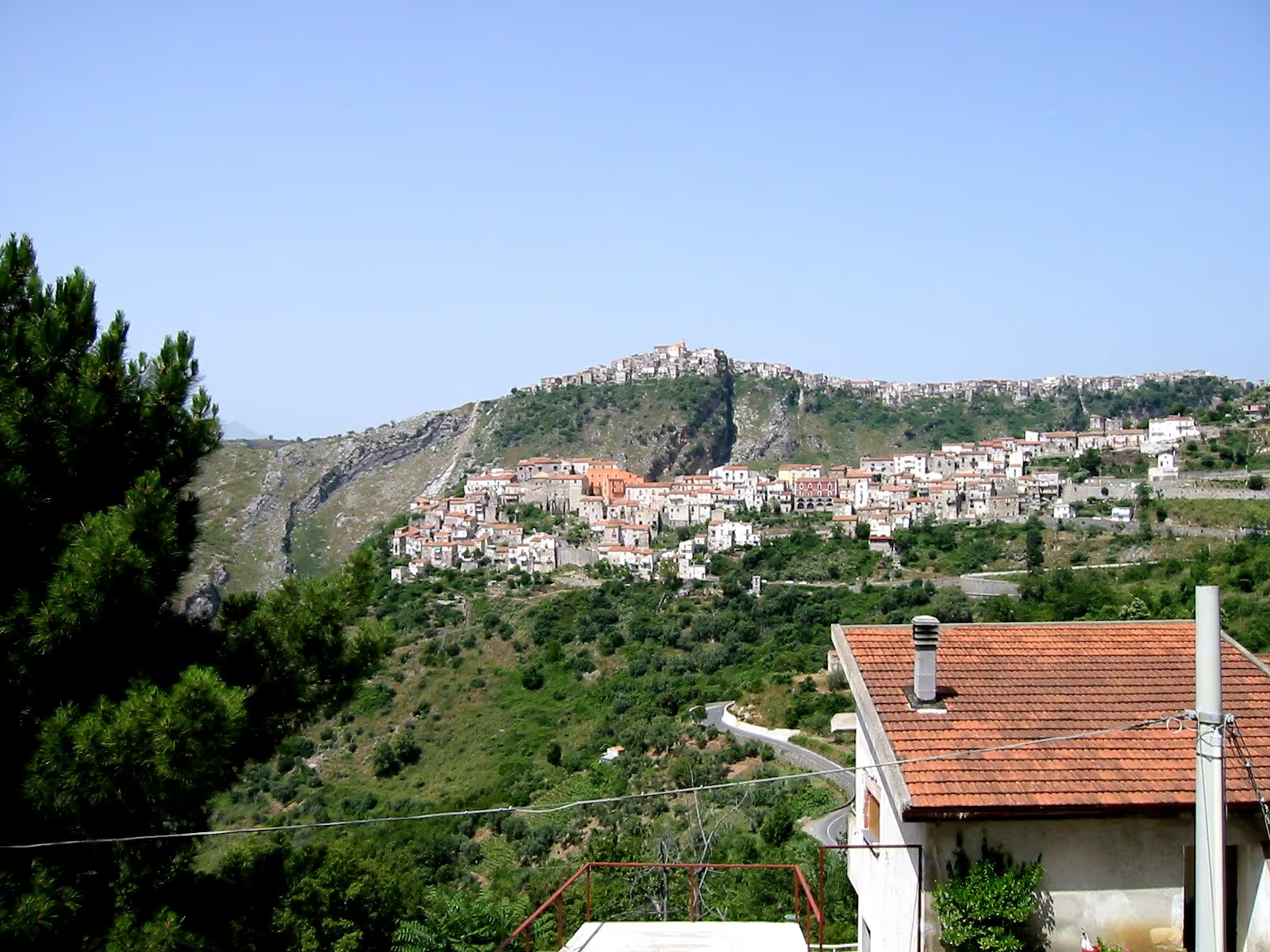
The village at 360 metres above the Vaccuta stream valley, separated from Grisolia by a ravine: in the Pollino park, behind Diamante, Maierà combines contemporary artworks in its lanes, the Chilli Pepper Museum and its four churches.
-
Buonvicino
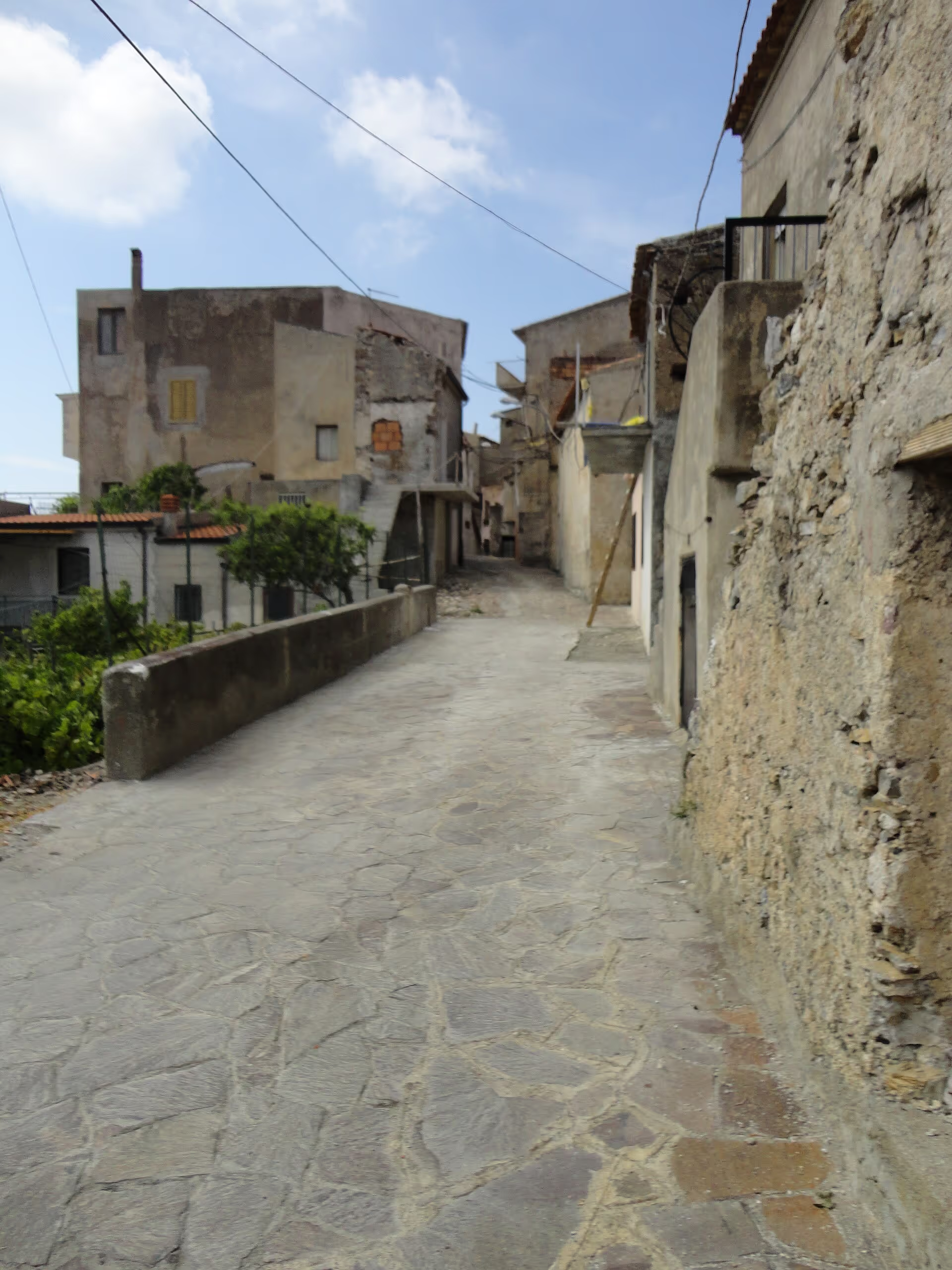
The village born of three hamlets on the route between the Tyrrhenian and the interior: at 400 metres above the Corvino stream, in the Pollino park, Buonvicino keeps the Stretto gorge with the Sasso dei Greci, the cave of Abbot Ciriaco, a disciple of Saint Nilus, and his great bronze statue watching over the village.
-
Santa Maria del Cedro
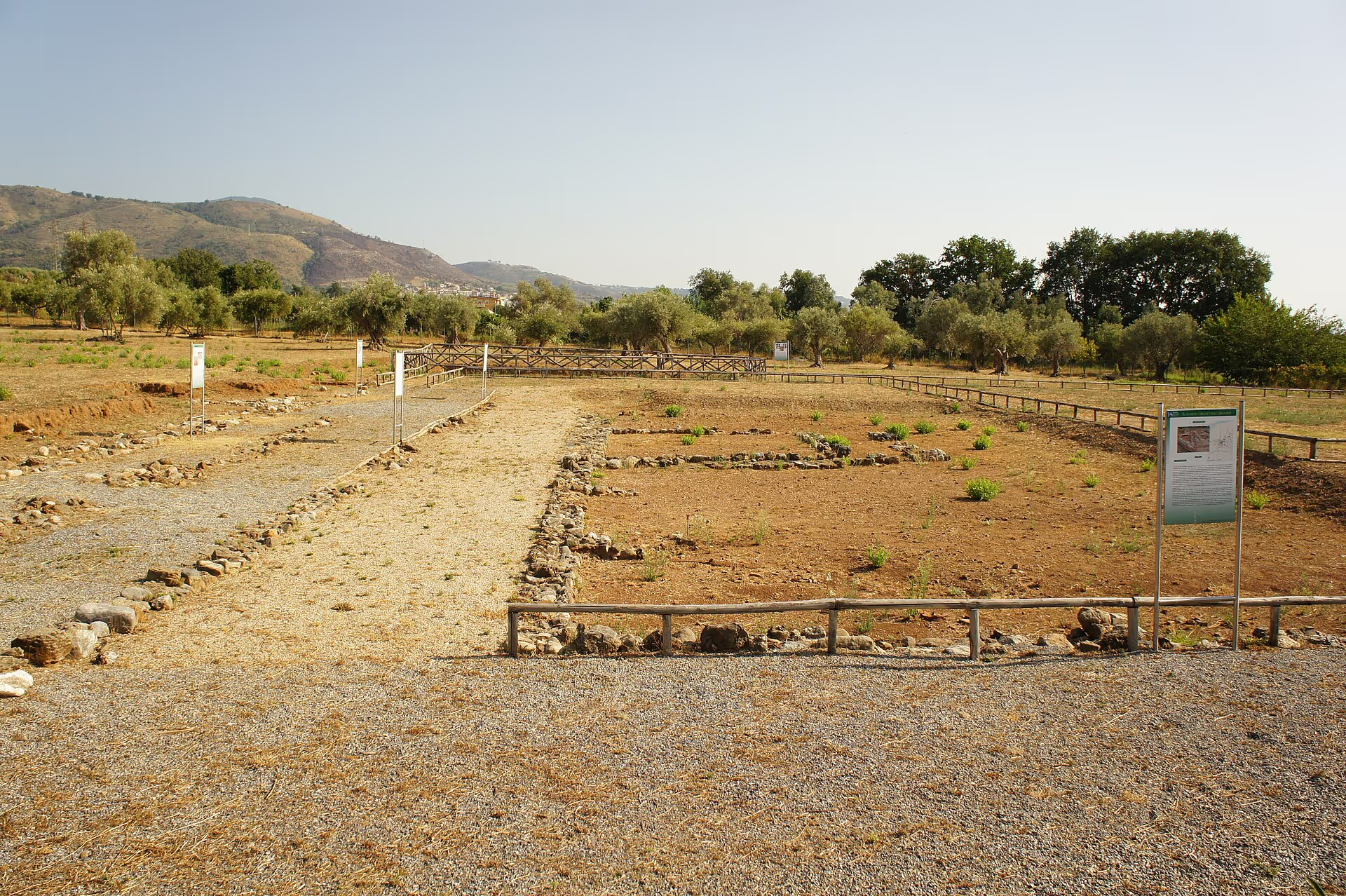
The town that gives the Riviera dei Cedri its name: the fertile plain between the Lao and the Abatemarco where the citron chosen by rabbis for Sukkot is grown, the remains of the Sybarite city of Laos at Marcellina and the Citron Museum in the Carcere dell’Impresa.
-
Grisolia
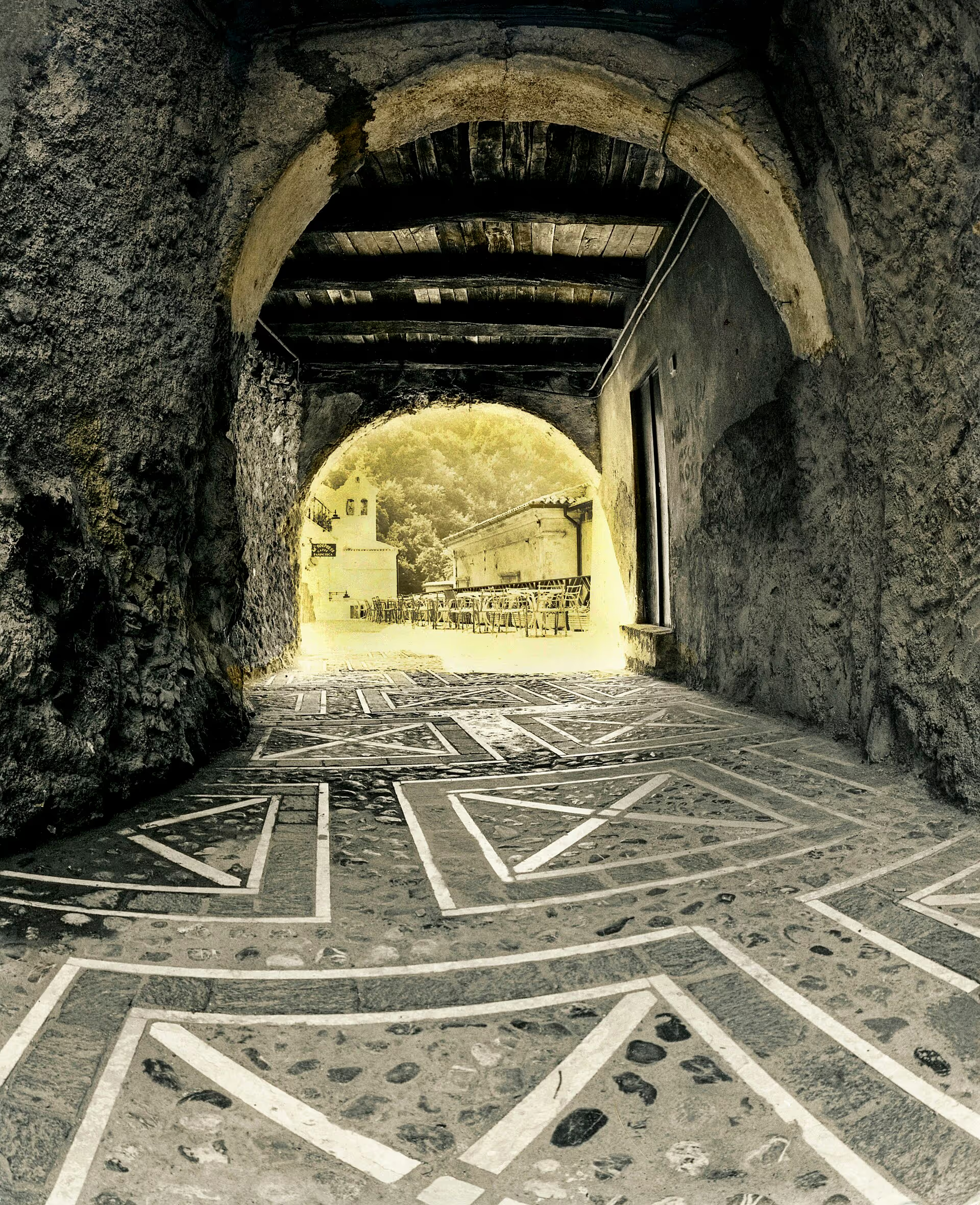
The village at 465 metres that looks out over the whole Riviera dei Cedri: from the sea at Acchio to the slopes of Monte La Mula, Grisolia combines covered stone alleys, the Palazzo Ducale, the ethnographic museum and the San Rocco procession with the caggie carried on the head.
-
Belvedere Marittimo
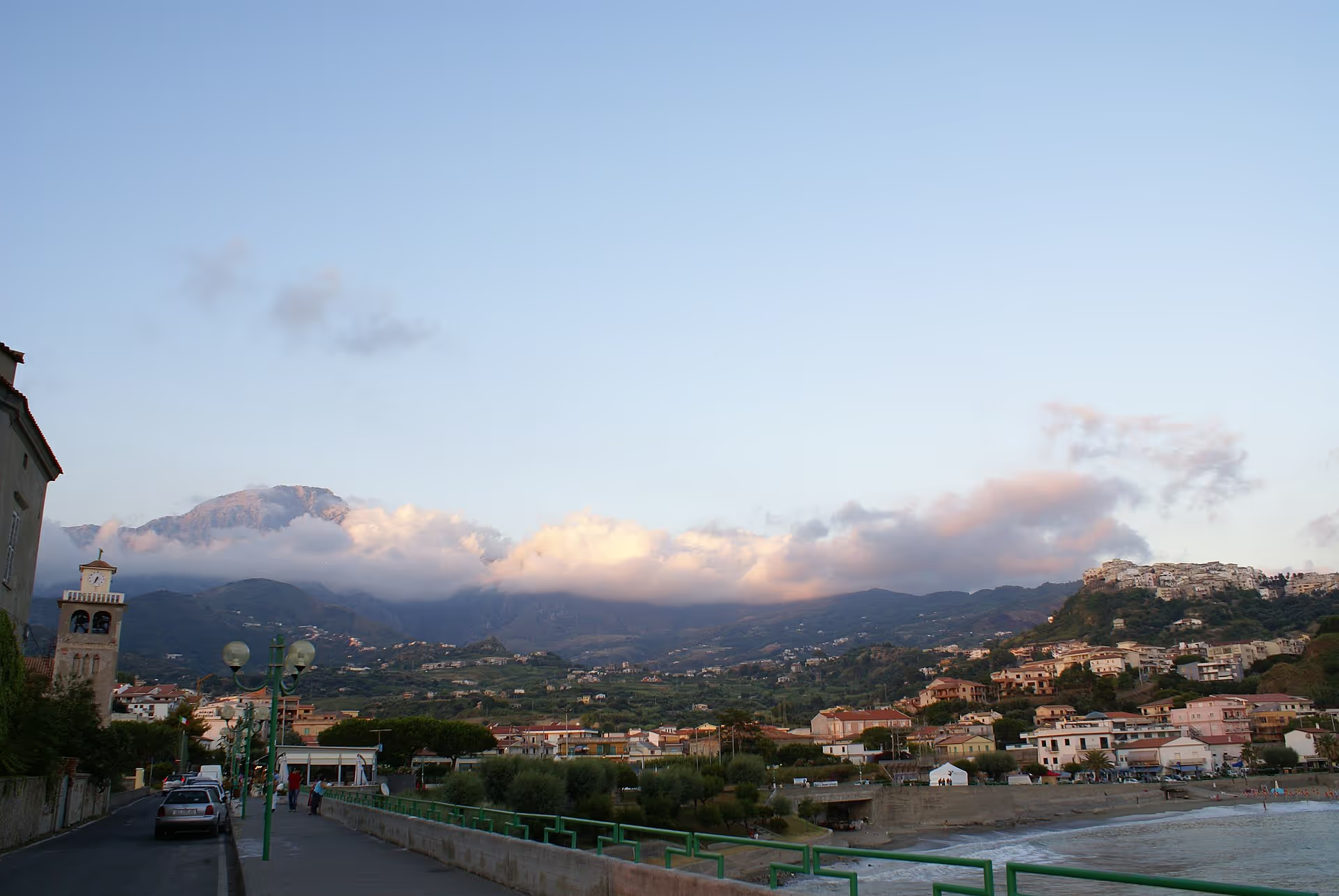
A medieval village 150 metres above the Tyrrhenian with the Sanseverino Renaissance castle, a wooden crucifix of 1711 and a chapel dated 1091; at its feet the Marina, the Bruttian tombs of Capo Tirone and the Note di Fuoco fireworks festival.
Itineraries through here
-
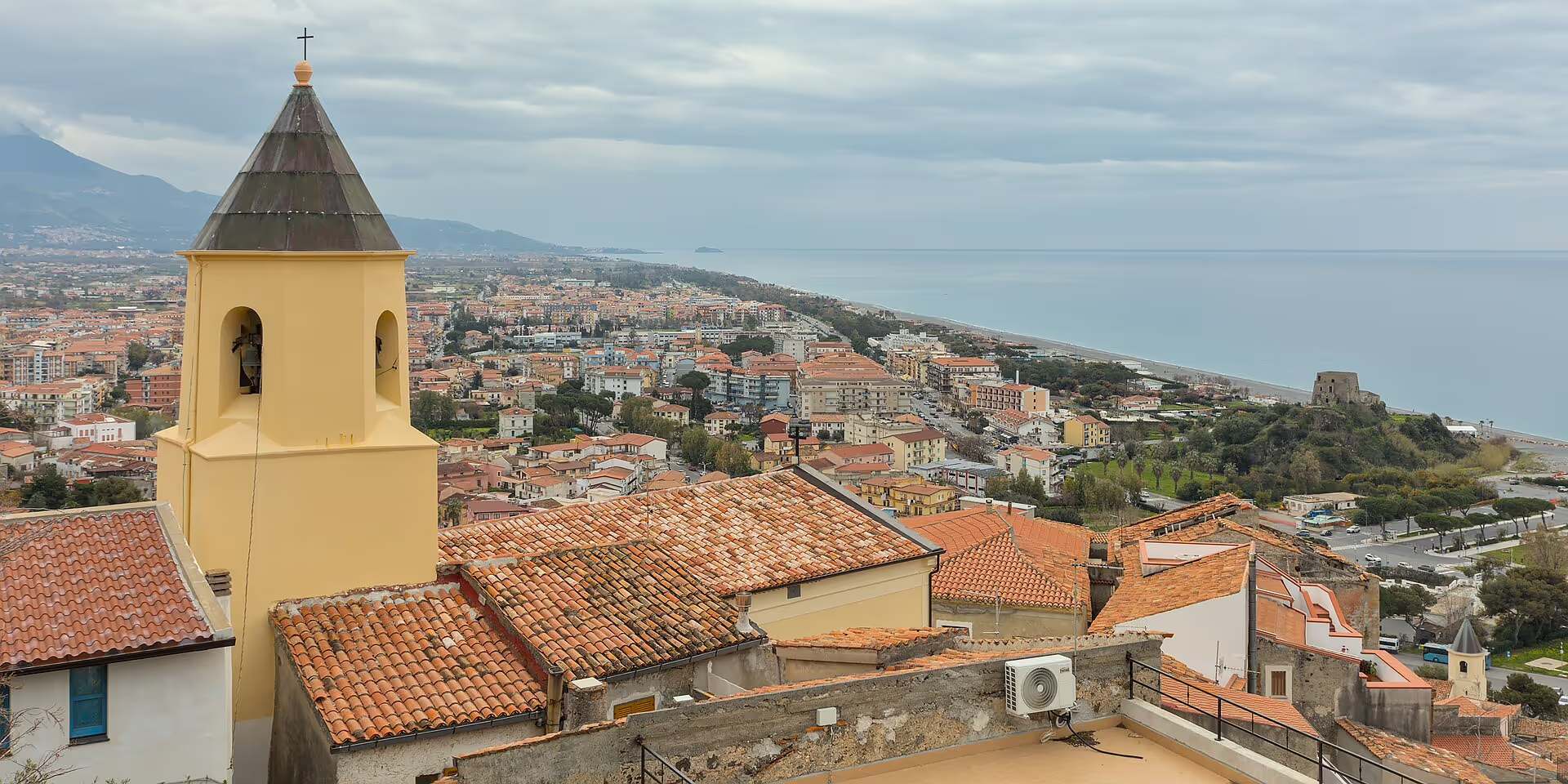 4 daysGrand tour
Grand Tour of the Riviera dei Cedri
Four days from north to south along the Upper Tyrrhenian Cosentino coast: islands, Norman towns, murals and sanctuaries.
11 stops8 townsMay–OctoberSee the stops - 2 daysSea & beaches
Sea & beaches
Two days among rock arches, islands and lidos of the Cosentino Tyrrhenian coast.
4 stops4 townsJune–SeptemberSee the stops -
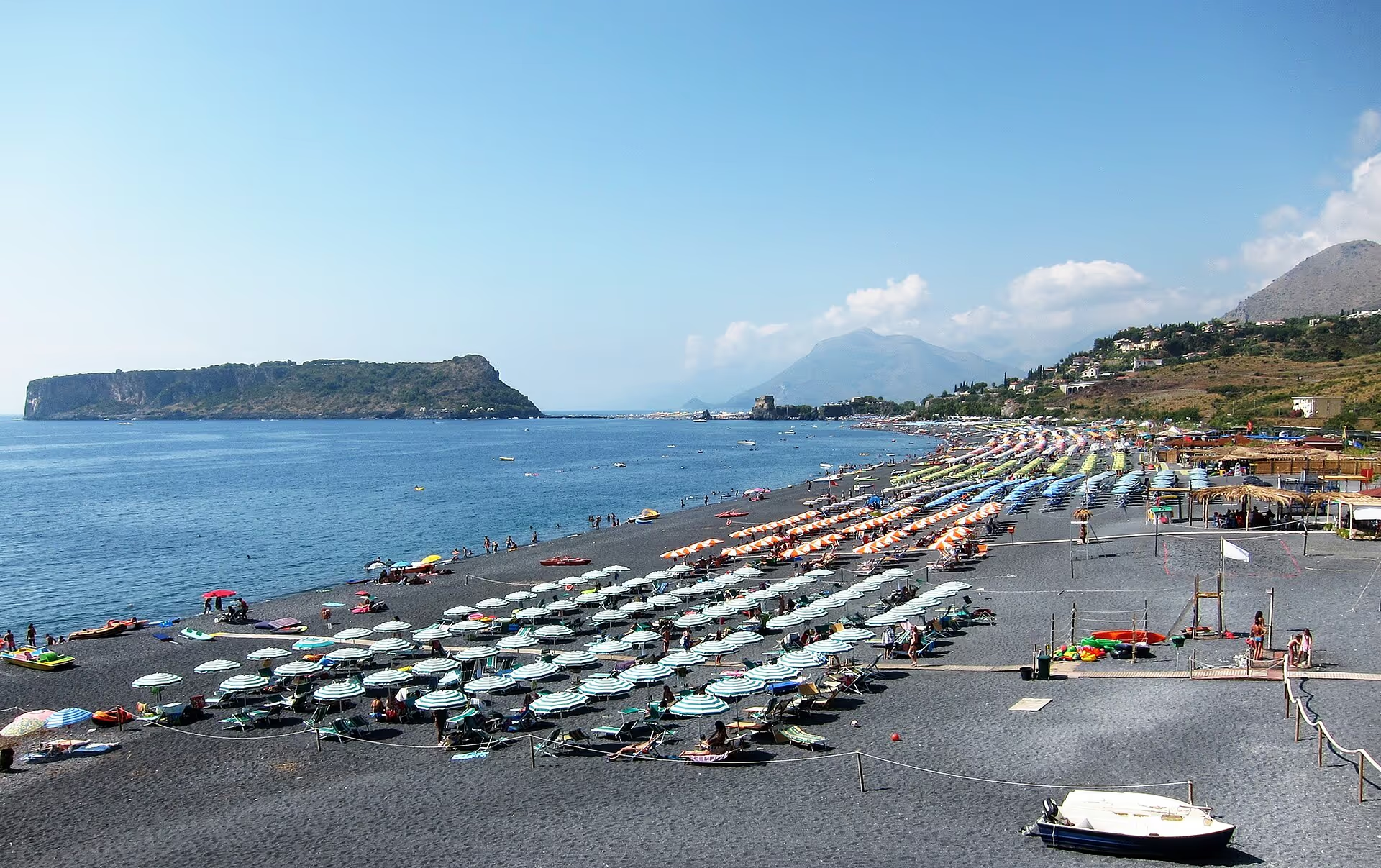 3 daysSea & beaches
Three days by the sea
Three days along the Tyrrhenian coast: islands, rock arches and beaches from north to south.
6 stops5 townsJune–SeptemberSee the stops -
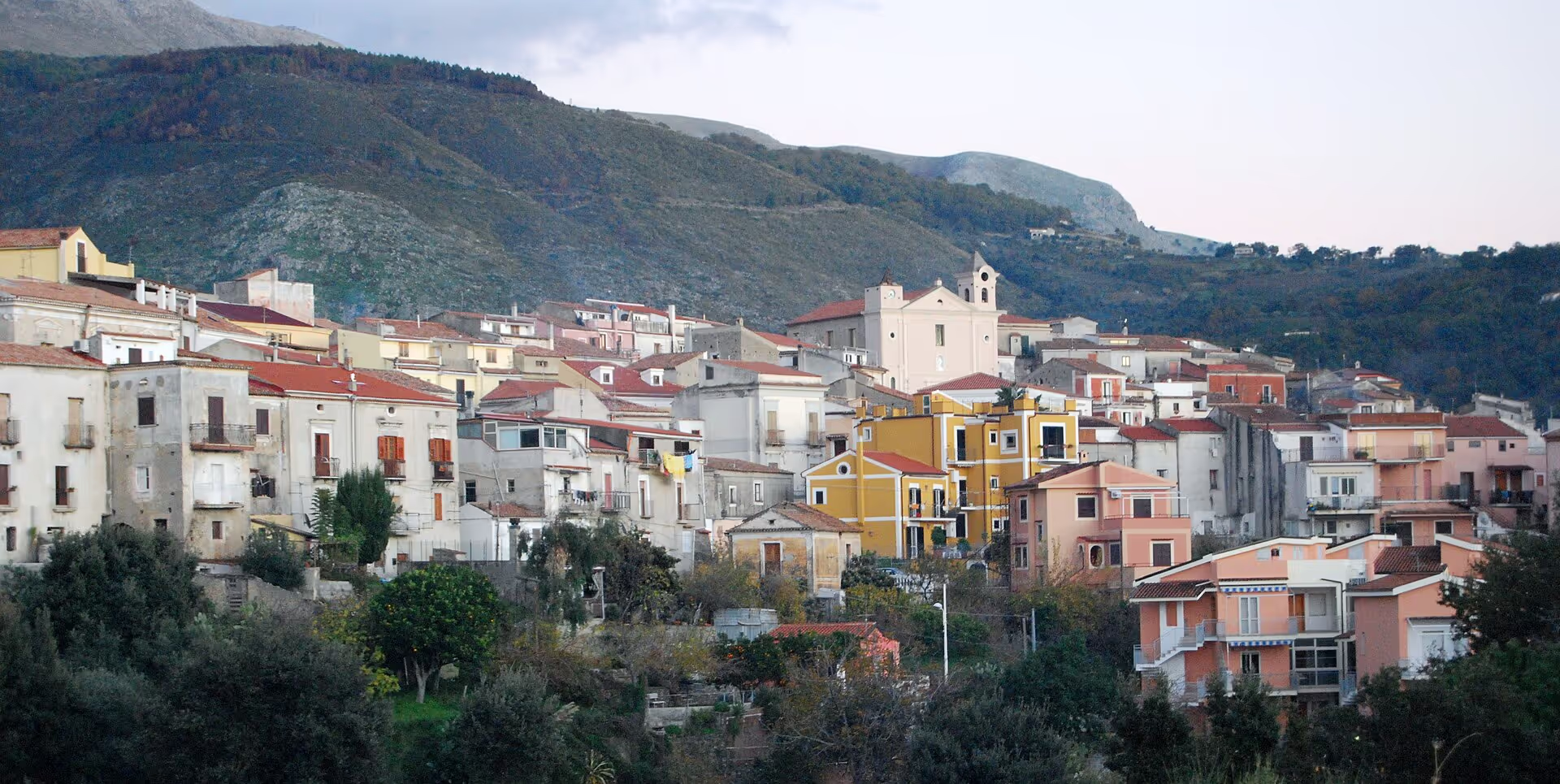 4 daysSea & beaches
Four days on the Tyrrhenian coast
Four days devoted to the sea, from San Nicola Arcella to Cetraro: arches, islands, beaches and marina.
8 stops6 townsJune–SeptemberSee the stops -
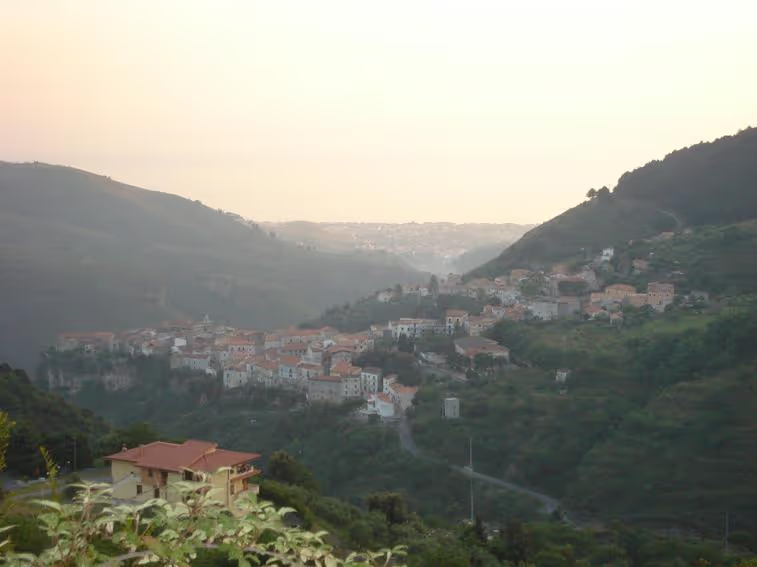 2 daysTowns & history
Weekend in the old towns
Two days among museum, stone village and murals: history and art without a devotional focus.
4 stops3 townsAll year roundSee the stops - 2 daysGrand tour
Flavours of the Riviera
Two days among citron, chilli pepper and harbour: the typical products of the Upper Tyrrhenian Cosentino coast.
4 stops3 townsAll year roundSee the stops - 3 daysGrand tour
Flavours and traditions
Three days among citron, old towns and harbour: a journey through the flavours of the Upper Tyrrhenian Cosentino coast.
6 stops4 townsAll year roundSee the stops -
 3 daysFamily
Family on the coast
Three easy days for families: beaches, murals and a boat trip to the island of Dino.
6 stops3 townsJune–SeptemberSee the stops
Where to stay
- Campeggio internazionale CirellaCampsite · Diamante
- Club Hotel Baia di DiamanteHotel · Diamante
- Hotel dei FocesiHotel · Diamante
- Hotel FerrettiHotel · Diamante
- Hotel La CometaHotel · Diamante
- Hotel Stella Maris di Salerno GiovanniHotel · Diamante
- Riviera bluHotel · Diamante
- Vanity B&BGuest house · Diamante
- Villaggio Lido TropicalGuest house · Diamante
Indicative information from OpenStreetMap. Check availability and reviews on the external platforms.
Where to eat
- A Dù Zi TotonRestaurant · Diamante
- A' Cucchiarella RistoranteRestaurant · Diamante
- ADEBar · Diamante
- Bar Angolo DivinoBar · Diamante
- Bar Spinelli di Bencardino MassimoBar · Diamante
- Caffè DiamanteBar · Diamante
- Caffetteria MarinoCafé · Diamante
- da FrancescoRestaurant · Diamante
- Gelateria Cuore MattoIce cream · Diamante
- GiemmeBar · Diamante
- Gusto AnticoRestaurant · Diamante
- Il DiversoRestaurant · Diamante
- L'ApprodoRestaurant · Diamante
- La GuardiolaRestaurant · Diamante
- La Rumba del CaribeRestaurant · Diamante
- Las VegasBar · Diamante
- Lido delle SireneRestaurant · Diamante
- Osteria dei muralesRestaurant · Diamante
- Osteria dei MuralesRestaurant · Diamante
- Pizzeria A' CannarutiaFast food · Diamante
- Pizzeria del CorsoRestaurant · Diamante
- pizzeria il giardinoRestaurant · Diamante
- Ristorante Da LucioRestaurant · Diamante
- Ristorante Lo spuntino sul mareRestaurant · Diamante
- Sapore di MareRestaurant · Diamante
- Una Tira L'altroBar · Diamante
- White CafèBar · Diamante
Indicative information from OpenStreetMap. Check availability and reviews on the external platforms.
Beaches and beach clubs
- Lido AlabamaBeach club · Diamante
- Lido delle SireneBeach club · Diamante
- Lido La Voce del MareBeach club · Diamante
- Lo SqualoBeach club · Diamante
- PoseidoneBeach club · Diamante
Indicative information from OpenStreetMap. Check availability and reviews on the external platforms.
Do you run a local business?
Update the listing or discover how to give your business more visibility.
Join the guide for freeHow to get to Diamante
- Reference railway station
- Diamante-Buonvicino
- about 1 km as the crow flies from the centre
- Train times (Trenitalia) ↗ Guide: by train
- Nearest airport
- Lamezia Terme International Airport (SUF)
- about 94 km as the crow flies from the centre
- Airport website ↗ Guide: by plane
- By car: A2 “del Mediterraneo” motorway
-
From the north · A2 Lagonegro north SS585 Fondo Valle del Noce → SS18 Tyrrhenian coastal road heading south
From the south · A2 Falerna SS18 Tyrrhenian coastal road heading north along the coast
- Driving directions (Google Maps) ↗ Guide: by car
Straight-line distances computed from verified coordinates: the road route is longer. Check times and connections on the operators’ websites.
Frequently asked questions
- On the Tyrrhenian coast of the province of Cosenza, Calabria, at the centre of the Riviera dei Cedri: roughly halfway between Scalea to the north and Belvedere Marittimo to the south.
- Because since 1981, on painter Nani Razetti’s idea, 85 artists from around the world have painted the walls of the old town and of Cirella; in 2021 the Murales40 project added new works and restored the historic ones.
- The murals of the old town, the Torre del Semaforo, the Basilica of the Immaculate Conception, the old seafront and, at Cirella, the ruins of the medieval village with the Teatro dei Ruderi and the view of the island.
- An islet facing the hamlet of Cirella, one of only two islands in Calabria together with the island of Dino; a late-16th-century watchtower still stands on top.
- The remains of the medieval settlement of Cirella, 172 metres up, founded between 850 and 1000, hit by the French fleet in 1806 and abandoned in 1808: a castle, a church with a Romanesque bell tower, the Monastery of the Minims and the modern Teatro dei Ruderi.
- A cultural and food festival devoted to chilli pepper, held in Diamante every year since 1992 and conceived by Enzo Monaco; the town also hosts the Italian Chilli Pepper Academy.
- Yes: the award was granted in 2021.
- The reference station is Diamante-Buonvicino, on the Tyrrhenian railway line, about 1 km as the crow flies from the centre of Diamante. Times and connections on the Trenitalia website.
- The nearest airport is Lamezia Terme International Airport (SUF), about 94 km as the crow flies; from there you continue by train from Lamezia Terme Centrale along the Tyrrhenian line, or by car on the A2 motorway.
Where is Diamante?
Why is Diamante called the town of murals?
What can you see in Diamante in one day?
What is the island of Cirella?
What are the ruins of Cirella?
What is the Diamante Peperoncino Festival?
Does Diamante have the Blue Flag?
Which is the nearest railway station to Diamante?
Which is the nearest airport to Diamante?
Discover locally
Live, up-to-date results with real reviews, on external platforms. We don’t hand-pick individual businesses we can’t verify.
Videos
Events
- Festival del peperoncino ogni anno
A Diamante dal 1992.
Yearly